

The environmental case for corn ethanol often gets reduced to a single carbon number, but that number can mislead more than it informs. I’ve spent the better part of fifteen years helping agricultural enterprises plan integrated processing chains, and I’ve learned that the real environmental benefit of corn ethanol isn’t a laboratory value—it’s what happens inside a plant that captures value from every process stream. Life cycle assessment matters, but it becomes actionable only when engineering decisions turn paper reductions into verifiable improvements. This article walks through the LCA framework, shows how by-product utilization and energy integration amplify environmental gains, and clarifies where land-use and water concerns stand today.
What Do Life Cycle Assessments Reveal About Corn Ethanol Environmental Benefits?
A life cycle assessment (LCA) tracks greenhouse gas (GHG) emissions from corn planting through ethanol combustion. The US Department of Energy’s GREET model consistently shows that corn ethanol delivers 40% to 52% lower GHG emissions than gasoline on a lifecycle basis, with some biorefinery studies reporting reductions above 60% when co-product credits are applied. These numbers shift depending on farming practices, biorefinery efficiency, and the energy source used at the plant.
Greenhouse Gas Reduction Potential: Field to Wheels
The largest climate advantage of corn ethanol lies in displacing fossil carbon. Unlike petroleum, the CO₂ released during ethanol combustion was recently drawn from the atmosphere by the corn plant itself. That carbon cycling, paired with continuous improvements in nitrogen management and reduced tillage on corn acres, has pushed the carbon intensity of US corn farming down by roughly 30% per bushel since 2000. In a plant running on natural gas cogeneration, net GHG savings typically reach 45% to 50% relative to gasoline.
The Role of Co-Product Credits in LCA Calculations
A standard corn ethanol plant also produces distillers grains (DDGS) and corn oil. When LCA models credit these co-products for replacing soybean meal and vegetable oil that would otherwise require separate energy-intensive production, the ethanol carbon footprint shrinks further. Without co-product credits, an ethanol plant’s GHG advantage might appear 10–15 percentage points lower—which is why many simplistic comparisons miss the mark.
How Does By-Product Utilization Enhance Corn Ethanol Environmental Benefits?
A plant that treats by-products as waste loses much of its environmental case. When those streams are processed into salable goods, the facility becomes a multi-output biorefinery and the per-unit environmental burden of ethanol drops materially.
DDGS as a High-Value Protein Feed Replacement
Wet distillers grains and dried distillers grains with solubles (DDGS) contain 27–30% crude protein, making them a direct substitute for soybean meal in livestock rations. The LCA benefit comes from avoiding the land, water, and energy required to grow and process an equivalent quantity of soybean protein. In integrated agricultural regions, feeding DDGS locally further reduces transport emissions.
CO₂ Capture and Food-Grade Applications
Fermentation produces nearly as much CO₂ by weight as ethanol. Capturing, purifying, and liquefying that CO₂ for food and beverage markets turns a GHG emission into a commercial product. A 300,000-ton-per-year ethanol plant can recover roughly 280,000 metric tons of CO₂ annually—equivalent to removing more than 60,000 passenger vehicles from the road, assuming the CO₂ would otherwise be vented.
Biogas from Wastewater and Its Energy Contribution
Anaerobic digestion of thin stillage and process wastewater produces biogas that can fire boilers or generate electricity. Our engineering teams routinely specify biogas recovery as part of the energy integration package, displacing 15% to 20% of a plant’s fossil fuel demand. That substitution feeds directly into a lower carbon intensity score for the ethanol gallon.
How Do Energy Cascade Systems Reduce Corn Ethanol’s Carbon Intensity?
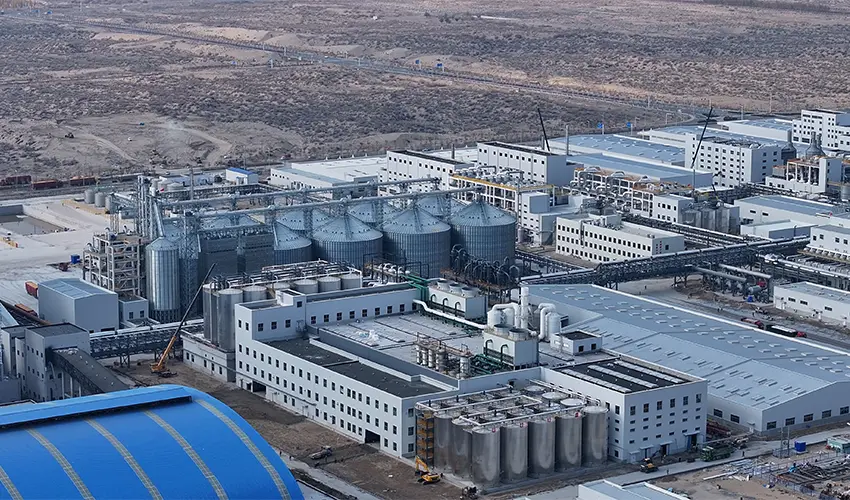
The difference between a “good” LCA number and a “great” one often traces back to heat management. Distillation and molecular sieve dehydration consume 40% to 50% of a plant’s total steam demand. Without energy cascade design, that thermal load burns fuel unnecessarily.
Multi-Effect Distillation and Mechanical Vapor Recompression
Instead of venting distillation overhead vapors to a condenser, multi-effect columns use the heat from one stage to drive the next. Adding mechanical vapor recompression (MVR) upgrades low-pressure steam with an electric compressor, cutting overall live steam consumption by 20% to 30%. The capital cost pays back through lower fuel purchases and a measurably lower carbon intensity score.
Using Waste Heat for Preheating and Drying
A well-integrated plant routes waste heat from distillation to preheat incoming mash and to partially dry DDGS. In the integrated plants we design, a 25% reduction in total energy consumption is a verified benchmark when energy cascade, waste heat recovery, and biogas utilization are deployed together. That reduction directly translates to lower Scope 1 emissions and a better position under renewable fuel standards.
Can Land Use and Water Consumption Challenges Be Managed?
No honest assessment of corn ethanol avoids the land-use and water questions. These concerns are real, but they are also nuanced in ways that simple headlines miss.
Indirect Land Use Change: Separating Myth from Data
Most global models that project large indirect land use change (ILUC) effects rely on assumptions that do not match observed soybean and corn acreage patterns in the United States over the last decade. Total US cropland has remained essentially flat since 2010, while corn productivity per acre has risen nearly 20%. In practice, yield gains and tighter rotation management have decoupled ethanol expansion from grassland conversion in major producing regions.
Water Recycling Systems and Zero Liquid Discharge Goals
A corn ethanol plant uses roughly 3 to 4 liters of water per liter of ethanol produced, mostly for cooling and process makeup. Closed-loop cooling, condensate recovery, and anaerobic effluent treatment can bring that figure below 2 liters per liter. In our project engineering, we target near-zero liquid discharge by integrating reverse osmosis for water recovery from stillage and reusing treated condensate for cooking and fermentation.
What Makes an Integrated Corn Ethanol Plant a Sustainable Business?
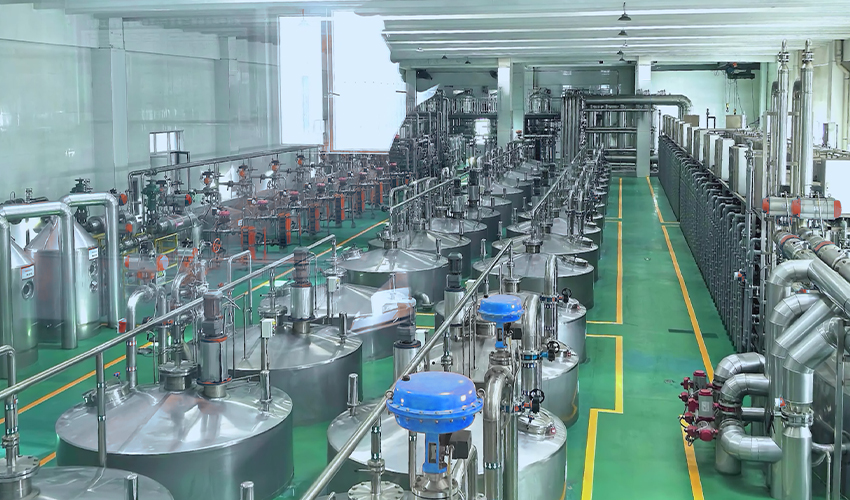
Sustainability arguments that ignore economics rarely survive a boardroom review. The integrated model works because it generates multiple revenue streams—ethanol, DDGS, corn oil, captured CO₂, and sometimes biogas-derived electricity—while cutting energy cost per unit output.
Financial Benefits of By-Product Revenue Streams
Co-products can contribute 25% to 35% of a plant’s gross revenue. When ethanol margins compress, DDGS and CO₂ sales often keep cash flow positive. That diversification also reduces the financial risk of investing in advanced energy-efficiency equipment, because the payback period shrinks when multiple product lines share the fixed cost.
Meeting Regulatory Standards for Renewable Fuel Certification
Jurisdictions including the EU, California, and Brazil now require detailed carbon intensity reporting for biofuel eligibility. An integrated plant with verified energy consumption data and third-party LCA documentation clears those certification hurdles more easily. Our experience suggests that a plant designed from the start with energy cascade and co-product recovery can achieve a carbon intensity score 15% to 20% below the conventional baseline—enough to command premium pricing in low-carbon fuel markets.
The lifecycle carbon case for corn ethanol is strongest when viewed through the lens of total plant integration. If you are planning a new ethanol facility or updating an existing one and need detailed environmental performance projections grounded in actual plant engineering, we can model the carbon footprint against your specific feedstock and design parameters. Reach us at [email protected] or call 010-8591 2286 to begin that conversation.
Common Questions About Corn Ethanol Sustainability
How much lower are greenhouse gas emissions from corn ethanol compared to gasoline?
On a lifecycle basis, today’s average US dry-mill corn ethanol plant achieves a 40% to 52% reduction in GHG emissions relative to gasoline, counting co-product credits. Plants that deploy biogas recovery, energy cascade distillation, and zero-coal power can push that above 60%. The exact figure depends on the LCA boundary, farm practices, and the plant’s thermal energy source.
Isn’t corn ethanol just shifting emissions from tailpipe to farmland?
The claim overstates the issue because the carbon emitted from ethanol combustion is biogenic—recently fixed by the corn plant—not fossil. The real emissions come from fertilizer production, farm diesel, and plant energy use. Those upstream emissions are dropping as corn yields increase per unit of nitrogen applied and more plants switch to combined heat and power or biogas.
What about the food-versus-fuel conflict?
US corn ethanol production uses field corn, not sweet corn, and about one-third of every bushel processed returns to the feed market as DDGS. Global food price spikes in recent decades have been driven far more by crude oil prices, trade restrictions, and extreme weather than by biofuel mandates. The protein contribution of DDGS to livestock diets often gets omitted from simple food-versus-fuel arithmetic—it matters in practice.
Can an ethanol plant ever be carbon neutral?
Carbon neutrality requires that every kilogram of CO₂ emitted across the supply chain is offset or captured. While few plants meet that bar today, combining carbon capture and storage, biogas-fired power, renewable electricity sourcing, and regenerative corn farming practices brings the target within reach. Our team has evaluated configurations where a plant’s net carbon footprint approaches zero under California’s LCFS methodology. If your project requires detailed environmental performance projections, share your plant concept with us at [email protected].
If you’re interested, check out these related articles:
Driving Global Food Conservation Through Technological Innovation
