
The global hardware trade has entered a more deliberate sourcing cycle. Buyers are no longer chasing the cheapest first sample; they are building supplier scorecards, checking certification paths, and consolidating orders around fewer, more transparent manufacturers. CIHS 2026, at SNIEC in Shanghai, is becoming the decision point in that cycle.
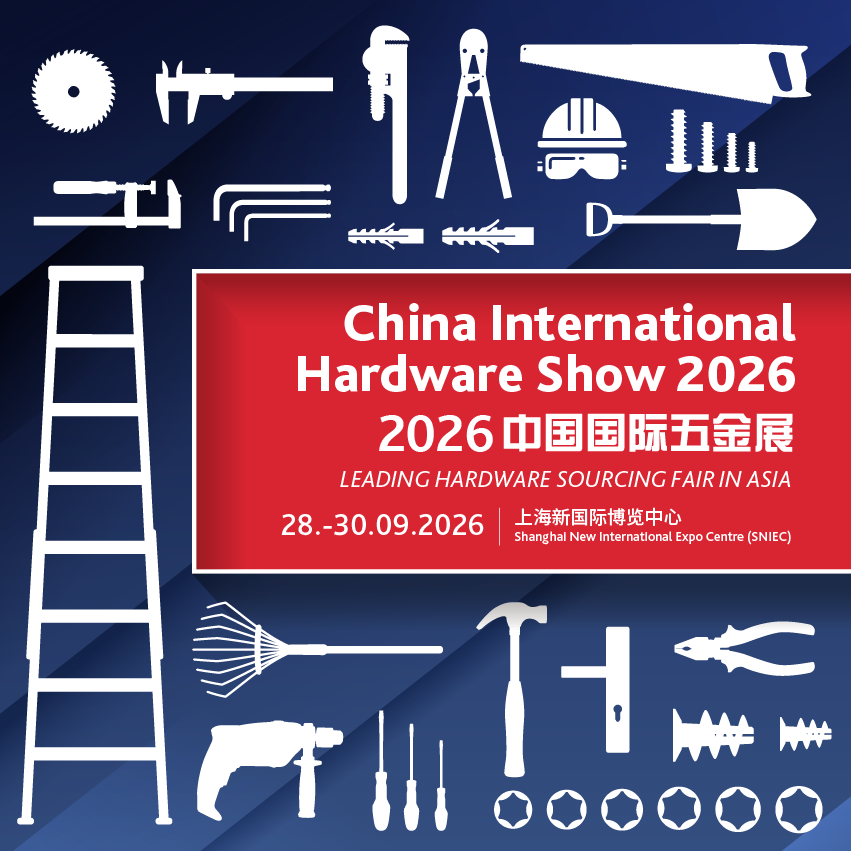
Global Hardware in 2026: A Buyer’s Reality Check
The most useful public record is the show’s own 2025 data: 120,000 square metres of exhibition space, 2,977 exhibitors, and 77,016 professional buyers from 123 countries and regions [1]. Those figures matter less as scale and more as structure. The floor is organized across hand tools, power tools, fasteners, building hardware, garden and outdoor tools, abrasives, welding supplies, PPE, and smart locking — meaning a buyer can compare the same category across multiple Chinese manufacturing clusters within a day.
We see the same pattern in buyer behaviour. Teams arrive with a shortlist that is already largely built online, then use the fair to verify, not discover. That is a healthier sourcing model: it compresses the time between first contact and audited sample, and it rewards exhibitors who can document quality systems rather than simply display product.

Five Trends Shaping the Global Hardware Market
1. Battery platforms are becoming the sourcing filter
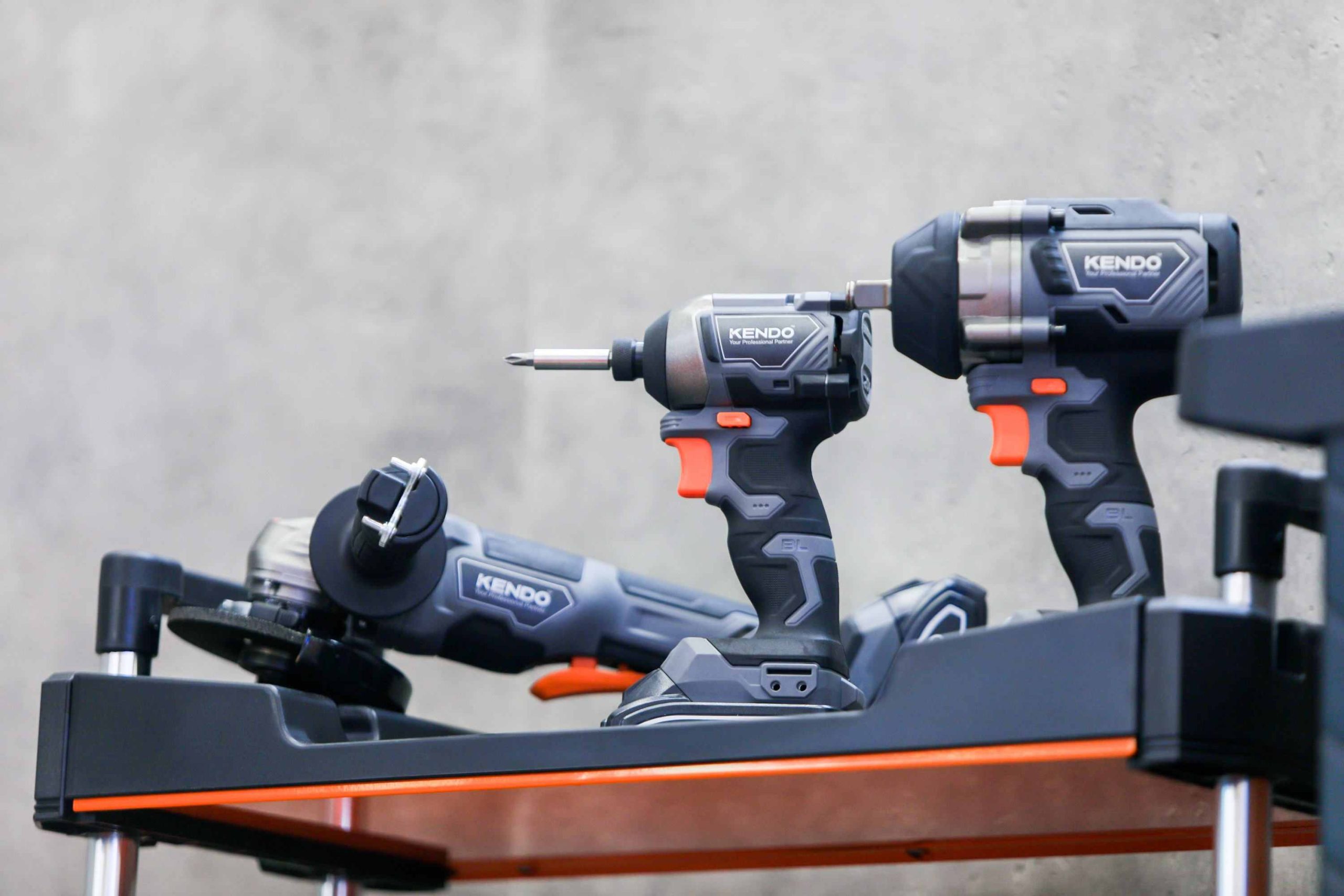
Cordless tools continue to displace corded and petrol equipment in professional and DIY channels. The EU Battery Regulation is pushing importers to ask for battery passport data, recycled-content declarations, and end-of-life planning before purchase [2]. At CIHS, battery compatibility has become one of the first questions buyers ask at power tool booths.
2. Brushless motors have moved from premium to standard
For professional power tools, brushless motors are no longer a differentiator; they are the baseline specification in mid-range and above. The practical consequence for sourcing is that buyers must evaluate control electronics, thermal management, and gear durability rather than just motor type.
3. Smart locks are being specified, not just displayed
Building hardware and intelligent locking have shifted from novelty to specification-driven procurement. Buyers from Southeast Asia, the Middle East, and Europe now arrive with protocol requirements — Bluetooth, Wi-Fi, Matter — and certification expectations for connectivity and security, not just mechanical durability.
4. Fastener sourcing is diversifying under trade pressure
Anti-dumping measures and raw-material volatility have made single-country fastener programs riskier. The result is a more explicit search for alternative grades, surface treatments, and production locations, with technical documentation carrying more weight than in previous cycles.
5. Sustainability reporting is entering the sourcing checklist
European buyers in particular are asking for carbon data, recycled material content, and REACH/RoHS declarations earlier in supplier conversations. Carbon reporting under CBAM has begun to influence how industrial hardware is specified even when the product itself is unchanged [3]. This raises the bar for factory documentation and gives prepared suppliers an advantage.
What Buyers Should Watch at CIHS 2026
The practical opportunity at SNIEC is not just seeing new products; it is testing claims side by side. A brushless power tool vendor can be asked to show motor controller specifications next to a competitor the same morning. A fastener supplier can be asked for heat-treatment records while the next booth is still walking through coating standards.
The buyer advantage comes from preparation. The most efficient meetings are not general introductions; they are structured comparisons built around a target FOB price range, minimum order quantity, lead time, certification list, and packaging requirement. We recommend writing those five criteria on a single sheet and using the same sheet in every meeting.

Plan Your CIHS 2026 Sourcing Trip
One next step matters more than any other: register your team and send a sourcing brief before the fair. Write down the categories you need, target unit costs, certification requirements, and approximate order volumes. Then send it to the CIHS Buyer Services Team at [email protected] or call +86 21 6390 6161-832. A clear brief lets the team match you with exhibitors that fit your market instead of a generic list.
FAQ: CIHS 2026 Industry Review
When and where is CIHS 2026 held?
CIHS 2026 takes place at the Shanghai New International Expo Centre (SNIEC) in Shanghai. The official dates, hall layout, and registration deadlines are published on the CIHS website.
How does CIHS 2025 data reflect the 2026 market?
The 2025 edition recorded 120,000 square metres of exhibition space, 2,977 exhibitors, and 77,016 professional buyers from 123 countries and regions [1]. For 2026, the show continues to position itself as a working sourcing fair rather than a passive marketplace.
Which product categories are strongest for international buyers?
Hand tools, power tools, fasteners, building hardware, garden and outdoor tools, abrasives, welding supplies, PPE, and smart locking all have substantial supplier depth at CIHS. The strongest category for a buyer depends on their target market and certification requirements.
What should I prepare before visiting CIHS 2026?
Prepare a category-specific shortlist, supplier scorecard, target FOB range, MOQ, lead time, and the certifications required in your market. Sending this brief to the Buyer Services Team before the fair saves at least one day of unstructured booth visits.
Is CIHS suitable for first-time hardware importers?
Yes, if preparation is treated as part of the sourcing plan. First-time buyers should arrive with a clearly defined product scope and a realistic minimum order quantity; this helps filter exhibitors before any sample discussion begins.
References
[1] China International Hardware Show, “CIHS 2025 post-show report: exhibitor and visitor data,” Koelnmesse (Beijing) Co., Ltd. and China National Hardware Association, Shanghai, China, 2025. [Online]. Available: https://www.cihs.com.cn/en/
[2] European Parliament and Council, “Regulation (EU) 2023/1542 of 12 July 2023 concerning batteries and waste batteries,” Official Journal of the European Union, L 191, pp. 1–117, 2023. [Online]. Available: https://eur-lex.europa.eu/eli/reg/2023/1542/oj
[3] European Parliament and Council, “Regulation (EU) 2023/956 establishing a carbon border adjustment mechanism,” Official Journal of the European Union, L 130, pp. 52–104, 2023. [Online]. Available: https://eur-lex.europa.eu/eli/reg/2023/956/oj