A senior brand manager once told me, “We want a fragrance that works everywhere.” I had to be honest: that fragrance doesn’t exist. But a smarter one does. Best fragrances for international brands are not one-size-fits-all; they are carefully constructed around a central olfactory theme that can be adjusted for regional tastes. In my decade of scent solution work across 68 countries, I’ve seen how the same rose-forward perfume can enchant a Parisian customer and irritate a client in Tokyo. The solution lies not in finding a perfectly neutral scent, but in building a fragrance strategy that respects cultural differences while holding a consistent brand promise.
What Makes a Fragrance Suitable for International Brands?
Selecting a fragrance for global deployment goes beyond picking a pleasant note. The first filter is adaptability: a base with broad appeal (citrus, light woods, clean musks) reduces the risk of rejection. In searching for the best fragrances for international brands, I always start with a transparent woody or citrus core, then layer regional signature accords on top. For example, a hotel chain might use a shared bergamot-cedar base, add a touch of frankincense for its Dubai properties, and substitute green tea for its Tokyo ones.
Consistency matters as much as the scent itself. You need a formulation that holds up across climates and diffusion systems. This is where fragrance oil quality and manufacturing standards intersect. In our product development, we test oils under high heat and humidity to ensure no separation or off-notes. A reliable supplier must also offer the same oil batch after batch, year after year, maintaining batch-to-batch consistency so that a guest in Berlin smells exactly the same signature as a guest in Bangkok.
How Do Cultural Preferences Influence Global Fragrance Selection?
Scent perception is not universal. What feels clean in one culture may feel clinical in another. I’ve learned this firsthand when we launched a white tea fragrance for a luxury resort: widely accepted in North America and Europe, but in parts of the Middle East it was perceived as too weak and lacking presence. We quickly formulated a bolder version with deeper amber and spice accents for that region, while keeping the original for western markets. This modular approach prevents disconnect and preserves the brand identity.
Middle Eastern Fragrance Expectations
In the Gulf region, fragrance is tied to identity and hospitality. Scents are often rich, opulent, and long-lasting. Oud, rose, amber, and incense are staples. A brand entering this market should consider intensity and projection. Air fresheners or hotel lobby diffusers need to deliver strong, persistent notes. Our hotel scent oil diffuser tower, capable of covering 3,000m³, fits such requirements.
European and North American Scent Norms
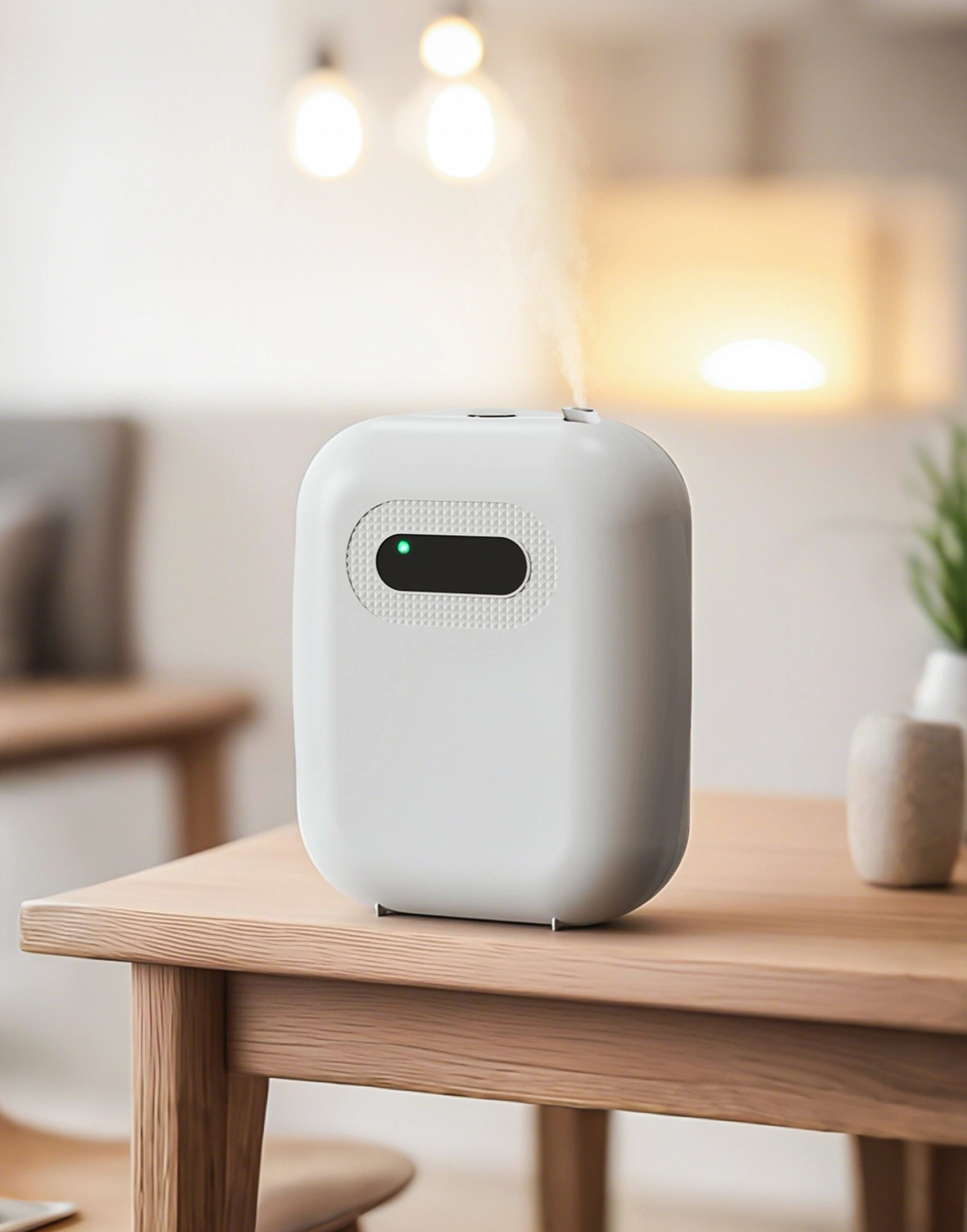
Western markets favor freshness and lightness. Citrus, aquatic, and green notes define luxury in retail and hospitality. The emphasis is on comfort, not statement. A Scandinavian boutique thrives on a fresh linen scent; an American spa prefers eucalyptus-mint. The diffusion system must be subtle. Our commercial scent oil diffuser with Bluetooth APP allows precise control of intensity, a feature I’ve found essential for these markets.
Southeast Asian Market Sensitivities
In countries like Japan and Singapore, subtlety is paramount. Strong florals or heavy woods can be perceived as intrusive. Green tea, bamboo, and yuzu are more welcome. The challenge is maintaining a recognizable brand signature when the scent profile is so light. We solve this by adjusting the top note brightness while retaining the same base accord, ensuring the brand DNA persists even in softer forms.
| Region | Preferred Scent Families | Key Considerations |
|---|---|---|
| Middle East | Oud, rose, amber, incense | High intensity, long throw, luxury opulence |
| Europe/North America | Citrus, aquatic, green, light floral | Freshness, comfort, subtle presence |
| Southeast Asia | Green tea, bamboo, yuzu, soft musk | Minimalism, harmony, discreet strength |
What Regulatory and Supply Chain Issues Affect Global Fragrance Programs?
When a fragrance crosses borders, it meets a maze of regulations. IFRA (International Fragrance Association) standards restrict certain ingredients based on safety. REACH (Registration, Evaluation, Authorisation and Restriction of Chemicals) in the EU adds another layer. A blend compliant in China may need reformulation for Germany. Without a partner that navigates these requirements, a brand can face shipment delays or product recalls. In our operations, we pre-screen all fragrance formulations against IFRA 51st Amendment and REACH requirements before production.
Supply chain consistency is another hidden obstacle. A fragrance oil that delivers reliably in a temperate warehouse might thicken or separate in tropical transit. We use accelerated stability testing to predict behavior. If a program spans air freight to Asia and sea freight to Europe, the oil must withstand both. Our experience serving 68 countries has taught us to build redundancy into logistics: stocking regional hubs, using climate-controlled containers, and maintaining backup supply for fast-moving scents.
If your program involves multiple regulatory environments, it is worth confirming your fragrance supplier’s compliance documentation coverage. Reach out at [email protected] to discuss your target markets.
 ## How Can You Build a Scalable Scent Program with a Manufacturer?
A scalable program requires a manufacturer that can deliver consistency across volume, geography, and time. That means the same oil formulation today and a year later, whether shipped to five locations or five hundred. We maintain strict batch records and keep reference samples for every production run, so if a customer expands into a new territory, the scent profile matches exactly.
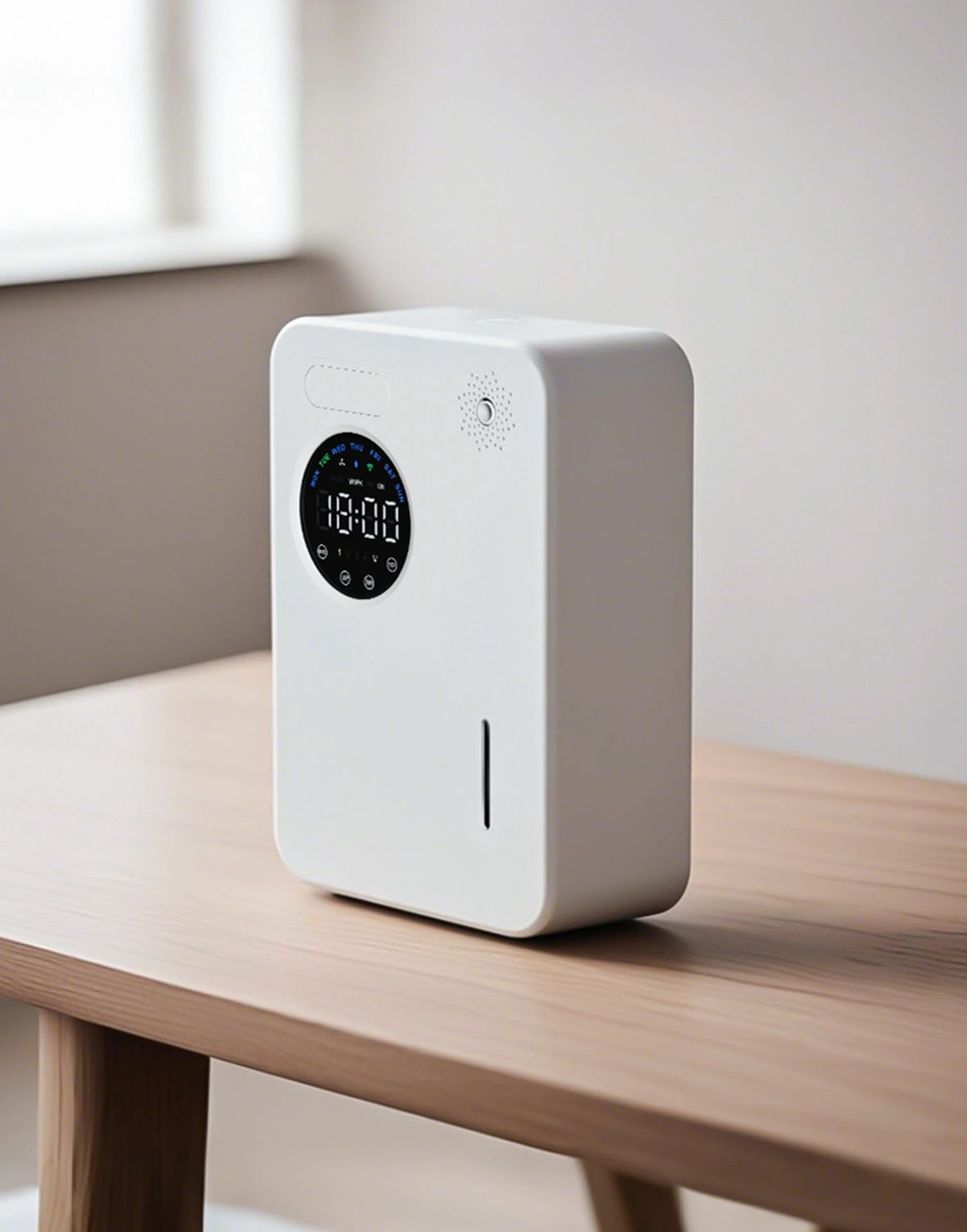
Equipment selection also plays a role. A retail boutique needs a compact diffuser, while a hotel lobby demands an HVAC-integrated system. Our product range covers both ends: from the Home Aroma Air Diffuser Scent Machine for small spaces to the Commercial HVAC Scent Diffuser for vast areas. Integration with building management systems allows remote control and scheduling across multiple sites, simplifying management for international brands.
 Choosing the right diffuser for each location is part of the scent program design. We map out square footage, ceiling height, and airflow before recommending a model. This upfront planning prevents under-scenting or over-concentration, both of which can undermine brand perception.
What Does Real-World Global Scenting Teach Us?
The biggest lesson from a decade of global scent deployment is that flexibility trumps uniformity. One luxury fashion brand we worked with insisted on a single fragrance worldwide. After a year, their Tokyo flagship reported that customers found the strong leather-amber note restrictive. We tweaked the formula for that market, softening the leather and adding green tea. Customer dwell time rose by 18% according to their internal survey. The brand kept its core identity but adapted.
Another insight: emotional connection cannot be prescribed. A scent that feels “luxurious” in Paris may feel “cold” in Rio. We always pilot a fragrance in a small subset of stores before full rollout, gathering feedback from local staff and customers. This iterative approach avoids expensive mistakes and builds buy-in from regional managers who appreciate being part of the process.
Moving from initial fragrance selection to full-scale deployment, the partnership with a scent solution provider becomes critical. They must understand not just fragrance chemistry, but also cultural nuance and operational logistics. A brand that invests in this partnership gains a scent identity that feels intentional and resonant everywhere.
Your Next Step Toward a Global Scent Identity
Selecting the best fragrances for international brands means more than picking notes; it means designing a coherent experience that shifts smoothly from market to market. A fragrance partner with deep cross-cultural experience and robust production logistics turns this complexity into a clear path. We work with brands every day to develop signature scent portfolios that respect regional preferences while reinforcing a single brand story. If you are exploring a global scent program, send your target market details and fragrance objectives to [email protected] or call +86 185 6557 5758, and we will help you map out a scalable strategy.
Questions Global Brands Often Ask About Fragrance Selection
How do I choose a fragrance that will work in all my target markets?
Start by identifying a base accord with broad cultural acceptance, such as citrus, white musk, or light wood. Then develop regional adaptations that layer local preferences onto that core. In practice, we create two or three variants of the same signature, all sharing a common heart note but with adjusted top and base notes to match regional tastes and regulatory limits.
What are the most common pitfalls when launching a fragrance across countries?
The biggest mistake is treating all markets identically. A scent that works in a warm Mediterranean climate may feel overwhelming in a humid Southeast Asian mall. Not reformulating for local regulations is another frequent trap. Pilot testing and regional feedback loops are invaluable. In our projects, we always validate in situ before full chain deployment.
Can I use the same scent in my hotel in Dubai and my store in Paris?
Technically yes, but effectiveness varies. Without adjustment, the scent may disappoint in one of the markets. We recommend a modular formula: a signature base that remains consistent, with a subtle regional twist that resonates with local expectations. This approach maintains brand cohesion while improving customer connection in each location.
How do I ensure consistent fragrance quality across continents?
Partner with a manufacturer that operates its own quality control lab and adheres to ISO standards. Batch-to-batch consistency checks, multi-point testing before shipment, and proper storage during transit are essential. Every production batch is accompanied by a certificate of analysis, so clients know exactly what they are getting in each country.
Is it more expensive to develop a custom fragrance for international use?
The cost is often justified by the improved guest experience and brand alignment. While custom development involves R&D investment, it can reduce long-term risk of mismatched scents and rework. We offer scalable development options, from existing scent libraries with minor tweaks to fully bespoke creations. If you have a defined budget, share your brief and we will propose cost-effective routes.
If you’re interested, check out these related articles: