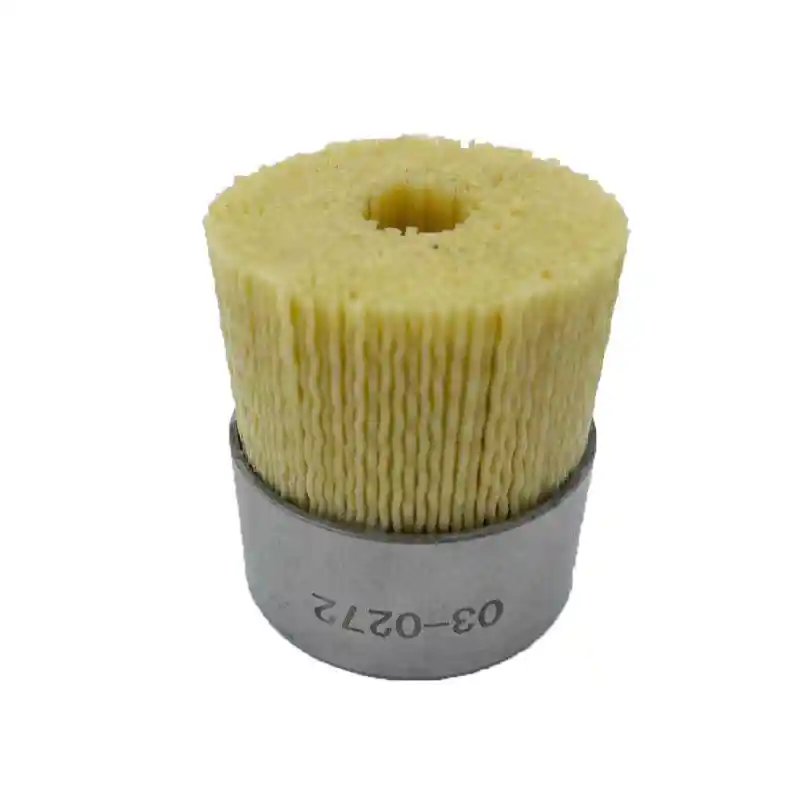

Abrasive impregnated nylon brushes have become a go-to solution in manufacturing environments where surface finish quality directly impacts product performance. These tools combine flexible nylon filaments with embedded abrasive particles, creating a self-renewing cutting action that maintains consistency throughout the brush’s working life. For operations dealing with deburring, polishing, or controlled material removal, selecting the right brush configuration makes a measurable difference in both cycle time and final part quality.
How Abrasive Impregnated Nylon Brush Technology Works
The fundamental principle behind abrasive impregnated nylon brush technology differs significantly from conventional surface finishing tools. Traditional brushes rely on surface-mounted abrasives or wire filaments that lose effectiveness as they wear. Abrasive nylon brushes take a different approach by distributing abrasive particles uniformly throughout each filament during the extrusion process.
This construction method creates a continuous self-sharpening mechanism. As the outer layer of each nylon filament wears during operation, fresh abrasive particles become exposed. The result is sustained cutting performance that remains consistent from the first use to the last. High filament density and uniform abrasive distribution across the brush face ensure repeatable results across production runs.
The flexible nature of nylon filaments allows them to conform to workpiece surfaces, including complex geometries and contoured edges. This conformability enables the embedded abrasive particles to maintain contact with the surface at a controlled angle, producing even material removal without the aggressive gouging that rigid abrasive tools can cause.
Selecting the Right Material and Grit Combination
The effectiveness of an abrasive impregnated nylon brush depends heavily on matching the filament material and abrasive type to the application. Nylon 6 and nylon 6.6 serve as the primary base materials, offering the balance of strength and flexibility needed for industrial surface finishing.
Abrasive selection follows the workpiece material and desired outcome. Silicon carbide provides the sharpest cutting action, making it well-suited for hard materials like cast iron and aggressive deburring tasks. Aluminum oxide offers durability and versatility for general-purpose work on steel, aluminum, and plastics. Ceramic abrasives deliver the highest material removal rates and longest life, particularly valuable for aerospace alloys and high-strength steels.
| Abrasive Type | Properties | Typical Applications |
|---|---|---|
| Silicon Carbide | Very sharp, hard, fast cutting | Heavy deburring, cast iron, non-ferrous metals |
| Aluminum Oxide | Tough, durable, good for general purpose | Steel, aluminum, plastics, composites |
| Ceramic | Extremely hard, long-lasting, aggressive cutting | Aerospace alloys, high-strength steels, heavy stock removal |
Grit size determines the surface finish quality. Coarse grits in the 60-120 range handle heavy deburring and stock removal. Medium grits between 180-320 work well for surface preparation and blending operations. Fine grits from 400-800 produce polished, aesthetically finished surfaces.
Performance Advantages Over Traditional Finishing Methods
Abrasive nylon brushes address several limitations inherent in conventional surface finishing tools. The non-loading characteristic stands out as a practical advantage. Unlike grinding wheels or coated abrasives that can clog with workpiece material, the flexible nylon filaments resist material buildup. This maintains cutting efficiency throughout the operation without requiring frequent cleaning or dressing.
The controlled cutting action produces consistent edge radiusing, which proves critical for components where burr removal affects function or safety. Flexible filaments follow surface contours without removing excess material from high points or missing low areas. This uniform conditioning prevents the dimensional changes that can occur with more aggressive finishing methods.
| Feature | Abrasive Nylon Brushes | Traditional Wire Brushes |
|---|---|---|
| Abrasive Action | Consistent, controlled, self-renewing | Aggressive, inconsistent, prone to dulling |
| Surface Finish | Uniform, smooth, precise | Can scratch, leave uneven patterns |
| Material Removal | Gentle to moderate, controlled | Aggressive, risk of over-removal |
| Safety | Non-sparking, lower risk of filament breakage | Can spark, higher risk of flying wires |
| Tool Life | Extended, consistent performance | Shorter, performance degrades rapidly |
| Conformability | High, adapts to contours | Lower, rigid filaments |
The non-sparking property of nylon filaments opens applications in environments where wire brush sparking creates hazards. Reduced filament breakage compared to wire brushes also improves workplace safety and reduces contamination of finished parts.
Selecting the Appropriate Brush Configuration
Brush geometry significantly influences performance for specific applications. The choice between disc brushes, wheel brushes, cylindrical brushes, and spiral configurations depends on workpiece geometry, access requirements, and the nature of the finishing task.
| Brush Type | Primary Uses | Best For |
|---|---|---|
| Disc Brush | Flat surfaces, deburring, surface conditioning | Large flat areas, automated systems |
| Wheel Brush | Edge blending, light deburring, polishing | Contours, edges, general purpose |
| Cylindrical Brush | Internal diameters, cleaning, surface preparation | Pipes, tubes, internal surfaces |
| Spiral Brush | Conveyor cleaning, heavy-duty scrubbing | Large-scale cleaning, aggressive action |
| Cup Brush | Large surface areas, rust removal, heavy cleaning | Rust, paint removal, aggressive cleaning |
Matching Brush Geometry to Workpiece Requirements
A deburring brush in disc form works effectively on flat machined surfaces where uniform edge treatment across the entire face is needed. The disc configuration provides consistent contact pressure across large areas, making it well-suited for automated systems processing sheet metal or plate components.
For internal surfaces, a cylindrical brush or tube cleaning brush reaches areas that disc or wheel configurations cannot access. These brushes conform to internal diameters while maintaining the abrasive action needed for effective surface conditioning.
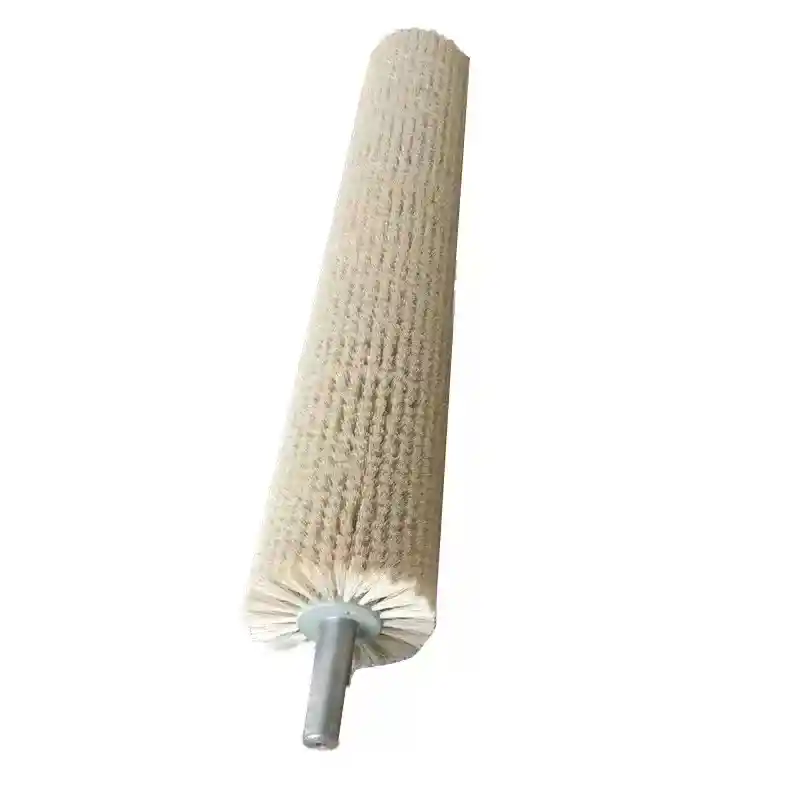
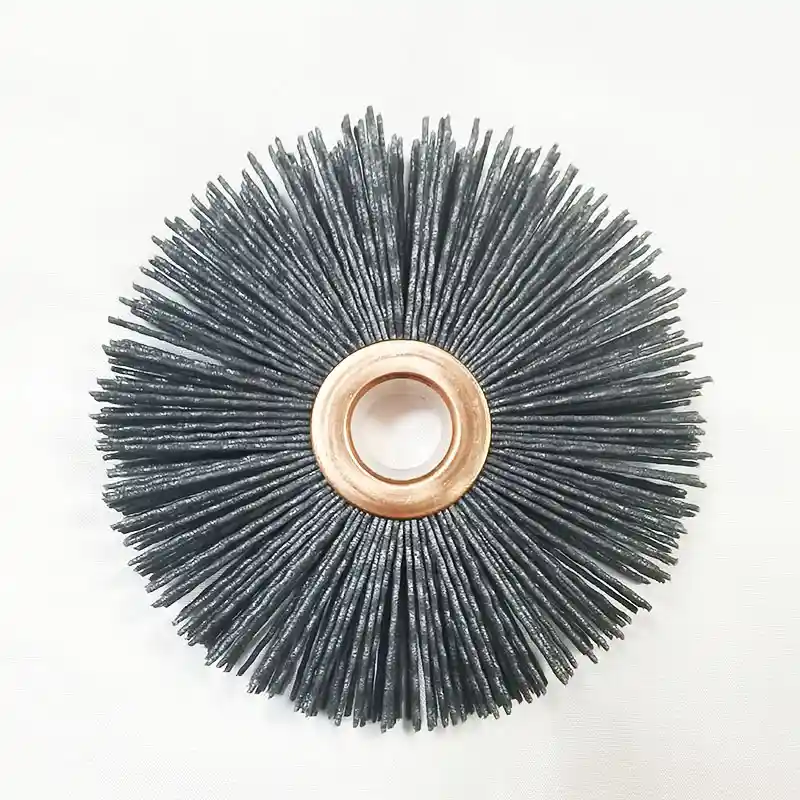
Wheel brushes handle edge work and contoured surfaces where the brush needs to follow varying profiles. Their radial filament orientation allows access to edges and corners that flat disc brushes would miss.
Integration with Automated and Manual Systems
Abrasive nylon brushes perform reliably in both automated and manual operations, though the selection criteria differ somewhat between these applications.
Robotic deburring and CNC-integrated finishing benefit from the predictable wear characteristics of abrasive nylon filaments. Automated systems can maintain consistent pressure and speed parameters, allowing the brush to deliver repeatable results with minimal operator intervention. The gradual, uniform wear pattern makes tool life predictable, simplifying maintenance scheduling.
Manual operations gain from the flexibility and controlled cutting action. Operators experience less fatigue compared to aggressive wire brushes, and the forgiving nature of nylon filaments reduces the risk of over-processing or damaging workpieces during hand-held finishing.
Industrial Applications Across Multiple Sectors
The versatility of abrasive impregnated nylon brush technology supports applications ranging from heavy industrial deburring to precision finishing of medical components.
Deburring and Edge Conditioning
Burr removal represents one of the most common applications for abrasive nylon brushes. Machining operations leave burrs on edges that can affect part function, create assembly problems, or pose handling hazards. The controlled cutting action of abrasive nylon filaments removes these burrs while creating a consistent edge radius.
Aerospace components often require specific edge break specifications to prevent stress concentrations. Abrasive nylon brushes achieve these controlled radii without the risk of over-blending that can occur with more aggressive methods. Gear teeth, machined housings, and precision components benefit from this predictable edge treatment.
Surface Preparation and Aesthetic Finishing
Beyond deburring, these brushes create specific surface textures for functional or aesthetic purposes. Satin finishes on stainless steel, matte textures on aluminum, and directional grain patterns all fall within the capability range of properly selected abrasive nylon brushes.
Surface preparation before coating or painting benefits from the consistent scratch pattern these brushes produce. The uniform surface profile improves coating adhesion compared to irregular patterns left by manual sanding or aggressive blasting.
Material Compatibility Guidelines
Selecting the appropriate abrasive type and grit for specific workpiece materials prevents surface damage and optimizes processing efficiency.
| Workpiece Material | Recommended Abrasive Type | Typical Grit Range |
|---|---|---|
| Steel, Cast Iron | Aluminum Oxide, Silicon Carbide | Coarse to Medium |
| Aluminum, Brass, Copper | Aluminum Oxide, Silicon Carbide | Medium to Fine |
| Plastics, Composites | Aluminum Oxide, Ceramic | Fine to Medium |
| Stainless Steel | Aluminum Oxide, Ceramic | Medium to Fine |
| Titanium, Aerospace Alloys | Ceramic, Silicon Carbide | Coarse to Medium |
Softer materials like aluminum and brass require attention to grit selection to avoid excessive material removal or surface smearing. Harder aerospace alloys benefit from ceramic abrasives that maintain their cutting edges longer under demanding conditions.
Maintenance Practices and Operational Safety
Proper handling extends the useful life of abrasive nylon brushes and maintains consistent performance. Regular cleaning removes accumulated debris from between filaments, preserving the cutting efficiency that can degrade when material builds up in the brush face.
Storage conditions affect brush longevity. Dry environments prevent moisture absorption that can affect nylon filament properties. Protecting brushes from physical damage during storage maintains filament integrity and ensures consistent performance when the brush returns to service.
Operating within recommended speed ranges prevents premature filament wear and maintains the controlled cutting action these brushes are designed to provide. Excessive pressure accelerates wear without proportionally improving material removal, making moderate, consistent pressure more effective than aggressive application.
Safety equipment including eye protection and dust collection addresses the airborne particles generated during surface finishing operations. Following established industrial safety protocols protects operators while maintaining the clean working environment that precision finishing requires.
Partner with Experienced Brush Manufacturing Specialists
Shanghai Huixi Trading Co., Ltd. provides customized abrasive nylon brush solutions backed by 16 years of manufacturing experience. Technical support teams work directly with clients to specify brush configurations, filament materials, and abrasive types matched to specific application requirements. ODM/OEM services accommodate unique industrial needs that standard catalog products cannot address.
Phone: +86 1580 0932 713
Email: [email protected]
Frequently Asked Questions About Abrasive Nylon Brushes
What makes abrasive impregnated nylon brushes superior to traditional wire brushes?
The primary advantage comes from the controlled, self-renewing cutting action. Wire brushes cut aggressively at first but dull quickly as wire tips wear and break. Abrasive nylon brushes maintain consistent performance because fresh abrasive particles continuously expose as the nylon wears. The flexible filaments also conform to surfaces without gouging, producing more uniform finishes. Non-sparking operation and reduced filament breakage improve safety in production environments.
Can abrasive nylon brushes be customized for unique industrial requirements?
Custom brush manufacturing addresses applications where standard configurations fall short. Specialized brush designs accommodate unique filament materials, abrasive types, grit combinations, and physical dimensions. Technical teams work through application requirements to develop brush specifications that match specific workpiece materials, geometries, and finish requirements.
How do I ensure the optimal lifespan and performance of my abrasive nylon brush?
Operating within recommended speed ranges and applying moderate, consistent pressure prevents premature wear. Regular cleaning removes debris buildup that can reduce cutting efficiency. Dry storage protects nylon filaments from moisture absorption. Monitoring wear patterns helps identify when brush replacement will maintain consistent results. Avoiding excessive force extends brush life without sacrificing finishing performance.
If you’re interested, check out these related articles:
advantage of hx boiler tube brush
wire wheel brush the right assistant for industrial cleaning and polishing
abrasive disc brush an excellent industrial surface treatment tool