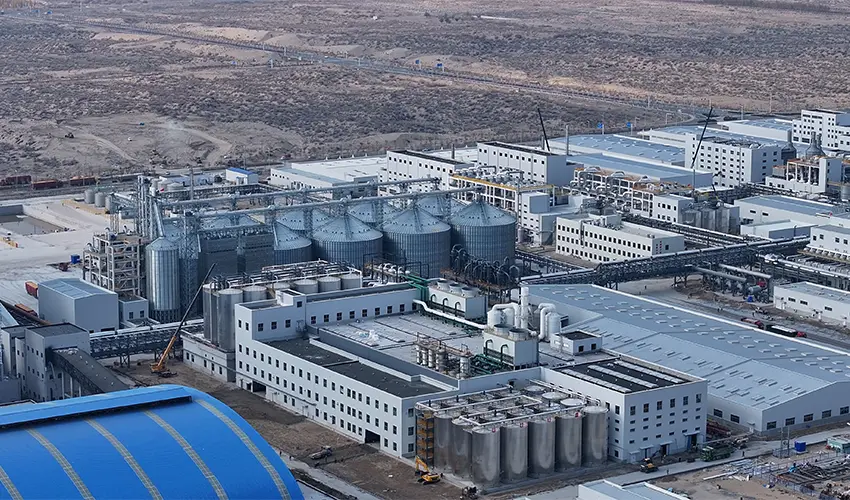

Finding an ethanol plant for sale can feel like searching for a missing puzzle piece in a complex agricultural landscape. Most listings present isolated equipment packages, but a turnkey corn alcohol production facility is fundamentally different when designed as an integrated node in a broader food-energy-feed system. I’ve seen too many projects where the fermentation column works beautifully, yet the grain supply chain fumbles and by-product revenue leaks. A plant that lacks coordination with upstream corn sourcing and downstream DDGS or CO2 markets will underperform regardless of how advanced the rectification columns are. This article examines how an integrated turnkey ethanol plant operates, what makes its economics tick, and why an agricultural chain partner is essential to turning that for-sale listing into a reliable profit centre.
An Integrated Turnkey Ethanol Plant Goes Far Beyond Equipment Sales
A genuine turnkey ethanol facility does not end at the last distillation column. It begins with corn receiving and ends with marketable co-products, woven into a system where grain storage, milling, liquefaction, saccharification, fermentation, distillation, dehydration, and by-product handling all interconnect. Without that integration, the plant becomes a collection of high-performance components that don’t talk to each other. With it, every process step feeds the next, and waste streams become revenue streams.
The table below contrasts a conventional equipment-supply approach with the integrated turnkey model we have delivered across global agricultural projects. The difference is structural, not cosmetic.
| Element | Standalone Equipment Supply | Integrated Turnkey Approach |
|---|---|---|
| Scope boundary | Stops at plant fence | Covers grain sourcing logistics, by-product off-take, and energy circle |
| Process integration | Unit operations handled by separate vendors | Single-point responsibility with unified control system |
| Circular economy | By-product handling optional | 100% by-product resource utilization built into design |
| Risk ownership | Divided across suppliers | One accountable project architect |
| Post-commissioning | Limited to individual equipment warranties | Agricultural chain continuity through feed, grain, and energy support |
This scope difference is not a marketing nuance. A corn ethanol plant sits inside a grain-deep-processing ecosystem, and the facility’s long-term viability depends on how well it connects to that ecosystem. Our team has designed alcohol plants where the same project also covered the grain depot, the DDGS dryer, and the biogas recovery system, allowing the client to manage corn procurement, feed sales, and energy under a single operational logic.
The Corn-to-Ethanol Pathway Shapes Your Plant’s Efficiency
The transformation of corn into anhydrous ethanol follows a sequence that has been refined over decades, but small decisions at each stage compound into large efficiency differences. The most common route for fuel ethanol is dry milling: corn is cleaned, ground into meal, slurried with water, and cooked to gelatinize the starch. Alpha-amylase enzymes break the starch into dextrins during liquefaction, then glucoamylase converts those dextrins to fermentable sugars in saccharification. Yeast ferments the sugars into a roughly 10-15% ethanol beer, which then enters a multi-column distillation system to reach 95-96% ethanol. Molecular sieve dehydration takes it the rest of the way to 99.5% anhydrous ethanol.
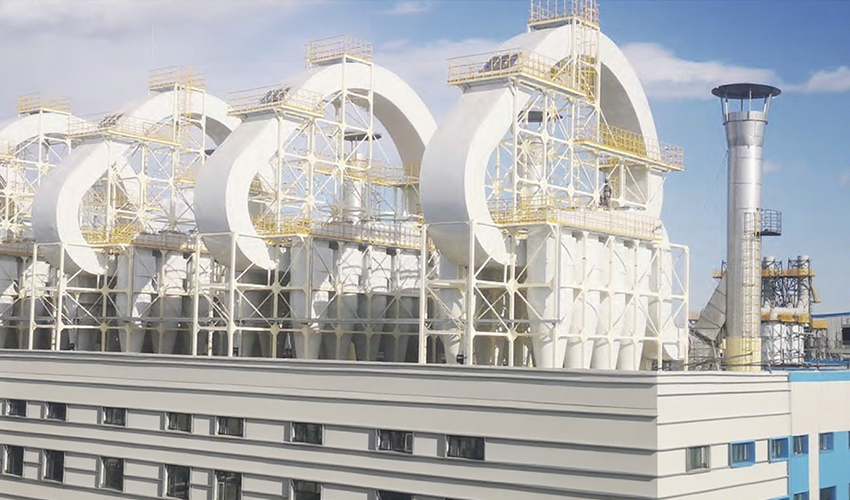
Each of these steps has levers that affect yield, energy consumption, and maintenance. Enzyme selection and dosage can swing conversion efficiency by several percentage points. Fermentation system design—continuous versus batch—directly impacts throughput stability and yeast viability. I’ve reviewed plant performance data where a poorly matched enzyme package cost hundreds of thousands of dollars in lost ethanol yield over a year, simply because the pre-treatment conditions didn’t match the raw corn characteristics.
The distillation section is another fork. The choice between tray columns and packed columns, the configuration of rectification and stripping sections, and the heat integration between them determine steam consumption per litre of ethanol. In grain processing plants we have engineered, heat cascade utilization reduced energy consumption by up to 25% compared to non-integrated designs. The same principle applies in alcohol production: configuring distillation, evaporation, and drying to share thermal streams in a declining temperature cascade cuts boiler load and operating cost permanently.
If your intended feedstock differs from standard dent corn, or if the grain supply chain involves multiple collection points with variable moisture and mycotoxin levels, the process design needs that built in from the start. Confirm enzyme compatibility, cleaning train capacity, and by-product quality management requirements before locking in a flowsheet. Our team can evaluate these against your regional conditions.
By-Products from Ethanol Production: Your Profit Engine
A corn ethanol plant does not just make alcohol. It produces distiller’s dried grains with solubles (DDGS), carbon dioxide, and potentially biogas from wastewater treatment. In an integrated facility, those streams are not by-products—they are co-products that can rival the ethanol stream in profit contribution.
DDGS is a high-protein animal feed ingredient. Its market value depends on protein content, fibre composition, and freedom from mycotoxins. That value starts in the corn cleaning section: damaged kernels or foreign material that slip through dilute the DDGS nutritional profile and reduce its selling price. I’ve observed that plants investing in robust rotary screens, magnetic separators, and aspirators at the front end consistently achieve higher DDGS prices in premium livestock feed markets.
CO2 from fermentation can be captured, scrubbed, compressed, and purified to food-grade or industrial specifications. The economics hinge on proximity to CO2 buyers and the cost of liquefaction and storage. For plants close to beverage or food processing clusters, CO2 sales can be a steady seven-figure annual revenue line. AGRIFAM alcohol solutions incorporate biogas comprehensive utilization, capturing methane from anaerobic wastewater treatment as boiler fuel, further displacing fossil energy.
When these three streams are designed into the plant from day one—not bolted on later—the facility becomes a corn-food-energy-feed closed loop. The circularity is not a sustainability slogan; it is a margin structure that protects the project during ethanol price dips. If your plant’s business model assumes a certain DDGS or CO2 offtake price, it is worth confirming those market linkages before finalising the processing configuration. Send us your intended capacity and location, and we will map the by-product revenue model against real regional benchmarks.
Capital Costs and ROI for an Ethanol Plant Depend on More Than Equipment Price
Investors often fixate on the headline equipment number when evaluating an ethanol plant for sale. That number hides three layers of cost that determine whether the project pays back or not: logistics infrastructure, integration penalties, and time-to-market.
A medium-scale plant processing approximately 100,000 tons of corn per year might involve a total capital outlay in the $50-$80 million range, but that bracket shifts dramatically with the cost of grain receiving terminals, silos, wastewater treatment, and steam generation. In my experience reviewing project budgets, the most frequently underestimated line item is the corn storage and handling system. Under-sizing silos or skimping on cleaning equipment leads to supply interruptions that cascade through fermentation and distillation, far more costly than the initial saving.
Integration penalties are the hidden friction of a multi-vendor approach. When the milling equipment, fermenters, and distillation columns come from different suppliers, the client bears the burden of making them work together. That means longer commissioning, finger-pointing during troubleshooting, and operating inefficiencies that erode the nameplate capacity. A single-source turnkey project eliminates that friction. AGRIFAM provides feasibility studies and full EPC delivery, compressing the timeline and guaranteeing that the entire chain functions as one system, from corn infeed to product dispatch.
The ROI math has another variable that goes beyond capital: energy integration. By cascading heat from distillation through evaporation and DDGS drying, a well-integrated plant can cut steam consumption significantly. That directly reduces the operating cost per bushel, which shifts the breakeven ethanol price downward and widens the margin cushion against market volatility. When you compare two similar-capacity plants, the one with full energy cascade and by-product integration will consistently outperform the one that treats each unit operation in isolation.
Why an Agricultural Chain Partner Eliminates Execution Risk in Your Ethanol Project
An ethanol plant is never an island. It depends on corn arriving at the right moisture, in the right volume, without price shocks that wipe out margins. It relies on a market for DDGS that may be hundreds of kilometres away. It generates wastewater that must meet discharge limits. Managing those external dependencies is where most projects stumble, not inside the fermenter.
This is where the difference between an alcohol process vendor and an agricultural chain integrator becomes concrete. AGRIFAM’s track record spans grain depots, feed mills, livestock ranches, and food processing plants in dozens of countries. That breadth means we understand what happens upstream and downstream of the ethanol plant because we have built those systems too. I’ve been involved in integrated projects from grain storage through food processing, and the most resilient ones are those where the EPC contractor also architects the larger agricultural circle—ensuring that corn procurement, DDGS offtake, and biogas use are not afterthoughts but design parameters from the feasibility stage.
When you evaluate an ethanol plant for sale, ask not just what happens inside the fence, but what happens to every kernel that enters it and every stream that leaves. An integrated partner answers that question with a working model, not a promise. Our team can walk you through that model based on your region, your feedstock, and your market ambitions.
Moving Forward with Your Ethanol Project
A turnkey ethanol plant represents a commitment that pays back over a decade or more, and the foundation of that return is built before the first concrete pour. Getting the system design right, locking in the by-product economics, and securing an agricultural chain partner who takes end-to-end responsibility transforms the investment from a speculative bet into a durable asset.
Whether you are comparing ethanol plants for sale or planning a greenfield facility, the next step is to translate your commercial goals into engineering specifications. Send your project brief—desired capacity, feedstock type, and location—to [email protected], or call 010-8591 2286. We will provide a preliminary configuration, timeline, and investment range tailored to your situation. No generic proposal, just a system built around your numbers.
Questions We Hear from Project Owners
How long does a turnkey ethanol plant take from signing to startup?
Typically, 18 to 24 months for a medium-scale facility, depending on permit timelines and site conditions. The critical path usually runs through long-lead equipment like distillation columns and molecular sieve units. A single-source EPC contractor can shorten that path by overlapping detailed engineering with procurement and avoiding inter-vendor coordination delays. Site mobilization, civil works, and commissioning then follow a tightly sequenced plan. We structure contracts with milestone payments linked to completion of each phase, so you maintain cash flow visibility throughout the build.
Is it a mistake to think only about fuel ethanol if the market shifts?
It depends on your regional offtake options. In several projects we have supported, the distillation and dehydration trains were designed with flexibility to divert a portion of the output to food-grade or medical-grade anhydrous ethanol when those specifications command higher margins. That requires additional purification steps—carbon treatment, ion exchange polishing—and separate storage tanks. Retrofitting later is far more costly. If your market research suggests a multi-grade opportunity, we recommend building that capability into the initial plant design rather than patching it in afterwards.
What environmental permits typically apply?
Air emissions (particulate from grain handling, boiler stack, CO2), wastewater discharge limits, and sometimes water abstraction rights. The DDGS dryer can be a major particulate source requiring baghouse filters. Biogas combustion may need flaring permits. The exact requirements are local, and we manage the environmental impact assessment (EIA) process as part of project delivery. In our experience, projects that involve local authorities early and transparently avoid the kind of mid-construction stoppages that kill ROI.
How does your after-sales support work once the plant is running?
We provide operator training during commissioning, a one-year warranty on installed equipment, and optional ongoing service agreements covering preventive maintenance, performance monitoring, and spare parts supply. In projects we have sustained over several years, we also help with grain procurement planning and DDGS offtake coordination because those are as central to profitability as the process itself. A plant is a living system, and we stay connected well beyond the handover.
Are fuel ethanol markets still viable with electric vehicles growing?
Short-term, yes. Bioethanol is mandated in gasoline blends across over 60 countries, and the heavy-duty transport, aviation, and chemical feedstock sectors will rely on liquids for decades. Long-term, the plant’s viability depends on its integration with the protein feed and CO2 markets, not just the fuel price. We have designed ethanol facilities where DDGS and CO2 together covered 40% or more of the annual operating cost, insulating the project from fuel-price cycles. Share your feedstock cost and regional fuel mandate details with us, and we will map the blended economics for your specific case.
If you’re interested, check out these related articles:
Driving Global Food Conservation Through Technological Innovation