A shipment of 500 diffusers lands in your warehouse. You unbox the first unit—the pump rattles, the mist output is uneven, and the fragrance throw barely reaches three feet. These are the moments that make a procurement manager’s stomach drop, and they are entirely avoidable. A quality control checklist for aroma diffuser orders turns ambiguous supplier trust into verifiable checks, and in my ten years of developing diffusers for 68 countries, I’ve seen it prevent more costly disappointments than any other single practice. This checklist is what our own team uses before shipping to luxury hotels, retail chains, and corporate offices—and it’s the baseline you should demand from your manufacturer.
What Quality Checks Must an Aroma Diffuser Pass Before Shipment?
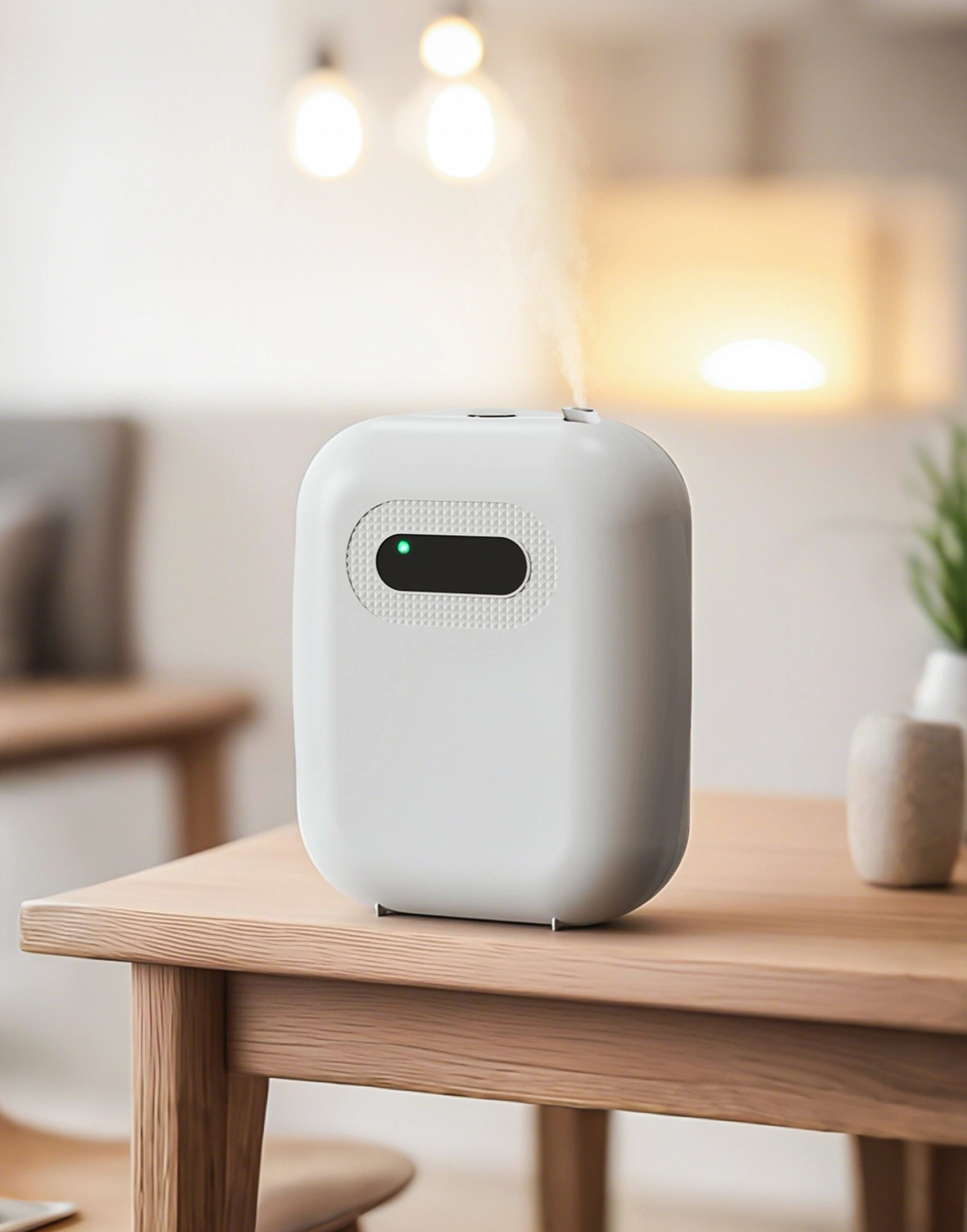
Every diffuser model has its own risk points, but all commercial-grade aroma machines sit on three pillars: atomization reliability, control consistency, and structural endurance. Testing these pillars before a container is sealed is not a nice-to-have—it’s the difference between a scent marketing program that runs for two years without a service call and one where end users unplug the device after six weeks.
For atomization, I pull a random sample from the production run—usually 10 to 20 units per hundred, depending on the model—and run each for at least four continuous hours at maximum output. The pump or nebulizer must maintain a steady, fine mist without sputtering, and the internal fan must not shift tone under heat build-up. On our commercial Bluetooth diffuser, for instance, we check that the DC12V pump runs 24/7 for 72 hours without a single beat interruption; anything less gets sent back to assembly for pump replacement.
Control consistency is the second pillar. A diffuser with touch buttons that sometimes ignore input, or a Bluetooth app that drops schedule sync at the third day, will frustrate hotel staff faster than a weak WiFi signal. Every unit in the sample goes through a trigger script: ten timed on/off cycles over an hour, then overnight schedule testing. If a single cycle fails, the entire batch is held until the firmware or touch hardware is corrected.
Structural endurance usually reveals itself in the seams. Diffusers that mount on a wall or ceiling—our track-mount models, for example—need to survive repeated contact without loosening housing screws or cracking near the anchor points. I test that by applying a 3kg lateral pull to the mounting bracket, which simulates a cleaning crew bumping the unit with a mop handle over a two-year contract. It sounds extreme, but I’ve received enough photos of dangling diffusers in hotel lobbies to know it’s a realistic simulation.
 ## How to Verify Material and Build Quality in Your Diffuser Orders
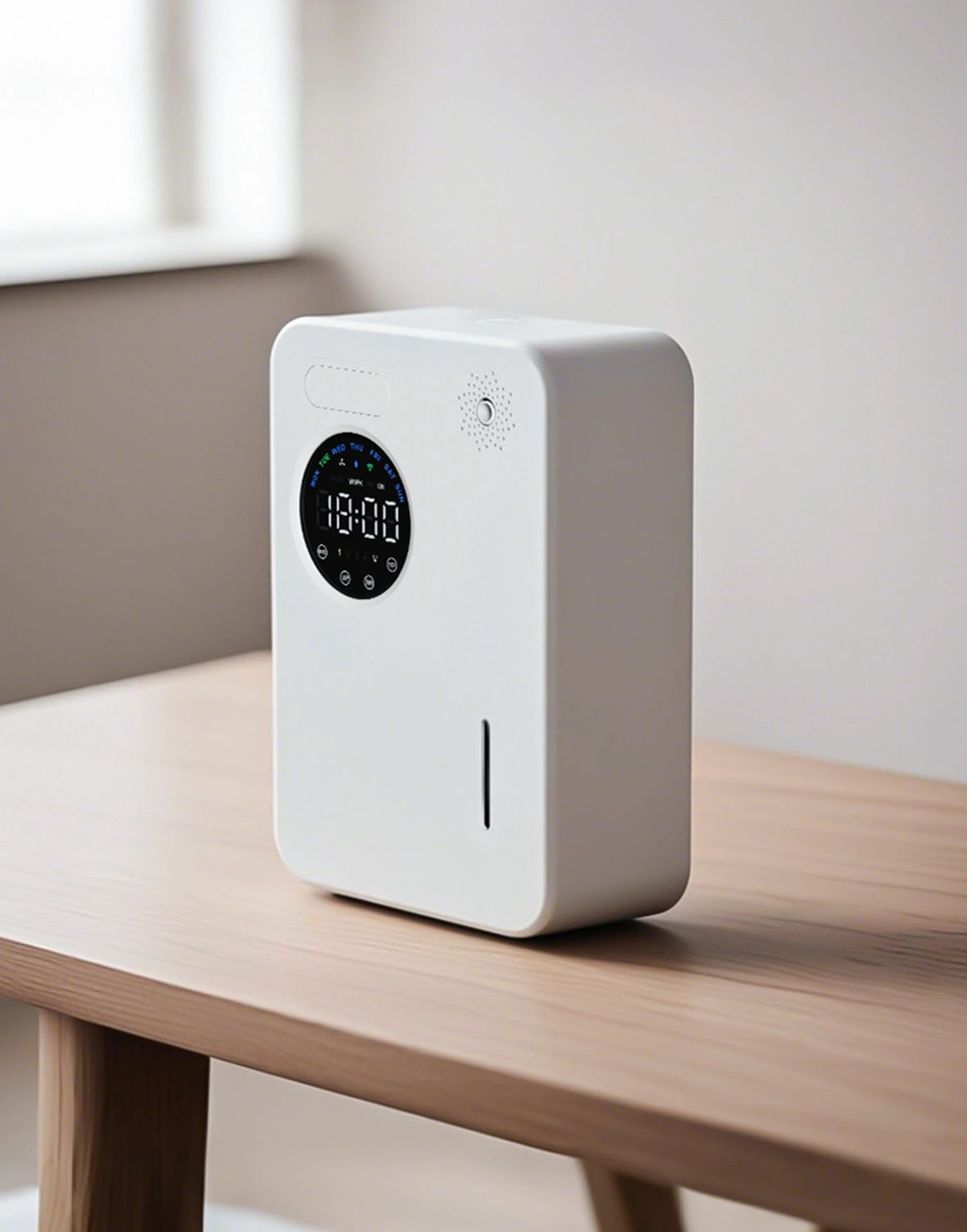
The visual and tactile feel of a diffuser tells a story that spec sheets cannot. Five years ago, a luxury spa chain rejected an entire shipment because the aluminum casing on their desktop models showed micro-scratches under gallery lighting—a finish defect that the supplier’s photographs conveniently hid. Since then, I’ve added a four-point material check to every pre-shipment protocol.
First, examine the coating adhesion. For aluminum alloy bodies, use a simple cross-hatch tape test: score a small grid into an inconspicuous area, press 3M 600 tape firmly, and pull. Any coating lifting off the metal is an instant fail. For plastic housings like those on our 150ml battery dispensers, I check mold parting lines with a fingernail—a rough edge means the tooling maintenance is overdue.
Second, open the unit and inspect wire management. A diffuser that looks sleek on the outside but has loose internal cabling rubbing against the circuit board will short within months. All wires should be clamped, heat-shrunk at connections, and routed away from hot components. I’ve rejected batches where the DC jack wire ran straight across the heating transistor, and I’d advise any buyer to add this to their checklist without exception.
Third, check the bottle and cap seal. Glass bottles need consistent wall thickness—a quick polariscope look reveals stress points—while HDPE and aluminum bottles should have a smooth thread engagement that doesn’t strip after ten unscrew-rescrew cycles. A bottle that cracks or leaks fragrance oil during air freight will ruin the entire carton, and nobody wants to explain that smell to a customs officer.
Finally, run a vibration test. Mount the diffuser on a vibration table at 25Hz for 30 minutes. Then listen for any new rattles inside. We found that a slight reverb in our HVAC diffuser’s fan housing only appeared after vibration—the fix was a $0.02 silicone gasket added before final assembly. Without that test, the rattle would have shown up three months into a bank’s corporate headquarters install.
If your program involves multiple installation environments—say, a mix of wall-mounted units for corridors and ceiling-mounted units for meeting rooms—confirm that each housing type has been tested against the specific stresses of its mounting position. Our engineering team can validate these tests for your order; reach out at [email protected].

Testing Fragrance Oil Compatibility and Scent Consistency
A diffuser is a scent delivery vehicle, and a beautiful machine that destroys the fragrance profile is a liability. Fragrance oils react with pump seals, atomizer nozzles, and bottle materials in ways that only reveal themselves after continuous contact. That’s why the next section of the checklist focuses on fluid dynamics, not just mechanical endurance.
I run each oil in the sample diffusers for 72 hours, then analyze the oil itself. A gas chromatography pass before and after the test tells me whether any lighter top notes have evaporated disproportionately, which would dull the scent experience. For example, citrus-dominant hotel lobby blends tend to lose their brightness if the diffuser’s internal temperature rises above 45°C—so we check the pump housing temperature at multiple points during the run.
The nozzle is the other silent culprit. Ultrasonic and nebulizing heads can develop micro-crystallization from heavy base oils containing vanillin or coumarin. I inspect the atomizer under a 10x loupe after a 24-hour burn, looking for any white residue build-up. If it’s present, the nozzle material isn’t compatible with that oil, and either the oil must be reformulated or the atomizer component changed. A buyer who skips this step will receive diffusers that start out fine and then slowly weaken over a two-week period, generating service calls from tenants who think the “scent machine is broken.”
Scent consistency across units is the final validation. I place three identical diffusers running the same oil in a closed 20m³ room and place trained noses (our fragrance designers) at four distance points after one hour of running. If the panel reports a variance greater than one point on a five-point intensity scale, the batch is sent for recalibration. A retail chain deploying 200 diffusers across a country cannot have one store smelling like a subtle floral and another getting overpowered by the same oil—uniformity is non-negotiable.
 ## Packaging and Labeling Requirements for International Orders
Even a perfectly built diffuser can arrive damaged or fail customs if packaging and labeling aren’t treated as quality control items. I consider the carton a component with its own spec sheet.
Drop testing is where packaging meets reality. I use ISTA 1A protocol: a 76cm free-fall drop on a corner, an edge, and a face. The fragrance oil bottle inside must not crack, the diffuser’s casing must not deform, and the packaging must not transfer impact to the product through insufficient cushioning. For our dual-system HVAC units, which weigh over eight kilograms packed, I add a vibration sequence that simulates a sea container’s 17Hz rumble over a six-week journey from Shenzhen to Hamburg.
Inside the carton, moisture is the silent killer. Every diffuser gets a silica gel pack, but that’s not enough for units with electronic boards. I recommend vacuum-sealing the diffuser itself in anti-static PE film if the destination has high humidity seasons. I learned this after losing 30 units in a shipment to Jakarta during monsoon season—corrosion on the PCB connectors turned the whole lot into e-waste.
Labeling is the customs gatekeeper. Every carton must carry: country of origin, net and gross weight, HS code (8509.80 for aroma diffusers), voltage and frequency, and the importer’s company details as they appear on the commercial invoice. For the European market, I add a CE mark directly on the product label, not just a sticker on the box, because some EU customs officials open cartons to verify. Missing CE on the product can delay clearance by weeks—I’ve had calls from frantic importers at 2 a.m. my time asking why their container is stuck at Rotterdam.
The checklist item I tell every buyer to demand: a packing list photo sent by the supplier before sealing the container. The photo shows the actual pallet with clear labels. It’s a simple step that resolves disputes before they become losses.
Supplier Documentation and Compliance Certificates
No physical inspection is complete without a paper trail, and the documentation set you receive before shipping tells you whether the supplier is organized or improvisational. I keep a standard document checklist for every PO.
The first mandatory document: a signed QC inspection report from the production run, linked to your specific order number. It must include the sample size tested, the tests performed (with pass/fail values), the acceptance criteria, and photographs of the actual units with serial numbers visible. A generic “passed inspection” stamp with no data is not a QC report—it’s a wish.
The second: a material compliance declaration for all plastic, metal, and electronic components in contact with fragrance oil. REACH compliance is the minimum for Europe; IFRA compliance is the fragrance standard. Our diffuser and oil product lines are tested against IFRA categories, and I recommend asking for the specific IFRA category sheet for the oil you’ve ordered. A diffuser that leaches plasticizer into the oil can alter the scent and create a skin irritant, which is a liability no brand can afford.
Electrical safety certification is third. For North America, the diffuser power supply must carry UL or ETL listing; for Europe, a CE-EMC and LVD test report; for Saudi Arabia, SASO. I’ve seen shipments re-exported at the buyer’s expense because the power brick was certified only for Chinese domestic use. The diffuser itself and the power supply are separate certification items—both need the marks.
The fourth document is the packing list with harmonized system codes and a certificate of origin. If you’re shipping under a free trade agreement, the certificate of origin must be issued by the local chamber of commerce, not printed by the manufacturer. I’ve watched a five-figure duty exemption evaporate over that distinction.
Building a documentation checklist before you place the order is the single most effective step a buyer can take. Share your target market and order specifications with us at [email protected], and we’ll help you compile the exact cert set your shipment needs.
Final Pre-Shipment Inspection Checklist
When the shipment is fully produced, packed, and waiting in the factory warehouse, a final walk-through inspection is the last chance to catch anomalies before they become customer complaints. I never skip this, even after all the in-process checks are signed off.
The checklist I use covers seven items:
1. Random carton opening: Select three cartons per hundred from different pallets. Open each, verify the product model matches the PO, the color finish matches the approved sample, and the accessory kit (power cord, mounting screws, user manual) is complete.
2. Functional spot test: Power on one unit from each opened carton. Run through a three-hour cycle while monitoring mist output, fan noise, and any error codes on the app. A single functional failure triggers a 10% increase in the sampling size for that batch.
3. Fragrance oil bottle seal check: Weigh three sealed fragrance bottles from the shipment, record, then weigh again after a 24-hour inverted stand. Any weight loss over 0.5g suggests a micro-leak.
4. Label read: Hold the product label at arm’s length. Can you read the model number, voltage, and country of origin clearly? If not, the font size is too small for end users.
5. Carton stacking integrity: Examine the bottom cartons on the pallet for compression creases. If the pallet was stacked three-high in the warehouse and the bottom cartons show deformation, the boxes aren’t strong enough for container transport.
6. Photo documentation: Photograph the opened cartons, the unit serial numbers, the pallet labels, and any defects. These photos are shared with the buyer before container sealing.
7. Glass bottle scratch check (for reed diffuser sets): Pull five glass bottles from random cartons, hold under a 500-lux light, and rotate. Any visible scratch longer than 5mm on the visible face means the entire glass batch needs inspection.
Once these seven items pass, I authorize the container loading. No shipment leaves the factory floor without a signed-off final inspection sheet bearing the order number and the inspector’s name. That sheet is the last document added to the shipping file—and the first document I’ll reference if there’s a problem at destination.

Common Questions from Aroma Diffuser Buyers
How do I handle a batch that passes factory QC but fails after arrival?
Start by photographing the failure evidence clearly—video of inconsistent mist, photos of cracks, screenshots of app errors. Then check your PI (proforma invoice) for the agreed inspection standard. If the items don’t match the pre-shipment QC report you received, you have a strong claim. In many cases, the root cause is shipping damage that was invisible at origin. That’s why I insist that every carton’s corner drop test and vibration test results are included in the QC file—when you can show the container condition exceeded the packaging design, you can shift the liability to the freight insurer.
What’s the difference between home-grade and commercial-grade diffuser QC?
Commercial diffusers must sustain far longer runtimes and higher fluid throughput, so the QC thresholds are stricter. A home unit may be sampled at 2% of the lot, while a commercial order for a hotel chain will be sampled at 10% or more, with each unit tested for 72 hours continuous run. Commercial pumps are rated for 8,000+ hours; home pumps may only be rated for 2,000. I’ve seen buyers try to save money by using home-grade units in a retail setting and then replace them all within a year. The cost of extra QC on commercial units is always cheaper than a full replacement program.
Can I use the same QC checklist for all diffuser types?
A common mistake is using a blanket checklist for nebulizers, ultrasonic, and HVAC diffusers. Each type adds unique failure modes: nebulizers clog with heavy oils, ultrasonic units are sensitive to water hardness if used with water-based oils, and HVAC systems need airflow calibration inside the duct. I create a model-specific appendix for each diffuser on the order. A good supplier will send you the engineering test specification for your model—request it before you sign the PO.
What certifications should I ask for if I’m selling in multiple regions?
The baseline is CE (Europe), FCC (North America), and RoHS for electronics. For fragrance oils, IFRA 51st Amendment compliance is the global standard. If you’re entering the Middle East, add SASO or ESMA. If you’re selling diffusers with lithium batteries, you’ll need UN38.3 test reports for air freight safety. I always advise buyers to send their target country list to the supplier early; the certification lead time can be four to six weeks, and discovering a missing cert after production is finished will delay your launch.
I’m new to importing aroma diffusers. Where should I start?
Begin with a small trial order of 20 to 50 units from the exact production line, not a hand-built sample. Run the full QC checklist on that batch yourself or hire a third-party inspection service. The lessons you learn on that small order will build the inspection spec for your volume order, and they’ll also tell you whether the supplier is proactive or reactive when issues arise. If you’d like a step-by-step walkthrough of what to ask for in a trial order, send your requirements and target market to [email protected], or call us at +86 185 6557 5758 to talk through your project.
If you’re interested, check out these related articles: