
The decision to source edible alcohol begins with a specification, but it should not end there. Neutral spirit for food and beverage production carries demands that go well beyond ethanol percentage—organoleptic neutrality, traceable feedstock lineage, and batch-to-batch consistency all depend on infrastructure that most buyers never see. In thirteen years of working across grain storage, deep processing, and integrated distillery projects, I have watched procurement teams treat edible alcohol as a commodity and then spend months resolving quality drift that a supplier audit would have flagged before the first tanker arrived. This article lays out what matters upstream: grain handling, distillation architecture, and the production chain depth that separates a dependable neutral spirit supplier from a transactional ethanol trader.
What Makes a Neutral Spirit Truly Food-Grade
Not all ethanol is safe to drink, and the distinction is not just a paperwork exercise. Food-grade neutral spirit—often traded as extra neutral alcohol (ENA) at 96% ABV minimum—must meet purity thresholds for methanol, aldehydes, fusel oils, and heavy metals that fuel-grade and industrial-grade ethanol do not. Typical ENA specifications call for methanol below 50 ppm, total aldehydes under 5 ppm, and fusel oil content low enough to leave no sensory trace in the final beverage. In China, the GB 31640-2016 standard governs edible alcohol; in the EU, Regulation (EC) No 110/2008 sets the frame. Buyers who skip the standard-versus-specification cross-check often discover that “food-grade” means different things in different jurisdictions.
The silent variable is organoleptic performance. A batch can pass every chemical threshold and still introduce a faint cereal note or solvent edge into a gin, vodka, or liqueur base. This is why distillation column design and reflux ratio matter as much as the final assay. I have seen producers running rectification columns with insufficient theoretical plates produce alcohol that meets the lab certificate but fails a sensory panel in the customer’s blending trial. When evaluating food-grade neutral spirit, ask your supplier for their plate count and reflux control strategy—not just the COA.
How Edible Alcohol Is Produced from Grain
Edible alcohol starts with grain—corn, wheat, or rice most commonly—and the quality management begins at intake, not at the fermenter. Grain cleaning, moisture control, and mycotoxin screening set the floor for everything downstream. After milling, starch is gelatinized and enzymatically liquefied before saccharification converts dextrins into fermentable sugars. Fermentation follows, typically with selected Saccharomyces cerevisiae strains run in continuous or fed-batch mode, producing a beer of 10–14% ABV depending on the grain and process configuration.
Distillation is where fuel ethanol and edible alcohol paths diverge most sharply. Both use multi-column systems—stripping, rectification, and often a hydroselection or extractive column—but food-grade production adds a polishing step that industrial fuel lines skip. The rectification column is run at higher reflux ratios to strip trace congeners, and the heart cut is narrower. Dehydration to 96%+ ABV uses molecular sieve adsorption in most modern plants, which avoids the azeotropic entrainer residues that older benzene or cyclohexane systems risked. For beverage alcohol, the sieve regeneration cycle and adsorbent bed life become quality-critical variables because any hydrocarbon carryover from regeneration is unacceptable.
Why Upstream Grain Processing Defines Alcohol Consistency
A distillery that buys commodity corn at spot prices and one that operates integrated grain storage and cleaning produce two different products even with identical distillation equipment. Grain moisture variation, broken kernel percentage, and foreign matter content shift starch availability and introduce fermentation variability that no downstream rectification can fully correct.
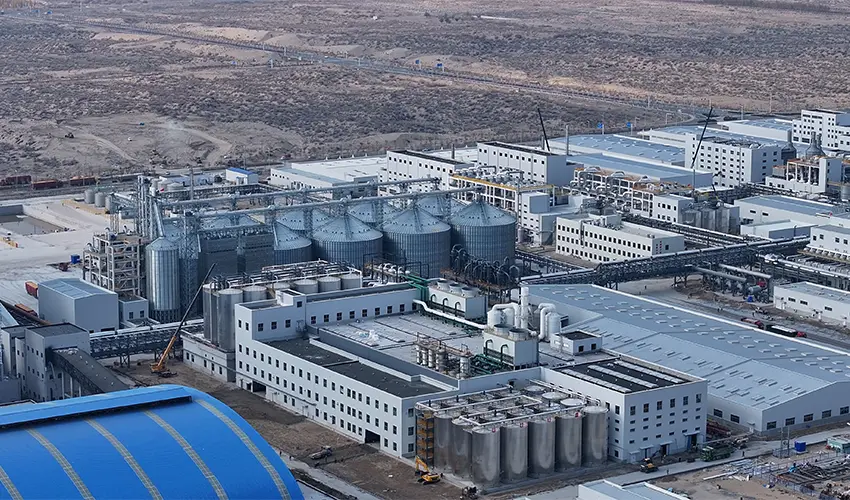
When I work on alcohol project planning, I look at the grain handling infrastructure before I look at the distillation columns. Facilities with their own silos, pre-cleaning lines, rotary screens, magnetic separators, and aspirators can hold incoming grain to a tighter specification envelope. This matters particularly for edible alcohol because residual grain contaminants—aflatoxin from improperly stored corn, pesticide traces from field-level treatments—can concentrate during fermentation and carry into the final spirit if the rectification is not designed for that load. A supplier who controls grain storage and cleaning is therefore controlling the single largest source of batch variability before fermentation even begins.

The deeper point: an edible alcohol supplier that is part of a wider grain deep processing operation has more degrees of freedom in feedstock selection. They can divert sub-grade grain to non-food alcohol streams and reserve the cleanest, lowest-mycotoxin lots for edible spirit production. Buyers who only see the final tanker are betting on the supplier’s goodwill; buyers who audit the grain yard know what they are actually getting.
What to Verify Before Committing to an Edible Alcohol Supplier
A certificate of analysis is a snapshot. A supplier qualification is the movie. Here is what I recommend procurement teams put on their checklist before signing a supply agreement for food-grade neutral spirit.
Feedstock traceability. Ask for documentation that traces each batch to a specific grain lot, harvest region, and intake date. Suppliers with integrated grain storage can provide this; traders who aggregate from multiple distilleries often cannot. Batch-level traceability is the single strongest signal that a supplier can stand behind their product.
Distillation system specification. Request the column configuration, theoretical plate count per column, reflux ratio operating range, and dehydration method. A rectification column with fewer than 60 plates will struggle to hit sub-5 ppm total aldehydes consistently. Molecular sieve dehydration requires evidence of regular adsorbent replacement or regeneration logs.
Process water quality. Edible alcohol production uses water in mashing, fermentation dilution, and column reflux. Water hardness, microbial load, and dissolved mineral content affect fermentation kinetics and can leave trace residues. Suppliers using closed-loop water systems with reverse osmosis treatment have a measurable quality advantage.
Sensory panel results. Not just the COA—ask for the internal sensory panel report for each batch. A supplier without a trained panel is relying entirely on chemical assays, which cannot detect interaction effects between trace impurities.
Third-party audit history. GMP, HACCP, or FSSC 22000 certification is the baseline. For export markets, confirm the certifying body is recognized by the destination regulator. A supplier who has passed an unannounced audit from a major beverage multinational has demonstrated capability that a paper certificate alone does not prove.
Common Questions About Neutral Spirit Supply
What is the difference between neutral spirit and ordinary ethanol?
Neutral spirit—also called extra neutral alcohol or ENA—is ethanol distilled to at least 96% ABV with sensory neutrality verified by both chemical assay and organoleptic testing. Ordinary industrial ethanol may meet the same ethanol concentration but carries higher congener levels and is not manufactured under food-grade GMP conditions. The two are different products built on different process standards, not the same product with different labels.
Can fuel ethanol plants produce food-grade alcohol?
Most cannot without significant capital modification. A fuel ethanol plant runs its rectification at lower reflux for energy efficiency and does not include the polishing steps required to remove trace organoleptic compounds. Converting a fuel plant to food-grade production typically requires adding a hydroselection column, upgrading process water systems, and re-qualifying all product-contact surfaces for food use. In programs I have been involved with, the retrofit cost often approaches 30–40% of the original distillation investment.
How should edible alcohol be stored after delivery?
Neutral spirit at 96% ABV is hygroscopic and will absorb moisture from ambient air, dropping the proof and potentially introducing airborne contaminants. Storage tanks should be sealed, nitrogen-blanketed where possible, and fabricated from 304 or 316 stainless steel. Carbon steel tanks, even with epoxy lining, risk iron pickup over extended storage that can discolor the spirit. Re-testing a retained sample after six months of storage reveals whether your storage conditions are preserving the original quality—something we recommend for any long-term supply arrangement.
What batch size should a first-time buyer request for trial?
One ISO tank container—roughly 25,000 liters—is the practical minimum for a meaningful production trial in beverage manufacturing. Lab samples confirm chemistry but tell you nothing about how the spirit performs in a full blending run or through your filtration system. Share your trial specifications and target beverage application with the supplier before ordering; the right supplier will adjust their rectification profile to match your sensory requirements rather than shipping off-the-shelf material.
If you’re interested, check out these related articles:
Driving Global Food Conservation Through Technological Innovation