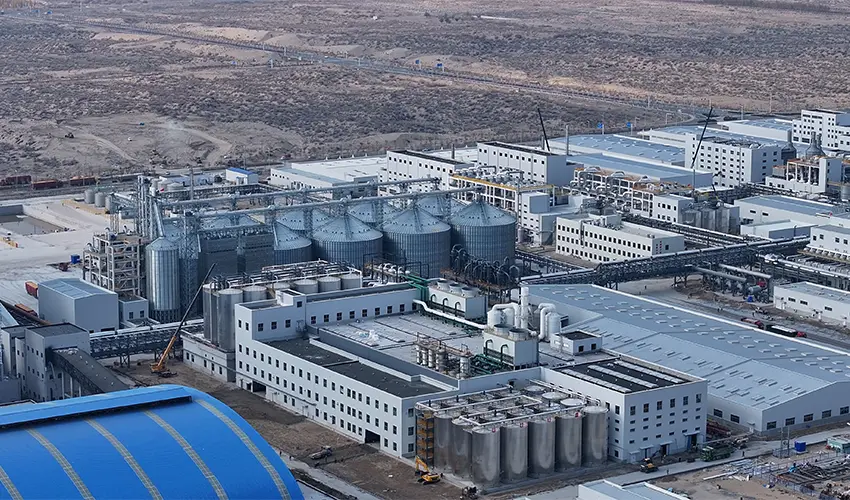

Sourcing medical alcohol for pharmaceutical or disinfectant production goes beyond verifying a GMP certificate. For procurement teams and brand owners, the real assurance lies in an integrated manufacturing model that controls quality from raw grain to the final sealed container. Medical alcohol OEM manufacturing demands more than clean-room filling lines; it requires full traceability, consistent purity meeting USP or EP standards, and a supply chain that does not falter when demand spikes. In this article, we examine what GMP-certified production capabilities look like in practice and how to evaluate OEM partners for long-term supply security.
An Integrated OEM Approach to Medical Alcohol Manufacturing
Procurement managers commonly encounter two supply models for medical alcohol. The first is a toll-blending operation: a GMP-certified facility purchases bulk ethanol from the open market, dilutes or denatures it, and fills it into branded packaging. The second is a fully integrated manufacturer that processes the raw agricultural material, distills and purifies the alcohol, and completes GMP filling under one roof. The difference in quality control and supply continuity between these two models is substantial.
When the production chain is fragmented, traceability becomes reliant on supplier declarations rather than direct process data. A manufacturer who mills corn, runs the fermentation and distillation, and then purifies the alcohol for medicinal use can maintain a single batch file from grain receipt to finished product release. That integration reduces the risk of contamination, simplifies root-cause analysis when a batch fails, and gives the OEM partner granular control over purity. In alcohol production projects we have planned, linking fermentation and distillation directly to final purification has proven to cut batch rejection rates and stabilize output during high-demand periods.
GMP Compliance as the Foundation of Medical Alcohol Production
GMP certification for medical alcohol is the entry ticket, not the differentiator. The foundation is built on a series of interconnected practices that must be verifiable during a site audit.
| GMP Element | What to Verify in an OEM Partner |
|---|---|
| Facility and environment | Clean-room classification, air handling, pressure differential, environmental monitoring logs |
| Documentation system | Batch production records, standard operating procedures, change control, deviation management |
| Raw material control | Incoming grain or alcohol testing, supplier qualification, traceability to field or source |
| Production process | Validated fermentation, distillation, and sterilization steps; critical parameter monitoring |
| Quality control laboratory | On-site HPLC or GC testing for purity, water content, residual solvents; method validated per USP/EP |
| Personnel training | Documented training on GMP, hygiene, and cross-contamination prevention |
Beyond the certificate, ask to see recent audit reports and a trend of batch purity data. A manufacturer that openly shares three years of batch release statistics is more credible than one that offers only a paper certificate. United States Pharmacopeia (USP) and European Pharmacopoeia (EP) standards specify ethanol purity typically at 94.9%–96.0% v/v for hand sanitizers and higher for injectable excipients, with tight limits on methanol, acetaldehyde, and benzene. The OEM partner’s laboratory capability to run these tests daily is often more telling than the certification on the wall.
From Corn to Clean Room: AGRIFAM’s Integrated Production Capabilities
AGRIFAM’s approach to medical alcohol production is built on decades of grain processing engineering. The integrated line consists of these connected stages:
- Corn receiving and cleaning – incoming grain passes through grain cleaners, rotary screens, and magnetic separators to remove foreign matter. Storage silos are monitored for temperature and humidity to prevent mold formation, which would introduce mycotoxin risk downstream.
- Milling and liquefaction – corn is ground to a specific particle size, then mixed with water and thermostable alpha-amylase to break down starch into shorter dextrins. This stage sets the viscosity and fermentable sugar potential.
- Saccharification and fermentation – after cooling, glucoamylase converts dextrins to glucose. Continuous fermentation with selected yeast strains produces ethanol, with real-time monitoring of pH, temperature, and sugar consumption.
- Distillation and rectification – multi-column distillation separates ethanol from water and fermentation by-products. AGRIFAM’s design uses energy cascade utilization, recovering heat from vapor streams to preheat incoming feed, reducing overall steam consumption by approximately 25%.
- Dehydration and final purification – rectified spirit at approximately 95% passes through a molecular sieve dehydration unit to produce anhydrous ethanol above 99.5%. For medical grade, additional polishing steps using activated carbon and fine filtration remove trace impurities to meet USP monographs.
- GMP packaging – the anhydrous alcohol is transferred into a certified clean area for filling into drums, IBCs, or bottles, with lot labeling that ties back to the original batch fermentation record.
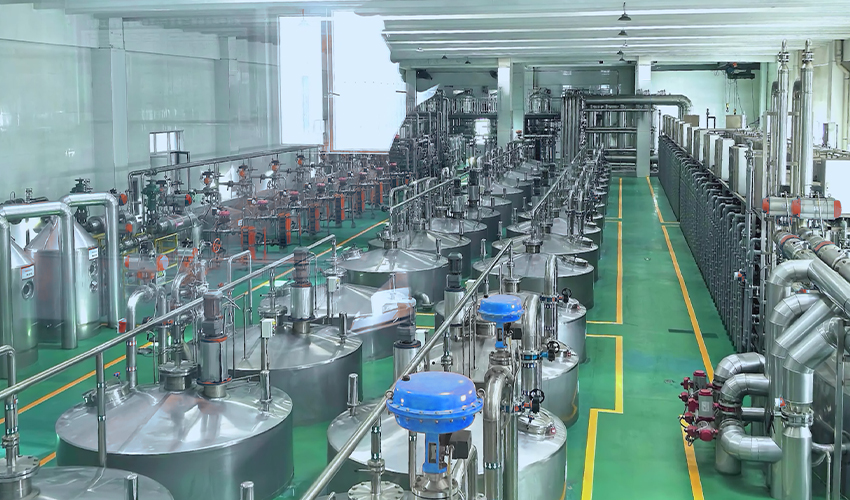
The entire sequence is managed through a digital platform that records critical process parameters continuously, creating an auditable data trail. This means that if a batch of medical alcohol needs to be traced back to the corn delivery number, the information is available in minutes, not days.
Co-Product Utilization and Sustainable Manufacturing
A full grain-to-medical-alcohol plant generates more than just ethanol. The co-products, when properly processed, turn the operation into a circular economy model that stabilizes production costs while meeting corporate sustainability targets.
After fermentation, the residual stillage is centrifuged to separate wet distillers grains, which are dried into DDGS (Distillers Dried Grains with Solubles) sold as high-protein animal feed. The carbon dioxide released during fermentation can be captured, purified, and liquefied for sale to food, beverage, or industrial gas markets. Wastewater with high organic load is routed to an anaerobic digester, producing biogas that can fuel the plant’s boiler or power generator, reducing external energy demand.

This integrated co-product revenue model directly benefits the OEM partner: a plant that earns income from DDGS and CO₂ can maintain competitive ethanol pricing even when raw corn prices fluctuate. For pharmaceutical and disinfectant brands, that translates into predictable contract pricing and supply stability. AGRIFAM’s closed-loop design embodies the “corn – food – energy – feed” concept, where nothing leaves the site as waste.
Selecting a Reliable Medical Alcohol OEM Partner
Not every GMP facility is structured for long-term OEM supply. When evaluating a partner, procurement teams should focus on five criteria:
- GMP audit transparency – does the manufacturer share recent regulatory audit outcomes and allow on-site visits?
- Integration depth – can the partner trace the alcohol back to raw material source, or is it blending purchased bulk ethanol?
- Documentation package – will you receive batch-specific certificates of analysis, records of cleaning validation, and change control notifications?
- Co-product management – does the plant have a functioning circular economy that offsets costs and reduces environmental risk?
- Technical support – can the partner assist with denaturing formulas, stability testing, or regulatory submissions in your target markets?
If your program involves injectable excipient-grade ethanol or requires ultra-low benzene specifications, it is worth confirming the manufacturer’s purification and analytical capabilities before finalizing a supply agreement. For organizations evaluating OEM partnerships for medical alcohol, AGRIFAM offers grain-to-final-product engineering and can supply corn-based anhydrous ethanol under GMP conditions. To discuss your purity, volume, or documentation requirements, share your specifications at [email protected] or call 010-8591 2286.
Common Questions About Medical Alcohol OEM Supply
What purity levels are required for pharmaceutical alcohol?
Pharmaceutical ethanol must meet monographs in USP, EP, or JP. Typically, the strength is not less than 94.9% v/v for sanitizer grade, while anhydrous ethanol for injectable excipients exceeds 99.5% with stringent limits on methanol (≤200 ppm), acetaldehyde (≤10 ppm), and benzene (≤2 ppm). The exact requirements depend on the finished drug product and the regulatory jurisdiction. A competent OEM manufacturer maintains a full specification sheet for each batch and can supply the certificate of analysis without delay.
Can a fuel ethanol plant be repurposed for medical alcohol production?
It is possible but requires substantial investment in clean-in-place systems, GMP-compliant building finishes, environmental monitoring, and additional purification steps. The distillation and dehydration sections are similar, but the front-end grain handling and the back-end packaging must be upgraded to prevent cross-contamination. In programs we have supported, the more practical path is designing a new facility that serves both grades from the start, with segregated filling areas, rather than retrofitting an older fuel plant.
How long does an OEM qualification process take?
Qualification typically spans three to six months, assuming the manufacturer already holds current GMP certification. The timeline includes a site audit, review of the quality management system, evaluation of batch history, and possibly a trial production run. If the OEM partner must also obtain a new certification for a specific market, add the regulatory review period for the relevant authority. Sharing your target product specifications early helps both sides identify any gaps before the formal qualification begins.
If you’re interested, check out these related articles:
Driving Global Food Conservation Through Technological Innovation
