
Selecting an anhydrous ethanol manufacturer that can meet custom industrial specifications is far more complex than ordering off‑the‑shelf fuel ethanol. Industrial applications—from pharmaceutical solvents to electronic cleaning agents—demand precise purity, consistent quality, and often tailored production parameters. While many bioethanol plants are designed around fuel‑grade output, custom‑grade anhydrous ethanol requires refined distillation and dehydration processes that not every manufacturer can economically reconfigure. This guide draws on direct project experience in designing and commissioning grain‑based alcohol plants to help procurement teams evaluate the technical and operational capabilities that separate a generic supplier from a true custom‑specification partner.
What Makes Anhydrous Ethanol Suitable for Industrial Applications
Anhydrous ethanol, by definition, contains at least 99.5% ethanol by volume, with the remaining fraction being water. Achieving that purity requires energy‑intensive dehydration, almost always through molecular sieve adsorption or pressure swing adsorption (PSA) following multi‑column distillation. Fuel‑grade anhydrous ethanol, the dominant global product, is typically denatured with gasoline‑range hydrocarbons to make it undrinkable and is sold under ASTM D4806 or EN 15376 specifications. Industrial users, however, frequently need non‑denatured, ultra‑dry ethanol with residual water below 0.1% and tight limits on impurities like methanol, aldehydes, and fusel oils. Pharmaceutical and electronic grades demand sub‑ppm metal content and particle control that fuel plants never address. The production line must be designed from the start—or rigorously retrofitted—to hit these tighter targets, which is why the manufacturer’s engineering depth matters as much as the quality of the distillation equipment itself.
How to Evaluate a Manufacturer’s Technical Capabilities
A manufacturer’s ability to produce custom anhydrous ethanol starts with its process hardware and quality infrastructure. The distillation train should include a rectification column capable of producing 95–96% azeotropic ethanol, followed by a molecular sieve dehydration unit with at least two adsorbent beds for continuous operation. Beyond the core equipment, look for integrated rectification‑polishing columns, online gas chromatography for real‑time purity verification, and Karl Fischer titration for moisture at the parts‑per‑million level.
| Grade | Ethanol Purity (min) | Key Impurity Limits | Typical Industrial Use |
|---|---|---|---|
| Fuel (ASTM D4806) | 92.1% (denatured) | Methanol <0.5%, Water <1% | Gasoline blending |
| Industrial | 99.5% | Acetaldehyde <10 ppm, Fusel oil <1 ppm | Solvents, chemical synthesis |
| Pharmaceutical (EP/USP) | 99.5% | Methanol <200 ppm, Heavy metals <0.1 ppm | Excipient, extraction solvent |
| Electronic VLSI | 99.9% | Metals <1 ppb, Particles >0.5 μm <25/mL | Wafer cleaning, semiconductor |
A manufacturer worth considering maintains in‑house testing capability for these parameters and can provide batch‑specific certificates of analysis. In our plant designs, we require that every distillation column have sampling ports at multiple tray levels, allowing operators to divert side‑stream fractions when purity deviates from the target. That degree of process control is a meaningful indicator of whether a plant is set up for custom work or only for bulk fuel production.
Customizing the Production Line for Your Industrial Specs
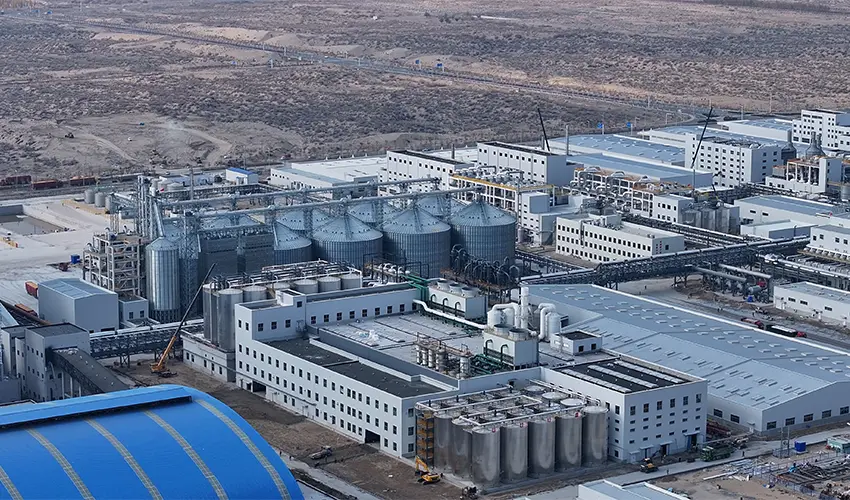
Producing anhydrous ethanol to a unique industrial specification is rarely a simple tweak; it is a deliberate re‑engineering of the production chain. The feedstock itself—corn, wheat, or cassava—affects the protein and oil residue carried into fermentation, and therefore the downstream purification load. We have found that custom lines benefit from dedicated corn‑purification steps (rotary screens, magnetic separators, aspirators) upstream of wet milling, even when the same plant could skip those for fuel‑grade output. Enzyme selection during liquefaction and saccharification also shifts the sugar profile, influencing yeast performance and by‑product formation.
The critical customization happens in the distillation‑dehydration interface. For pharmaceutical or electronic grades, a second rectifier or a polishing column after the molecular sieve unit strips out trace volatiles that a standard fuel plant would leave in. In one integrated project we commissioned in northern China, the client required two distinct product streams—fuel ethanol for the local blending market and reagent‑grade ethanol for export—from the same corn feedstock. We solved this by installing a parallel molecular sieve skid with a dedicated condensation and storage loop, coupled with a clean‑in‑place (CIP) system that automated the changeover between grades. The result was two marketable streams with less than 0.5% cross‑contamination risk, verified by inline GC.
Energy consumption also shifts when purity rises. Producing 99.9% anhydrous ethanol can increase steam demand by 10–15% over fuel‑grade production, so the manufacturer must demonstrate how it integrates waste heat recovery and energy cascade techniques to keep operating costs manageable. 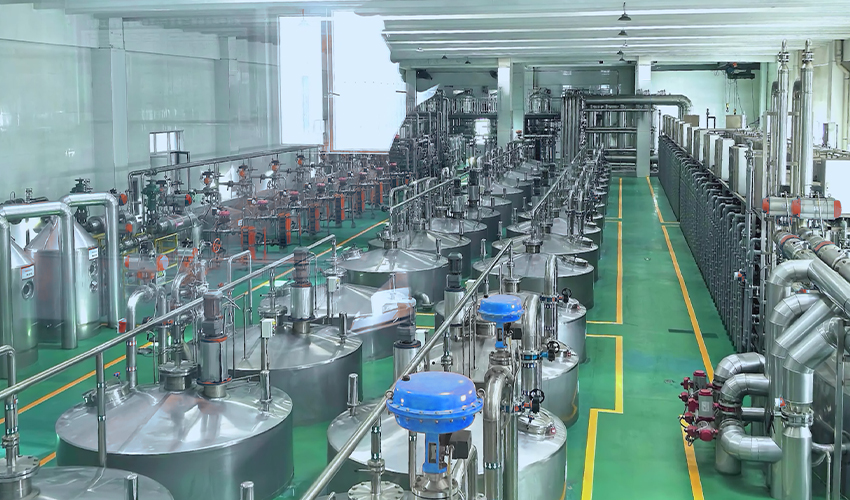
Integrated EPC and Supply Chain Assurance
When anhydrous ethanol is needed to a custom specification, choosing a turnkey engineering, procurement, and construction (EPC) partner with control over the entire value chain—from grain storage to product dispatch—reduces the quality variability that plagues project‑by‑project assembly. Our approach begins with on‑site grain storage silos that monitor temperature and humidity, preventing mycotoxin development that could later foul distillation columns. The corn starch processing line that feeds the alcohol plant uses a closed‑loop water system, conserving resources while keeping the fermentable starch stream consistent.
The value of integration extends to by‑product utilization. A custom anhydrous ethanol line will still produce DDGS, carbon dioxide, and potentially biogas. An integrated EPC partner designs the plant so that CO₂ recovery and biogas capture are part of the original layout, not expensive retrofits. For a project targeting pharmaceutical‑grade ethanol, the revenue from food‑grade liquid CO₂ (recovered from fermentation) can offset the higher purification cost. This kind of circular‑economy design requires the manufacturer to think in systems, not just in isolated unit operations.
On the supply side, a partner with deep grain sourcing and processing knowledge can align corn or wheat specifications with the ethanol plant’s purification strategy, reducing the impurity load before it ever reaches fermentation. That upstream consistency is difficult to achieve when the ethanol manufacturer is separate from the feedstock handler.
Partnering for Custom Anhydrous Ethanol Projects
Securing a long‑term supply of custom anhydrous ethanol means more than qualifying a product sample; it means qualifying the production system. In our experience, the most successful industrial supply arrangements begin with a technical audit: a joint review of the proposed process flow diagram, purity targets, by‑product handling, and quality control plan. That audit should confirm that the manufacturer can actually sustain the specification across seasons, feedstock batches, and production rates.
We bring fifteen years of grain‑based alcohol EPC experience to each custom project, integrating grain storage, starch processing, alcohol distillation, molecular sieve dehydration, and by‑product valorization under one technical team. Whether you need reagent‑grade ethanol for laboratory use, pharmaceutical‑grade alcohol under GMP, or electronic‑grade anhydrous ethanol with sub‑ppb metal limits, the plant is designed around your specification, not adapted from a commodity fuel line.
Discuss your specifications and target capacity with our engineering team. Send your product requirements, intended application, and volume expectations to [email protected], or call 010‑8591 2286 to arrange a technical consultation.
Common Questions About Sourcing Custom Anhydrous Ethanol
What purity level can a grain‑based plant realistically achieve?
A well‑designed plant with polishing columns and molecular sieve dehydration can reliably deliver 99.9% anhydrous ethanol with methanol below 50 ppm and acetaldehyde below 5 ppm. For electronic‑grade requirements below 99.99%, additional ion‑exchange polishing and particulate filtration are needed; not every EPC contractor has that capability, so confirm it early.
Can the same production line supply both fuel and industrial grades?
Yes, with modular skid design. By adding a parallel dehydration train and dedicated storage for high‑purity product, the plant can switch between grades with less than half a percent cross‑contamination risk. The capital cost increase is typically 15–20% over a single‑product line, but it opens a much more diversified market.
How long does it take from concept to first delivery for a custom ethanol plant?
For a full EPC project from ground‑breaking to mechanical completion, 18–24 months is realistic. Adding the commissioning and grade‑specific performance testing, the first on‑spec product typically ships 20–26 months after the contract is signed.
What makes a custom anhydrous ethanol project economically viable?
The economics work when the premium for non‑fuel ethanol covers the additional purification cost. In a project that also monetizes food‑grade CO₂ and DDGS, the incremental investment for high‑purity ethanol can pay back in under three years. We help clients build a full cost model during the feasibility stage to confirm the business case before committing capital. Share your target purity and capacity, and we’ll provide a preliminary technical and financial feasibility assessment.
If you’re interested, check out these related articles:
Driving Global Food Conservation Through Technological Innovation