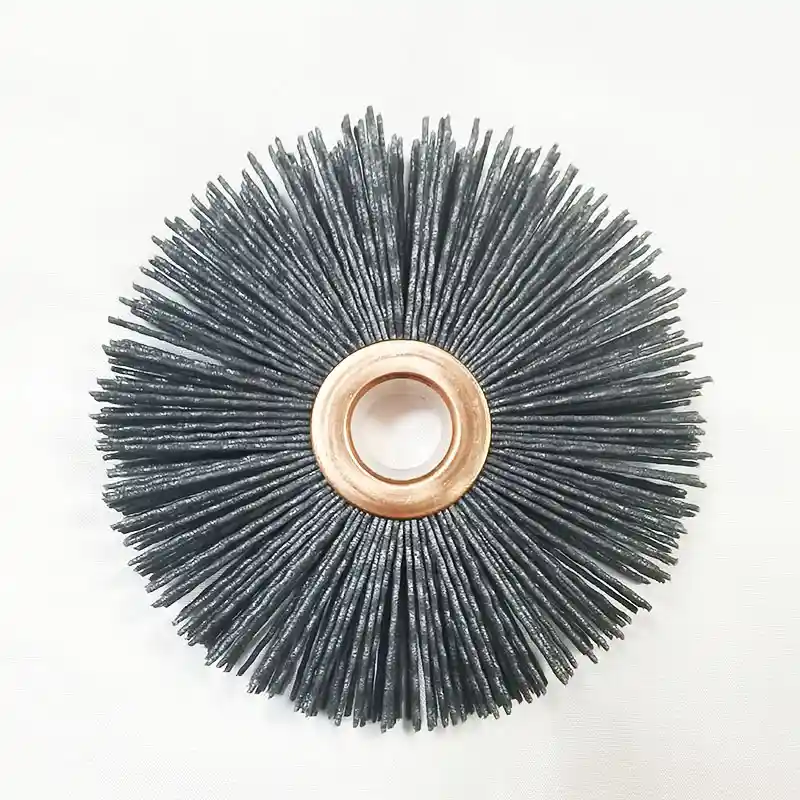

Manufacturing engineers and maintenance teams frequently face the same frustration: a standard wheel brush that vibrates, sheds bristles, or leaves uneven results, slowing down production and forcing rework. A stem-mounted wheel brush can solve that if you pick one engineered for the job, not just any off-the-shelf option. This article gives you the practical criteria we’ve developed over 15 years producing custom industrial brushes for clients on four continents, so you can specify the right stem-mounted wheel brush and get consistent polishing and cleaning in your process.
What a Stem-Mounted Wheel Brush Actually Does
A stem-mounted wheel brush has a central arbor hole built around a reinforced stem, letting it mount directly onto a rotary tool spindle. That’s a different configuration from a conventional wheel brush that uses an un‑reinforced center, and the difference matters in high-speed polishing and cleaning.
In practice, we see stem-mounted designs used most often where operators need quick changeover or where side loads are significant: deburring machined edges, removing light rust, cleaning weld beads before coating, or giving a final surface finish on metal parts. Because the stem provides a rigid, balanced anchor point, the brush tracks truer at speed, reducing wobble and uneven wear.
The stem itself isn’t just for mounting. Its dimensions, material, and how it’s fixed to the brush body determine whether you’ll get a smooth polish or a chattering, lopsided one. I’ll come back to that.
Choosing Filament Types for the Polish or Clean You Need
Filament material is the first variable most shops think about, and for good reason: it directly sets the aggressiveness, scratch pattern, and service life. The common options and where each fits best:
| Filament Type | Aggressiveness | Best For | Typical Workpiece Materials |
|---|---|---|---|
| Crimped steel wire | Medium | Rust removal, light deburring | Steel, cast iron |
| Knotted wire | High | Heavy weld slag, thick scale | Structural steel, weldments |
| Nylon with abrasive grain | Low to medium | Fine polishing, surface blending | Aluminum, stainless, non‑ferrous |
| Brass‑coated steel wire | Low | Cleaning soft metals without scratching | Copper, brass, aluminum |
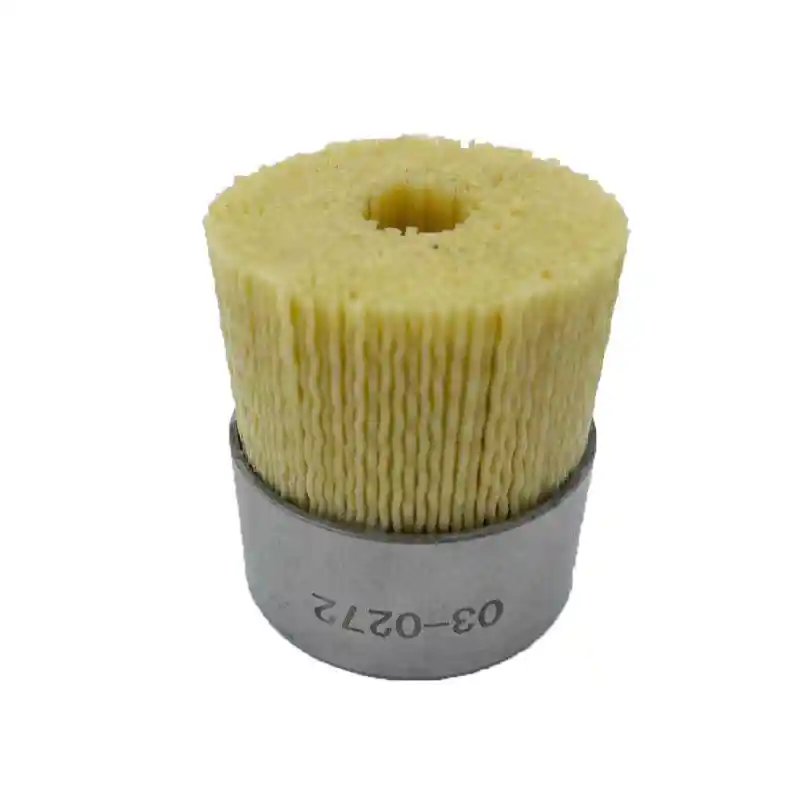
For a polishing step on stainless steel, we often steer clients toward abrasive nylon filament with the right grit size because it won’t embed ferrous particles that could later corrode. For cleaning mill scale from hot‑rolled steel before painting, knotted wire gives the stock removal rate the line speed demands.
One thing you won’t see in the chart is how filament wears at the stem‑anchored edge. If the brush isn’t balanced, some filaments will bend earlier than others, creating an uneven cutting face, and the brush will effectively “walk” across your part instead of staying planted. That brings us to the part of stem‑mounted brushes that separates the reliable from the regrettable.
Why Stem Quality and Balance Control Your Finish Consistency
I’ve spent a lot of shop time diagnosing surface finish complaints that turned out not to be an abrasive or feed rate problem, but a brush stem that was either out of concentricity or too soft for the RPM. The failure looks like this: the finishing operator gets streaks or scorching in random spots, checks the spindle RPM, checks the part fixture, maybe adjusts the coolant, and the problem doesn’t go away. A dial indicator on the brush rim shows runout beyond 0.2 mm, often because the stem itself was machined slightly off‑center or the arbor hole was drilled oversize.
A properly made stem does three things:
1. It centers the brush body so every filament row sees the same radial load.
2. It resists deformation under side pressure, keeping the brush diameter stable.
3. It minimizes vibration that transfers up into the tool bearing.
When we design a stem‑mounted brush for a customer’s application, we look at the mounting spindle diameter, the free length of the stem, the brush OD, and the target RPM. Those four numbers determine the minimum stem diameter and the material grade needed. If you just buy a stock brush with a generic stem, you’re gambling that those numbers happen to line up.
That’s not a small gamble when you’re polishing several thousand parts a shift. Balance goes out, filament wear accelerates, and you end up swapping brushes three times more often without knowing why.
When a Customized Stem‑Mounted Brush Makes More Sense
There are plenty of standard‑size stem‑mounted wheel brushes on the market, and if your operation only needs rust removal on structural steel at moderate speeds, a standard brush can work fine. The moment you have a tight tolerance on surface roughness, a specific mounting interface, a short cycle time, or a workpiece geometry that makes consistent contact difficult, a customized brush usually pays back the extra tooling cost within the first production run.
Here are the specifications I typically discuss with an OEM buyer or a process engineer when we’re developing a custom stem‑mounted brush:
- Stem length and diameter: must match the spindle depth and the clearance to the workpiece.
- Arbor hole tolerance: a light press fit or a precise slip fit? The difference affects runout and how you mount the brush.
- Filament density and trim length: more filaments give you a longer‑lasting brush, but you need enough chip clearance.
- Max safe RPM rating: should be stamped on the brush, not just a catalog number.
We’ve worked on projects where changing the stem material from mild steel to hardened alloy steel extended brush life by 60% in a deburring cell, simply because the stiffer stem kept the filaments from “fanning” at operating speed. That’s not something a catalog description will spell out.
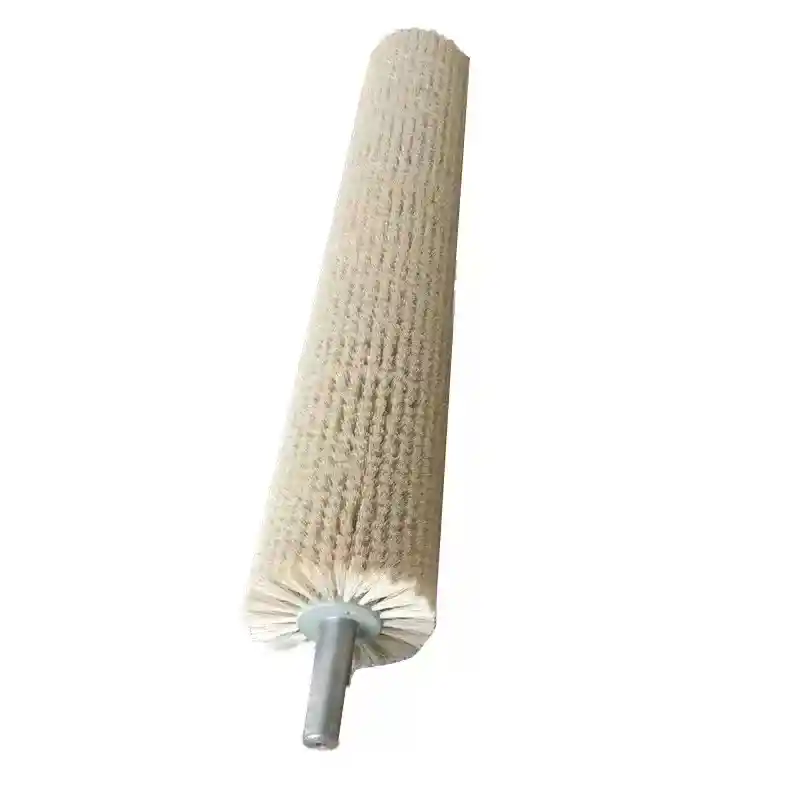
In our own manufacturing at Huixi Brush, we produce stem‑mounted wheel brushes in wire and nylon‑abrasive versions, with stem configurations matched to the spindle spec. Because we handle both the filament winding and the stem machining under one roof, we can hold tighter concentricity than you’d get from a two‑step supply chain. For clients with sensitive finishing steps, that difference shows up directly in lower reject rates.
Common Questions About Stem‑Mounted Wheel Brushes
What’s the difference between a stem‑mounted wheel brush and a regular wheel brush?
A regular wheel brush typically has an arbor hole without a reinforced metal stem; you mount it using a separate hub or flange. A stem‑mounted brush integrates a solid stem that serves as the mounting point, giving you better rigidity and easier changeover. We recommend it whenever side loads are high or you need repeatable concentricity after each tool change.
Can I use the same stem‑mounted brush for polishing and cleaning?
It depends on the filament material and your workpiece. If “cleaning” means removing loose dirt and light oxidation, an abrasive nylon brush might handle both steps on a soft metal. But if cleaning requires aggressive scale removal, you’ll need a crimped or knotted wire brush first, then a separate polishing brush. Trying to do both with one brush usually gives you a mediocre clean and a scratched surface.
How do I know if my brush is running unbalanced?
Listen for a rhythmic thrum or vibration that doesn’t match the machine’s normal hum. Check your workpieces for periodic chatter marks spaced at the distance the spindle travels per revolution. And if the brush diameter wears unevenly after just a few cycles, the stem likely isn’t running true. Swapping to a brush with a machined, hardened stem often solves those issues immediately.
Do I need a special arbor size for my spindle?
In most cases, yes. Many standard brushes come with common imperial or metric bores, but if your machine uses a non‑standard spindle diameter or a collet chuck with limited range, a custom arbor size avoids the slop that leads to runout. We usually ask clients for the exact spindle nose measurement and the mounting method – set screw, collet, threaded – and build the stem to that spec.
What if my application doesn’t fit any standard brush size?
Then a custom stem‑mounted brush is the right path. Start by defining your workpiece material, the surface finish you need, the RPM range, and any clearance restrictions. From there, an experienced manufacturer can propose a filament type, stem design, and brush OD that fit. If your process involves tight geometry or high cycle counts, I’d recommend having the conversation early and sharing a part drawing or photos of the workpiece area, so the brush can be developed for your actual operating conditions. You can reach us at [email protected] or +86 1580 0932 713 with your specifications.
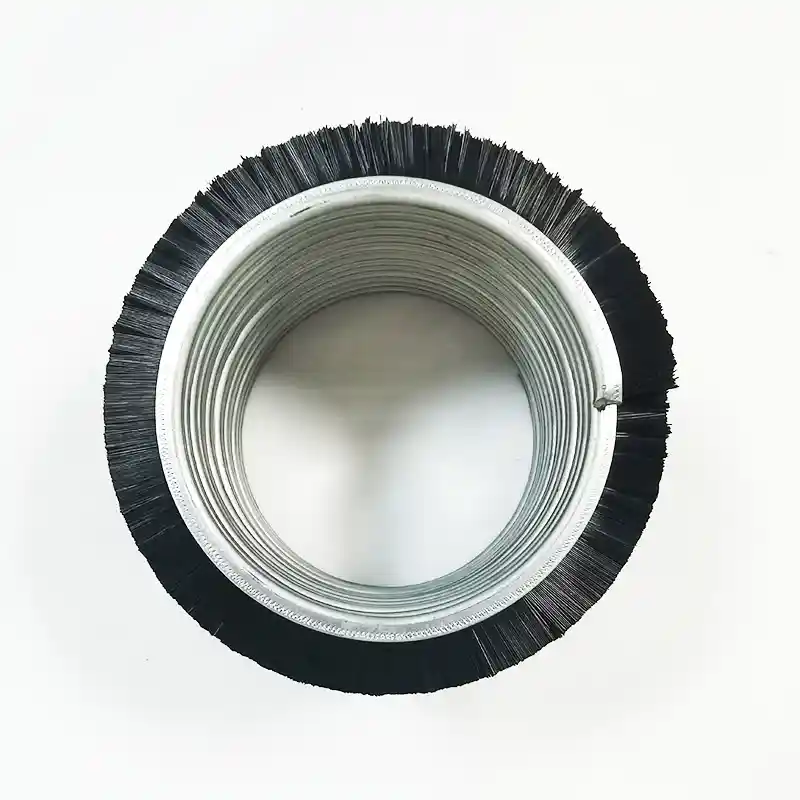
We’ve seen enough finishing lines to know that the cost of a well‑matched stem‑mounted brush is small compared to the cost of rework or unscheduled tool changes. Getting the stem right is what makes the polishing step predictable, job after job.
If you’re interested, check out these related articles:
advantage of hx boiler tube brush
main features and applications of hx nylon cylindrical brush
where stainless wire spiral brush can be used
introduction of our concrete block machine brushes