
Ethanol plant digital management has moved beyond simple SCADA screens. Today, integrated intelligent control platforms connect every unit operation—from corn intake to anhydrous ethanol loading—into a single decision-making system. In our work designing agricultural processing facilities across multiple continents, we have seen that plants adopting full-chain digital management consistently cut energy use and improve co-product value. This article outlines the core architecture of such platforms, how they enable energy cascade utilization and byproduct recovery, and the practical steps for implementing a system that pays back through operational savings.
What Is an Ethanol Plant Digital Management Platform
An intelligent ethanol plant digital management platform is not a single piece of software but an integrated architecture that brings together distributed control systems (DCS), supervisory SCADA, industrial IoT sensors, and cloud-based analytics. Where older plants rely on isolated loops—fermentation temperature here, distillation pressure there—a modern platform creates a unified control layer that sees the whole process. It lets operators adjust parameters across the plant from one interface, and it lets algorithms optimize for total energy consumption rather than just one unit’s throughput. For fuel ethanol production, this integration directly impacts yield, purity, and utility costs.
Core Components of an Intelligent Control System
A reliable ethanol plant digital management platform rests on several interconnected layers. Field instruments—flow meters, temperature probes, pressure transmitters, and analysers—feed real-time data to PLCs that execute local loops. A DCS or SCADA layer then aggregates thousands of data points and presents them on operator consoles with trend views, alarm management, and batch recipe handling. On top of this, a plant-wide historian and analytics engine capture long-term performance data, enabling predictive maintenance and energy benchmarking.
DCS vs SCADA for Ethanol Production
| Function | DCS | SCADA |
|---|---|---|
| Control architecture | Distributed, hard real‑time | Supervisory, less time‑critical |
| Typical use in ethanol | Fermentation and distillation control | Plant-wide monitoring, data logging |
| Response time | Milliseconds | Seconds |
| Scalability | Designed for integrated brownfield | Easier to expand across greenfield |
| Best suited for | Large continuous processes | Medium plants with batch operations |
Many modern ethanol facilities combine a DCS backbone for critical reaction and separation loops with a SCADA layer for utility monitoring, tank farm management, and remote access, achieving both speed and broad visibility.
Digital Twin Technology in Fermentation Control
A digital twin that mirrors the fermentation process can sharpen control well beyond traditional PID loops. The model incorporates yeast strain kinetics, real‑time sugar concentration, and temperature trends to predict the remaining fermentation time and optimal nutrient dosing. When linked to the live control network, the twin can recommend—or directly implement—micro‑adjustments that keep yeast activity at its peak, improving ethanol yield per bushel of corn without adding capital hardware.
How Digital Management Integrates Energy Cascade and Byproduct Recovery
The greatest value of a unified digital platform lies in its ability to synchronize energy and material flows across unit boundaries. Steam raised for distillation columns can be cascaded to evaporation, drying, or even feed pre‑heating, but the opportunity depends on matching supply and demand in real time. The platform monitors steam headers, flash tank pressures, and downstream loads simultaneously, automatically opening or throttling let‑down valves to keep the cascade balanced. It also tracks biogas output from anaerobic wastewater treatment and adjusts boiler firing rates to favour biogas over purchased fuel whenever available.
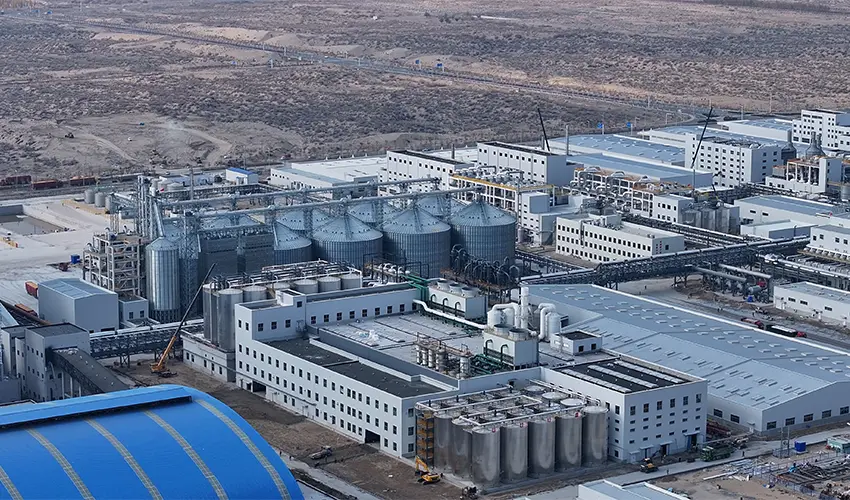
As an EPC partner for corn‑to‑ethanol plants, we have designed systems where recovered CO2 from fermentation is compressed, purified, and sold as food‑grade liquid CO2, while DDGS dryers receive exactly the heat they need without overheating and degrading protein quality. When every heat exchanger and separator is tied into one control philosophy, the plant can achieve energy consumption reductions of up to 25% compared with traditional independently controlled operations.
If your ethanol plant is operating with separate control systems and you suspect energy recovery gaps, evaluating the integration potential is a necessary first step. Our team can review your process data to identify where a unified digital platform could create the most impact—reach out at [email protected].
Implementing a Digital Platform: Costs, Timeline, and ROI
Retrofitting a digital management platform into an existing ethanol plant requires careful front‑end engineering. Brownfield projects often need new field instrumentation, upgraded network cabling, and a control room renovation, which can keep initial capital in the range of US$1–3 million for a 100 million‑litre plant. Greenfield installations, where the platform is designed into the plant from day one, typically add 8–12% to total EPC cost but eliminate the inefficiencies of patched‑together legacy systems.
The payback period is driven primarily by energy savings and co‑product revenue. A 25% reduction in steam and electricity consumption, combined with a 10–15% improvement in DDGS consistency that commands better feed market prices, often repays the investment within 2–4 years. Plants that also monetise CO2 and biogas see even faster returns. Operator training is required, but modern interfaces with intuitive dashboards and guided procedures shorten the learning curve, and most commissioning teams embed training into the startup phase.
Choosing a Turnkey Provider for Ethanol Plant Automation
Delivering a fully integrated digital management platform demands deep knowledge of the complete corn‑to‑ethanol process chain. Look for a provider that has designed and commissioned complete ethanol lines, not just supplied isolated automation components. The ideal partner understands how distillation, molecular sieve dehydration, evaporation, and byproduct handling interact, and can configure control strategies that optimize the whole rather than optimising sub‑systems in isolation. Verify that the provider can support the system long‑term with spare parts, software updates, and remote diagnostics.

From‑farm‑to‑table integration is at the heart of modern agricultural processing, and an ethanol plant is one node in a larger food‑energy‑feed ecosystem. A provider with experience across grain storage, deep processing, and downstream feed applications brings a perspective that sees not just an ethanol plant, but an integrated value chain where digital management unlocks value at every stage.
Planning Your Digital Management Journey
Shifting to a unified digital platform is a capital decision that requires careful planning, but the operational savings and quality improvements make it one of the highest‑return investments in ethanol production today. We help plant owners map their current control architecture, identify integration points, and develop a phased rollout that minimizes downtime. To discuss your plant’s specific requirements, contact us at [email protected] or call 010‑8591 2286. Share your current production data and we will provide a preliminary assessment of what an integrated platform could achieve for your bottom line.
Common Questions About Ethanol Plant Digital Management
How much does a digital management platform cost for a mid‑size ethanol plant?
Cost varies widely with scope. A phased retrofit for a 100‑million‑litre plant may start at US$1 million when focusing on the most impactful areas first—typically distillation and energy recovery—and scale upward as additional units are added. Greenfield installations embed the cost into the overall EPC capital and usually deliver faster payback because the system is harmonised from the start.
Can an older ethanol plant be retrofitted with intelligent controls?
Yes, and many have been. The key is a thorough site survey to map existing instrument loops, control panel condition, and network infrastructure. Older pneumatic actuators and standalone single‑loop controllers often need replacement, but the process equipment itself can remain. We typically recommend a step‑wise rollout that keeps the plant running while upgrading section by section.
How long does it take to see a return on investment?
Most plants achieve payback in 2–4 years. The primary return comes from reduced thermal and electrical energy cost, followed by higher co‑product value through tighter quality control. Plants that also recover biogas for boiler fuel or purify CO2 for the merchant market can see returns well inside two years.
What is the role of digital management in reducing DDGS variability?
Fermentation time, temperature, and residual sugar all influence DDGS characteristics. A digital platform holds those parameters within narrow bands, and it controls dryer inlet temperature precisely to avoid over‑cooking protein. The result is a more uniform product that feed mill buyers value, often at a premium.
Do we need to retrain our operators?
Yes, but the transition is manageable. Modern interfaces are graphical and workflow‑oriented, so operators familiar with DCS panels adapt quickly. Most systems include simulation modes for training, and a commissioning engineer remains on site during startup to guide the crew. For plants evaluating digital management, the most reliable path is to start with a plant‑wide audit of energy and material flows, then design a control architecture that prioritizes integration. Share your requirements and we will help map the right solution for your scale.
If you’re interested, check out these related articles:
Driving Global Food Conservation Through Technological Innovation