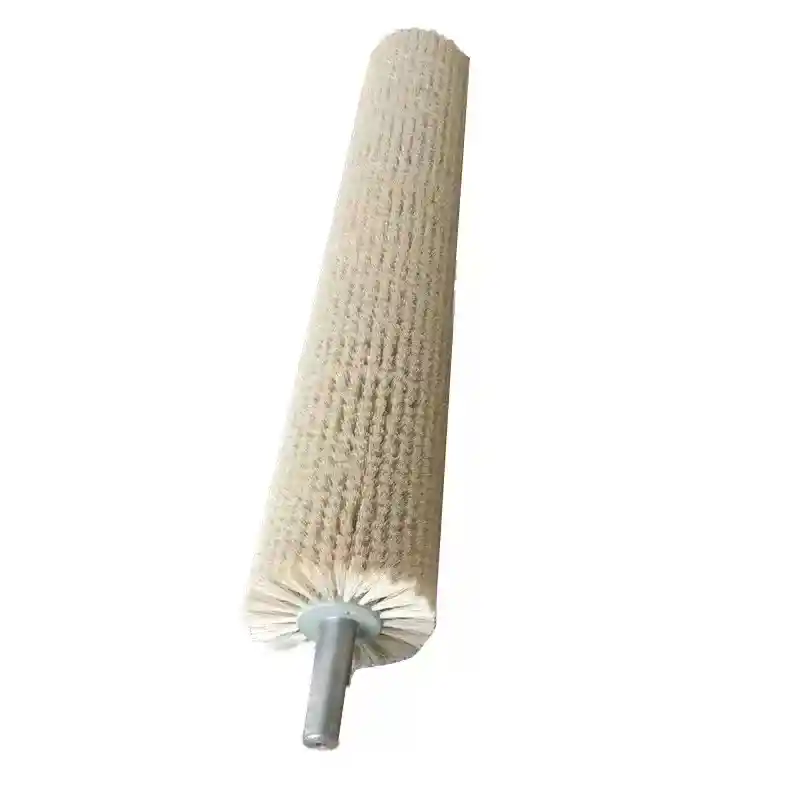

Industrial cleaning brushes are the workhorses of surface preparation, deburring, and finishing in heavy manufacturing environments. Years of working with custom brush solutions have shown me that the difference between a successful application and constant downtime often comes down to how the brush matches the specific challenge of the job. This article explains the most important factors in selecting an industrial cleaning brush for demanding applications—filament material, brush type, core design, and the case for custom configurations—so you can avoid the trial and error that eats up production time.
What Makes Heavy-Duty Cleaning Different from Routine Brushing
Routine cleaning might handle light dust or loose particles, but heavy-duty cleaning in industries like metal fabrication, steel wire production, and casting involves stubborn contaminants: heat scale, weld slag, deep oxidation, heavy grease, and dried process residues. The brush must remove these without damaging the workpiece surface, all while surviving the abrasion and heat of the process itself.
From the projects I’ve supported, I’ve noticed three consistent demands in tough environments:
– High filament aggression with enough resilience to not collapse after a single shift.
– Controlled stiffness so the brush doesn’t gouge the base material.
– Chemical and thermal stability when cleaning involves solvents, hot parts, or inline processes.
If your operation runs continuous production and stops only for scheduled maintenance, the brush is not a consumable you can afford to replace every hour. That changes the importance of density, fill pattern, and core construction.
Brush Configurations That Handle Heavy Loads
While there are many brush types in the market, a handful of configurations consistently prove themselves in heavy industrial cleaning. The table below summarizes the main ones and where they fit.
| Brush Type | Common Use in Heavy Work | Typical Filament Options |
|---|---|---|
| Cylindrical brush | Cleaning wide surfaces, conveyor belts, rollers, and flat stock | Steel wire, abrasive nylon, brass |
| Wheel brush | Deburring edges, removing heavy rust from profiles and plates | Crimped steel wire, knotted steel wire |
| Strip brush | Sealing, guiding, and cleaning in tight linear gaps | Nylon, steel wire, brass |
| Spiral brush | Cleaning the inside of pipes, bores, and complex cavities | Steel wire, stainless steel, nylon |
| Tube brush | Internal cleaning of tubes, heat exchangers, and cylinder bores | Steel wire, abrasive nylon |
A cylindrical brush is often the first choice for flat or curved roller cleaning because the entire length works the surface at once. I’ve seen operations switch from small-diameter cup brushes to a single large cylindrical brush and cut cleaning time by more than half. The key is getting the density and outer diameter right for the machine’s RPM range—too soft and the brush won’t bite, too dense and heat builds up fast.
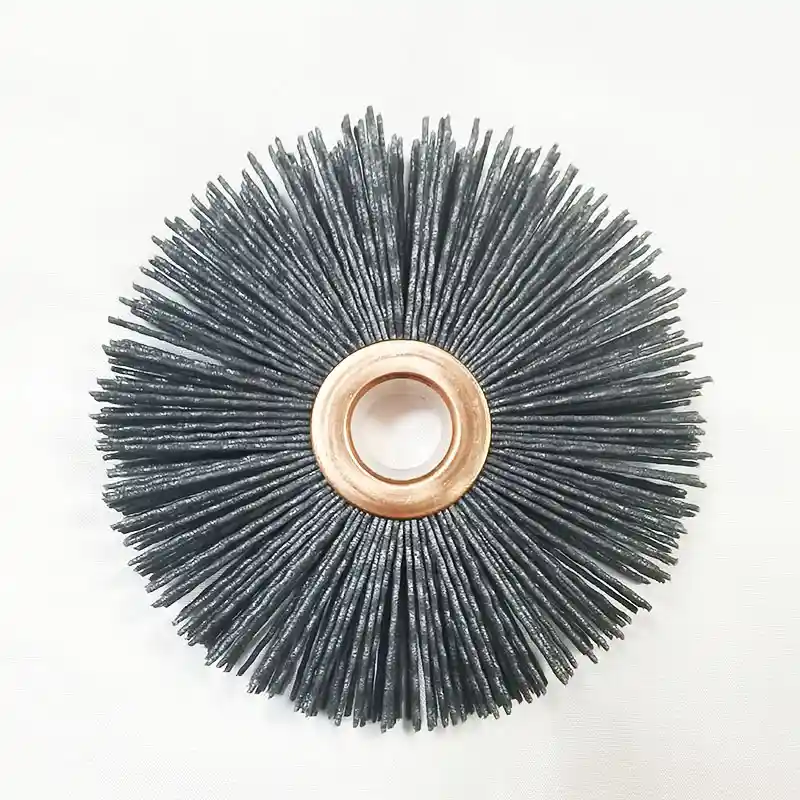
Wheel brushes excel at heavy rust and slag removal when you need concentrated pressure on a narrow edge. A crimped wire wheel offers moderate aggression with flexibility; a knotted wire wheel—where the filaments are twisted together into tight bundles—provides much higher cutting power for thick scale and deep pits. On one project for a steel mill, the maintenance team had been burning through standard crimped wheels every few hours until we switched to a packed knotted configuration with a reinforced hub, which held up through an entire shift.
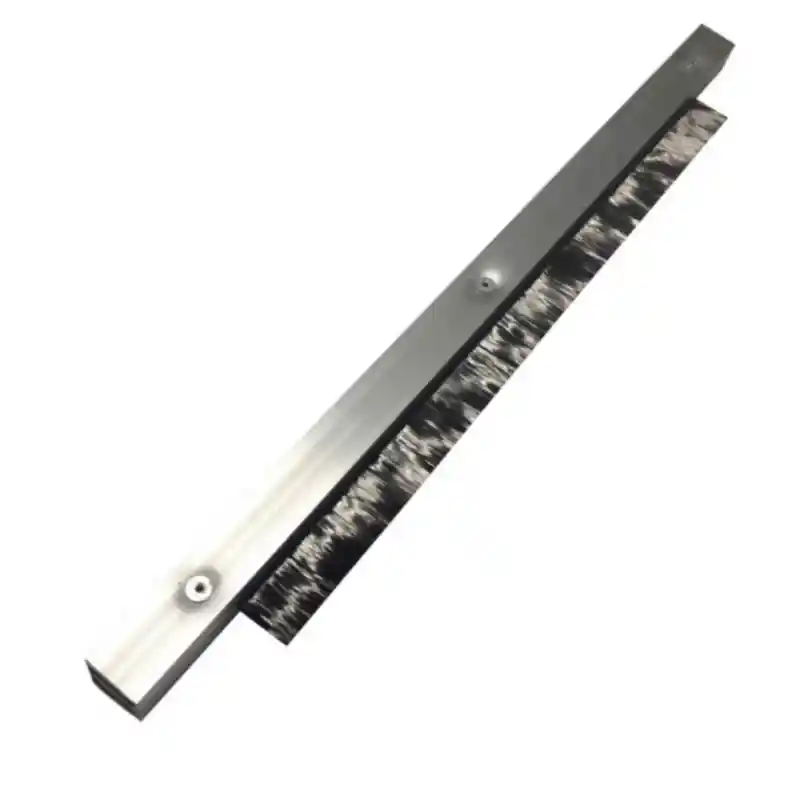
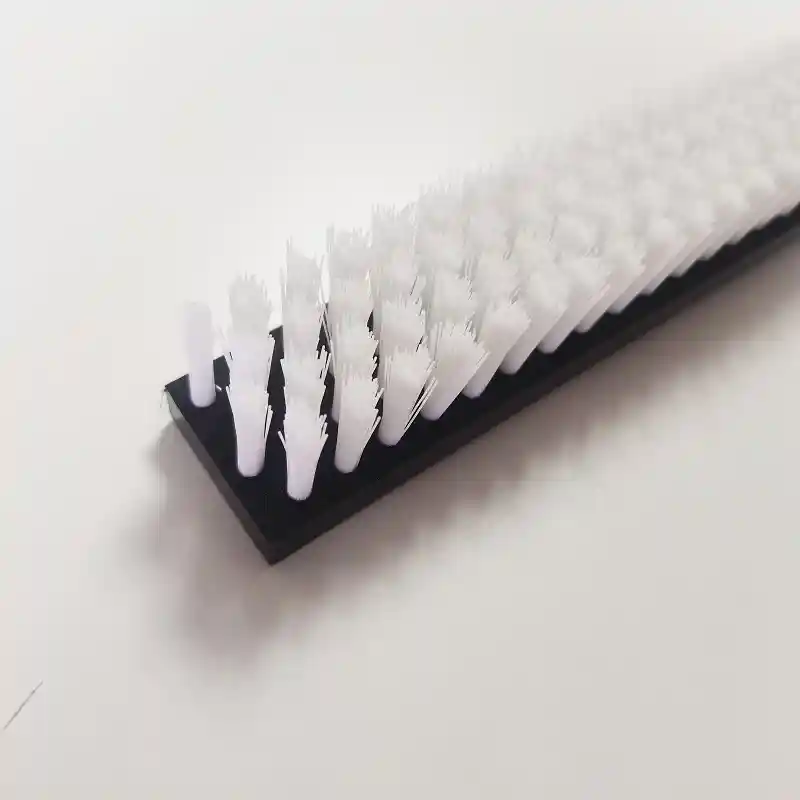
Strip brushes solve a different problem. When you need to brush a continuous edge, door seal channel, or irregular contour, strip brushes follow the shape and maintain constant contact. In heavy-duty applications, the profile material matters as much as the filament. Steel-backed strips hold shape under pressure better than aluminum equivalents.
Filament Choice: Matching the Wire to the Soil
The filament material is where a lot of confusion happens. Too aggressive and you ruin the workpiece. Too gentle and the brush just polishes the contamination instead of removing it.
- Carbon steel wire is your workhorse for general rust, paint, and scale on ferrous metals. In our manufacturing experience, 0.30mm to 0.50mm wire diameters work well for most heavy cleaning on steel plates and castings. Thicker wire (0.50mm and above) brings more bite.
- Stainless steel wire is essential when you cannot risk iron contamination—think food equipment, chemical tanks, or stainless steel fabrications. It cleans without leaving rust-prone particles behind.
- Brass and bronze filaments offer a finer touch. I’ve recommended them for cleaning aluminum dies and copper contacts where steel would scratch. They won’t spark either, which matters in explosive atmosphere environments.
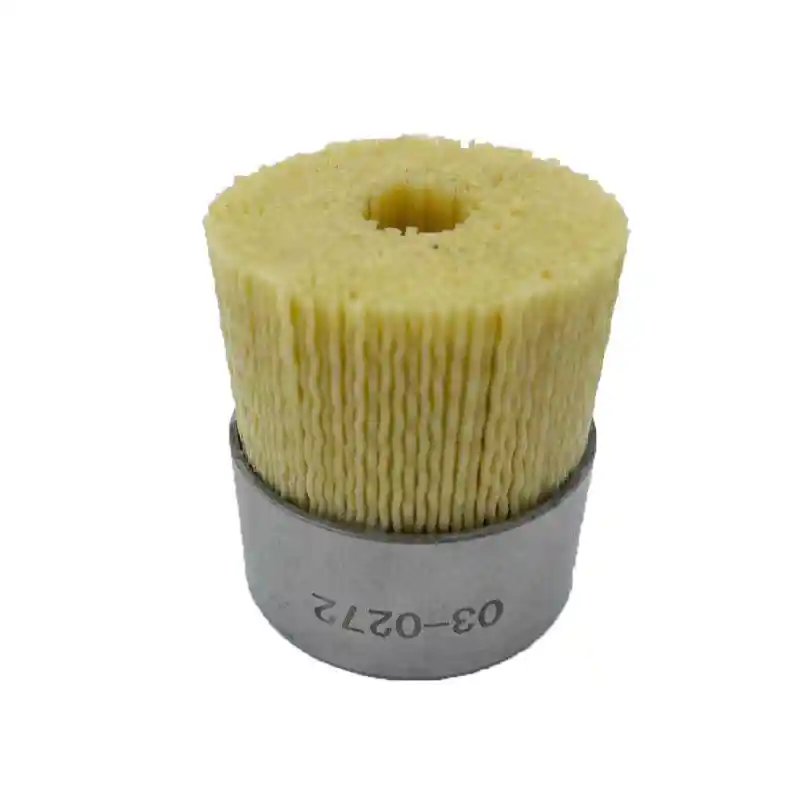
- Abrasive nylon filaments embed silicon carbide or aluminum oxide grit inside the nylon. These are excellent at removing light scale and oxidation while leaving a satin finish. They work well when you need both cleaning and a controlled surface roughness for downstream painting or bonding. However, they wear faster on sharp corners, so brush pressure and speed must be dialed in carefully.
One common mistake I encounter is mixing carbon steel brushes with stainless steel parts. Even if the contamination isn’t visible at first, embedded steel particles can lead to rust spots later, especially in humid environments. A separate brush set designated for stainless-only cleaning, or the discipline to switch to stainless steel filaments from the start, avoids costly rework.
Why Custom Brushes Often Outperform Off-the-Shelf Designs
For tough jobs, off-the-shelf brushes rarely match the application as well as a brush built to the specific duty. Standard brushes are designed for a broad range of conditions, so they compromise on features that become critical in your particular process: exact outer diameter to match the machine, a specific filament density to balance cleaning aggression and brush life, the right core material for chemical or heat resistance, or a non-standard trim length that cannot be found in stock.
In our sixteen years of manufacturing brushes, we’ve seen that a customer who comes with a clear description of the surface material, the contaminant, the machine’s RPM, and the desired finish almost always benefits from a custom design. This doesn’t always mean a higher per-piece cost. If a custom brush lasts three times longer than the closest standard option and you factor in less downtime for changeovers, the total cost of ownership can be lower. For continuous production lines, that’s not a minor advantage.
The starting point for a custom brush usually involves choosing the filament type and diameter first, then the density and fill pattern, and finally the core or hub. For cylindrical brushes, we often adjust the spiral pitch or the number of knots per inch to control how aggressive the brush is. A tighter pitch with more filament rows gives a smoother finish but generates more heat. A wider pitch bites harder but leaves a more directional scratch pattern.
When your production involves frequent product changeovers, having a supplier who can hold your custom specification in stock and ship on demand also takes a load off your procurement team. That’s why we maintain repeat order records for every client—so the fifteenth brush arrives exactly like the first one did.
Supplier Evaluation: What to Look For Beyond the Catalog
Once you know what brush type and filament you need, selecting a supplier becomes a matter of reliability and technical support. Here are the points I’d look at:
First, ask if the supplier can provide samples without minimum order quantity demands. A brush sample lets you test on your actual equipment before committing to volume. Many brush manufacturers with real production capability can offer a small run or even a free sample for evaluation.
Second, check whether they can handle ODM and OEM modifications without reverting to a fixed product list. If every conversation ends with “we don’t do that,” it’s a sign the supplier is a stock distributor rather than a manufacturer. When a product line changes or a new machine comes in, you need a partner who can adjust filament material, length, density, and hub design without starting from zero.
Third, consider delivery consistency. A manufacturer with its own production line and sufficient raw material inventory can commit to lead times you can rely on. The cost of a late brush shipment is rarely just the brush price—it’s the lost production hours while machines sit idle.
Finally, technical support counts. The supplier should be able to discuss where a brush is failing, analyze wear patterns from photos, and suggest a filament or density change. This kind of support comes from having engineering staff, not just a sales desk. In my work, a short conversation about what went wrong often leads to a quick fix that avoids redesigning an entire finishing station.
Common Questions About Industrial Cleaning Brush Selection
How do I know if the filament is too aggressive for my surface?
Start by working at lower RPM and lighter contact pressure with a sample brush. If you see deep scratches or a visible change in surface profile, move to a finer wire diameter, a softer filament material (like brass or abrasive nylon), or a less dense brush configuration. In our tests, a 0.30mm crimped carbon steel wire on mild steel at moderate speed cleans well without gouging; moving up to 0.50mm increases stock removal but leaves a rougher surface.
What’s the difference between crimped and knotted wire?
Crimped wire filaments are individually formed into wave shapes and then packed into the brush. They provide medium aggression with good flexibility, which helps the brush follow uneven surfaces. Knotted wire consists of multiple strands twisted into tight bundles, producing a much stiffer, more aggressive brush. I’ve recommended knotted wire for thick scale on heavy castings and crimped wire for general rust removal on sheet metal where you don’t want to dig into the substrate.
Can a single brush type handle both cleaning and polishing?
Specialized abrasive nylon brushes, or brushes with a combination of filament types, can handle light cleaning and surface finishing in one pass. We have built cylindrical brushes with alternating rows of abrasive nylon and steel wire to achieve both scale removal and surface smoothing on round bars. However, for deep rust or heavy slag removal, a dedicated aggressive brush followed by a finishing brush usually gives better results and longer brush life.
Should I always choose a custom brush if my application is tough?
Not necessarily. If your requirement fits common machine speeds, workpiece geometry, and contamination types, a well-specified standard brush can work well. But if you are fighting brush life, surface finish inconsistency, or heat buildup, exploring a custom configuration with a manufacturer who understands the application can solve the problem without changing your entire process. Send us your part dimensions, material specs, and desired surface outcome, and we can assess whether a standard or custom brush makes more sense for your operation at [email protected] or +86 1580 0932 713.
If you’re interested, check out these related articles:
abrasive wheel brush a magical tool for industrial surface treatment
brushes for steel wire industries cleaning descaling derusting polishing
abrasive disc brush an excellent industrial surface treatment tool
the differences between knotted wire wheel brush and crimped wire wheel brush
advantage of hx boiler tube brush