
Procurement teams sourcing medical alcohol encounter a market where certificates of analysis can look identical while the manufacturing systems behind them vary dramatically. GMP compliance is not a standalone credential to verify against a checklist — it is a production philosophy that shapes equipment design, process flow, and quality documentation from the first raw material intake to the final packaged product. This article examines the standards that define medical alcohol manufacturing, the product grades that serve different clinical and pharmaceutical applications, the critical manufacturing stages that determine purity and consistency, and the supplier evaluation criteria that go beyond surface-level compliance claims.
GMP Compliance in Medical Alcohol Production
Good Manufacturing Practice for medical alcohol is governed by pharmaceutical regulatory frameworks such as the WHO GMP guidelines, PIC/S, and national pharmacopoeias including USP, EP, and ChP. At the core, GMP demands that alcohol intended for pharmaceutical use, as an active ingredient or excipient, is produced under a documented quality system that controls every variable — from the source grain to the final denatured or anhydrous grade.

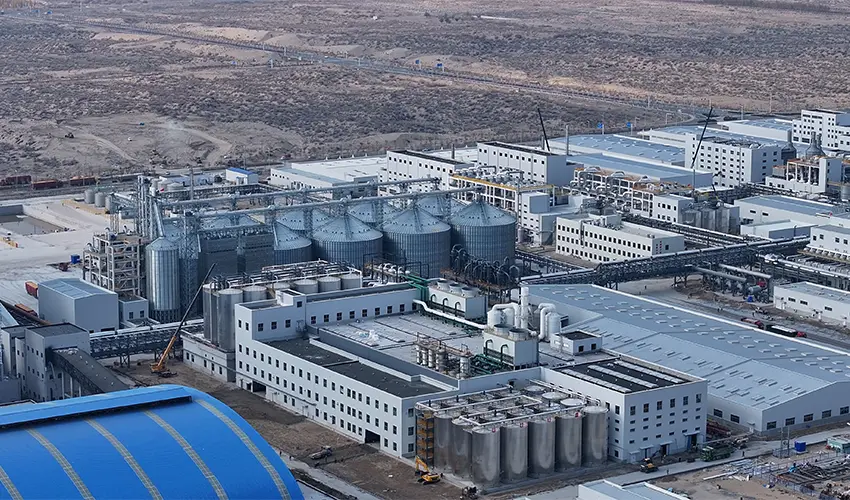
A GMP-compliant alcohol plant differs from an industrial or fuel ethanol facility in several non-negotiable ways. Cleanroom classifications for filling and packaging areas are typically ISO Class 7 or 8, depending on the intended use. Process equipment surfaces that contact the product are 316L stainless steel with documented passivation and cleaning validation. The water used in production is purified, most often meeting USP Purified Water or WFI specifications depending on whether the alcohol contacts injectable formulations downstream. Air handling, personnel gowning, and environmental monitoring procedures are implemented and recorded continuously.
These requirements change the capital investment profile of a medical alcohol project significantly compared to a fuel-grade plant. But procurement teams need to understand that GMP is not just about the final testing report — it is about the entire manufacturing environment. A supplier who can show environmental trend data, deviation investigation records, and process validation documentation over multiple batches offers a fundamentally different assurance level than one who provides only a certificate of analysis per batch.
Medical Alcohol Product Line: Grades, Specifications, and Applications
Medical alcohol as a product category covers several distinct grades, each with its own pharmacopoeial monograph and intended use. The core differentiation lies not just in ethanol concentration but in the impurity profile, the source of the alcohol, and the permitted additives.
| Grade | Typical Concentration | Key Standards | Primary Applications |
|---|---|---|---|
| Medical-grade Ethanol (Undenatured) | ≥ 95% v/v | USP, EP, ChP | Disinfectants, hand sanitizers, extraction solvent, compounding |
| Denatured Medical Alcohol | ≥ 95% v/v with specified denaturant | Regional pharmacopoeias | Disinfectant products for clinical surfaces and skin antisepsis |
| Pharmaceutical-grade Ethanol (Excipient) | ≥ 96% v/v anhydrous option | USP-NF, EP | Liquid formulations, oral solutions, coatings |
| Diluted Alcohol (e.g., 70% v/v) | 70% v/v ± specification | USP, EP | Ready-to-use antiseptic products, injection swabs |
Denaturation is a critical specification point that procurement teams must coordinate carefully. The denaturant — typically IPA, methanol, or a combination — is defined by national regulatory authorities and customs regulations. An incorrect denaturant can render a shipment non-compliant for import even if the alcohol meets pharmacopoeial purity. We have worked with clients where selecting the right denaturant formula required coordination across three regulatory jurisdictions before production began, and the denaturing step itself needed validated in-line mixing and separate tank storage to avoid cross-contamination risks.
The Manufacturing Process and Quality Control Architecture
The production of GMP-compliant medical alcohol follows a process chain that is conceptually similar to other grain-based alcohol production but with significantly tighter control parameters and material traceability requirements at every step.
Milling and liquefaction begin with grain corn or other starch sources that must have documented identity, purity, and absence of pesticide residues above pharmacopoeial limits. This raw material traceability extends backward through the agricultural supply chain, which can be a challenge in certain sourcing regions. The starch slurry then undergoes controlled enzymatic saccharification in stainless steel vessels, with temperature and pH maintained within narrow bands to achieve consistent fermentable sugar profiles.
Fermentation is the stage where GMP discipline most visibly diverges from industrial alcohol practice. The fermentation vessels and associated piping are part of a closed system with sterile aeration when required, and the yeast strain used is a documented, pure culture maintained under a cell bank system. Cleaning validation between batches follows a CIP cycle with documented effectiveness. Aseptic sampling ports allow for microbiological monitoring throughout fermentation, and any deviation from established critical process parameters triggers an investigation before the batch proceeds to distillation.
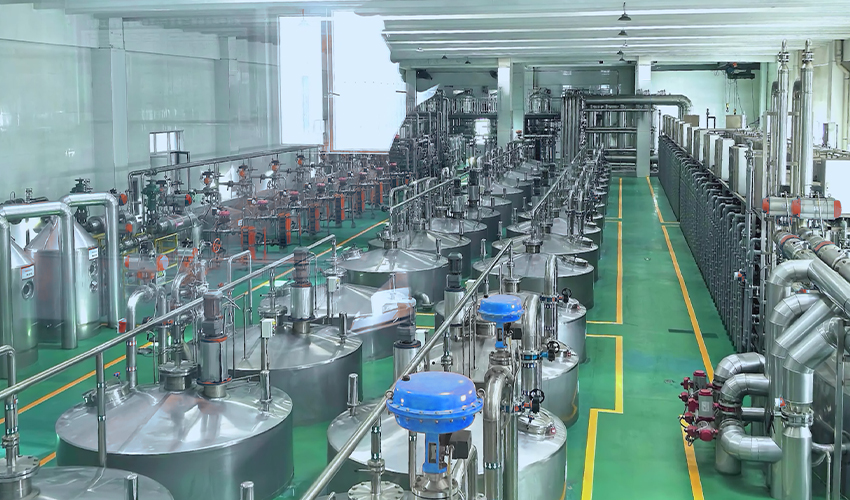
Distillation and rectification in a medical alcohol plant use multi-column configurations — typically a combination of stripper, rectifier, and hydroselection columns — to achieve the required ethanol purity and to remove volatile impurities such as methanol, acetaldehyde, and fusel oils. The differences from fuel-grade distillation are in the column construction materials (fully stainless steel with low surface roughness), the reflux ratios for tighter cuts, and the integration of the column control system with the plant’s quality data management platform. Every distillation run is tracked against a validated operating envelope.
The dehydration step, when producing anhydrous grades, typically uses molecular sieve adsorption technology. The sieve beds are regenerated on a cycle, and the breakthrough curve is validated as part of the process qualification. Post-dehydration, the alcohol is cooled, filtered through 0.2-micron or finer filters where required, and transferred to a dedicated storage and filling area.
Quality control testing extends well beyond simple ethanol content and methanol limits. GMP alcohol batches are tested for heavy metals, non-volatile residue, acidity or alkalinity, UV absorbance, and related organic impurities per the relevant monograph. For alcohol intended as an excipient, additional tests such as endotoxin levels or microbial limits may apply. All test results are captured in a batch record that includes in-process as well as final product data, and a certificate of analysis is issued only after a qualified person reviews the complete batch documentation.
How Traceability and Documentation Support GMP Compliance
A full GMP compliance posture is only as strong as its traceability system. In practice, this means that for any given batch of medical alcohol that reaches a customer, the supplier must be able to reconstruct, within hours, the raw material lot numbers, the process parameters recorded during its manufacture, the equipment used and its cleaning status, the personnel involved at critical steps, and the complete quality testing trail.
Batch numbering systems must be structured to prevent duplication and to allow for rapid retrieval. Many GMP facilities now use electronic batch record systems rather than paper, but the fundamental requirement remains the same: the data must be contemporaneous, attributable, legible, and auditable.
For international procurement, documentation requirements often include not just the certificate of analysis but also GMP certificates issued by the relevant regulatory authority, statements of the manufacturing process flow, and sometimes a drug master file or equivalent technical dossier. Suppliers who have already prepared these documents for multiple regulatory markets can shorten the qualification timeline by months compared to those who handle compliance reactively.
Evaluating a Medical Alcohol Supplier
When comparing potential suppliers, the following areas differentiate those with a mature quality system from those with basic testing capability.
First, the quality assurance department should be organizationally independent from production, with authority to release or reject batches. The trend analysis of process data — not just pass/fail testing — reveals whether the facility controls its process or simply tests out-of-specification material after the fact.
Second, change control is a revealing indicator. A supplier who cannot describe how they manage and document changes to raw material sources, equipment, or processes is likely operating a quality system that exists primarily on paper. Every change that could affect product quality should go through a formal review, and the procurement team should be notified of relevant changes before they affect shipments.
Third, the facility’s regulatory inspection history provides an external calibration. An inspection report from a recognized authority that includes observations, even if resolved, is not necessarily a negative — an absence of any inspection history or a refusal to share reports can be a greater concern.
Full-Chain Integration in Alcohol Manufacturing Projects
A medical alcohol manufacturing line is not a collection of independent unit operations purchased from separate vendors. It is an integrated process system where the fermenter design affects distillation column performance, the utility plant sizing is interdependent with energy integration decisions, and the clean utility systems — water, steam, compressed air — must meet pharmaceutical-grade specifications that propagate their own design constraints.
For organizations building or expanding medical alcohol capacity, the project delivery model matters. An EPC approach that covers process design, equipment specification, installation, and commissioning under a single point of responsibility reduces the interface risk that otherwise sits with the project owner. The engineering team must demonstrate experience not just with alcohol technology but specifically with GMP-regulated environments, because the difference between a well-designed industrial alcohol plant and a GMP-compliant medical alcohol plant manifests in hundreds of detail decisions across layout, materials, automation, and validation.
AGRIFAM’s alcohol production solution applies advanced fermentation, distillation, and dehydration technologies within a framework of energy cascade utilization and circular economy integration. The company provides complete EPC delivery for grain-based alcohol plants, covering everything from raw material handling through to the final product storage and wastewater treatment. For medical alcohol projects, the engineering approach can be adapted to meet applicable pharmacopoeial standards and GMP requirements, with specifications tailored to the target market’s regulatory environment.
If your project requires a manufacturing partner who understands the engineering demands behind GMP-aligned alcohol production, rather than just the finished product specifications, reach out at [email protected] or call 010-8591 2286 with your intended grade and scale.
Questions Procurement Teams Ask About Medical Alcohol Manufacturing
What is the practical difference between USP-grade and EP-grade medical ethanol?
USP and EP monographs for ethanol share many purity specifications, but the impurity limits and the list of controlled substances often differ. For example, the limit for methanol may be slightly different, and the EP monograph sometimes includes a test for certain carbonyl compounds that the USP monograph does not explicitly require. A product that meets both standards is possible if the manufacturing process is designed for the tighter limit. If your market requires compliance with both, request analytical data against the specific impurity test list from each pharmacopoeia rather than assuming that one certificate covers both.
How is denatured medical alcohol regulated differently from undenatured?
Denatured alcohol is ethanol to which a specific denaturant has been added to make it unfit for human consumption. The denaturant formula is often defined by national excise or customs authorities, and the regulation is primarily driven by tax and tariff classification rather than pharmacopoeial quality. However, for medical use, the denaturant must still meet purity requirements and the final denatured product must be safe for its intended clinical application. The supplier should document the source and purity of the denaturant as part of the batch record, and the denaturing process should be validated for homogeneity.
Can a single plant produce both medical-grade and fuel-grade alcohol?
Technically yes, but the operational and design challenges are significant. The GMP-compliant portion of the plant requires segregated utilities, dedicated stainless steel equipment, validated cleaning procedures, and environmental monitoring — all of which raise costs. Most facilities dedicated to medical alcohol production run exclusively under GMP conditions. If a plant splits production between medical and fuel grades, the risk of cross-contamination and the complexity of changeover procedures demand careful audit and validation review when assessing the supplier.
What documentation should a supplier provide before the first shipment?
Beyond the certificate of analysis, a competent supplier should be able to provide a valid GMP certificate from the regulatory authority that covers the specific manufacturing site and the alcohol product category, a process flow description with critical control points identified, a specification sheet aligned with the relevant pharmacopoeial monograph, and a stability data summary if shelf life is being claimed. If the alcohol is being imported, the supplier should also confirm the regulatory status in the destination market and assist with any required pre-import documentation. For a specific project, share your quality requirements and target regulatory standard with our team at [email protected] — we will confirm what documentation support is available for the product grade you need.
If you’re interested, check out these related articles:
Driving Global Food Conservation Through Technological Innovation