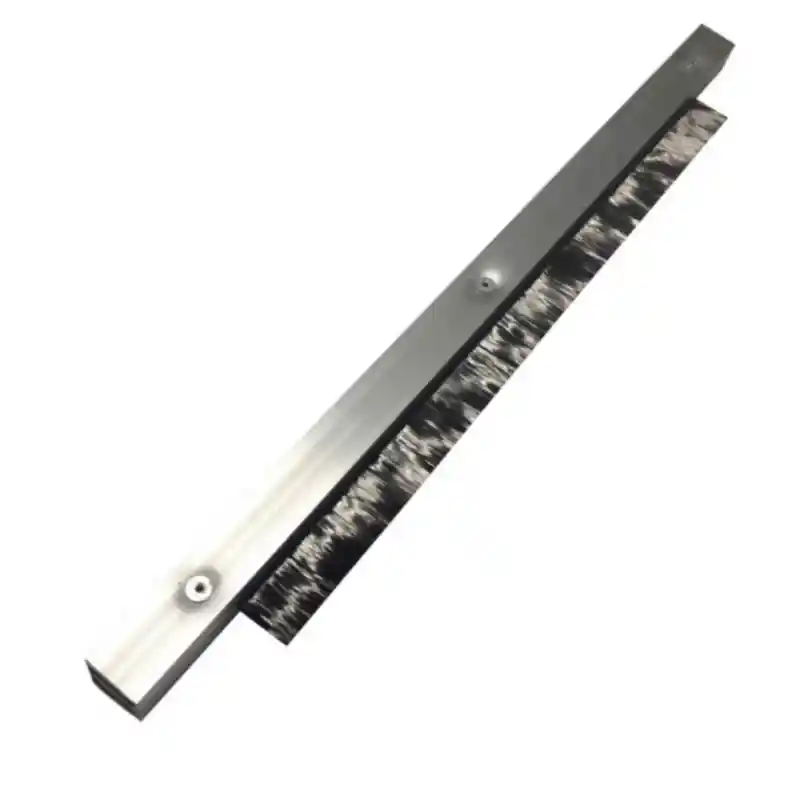

A door seal brush works because it fills the gap, not because it looks right in the profile drawing. I have spent over fifteen years specifying strip brush for industrial enclosures, generator sets, and cleanroom doors, and the single most common procurement error I see is selecting a profile shape while ignoring the filament density inside it. The result is a seal that passes visual inspection on day one and fails on air leakage, dust ingress, or edge collapse within six months. While most articles on door seal brush selection focus on profile dimensions and mounting compatibility, this article addresses what actually determines service life and seal integrity: filament material, wire diameter, and packing density. I am writing this for maintenance engineers and procurement teams who need a seal that holds its performance across years of door cycles, not just one that fits the channel.
What Makes a Door Seal Brush Actually Seal
A door seal brush does two things at once. The bristles must be flexible enough to conform to the mating surface, and they must be dense enough to block airflow and particulate migration. We run into problems when one of those requirements is prioritized at the expense of the other.
The filaments in an industrial door seal brush are typically set into a galvanized or stainless steel channel, which is then crimped to lock the fill material in place. The channel anchors the brush into the door frame or the moving leaf. The filament row is what does the work. Polypropylene filament works for general weather sealing. Nylon 6 or 6.6 handles higher cycle counts and better abrasion resistance. For environments with welding spatter or hot exhaust, we specify natural animal hair or aramid blends to avoid melting.
The filament crimp matters more than most people realize. Crimped fiber creates a slightly randomized tip pattern that helps each strand occupy its own space rather than laying flat against its neighbor. That randomization draws more air into the brush row, and that air gap is what gives the seal its recovery after deflection. Straight filament can pack tighter initially, but it mats down faster under repeated compression and loses spring-back.
How filament material choice affects seal life
Material selection determines everything downstream: temperature range, chemical resistance, moisture tolerance, and the number of cycles the brush can absorb before the fill height degrades. We have run accelerated wear tests on door seal brush sections cycling against powder-coated steel at roughly six cycles per minute. Polypropylene holds up for general interior use where temperature stays under 80°C. Nylon bristles withstand higher speeds and more abrasive contact without splitting at the tips. For pharmaceutical cleanroom doors, we often combine nylon filament with a thin polyethylene center fin to add a secondary wiping seal without stiffening the brush row. That design change came directly from a client project where a standard single-row seal was passing visual smoke tests but failing particle counts under positive room pressure.
Why Profile Geometry Alone Does Not Guarantee Performance
Most supplier catalogues show you the channel shape: flat back, angle mount, or 180-degree wrap. Buyers tend to match the channel to a mounting slot and assume the seal performance follows. The channel holds the brush. The filament does the sealing. If the filament row is sparse, the best channel design in the world will not stop dust infiltration.
Density is what separates a brush that seals from one that just looks like a brush. We measure this as filament weight per meter or number of tufts per linear inch, depending on the winding method. In one aftermarket replacement project, a customer was buying door seal brushes that matched their original channel drawing exactly but were failing after eight months. When we sectioned the old strip, the filament count per inch was roughly half of what we would specify for that gap width and pressure differential. The profile geometry was correct on paper. The fill density was wrong in practice.
Filament length and working deflection range are equally important. If the brush is too short for the gap, the tips barely touch the mating surface and the seal leaks from day one. Too long, and the bristles buckle sideways instead of compressing evenly. That buckling wears out the outer edge of the brush while the center row barely contacts the surface, creating a leak path right where you need the most contact pressure.
How to Specify Filament Density for Wind and Dust Sealing
We treat door seal brushes as engineered components, not commodity trim. That means writing specifications that go beyond the channel dimension and into the fill parameters.
The first parameter is wire diameter, expressed in millimeters or mils. For nylon and polypropylene filament used in door sealing, common wire diameters range from 0.15 mm to 0.50 mm. Finer wire packs more densely and conforms better to irregular surfaces. Thicker wire resists permanent set better under sustained compression. For a standard personnel door exposed to wind and dust, I typically specify 0.20 mm nylon filament at a packing density that puts roughly eighteen to twenty-two tufts per linear inch in a single-row strip. If the door faces prevailing wind and there is a measurable pressure differential across it, I double that with a second staggered row.
The filament height should exceed the maximum gap dimension by twenty to thirty percent under free conditions. That over-height provides the preload that keeps the brush engaged when the door frame shifts under thermal expansion or when gaskets elsewhere in the assembly compress over time. We learned this the hard way on an export project where container doors were sealed with strip brush that matched the static gap perfectly but lost contact when the container walls flexed during transport. The fix was adding three millimeters of free height above the nominal gap, which gave the filament enough stroke to track the moving surface without fully unloading.
Mounting position relative to the weather side also determines how the brush behaves over time. A brush mounted on the interior face of an outward-opening door sees less direct rain and dust loading than one mounted on the exterior leading edge. The exterior-mounted brush needs higher density because the filaments themselves become the first line of defense against driven particulates rather than just a secondary barrier behind a primary gasket.
Filament trim angle and its effect on dust shedding
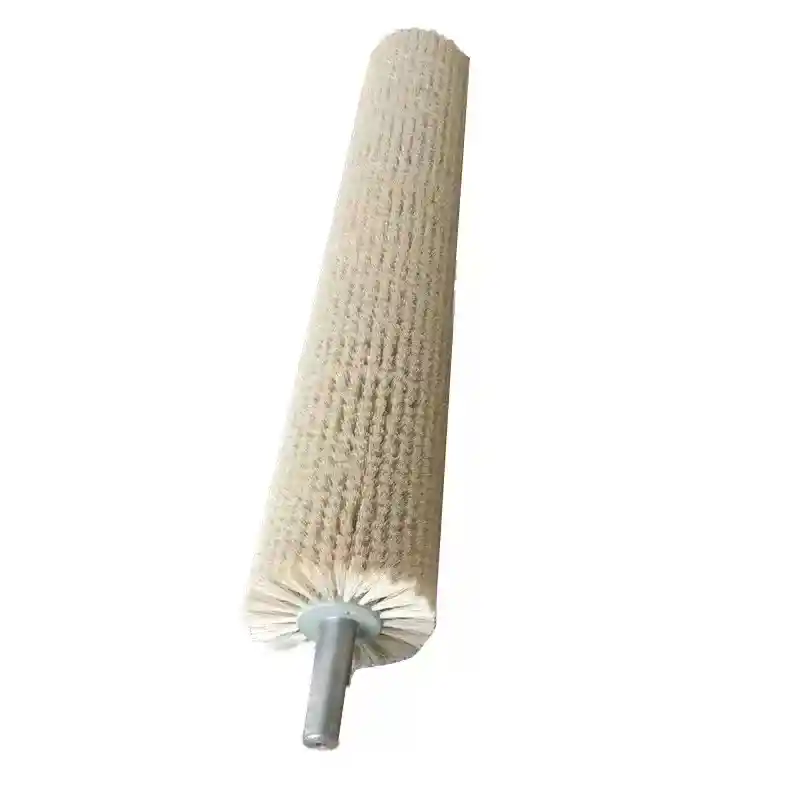
The trim angle is something most people never think about until a seal starts trapping dust instead of shedding it. If the filament tips are cut square, the brush presents a flat face to the mating surface. That flat face can pack dust into the tip region and eventually stiffen the bristle bundle. An angled trim, typically fifteen to twenty degrees off perpendicular, gives each filament a slightly different contact point along the surface. Dust that lands on the tips gets wiped toward the lower edge rather than driven straight into the brush row. For doors on dusty factory floors or outdoor enclosures, we angle-trim the brush and orient the cut so the sweep direction pushes debris away from the clean side.
Nylon Versus Polypropylene: What Fifteen Years of Field Data Shows
We have supplied door seal brush in both materials across enough projects that the performance pattern is clear. Polypropylene costs less per meter and resists moisture absorption well. It works acceptably in interior partition doors, electrical cabinets, and low-cycle access panels where temperatures are moderate and the seal is not directly exposed to UV or oil mist.
Nylon costs more and delivers more. The filaments have higher tensile strength, better abrasion resistance, and a temperature ceiling roughly forty degrees Celsius higher than standard polypropylene. For loading dock doors, generator enclosures, paint booth entries, or any application where the brush sees high cycle counts or chemical exposure, nylon pays back its cost difference within the first replacement cycle you avoid. We have one repeat customer in Southeast Asia running nylon door seal brushes on marine container doors that have been in service over five years without measurable fill height loss. Their previous polypropylene brushes were replaced every two years. The filament material was the only variable that changed.
The table below summarizes the key differences for procurement decisions.
| Property | Polypropylene | Nylon 6/6.6 |
|---|---|---|
| Continuous temperature limit | 80°C | 120°C |
| Moisture absorption | Negligible | 3–5% at saturation |
| Abrasion resistance | Moderate | High |
| UV resistance (unstabilized) | Poor | Fair |
| Relative cost per meter | Lower | Higher |
| Typical service life in high-cycle door | 2–3 years | 5+ years |
I should add a note on moisture. Nylon does absorb some water, and in continuously wet conditions the filament can swell slightly and soften. For washdown environments, we specify a moisture-conditioned nylon or switch to polypropylene with a UV stabilizer package if the door sees direct sun. The specification decision always comes back to the actual operating conditions, not a generic “nylon is better” rule.
Installation Practices That Shorten Seal Life
Even the best-specified door seal brush will underperform if the installation introduces uneven loading or bypass gaps. The channel must be supported along its full length, not just at the fastener points. When a strip brush is screwed in at 300-millimeter intervals with nothing backing the channel between screws, the unsupported spans can bow under filament pressure and pull away from the mating surface. We either specify a continuous mounting slot that captures the full channel back, or we add intermediate clips at no more than 150-millimeter centers for strips under 12 millimeters of channel width.
Butt joints between brush sections are another common leak source. Cutting two brush strips square and pushing them together leaves a visible seam, and that seam is a straight-line path for air and dust. We cut mating sections at complementary 45-degree angles so the filament rows overlap at the joint. On critical seals, we stagger two rows of brush with offset joints so there is no continuous leak path through any single seam.
The door or frame surface that the brush contacts also needs attention. If the brush is wiping against raw steel with mill scale or weld spatter, the filament tips abrade quickly and the seal degrades from the contact side inward. A smooth, clean mating surface, preferably painted or plated, preserves filament life by reducing tip friction and cutting. For stainless steel doors, the surface is inherently smooth enough. For mild steel frames, we advise at minimum a primer coat where the brush makes contact.
How to Qualify a Door Seal Brush Supplier Before Committing
Qualifying a supplier means looking past the catalogue and asking about how the brush is actually made. The crimping process that locks the filament into the channel is the single most important manufacturing step. If the crimp is too loose, filaments pull out under repeated deflection. Too tight, and the channel deforms or the filament base cracks at the clamping line.
We produce strip brush on automated crimping lines where the channel feed, filament insertion, and crimp pressure are controlled to within a narrow tolerance range. When I talk to a procurement engineer who is comparing suppliers, I tell them to ask for a sectioned sample cut through the channel so they can inspect the filament anchorage directly. If the supplier will not provide that, or if the sample shows uneven filament distribution with gaps visible between tufts at the base, the seal performance will be inconsistent from batch to batch.
Lead time and customization flexibility matter just as much. A standard straight-profile door seal brush in common sizes ships quickly from stock. When the profile needs an angle mount, a 180-degree wrap for a round bar door edge, or a dual-material filament blend for a specific chemical resistance requirement, the supplier needs in-house tooling capability and willingness to run smaller batch sizes. Not every manufacturer will do this, and the ones that will typically have shorter communication cycles and can provide a drawing approval before production starts. For wholesale buyers managing multiple door designs across different projects, that flexibility eliminates the workaround of adapting a standard profile to a non-standard frame.
If your application involves outdoor exposure, high cycle counts, or a measurable pressure differential across the door, share your gap dimensions, operating temperature, and expected daily cycles when you request a quote. That information lets us confirm the right filament material and density before you commit to a sample order. Reach us at [email protected] or call +86 1580 0932 713 with your requirements, and we will provide a specification recommendation with a section drawing within one working day.
Common Questions About Specifying and Maintaining Door Seal Brush
Does a door seal brush work better in a single row or double row?
It depends on the pressure differential. For interior doors where the seal is mainly blocking light dust and minor drafts, a single dense row with 0.20 mm filament at roughly twenty tufts per inch handles the job. When the door separates a conditioned space from an unconditioned one with noticeable air pressure difference, or when it faces direct wind, a double row with staggered filaments reduces the leakage rate to a fraction of what a single row can achieve. The added cost is in the channel width and the second filament run, and for exterior doors that cost is small compared to the energy loss from a leaking seal over the door’s service life.
Why does my strip brush lose its shape after a few months of use?
In most cases, the filament density was too low from the start, and the bristles laid over permanently because there were not enough neighbors sharing the deflection load. Check the filament count per inch on a failed section against a new one from the same batch. If the count matches but the brush is still deformed, the filament material may have been exposed to temperatures above its rating and lost its memory properties. Nylon has better shape retention than polypropylene under sustained load, so consider that upgrade if your current brush is PP and the failure is compression set rather than outright bristle loss.
Can I use a door seal brush to block smoke in a fire-rated door application?
Standard polypropylene and nylon door seal brushes are not fire-rated components. Smoke containment in fire doors typically requires intumescent strips that swell under heat to seal the gap. A brush seal can work as a cold smoke seal if it is dense enough to restrict airflow, but it will not pass a fire certification test on its own. For projects where both smoke sealing and fire rating are required, we recommend combining a nylon brush seal for daily use with a separate intumescent strip mounted in the same channel or an adjacent groove. Share your certification requirements and we will confirm whether a brush-only solution meets the standard or whether a hybrid approach is necessary.
If you’re interested, check out these related articles:
rope cleaning brush for industrial use a key tool for maintaining safe production
brushes for steel wire industries cleaning descaling derusting polishing