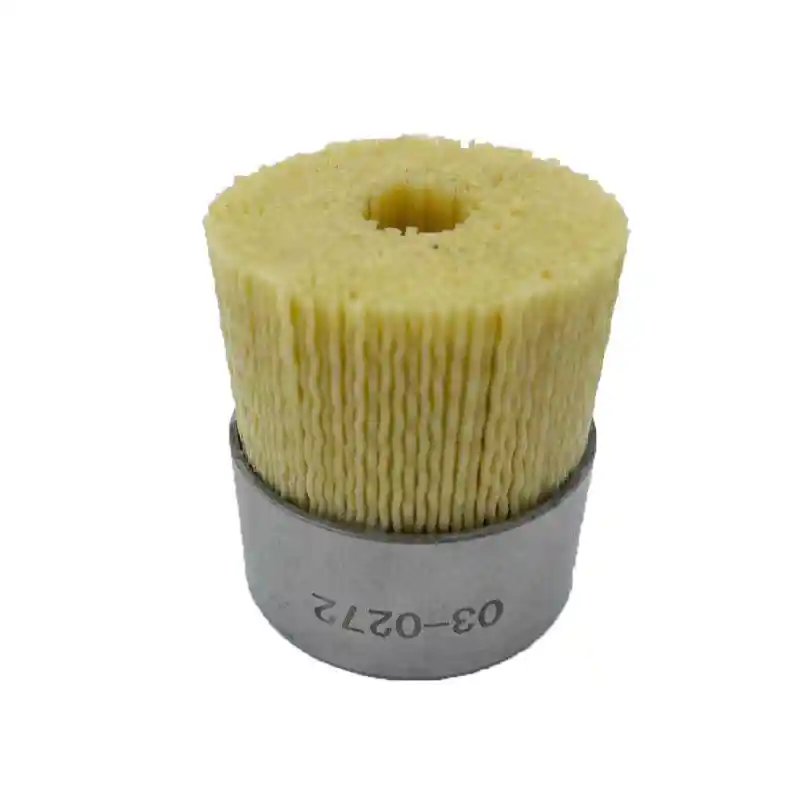

CNC machining centers running automated deburring cycles face a specific problem: wire brushes remove material too aggressively on aluminum and soft alloys, while standard nylon brushes lack the cutting action needed for steel burrs. Nylon circular brushes, particularly disc and wheel configurations with abrasive impregnated filaments, occupy the middle ground that most generic brush specifications fail to address. I have worked with machine builders and job shops specifying these brushes for over fifteen years, and the pattern is consistent. The shops that treat brush selection as an engineering decision rather than a consumable purchase see measurably lower rework rates and longer intervals between tool changes. The key is matching filament diameter, grit type, and fill density to the specific material and burr profile your CNC program produces.
Why Nylon Circular Brushes Work for CNC Applications
Nylon circular brushes function differently from wire brushes in automated machining environments. The filament flexes on contact, conforming to part geometry rather than gouging it. When the nylon contains embedded abrasive particles, typically silicon carbide or aluminum oxide, each filament acts as a flexible grinding tool that follows contours without removing base material beyond the burr itself.
This matters in CNC deburring because the brush must handle parts with varying burr heights from the same program. A cross-drilled hole produces a different burr profile than a milled edge, yet both may appear on the same workpiece. Wire brushes set aggressively enough for the larger burrs will scratch surfaces where smaller burrs exist. Nylon circular brushes with appropriate grit selection handle this variation because the abrasive action is distributed across thousands of flexible contact points rather than concentrated at rigid wire tips.
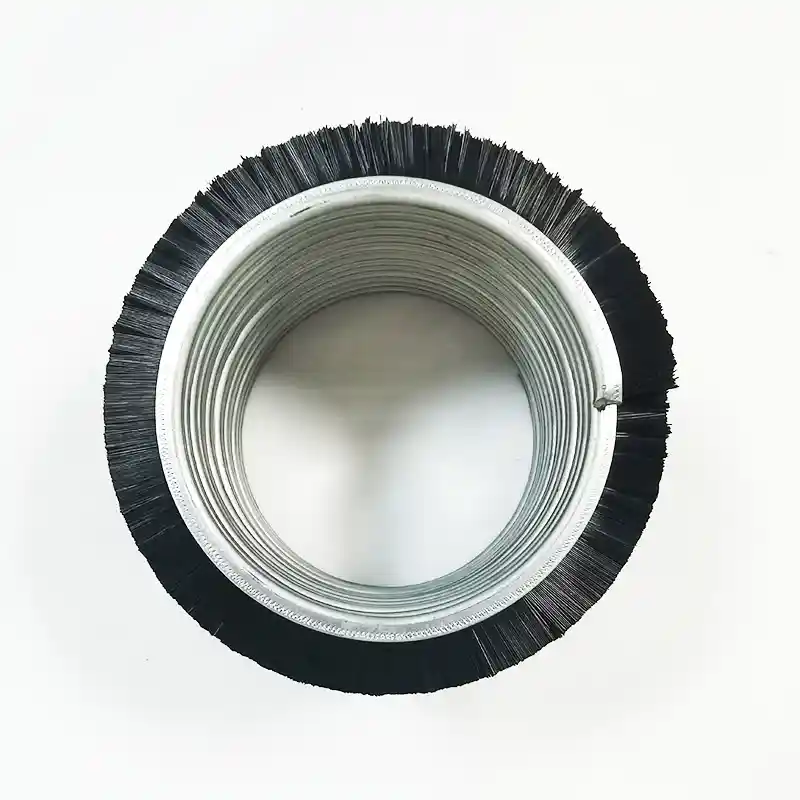
The disc brush configuration mounts perpendicular to the spindle axis, presenting the filament ends to the workpiece. Wheel brush configurations mount parallel to the spindle, presenting the filament sides. Each geometry suits different access requirements. Disc brushes reach into pockets and work flat surfaces efficiently. Wheel brushes clean edges and external profiles where side contact is more effective.
Selecting Grit and Filament for Your Material
Grit selection for nylon circular brushes follows the same logic as coated abrasives, but the flexible filament changes the effective cutting action. A given grit in nylon filament produces a finer finish than the same grit on a rigid grinding wheel because the filament deflects under pressure rather than maintaining constant contact force.
| Material | Recommended Grit | Filament Diameter | Expected Finish |
|---|---|---|---|
| Aluminum alloys | 180 to 320 | 0.50 to 0.75 mm | Satin, no scratching |
| Mild steel | 80 to 120 | 0.75 to 1.00 mm | Matte, burr free |
| Stainless steel | 120 to 180 | 0.75 to 1.00 mm | Uniform grain pattern |
| Brass and copper | 240 to 320 | 0.50 mm | Polished appearance |
| Cast iron | 80 to 120 | 1.00 to 1.20 mm | Clean edge, scale removed |
Silicon carbide grit works well on aluminum and non-ferrous metals because it fractures during use, presenting fresh cutting edges. Aluminum oxide grit is tougher and suits ferrous materials where the abrasive must withstand higher temperatures generated by friction on steel.
I have seen shops specify 80 grit for aluminum deburring because they assume coarser means faster. The result is embedded abrasive particles in the soft aluminum surface, visible as gray streaks that reject parts at inspection. Starting with 180 grit and adjusting spindle speed produces cleaner results with comparable cycle times.
Fill Density and How It Affects Brush Performance
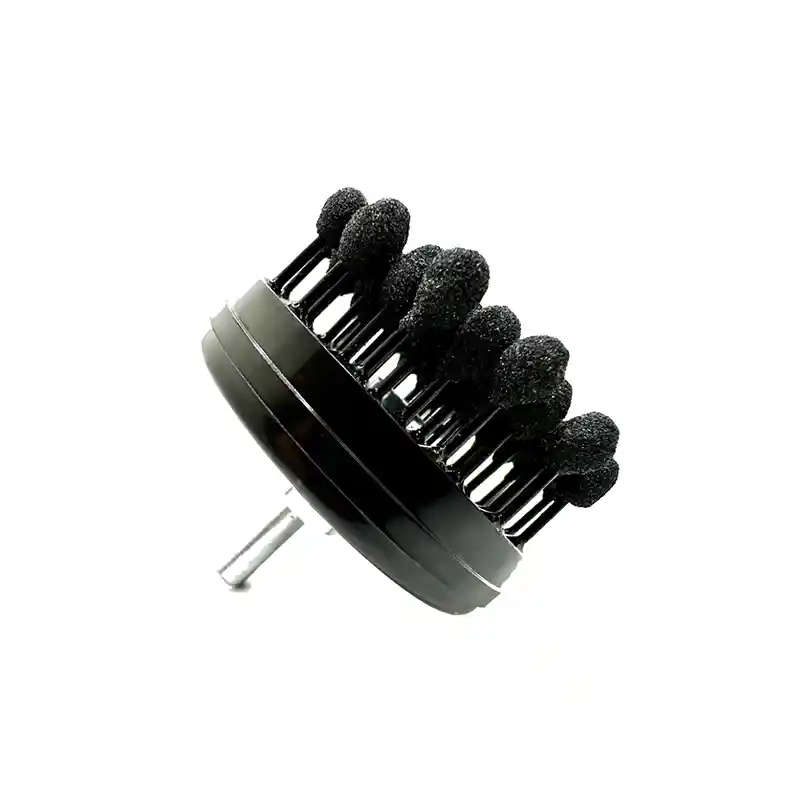
Fill density, the number of filaments per unit area of the brush face, determines how aggressively the brush cuts and how long it lasts. Higher fill density means more filaments share the load, reducing wear on individual filaments but also reducing the flexibility that allows conforming to part geometry.
For CNC deburring applications, moderate fill density typically performs better than maximum density. The brush needs enough flexibility to follow contours without leaving witness marks from filament bunching. When fill density is too high, the brush acts more like a solid abrasive disc, losing the conformability advantage that makes nylon circular brushes useful in the first place.
Huixi Brush manufactures nylon circular brushes with fill densities specified per application. Standard industrial deburring uses 60 to 70 percent fill. Polishing applications where surface conformity matters more than material removal use 50 to 60 percent fill. Heavy scale removal on castings uses 75 to 80 percent fill where aggressive cutting outweighs conformability requirements.
The practical test is simple. Run the brush on a sample part at your planned spindle speed. If the brush leaves a uniform finish across contoured areas, the fill density is appropriate. If you see streaking or uneven finish where geometry changes, the brush is too dense for that application.
Disc Brush Versus Wheel Brush for Different CNC Operations
The choice between disc and wheel configurations depends on how the brush contacts the workpiece and what access the CNC spindle provides.
Disc brushes mount with the filaments pointing axially from the spindle. The working surface is the filament ends. This configuration suits:
- Flat surface deburring where the spindle approaches perpendicular to the work surface
- Pocket cleaning where the brush plunges into a cavity
- Face milling burr removal where edges are accessible from above
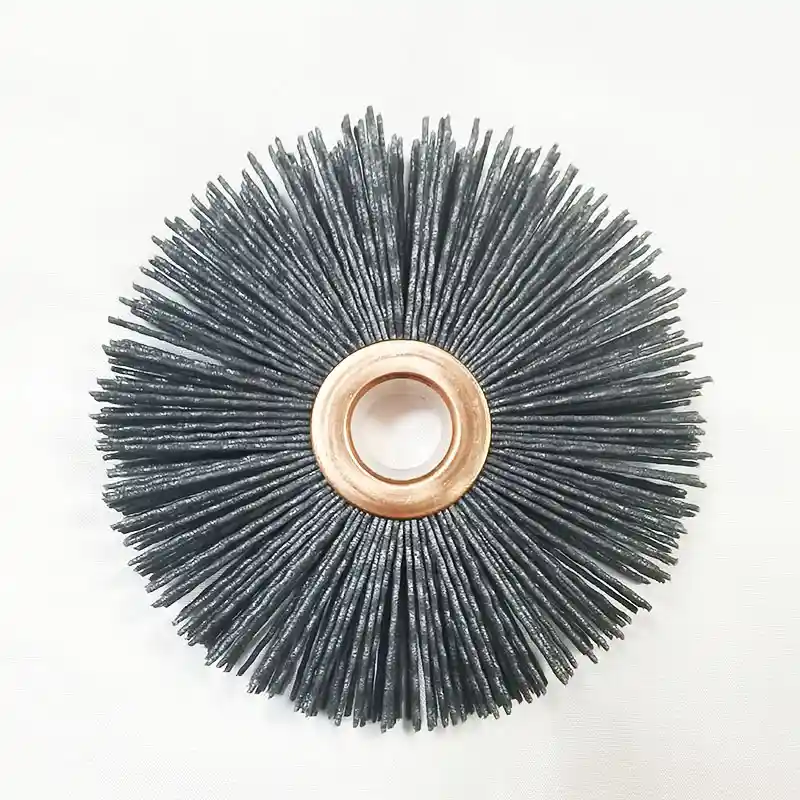
Wheel brushes mount with filaments radiating from a central hub. The working surface is the filament sides. This configuration suits:
- Edge deburring where the spindle travels along the part profile
- External contour finishing where side contact is more effective
- Slot and groove cleaning where the brush enters from the side
Many CNC deburring programs use both configurations in sequence. A disc brush removes face burrs, then a wheel brush cleans edges in a second pass. The tooling investment is modest compared to the labor cost of manual deburring or the scrap cost of parts damaged by inappropriate brush selection.
If your current program uses only one brush type and you are seeing inconsistent results on different features, it is worth discussing your part geometry with a brush supplier who can recommend whether adding a second configuration would improve outcomes.
Common Specification Mistakes and How to Avoid Them
The most frequent specification error I encounter is treating brush diameter as the only variable. A shop will specify a 100 mm disc brush because that fits their spindle and assume all 100 mm disc brushes perform similarly. Filament material, grit, diameter, fill density, and trim length all affect performance as much as overall brush diameter.
Trim length, the distance filaments extend from the brush body, controls how much the filament can flex before the brush body contacts the workpiece. Short trim length produces aggressive cutting with less conformability. Long trim length produces gentle action that follows contours but removes material slowly.
For CNC applications where cycle time matters, the tendency is to specify short trim length for speed. This works until the brush encounters a part feature with tighter radius than the reduced flexibility can follow. The result is either missed burrs in tight corners or surface damage where the brush body contacts the part.
A balanced specification for general CNC deburring starts with trim length equal to 20 to 25 percent of the brush diameter. A 100 mm disc brush would have 20 to 25 mm trim length. Adjust shorter for aggressive flat surface work or longer for complex contoured parts.
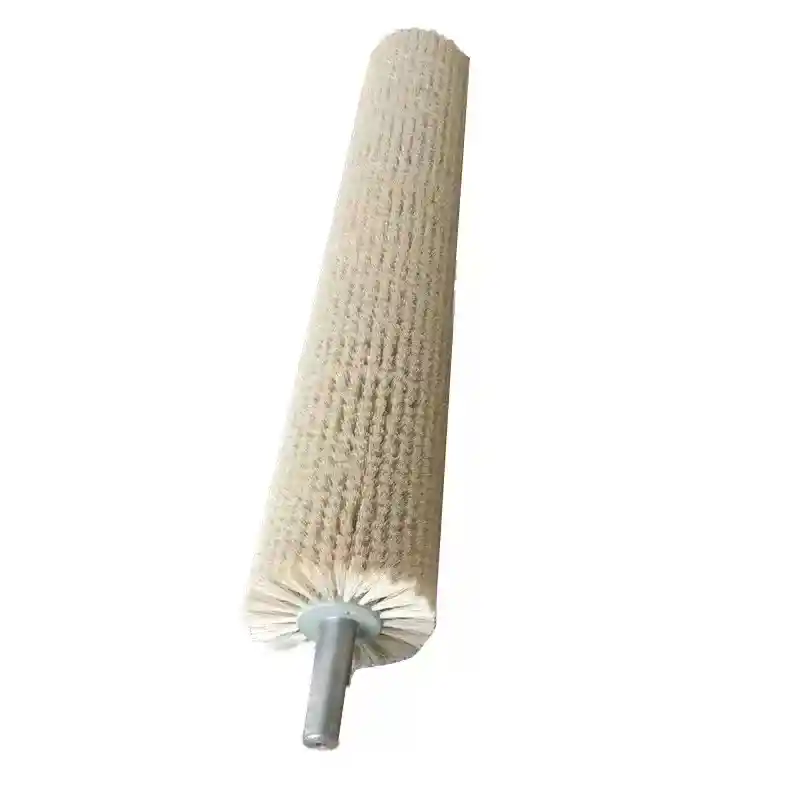
Another common mistake is running nylon circular brushes at wire brush speeds. Nylon filaments generate heat through friction, and excessive speed causes filament tips to melt and glaze over, losing their abrasive effectiveness. Maximum peripheral speed for abrasive nylon is typically 15 to 20 meters per second, significantly lower than wire brush ratings. Calculate your spindle RPM based on brush diameter to stay within this range.
When to Replace a Nylon Circular Brush
Nylon circular brushes wear predictably, which makes replacement scheduling straightforward once you establish baseline performance. The filaments shorten as abrasive particles dislodge and the nylon itself wears. When trim length reduces to approximately 60 percent of original specification, the brush loses enough flexibility that performance changes noticeably.
Visual inspection is unreliable for determining brush condition because worn filaments may appear intact while having lost their abrasive content. The practical indicator is finish quality. When a brush that previously produced acceptable results starts leaving inconsistent finish or missing burrs in corners, the brush has reached its service limit regardless of how it looks.
Tracking brush life against part count provides data for scheduling replacements before quality problems appear. A brush that consistently processes 800 parts before finish degradation can be scheduled for replacement at 700 parts, preventing the inspection failures and rework that occur when brushes run past their effective life.
Getting the Right Nylon Circular Brush for Your CNC Program
Specifying nylon circular brushes for CNC use requires matching multiple parameters to your specific application. Material type determines grit selection. Part geometry determines disc versus wheel configuration. Surface finish requirements determine filament diameter and fill density. Cycle time constraints determine trim length and spindle speed limits.
If you are experiencing inconsistent deburring results, surface damage on soft materials, or excessive brush consumption, the specification likely needs adjustment rather than simply trying a different supplier for the same specification. Share your part material, the burr locations and sizes your program produces, and your current brush specification with our engineering team at [email protected] or +86 1580 0932 713. We can review whether your current specification matches your application or recommend adjustments that would improve results.
Questions CNC Engineers Ask About Nylon Circular Brushes
What spindle speed should I use for abrasive nylon disc brushes?
Calculate based on peripheral speed rather than RPM alone. Abrasive nylon filaments perform best at 15 to 20 meters per second peripheral speed. For a 100 mm diameter brush, this translates to approximately 2,800 to 3,800 RPM. Running faster causes heat buildup that glazes filament tips and reduces cutting effectiveness. Running slower extends brush life but increases cycle time. Most CNC deburring programs find optimal balance at 18 meters per second, adjusting slightly based on whether the priority is finish quality or throughput.
Can I use the same nylon brush for aluminum and steel parts?
Using the same brush specification for both materials typically produces poor results on at least one of them. Aluminum requires finer grit (180 to 320) to avoid embedded particles, while steel burrs need coarser grit (80 to 120) for effective removal. The filament diameter also differs because aluminum’s softness requires thinner, more flexible filaments. If your production includes both materials, maintaining separate brush inventories for each produces better results than compromising on a single specification.
How do I know if fill density is wrong for my application?
Two symptoms indicate fill density problems. If the brush leaves streaking or uneven finish where part geometry changes from flat to contoured, the fill density is too high and the brush cannot conform to the surface. If the brush wears unevenly with some filaments significantly shorter than others, the fill density is too low and individual filaments are overloaded. Either condition warrants testing a brush with adjusted fill density on sample parts before committing to production quantities.
Why does my nylon brush leave a different finish after a few hundred parts?
Abrasive nylon filaments lose cutting effectiveness as the embedded grit particles dislodge through normal use. The brush may still remove burrs but produces progressively finer finish as it wears. If your specification requires consistent finish across production runs, establish a part count threshold for brush replacement based on finish measurement rather than visual brush inspection. Tracking this data across several brush changes reveals the actual service life for your specific application. If you need tighter finish consistency, send your part specifications and current brush data to our team for recommendations on grit and filament combinations that maintain finish longer.
If you’re interested, check out these related articles:
how do you know about deburring brushes
abrasive wheel brush a magical tool for industrial surface treatment
advantage of hx cylindrical nylon brushes
abrasive disc brush an efficient tool for many applications