Patients rarely arrive at a clinic already calm. The anxiety often begins before check-in, builds in the waiting area, and peaks when a name is called. Scent can reduce patient anxiety when the fragrance, delivery method, and intensity match the room. A scent solution specialist controls those variables in ways a plug-in air freshener cannot. In dental offices, outpatient clinics, and diagnostic centers, the goal is not to mask clinical smells with perfume. The goal is to shift the sensory environment so the nervous system receives a quieter signal.
Why Do Patients Feel Anxious in Clinical Settings?
Waiting areas concentrate anxiety triggers. Hard seating, unknown wait duration, overheard conversations, and the visible movement of staff all raise alertness. Then there is smell. Clinical spaces carry cleaning agents, disinfectants, latex, and biomedical waste odours that register before conscious thought. The olfactory system connects to the limbic region, so scent signals can trigger unease without a patient knowing why. The same mechanism works in reverse. A designed ambient fragrance can present a more familiar environmental cue.
Can Scent Reduce Patient Anxiety in a Waiting Area?
The reduction does not come from making the space smell good. It comes from replacing unfamiliar, threatening odours with a controlled scent signal that the brain reads as safe. Scent can reduce patient anxiety when the diffusion is subtle enough to be noticed only after a few minutes. At that intensity, the fragrance does not announce itself the way a cleaning product does. It becomes part of the room’s baseline. The most effective clinical scent programs I have designed start at the lowest perceivable concentration and hold there. What changes is not the scent intensity. What changes is the contrast between the treated area and the sharper odours outside it.
Which Fragrances Work Best for Patient Anxiety?
Fragrance selection is less about one magic note and more about recognition. Patients respond best to scent profiles they have met in positive contexts. Fresh, uncomplicated accords usually work better than dense orientals or sweet gourmands in a clinical setting.
Citrus and Green Accords
These profiles read as clean and airy. They can make a waiting room feel maintained without smelling like disinfectant. I often recommend a light bergamot, white tea, or green tea note with a dry base to avoid a household cleaner association.
Lavender and Soft Florals
Lavender appears most often in wellness discussions, but its clinical value depends on concentration. Overdosed lavender becomes powdery and can feel dated. A small percentage inside a green or citrus blend is usually more acceptable than a full lavender experience.
Oud and Woody Blends
Woody accords add calm and a sense of warmth, particularly in imaging centers, physiotherapy clinics, and dental offices. These scents should stay in the base. If the wood note dominates, the room can begin to feel heavy rather than reassuring.
What Equipment Delivers Consistent Clinical Scenting?
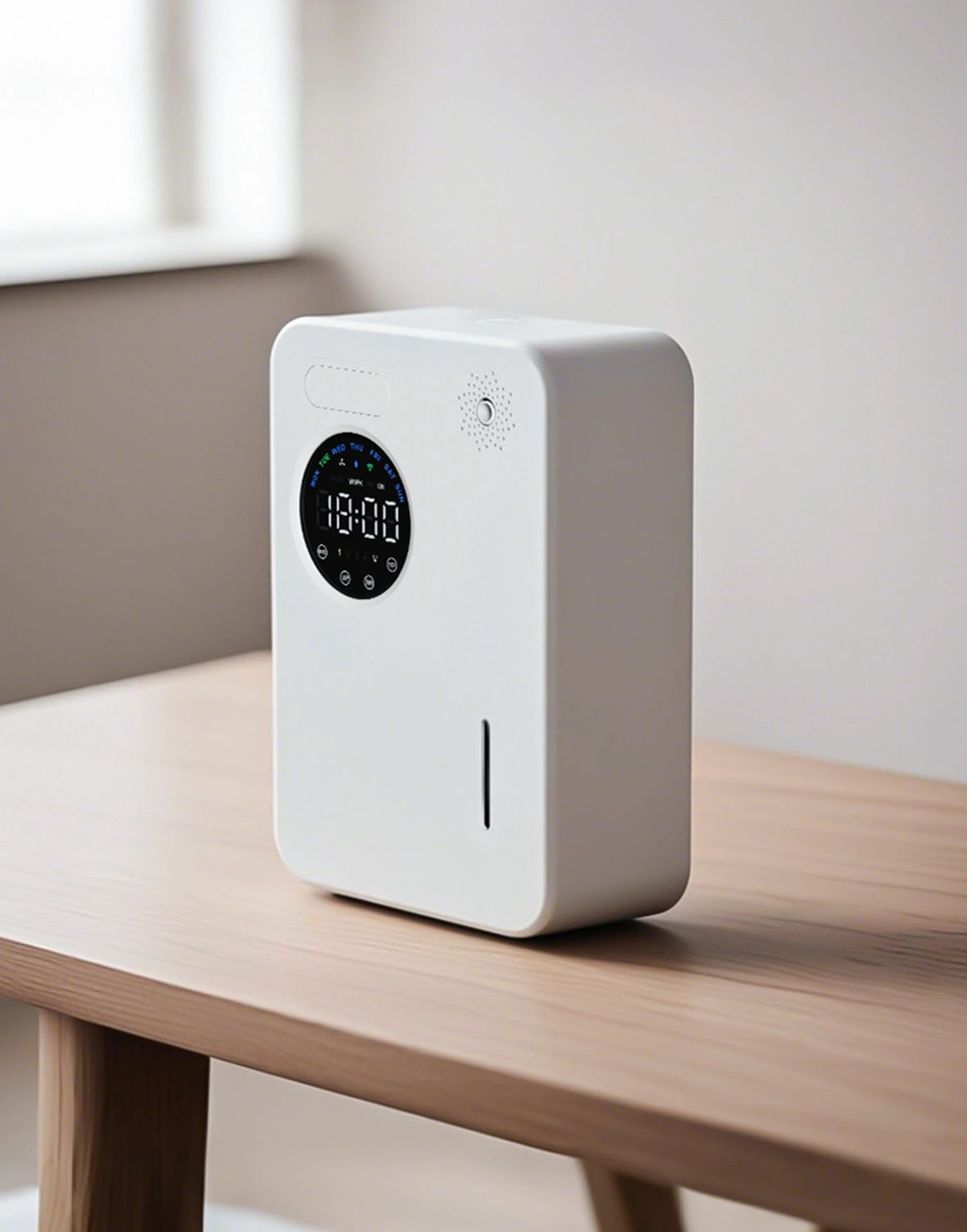
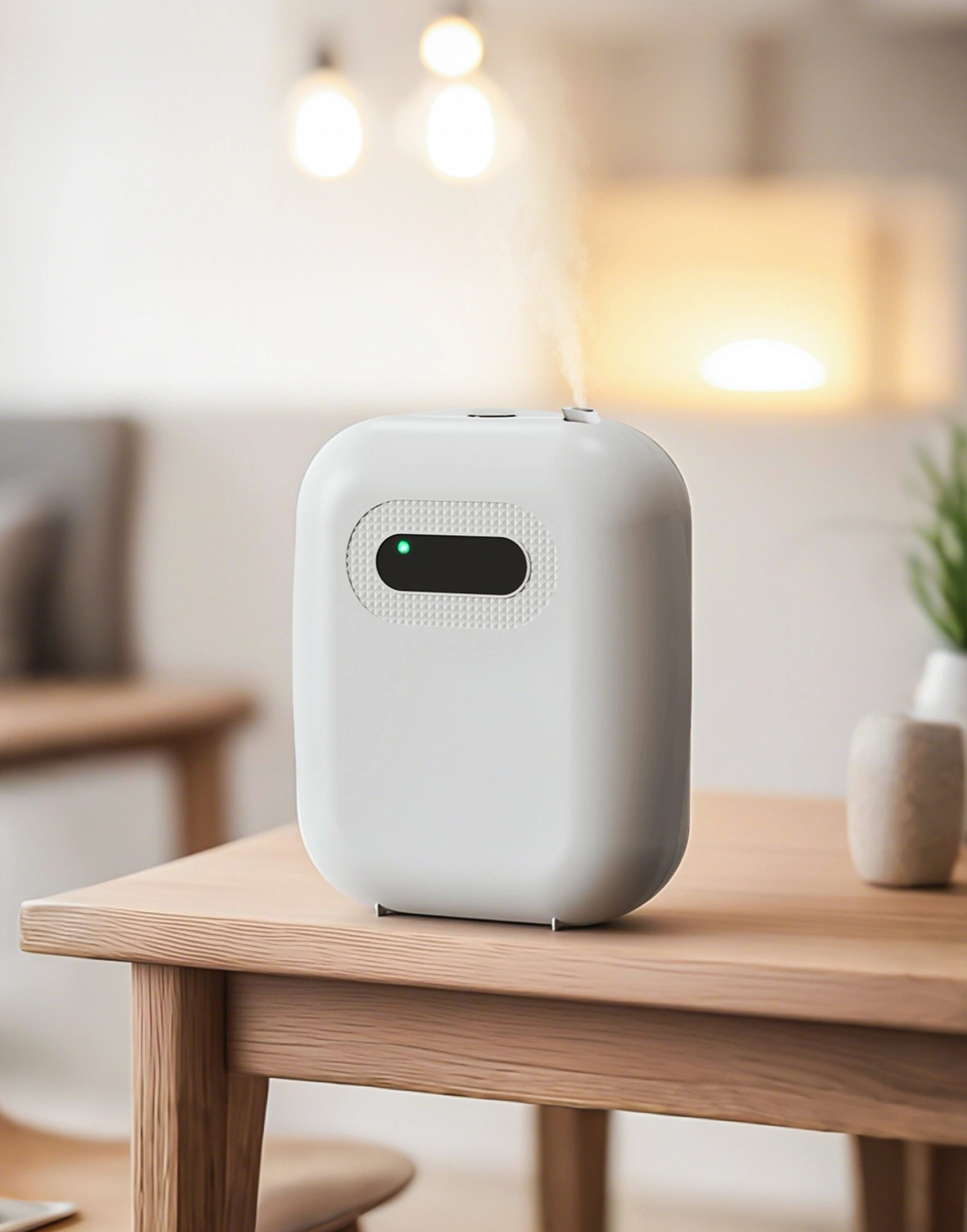
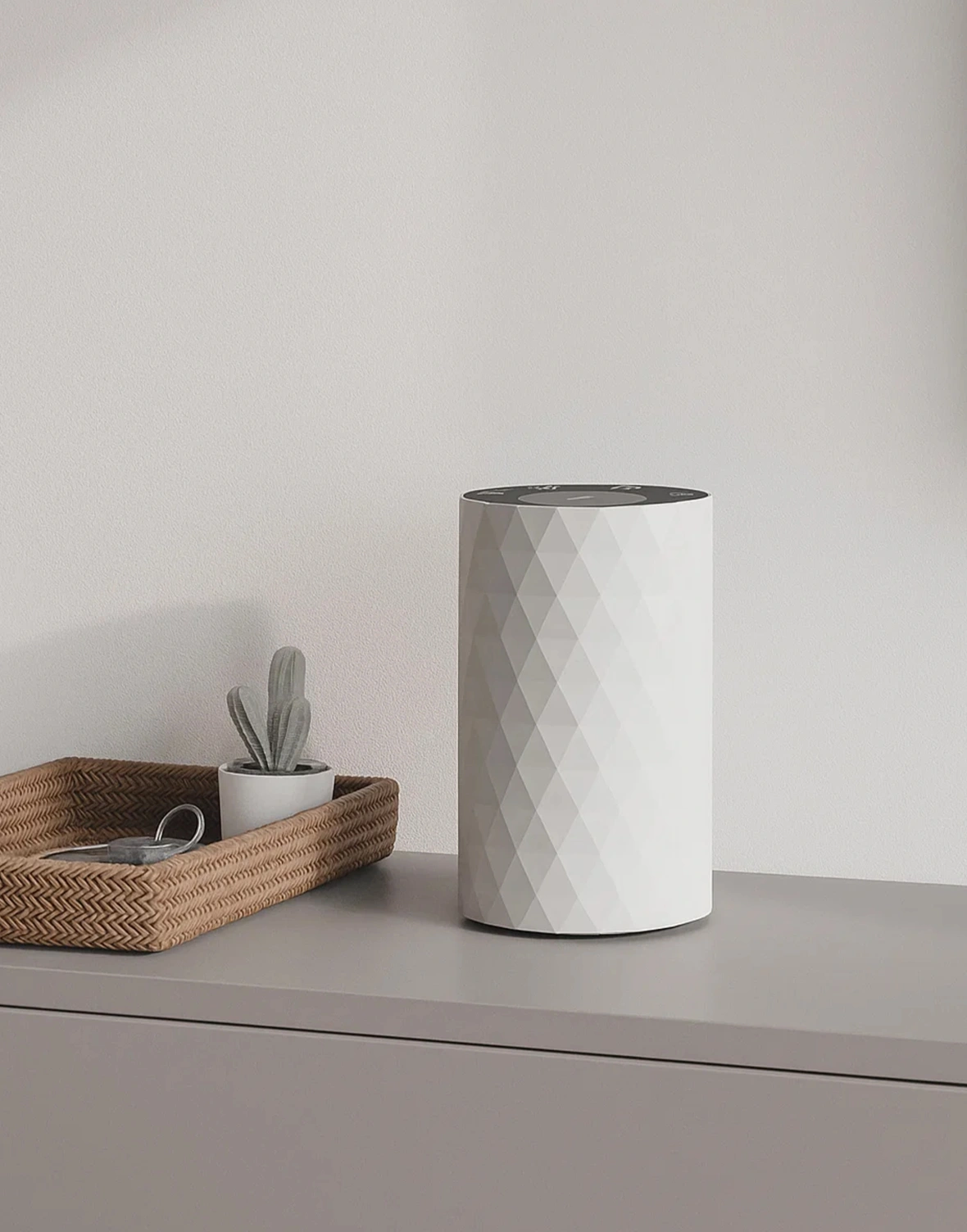
A clinical space needs diffusion that does not add noise, moisture, or visible mist at the wrong moment. Waterless cold air diffusion is the standard I favor for waiting rooms because it keeps fragrance particles small enough to remain airborne and consistent enough to avoid wet surfaces. HVAC integration works in larger facilities and multi-floor clinics. Standalone units suit smaller practices and rooms that need independent scheduling. In clinical spaces, scent can reduce patient anxiety only if the delivery system stays consistent and unobtrusive. The table below shows the models most relevant to clinical layouts from our product range.
| Model | Coverage | Power | Control | Clinical Application |
| Commercial Scent Oil Diffuser (Bluetooth APP) | 300m³ | DC12V-1A | Bluetooth APP | Waiting rooms and consultation suites |
| Wall Plug-in Essential Oil Diffuser Machine | 200-250m³ | 100-240V wall plug-in | Bluetooth APP | Compact private clinics |
| Commercial Aroma Diffuser HVAC Scent System (Rectangular) | 3,000-4,000m³ | DC12V | Physical, Bluetooth, WiFi | Large lobbies and open plan areas |
| Commercial HVAC Scent Diffuser Aroma Dispenser System | 8,000m³ | DC12V-3A | Bluetooth APP | Multi-zone healthcare facilities |
If your clinic has multiple rooms, ceiling returns, or a lobby larger than one coverage zone, it is worth confirming the coverage calculation before selecting a unit. Send a simple floor plan to [email protected] and we will check which model fits the air volume.
What Mistakes Undermine Calm Scenting in Healthcare?
Most failures come from treating scent as decoration. Overdosing is the most common. A fragrance that can be identified immediately usually produces fatigue and aversion, which has the opposite clinical effect. Masking is the second mistake. Pushing a strong fruit or floral scent over urine, sweat, or disinfectant creates a mixed layer that patients read as uncleanliness rather than comfort. Ignoring airflow is the third. The same diffuser can create a pleasant lobby and an overpowering corridor if supply air pushes fragrance into a dead zone. In one clinic layout, a ceiling return pulled scent away from the waiting chairs, and staff assumed the machine was not working. The fix was position, not concentration.
How Should a Clinic Plan Its Scenting Program?
Start with the patient journey, not the fragrance. Walk the path from entrance to treatment room and note where smell changes, where airflow stalls, and where patients wait longest. Then set the first diffuser at the area of highest dwell time. Use a low intensity and schedule fragrance around staff shifts. Review after one week. If staff no longer notice the scent, that usually means adaptation, not failure. If patients report a cleaner or calmer space, hold the level. The aim is a consistent baseline that fits the clinical environment without becoming a topic of conversation. Whether scent can reduce patient anxiety in a specific clinic depends on that baseline, not on finding a stronger oil.
Patient anxiety is already present before treatment begins. A properly matched scent program can soften the waiting experience, but the equipment and fragrance must suit the room. Send your room dimensions, ceiling height, HVAC details, and typical patient volume to [email protected] or call +86 185 6557 5758. We will reply with one diffuser recommendation and one scent intensity schedule for the space.
Common Questions About Scenting and Patient Anxiety
Does scenting only mask clinical odors?
Scenting can do more than mask, but only if the fragrance is not used to cover a problem. The first step is removing source odors through ventilation and cleaning. After that, a waterless diffuser can create a fresh baseline that makes residual clinical smells less noticeable. I have seen waiting rooms where the same scent profile read as clean in one corner and stale in another because the extract air was pulling fragrance into an alcove. The answer is zoning and concentration, not a stronger scent.
What about patients with asthma or fragrance sensitivity?
It depends on the patient group and the fragrance formulation. For general waiting areas, the safer approach is a low concentration of a diffuser oil with no added dye and a simple, transparent formulation. In respiratory clinics, oncology settings, or spaces where patients report multiple chemical sensitivities, scenting may be limited to staff areas or omitted entirely. The decision should follow patient mix and local facility policy. Share your patient profile before selecting a fragrance family. That detail changes the recommendation more than room size does.
Can hospitals use scent in patient treatment areas?
Many teams assume scenting belongs only in lobbies and corridors. The real constraint is clinical tolerability, not a blanket ban. Treatment areas with invasive procedures, immunocompromised patients, or strong infection control protocols usually require fragrance-free zones. Nonclinical adjacencies such as staff break rooms, family waiting areas, and entrance halls can still carry a consistent signature scent without entering the treatment bay. Each facility should separate zones by patient exposure and air handling.
How often should a clinical scent program adjust intensity?
In clinics where I have reviewed scent programs, the most frequent adjustment is intensity, not fragrance choice. Many operators start too high and turn the unit down within the first week because staff working eight hours in the space adapt to a smell faster than patients do. A better starting point is the lowest level that can be perceived after entering the room. Set a monthly check for oil level, diffuser vents, and staff feedback. Change the scent profile only when the room function changes or the season shifts the air condition. If your facility includes sensitive patient groups, share those constraints and we will confirm which formulation options are appropriate before you order.
If you’re interested, check out these related articles: