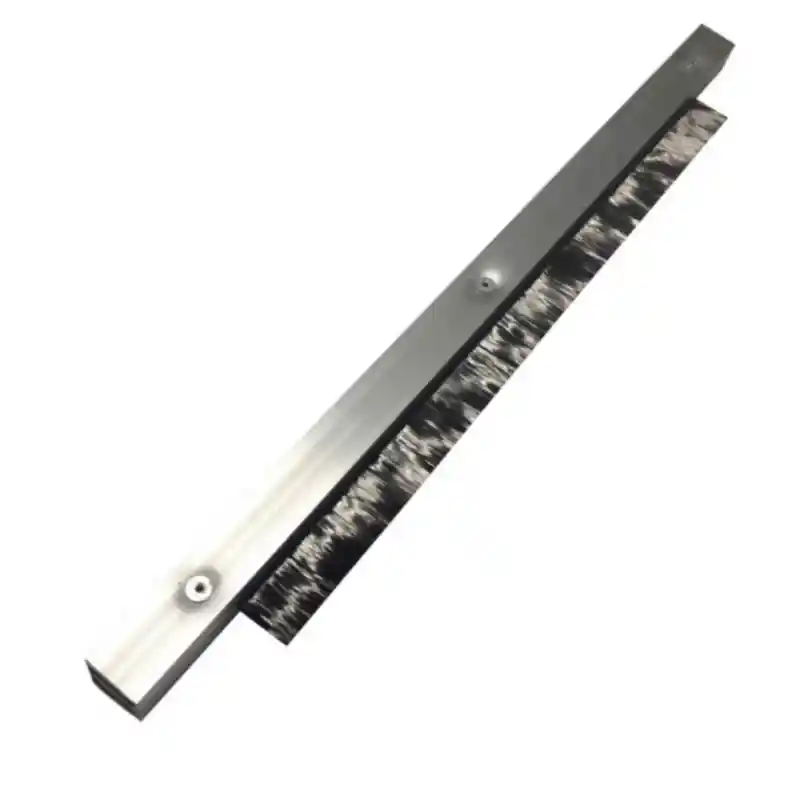

Equipment cabinets in industrial plants usually fail slowly: dust builds on terminals, conditioned air escapes through the door gap, and noise travels outside the enclosure. A durable door seal brush closes these gaps with dense, flexible filaments while still allowing the door to open and close without high friction. This type of brush is used as a perimeter seal on electrical enclosures, CNC machine guards, generator housings, climate-controlled cabinets, and mobile equipment cabs. The product page for door seal brush shows common mounting profiles, and the seal can also be built as a cut-to-length strip brush for a customer-specific channel.
Why Door Gaps Are a Reliability Problem
A door gap is not just a mechanical clearance. It is a continuous opening for dust, air, and noise.
Dust ingress disrupts cooling and can settle on circuit boards, connectors, and moving parts. In dust-protected equipment, IEC 60529 defines IP5X as limited dust ingress that does not interfere with operation [1]. A perimeter brush helps maintain cabinet cleanliness by creating a labyrinth of bristles instead of leaving a straight open seam.
Air leakage around the door edge also works against temperature control. In air-conditioned or ventilated cabinets, an unsealed gap allows warm or humid air to enter and conditioned air to escape. Infiltration around the perimeter makes the cooling load less stable [2]. A dense brush line reduces that uncontrolled air exchange without blocking service access.
Noise is the third problem. Gaps around the door reduce the effective transmission loss of the enclosure wall. Acoustic guidelines for enclosure design treat any opening as a weak point in the barrier system [3]. Door seal brushes are not a substitute for an engineered acoustic enclosure, but they close the perimeter path where sound and dust both pass through. In workplaces where cabinet noise contributes to overall exposure, perimeter sealing is part of a wider noise-control program under occupational exposure rules [4].
What Is a Door Seal Brush?
A door seal brush is a linear sealing component made of filaments held in a metal or plastic channel. The filaments are typically straight or slightly angled, and they flex when the door closes. This allows the brush to follow an uneven gap better than a solid rubber or foam strip.
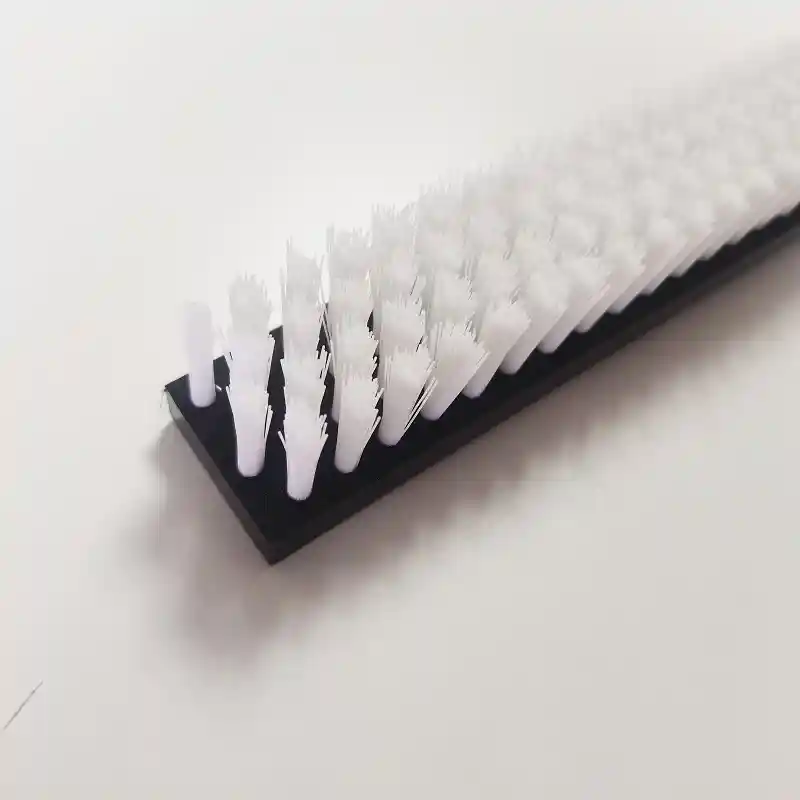
The brush belongs to the same product family as an industrial strip brush. The backing holds the bristles in place, while the free bristle ends do the sealing. Door seal brushes work well where the door edge is irregular, where the gap changes along the frame, or where repeated opening would wear a solid seal.
When the sealing edge must follow a straight or formed channel, strip construction is the core option. <what you know about brass wire brush strip> covers backing profiles, filament material, and how formed strip brushes keep the bristles anchored under repeated door movement.
Key Selection Factors for Door Seal Brushes
Filament Material
The filament must match the dust, moisture, temperature, and electrical conditions of the cabinet. The table below lists common materials and their main service role.
| Material | Best For | Practical Notes |
|---|---|---|
| Nylon 6/6 | General-purpose dust sealing | Good abrasion resistance and bend recovery |
| Polypropylene | Light-duty sealing and moisture resistance | Lower cost and good chemical resistance |
| PET | Cleanrooms and food-related equipment | Low lint and stable flex performance |
| Antistatic nylon | Electronic control cabinets | Reduces static build-up around sensitive boards |
| Conductive filament | Telecom and data cabinets | Requires a grounded mounting channel |
For outdoor equipment, UV-stabilized nylon or polypropylene is generally preferred because it retains flexibility after long sun exposure.
Backing and Mounting
The backing may be aluminum, galvanized steel, stainless steel, PVC, or a flexible plastic profile. Aluminum is common for lighter door seams. Galvanized steel is common where fasteners are needed along the full length. Stainless steel is used in washdown areas or corrosive environments.
A flexible strip brush can follow a curved door profile, while a formed strip brush provides a more rigid, pre-shaped mounting section for automation machinery.
Bristle Density and Trim Length
Density and trim length determine how much the brush closes the gap. The correct solution starts with field measurement: measure the smallest gap, the largest gap, and the gap along the hinge side separately. A common approach is to select a trim length that allows moderate compression at the widest point without excessive friction at the narrowest point.
For example, if a control cabinet door has a 5 mm gap near the hinge and a 2 mm gap near the latch, a brush with stepped trim lengths can be produced rather than forcing one density across the full perimeter. This keeps closing force reasonable while closing the larger opening.
Dust, Wind, and Noise Isolation in One Component
Dust Control
Dense bristles create a flexible barrier instead of a single contact line. Dust must pass through multiple filament layers before it can enter the cabinet. In many electrical enclosures, this is enough to keep dust from settling where it can cause tracking or overheating.
Wind and Draft Reduction
For climate-controlled cabinets, the brush reduces the open edge area that permits air exchange. The reduction is not the same as a sealed gasket, but it meaningfully lowers uncontrolled infiltration around the door perimeter [2]. This helps stabilize internal temperature and can reduce condensation in humid environments.
Noise Reduction
A door seal brush improves the perimeter part of the enclosure, but noise can still travel through panels, fans, and cable entry points. For this reason, the brush should be selected as part of the cabinet sealing system rather than presented as a standalone acoustic guarantee. Where a formal acoustic target is required, the enclosure should be evaluated as a complete barrier system [3].
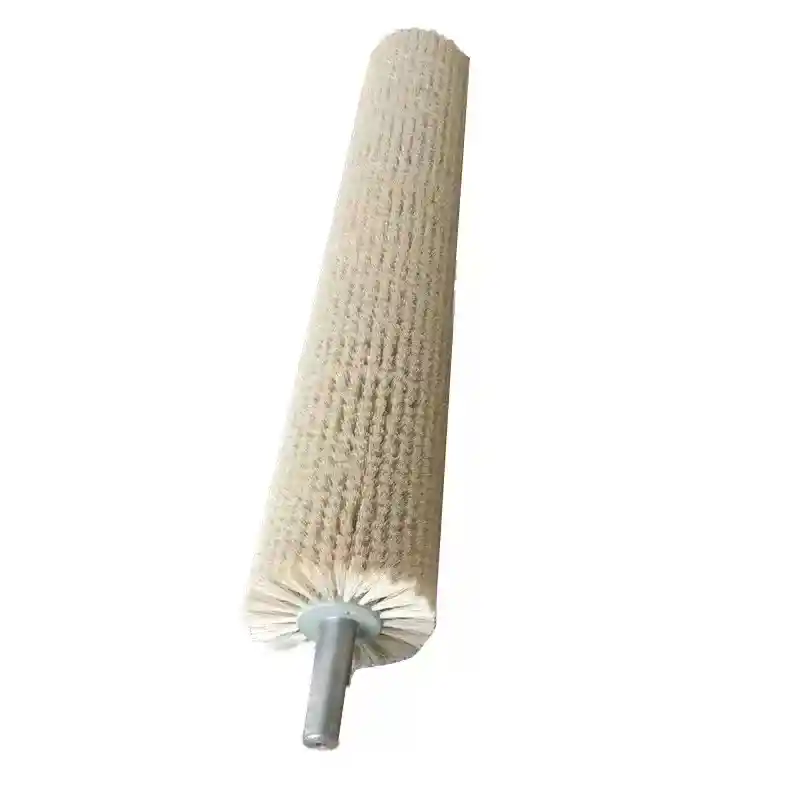
For cabinets with rotating shafts and removable panels, cylindrical and strip brushes often work together at the gaps. <main features and applications of hx nylon cylindrical brush> covers diameter, filament type, and trim-length selection for cylindrical sealing and light cleaning duties.
Installation and Field Checks
Installation is straightforward when the mounting channel is selected first. The channel is attached to the door or frame, and the brush is slid into the channel or secured with fasteners. Before finalizing the order, check the following:
- Measure the gap at both the hinge side and the latch side.
- Confirm the door closes without excessive force.
- Check whether the brush will rub against cables, seals, or a raised door lip.
- Select backing material for the surrounding washdown or chemical exposure.
- For long lengths, order the brush in one continuous section where possible to avoid end gaps.
If you are replacing a rubber seal or an existing brush that wears quickly, send the old profile, measured gap range, operating temperature, and material requirement to [email protected]. Our engineers can match the filament density and backing to your cabinet door and prepare the inquiry with the technical drawings.
Common Cabinet Applications
Door seal brushes are used across many equipment types because the sealing requirement is similar: a moving door must remain serviceable while the closed perimeter keeps out contamination.
- Electrical distribution cabinets: reduce dust accumulation on terminals and busbars.
- CNC machine enclosures: block fine chips and splashing coolant from reaching electrical components.
- HVAC and air-handling cabinets: limit air exchange and improve differential pressure stability.
- Telecom and data cabinets: manage cable entries and door perimeter gaps.
- Generator and compressor enclosures: combine dust protection with partial perimeter noise control.
- Railway and off-road equipment cabs: tolerate vibration and repeated door movement.
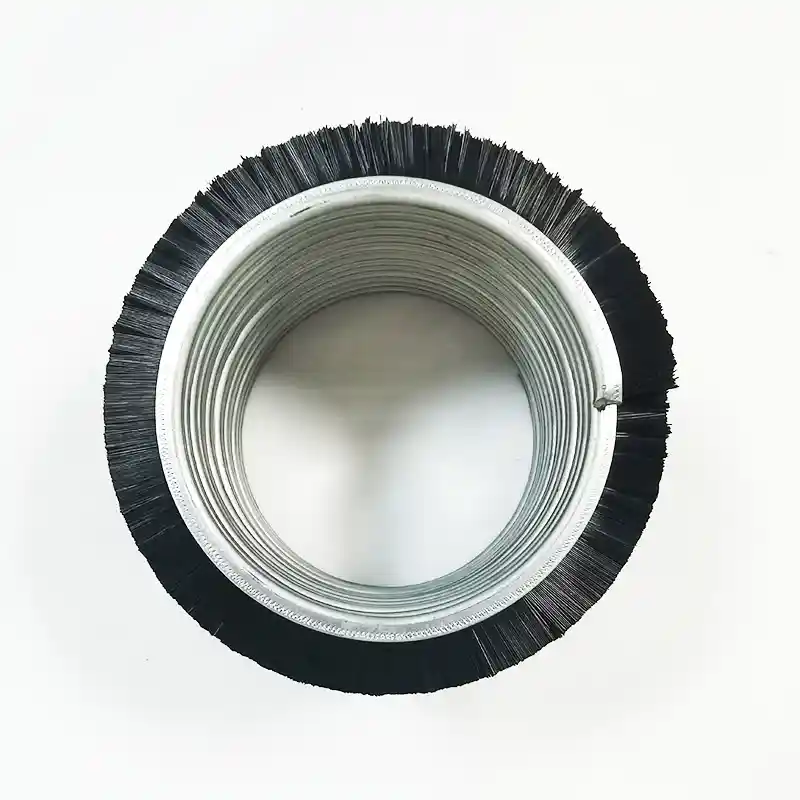
If the cabinet also has spindle or shaft openings, the inward and outward winding direction changes how the brush sheds debris. <the differences between inward and outward spiral brush> covers winding direction, filament lay, and the practical effect on rotary sealing and cleaning.
Get a Custom Door Seal Brush Quote
Send your cabinet drawing, measured gap dimensions, filament material preference, and quantity to [email protected] or call +86 1580 0932 713. Huixi Brush provides cut-to-length strips, formed profiles, and mounting channels made to your cabinet door specification. We will confirm the backing type, filament density, trim length, and production lead time before your order is released.
Frequently Asked Questions
What is the difference between a door seal brush and a rubber gasket?
A door seal brush is better for uneven or changing gaps because the filaments flex independently. A rubber gasket provides a tighter compression seal but can wear faster when the door edge is rough or the alignment is not stable.
How do I choose the right bristle density?
Measure the gap at several points along the door. Use a higher density for dust and noise control, and a lower density where closing force or sliding friction must be kept low. For sensitive electronics, ask about antistatic or conductive filament options.
Can a door seal brush handle outdoor UV exposure?
Yes. Select UV-stabilized nylon or polypropylene filaments and a corrosion-resistant backing such as stainless steel or treated aluminum. This keeps the brush flexible and prevents rapid bristle hardening.
Does a door seal brush eliminate cabinet noise?
It reduces perimeter noise transmission, but it does not eliminate noise from panels, fans, or cable openings. For a formal acoustic target, treat the brush as one part of the enclosure barrier and follow acoustic enclosure design principles [3].
References
[1] IEC 60529:1989+AMD1:1999+AMD2:2013, Degrees of protection provided by enclosures (IP Code).
[2] ASHRAE Handbook—Fundamentals, Chapter 16, Ventilation and Infiltration.
[3] ISO 14163:1998, Acoustics — Guidelines for noise control by enclosures.
[4] U.S. Occupational Safety and Health Administration, 29 CFR 1910.95, Occupational noise exposure.
If you’re interested, check out these related articles:
advantage of hx boiler tube brush
brass brushes work perfectly for pipe cleaning
descaling spiral brush an innovative tool and generalist in the field of industrial cleaning
abrasive disc brush an efficient tool for many applications
abrasive disc brush an excellent industrial surface treatment tool
