Many retailers add fragrance after the store is finished, then find that the scent disappears behind cleaning products, cardboard, and cooking exhaust. Retail scent marketing works differently. It treats fragrance as part of the store environment, tied to airflow, ceiling height, and customer dwell areas. A well planned program lengthens dwell time and strengthens brand recall. The failure point is rarely the oil. It is almost always the equipment placement and zone mapping. I recommend fixing coverage and maintenance before locking a signature scent, because no fragrance profile survives a diffuser that cannot reach the customer’s nose.
Retail Scent Marketing Starts With Store Temperature and Airflow
Retail scent behaves like temperature: it pools near vents, follows air currents, and settles in low-traffic corners. Before choosing a fragrance, I map the store’s airflow. Air conditioning discharge, entrance draughts, and bakery or coffee station exhaust become the real design constraints. A floral scent placed near a kitchen exhaust will never behave the way the brand intended.
A retail scent marketing plan has to account for where customers pause, not just where fixtures sit. In projects I have worked on, stores that begin with a ceiling mounted commercial diffuser and then adjust the fragrance concentration report more consistent coverage than stores that start with decorative countertop units. The difference is not oil quality. Countertop units may cover 80 to 300 cubic metres, which suits a fitting room or small boutique, but they cannot move fragrance through a 300 square metre sales floor.
Store Layout Determines the Diffuser Coverage You Need
Retail formats dictate equipment. A jewellery store with a single door and low ceiling needs different hardware from a two storey fashion flagship with escalators and a central atrium. I group projects into three bands: under 300 cubic metres, 300 to 1,000 cubic metres, and above 3,000 cubic metres. Each band changes the pump, bottle size, and control method.
Small Stores Under 300 Cubic Metres
Small format retail works with a waterless diffuser on a shelf or counter running timed intervals. Low noise matters here, ideally under 35 dBa, so the fragrance does not compete with conversation. The goal is a scent that stays within the customer’s personal space, not one that fills the building.
Open Floors and Multi-Level Stores
Open floors need a fan-assisted diffuser or HVAC system. A commercial Bluetooth unit with a 150ml bottle can run around the clock and be scheduled by zone. When the space exceeds 3,000 cubic metres, we move to an HVAC scent system or dual-system unit with independent pumps for different floors. Without this split, the lower floor smells strong while the upper floor stays neutral.
| Retail format | Typical coverage | Equipment type | Application reason |
|---|---|---|---|
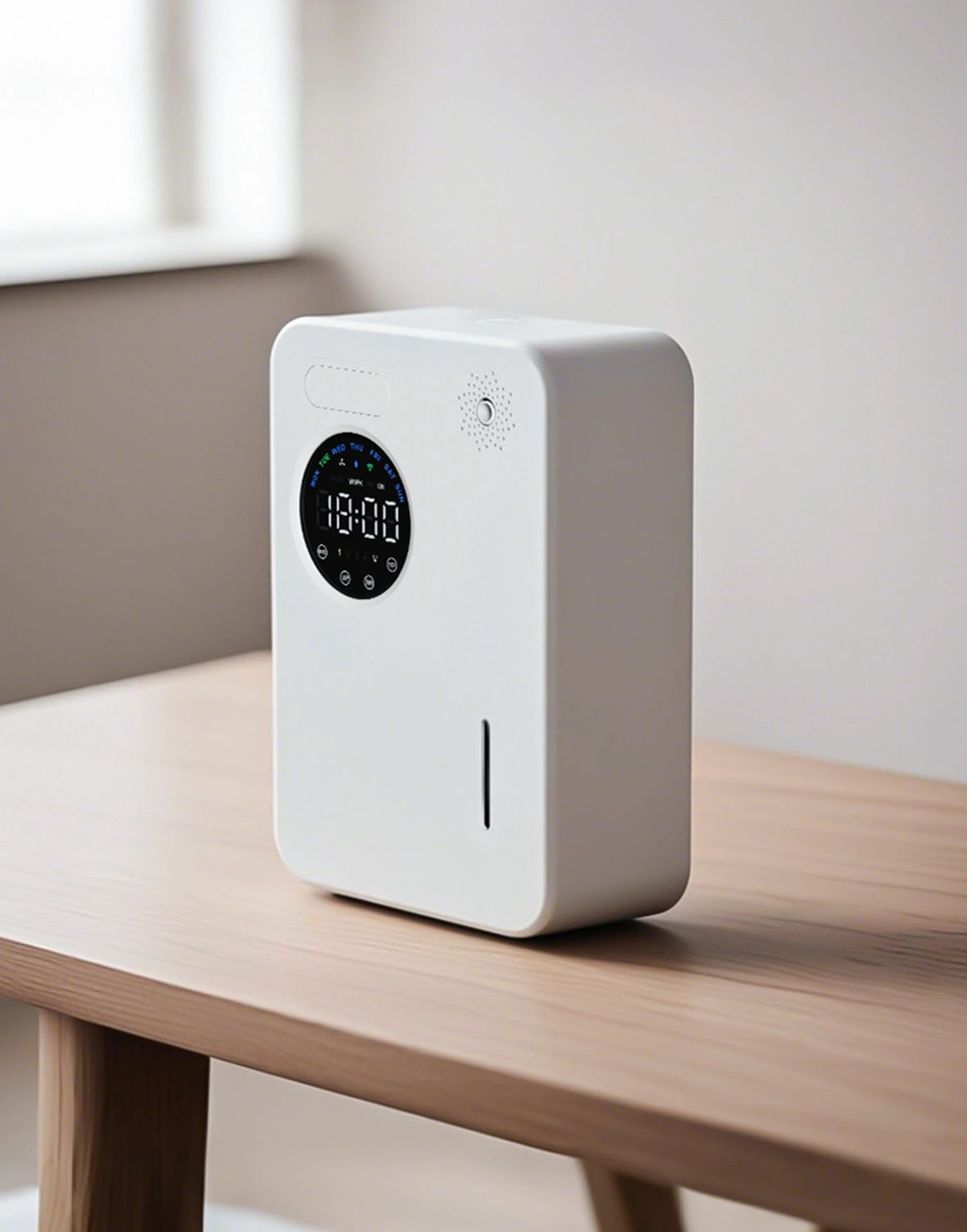
| Small boutique or fitting room | Up to 300 m³ | Home Essential Oil Diffuser Aroma Dispenser Machine | Countertop, 10ml bottle, quiet timer control |
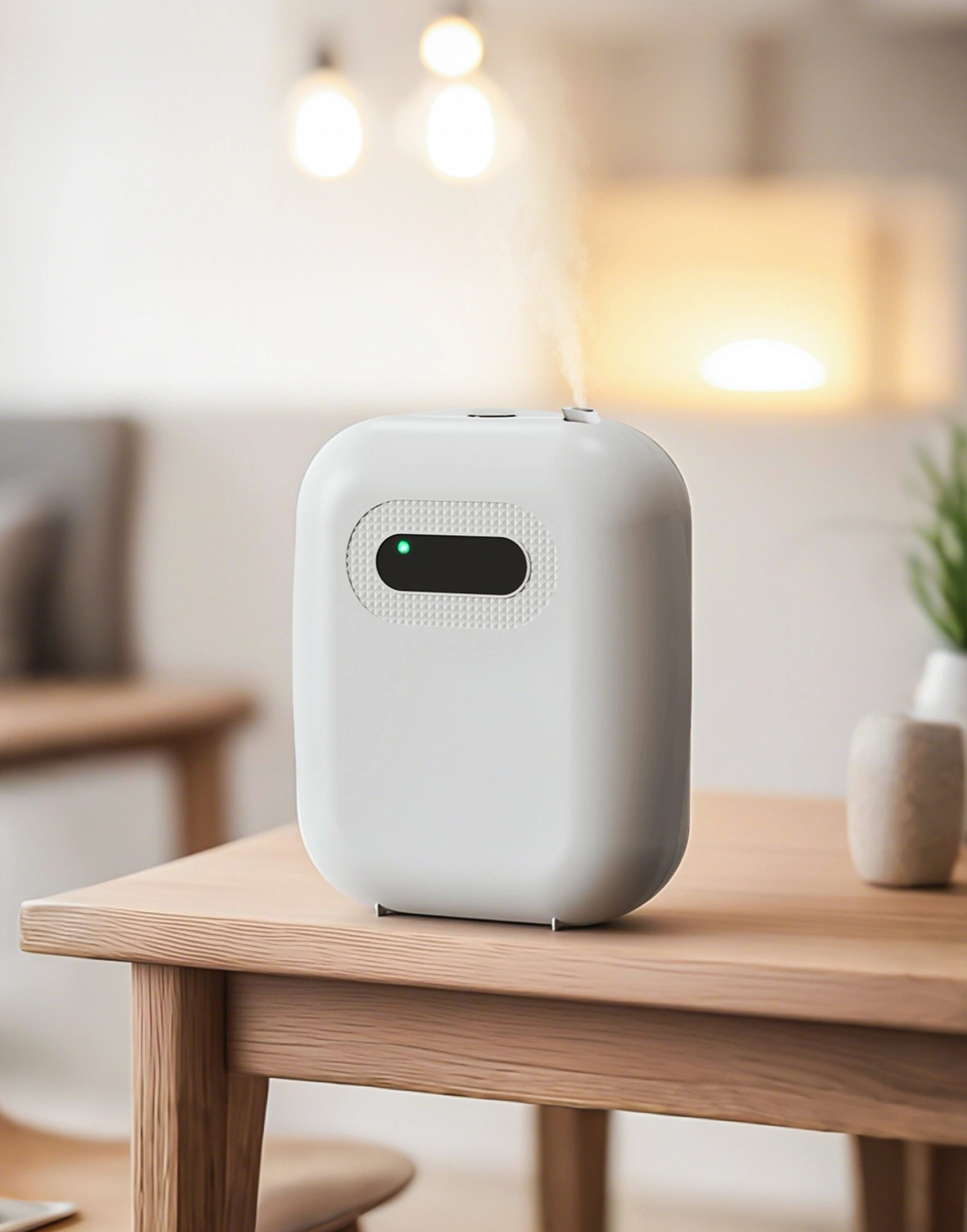
| Mid-size store or single floor | 300 to 1,000 m³ | Commercial Scent Oil Diffuser (Bluetooth APP) | 150ml bottle, long-life pump, app scheduling |
| Large retail floor | 3,000 to 4,000 m³ | Commercial Aroma Diffuser HVAC Scent System | Wall or HVAC integration, 1,000ml HDPE bottle |
| Flagship or mall zone | 5,000 to 15,000 m³ | Dual-System HVAC Scent Diffuser | Two pumps, two atomizers, independent zones |
| Ceiling or track setting | 500 to 600 m³ | Ceiling Diffuser Commercial Scent Machine | Track-mounted, built-in fan, contactless operation |
Retail Scent Marketing Uses a Distinct Signature Scent Process
A signature scent is not the strongest blend. It is the one a customer can recall after leaving the store. In a showroom project I reviewed, the team swapped a sweet vanilla for a green tea and cedar blend but kept the same diffuser schedule. The new profile was more popular with staff, but customer recall did not change because the scent was still only reaching the front third of the store. The lesson stayed with me: fragrance selection cannot fix a distribution problem.
Retail scent marketing should select the fragrance only after the equipment and zone map are set. I ask two questions before sending samples. What material dominates the store, and what time of day has the strongest odour load? A store that sells coffee at the entrance gets a woody base with low sweetness. A glass and metal boutique gets a cleaner green note. If a brand picks a fragrance before answering these questions, the result is usually a scent that works in the evaluation bottle but disappears or irritates in the live store.
If your store has ceilings above four metres or combines open and enclosed zones, confirm the diffuser throw before you finalize the specification. Email your ceiling plan to [email protected] and we will check the coverage against our equipment range.
Zone Planning Prevents Scent Fade and Customer Fatigue
Customers stop noticing a scent after several minutes in the same zone, not because the system failed but because the nose adapts. That is why zone planning matters more than constant output. A single strong cloud creates complaints at the entrance and fades into silence near the fitting rooms.
Retail scent marketing treats fragrance as a zoned service rather than one continuous cloud. A practical zoning sequence looks like this:
- Map zones by customer time, not by floor area. Entrance and fitting rooms get shorter exposure; seating and browsing zones get softer, broader scent.
- Separate odour sources before adding fragrance. Coffee stations, shoe walls, and cleaning cupboards should be vented first.
- Set the fragrance concentration lower than expected. The right level is barely noticeable at first, because a strong scent triggers complaints faster than a weak one.
- Adjust peak times instead of running one profile all day. Morning and weekend customer volumes change how quickly the nose adapts.
Retail Scent Marketing Procurement Depends on a Site Walkthrough
In retail scent marketing, the quote should follow a site check, not a fragrance sample request alone. I have seen buyers shortlist oils first and then discover that the ceiling material cannot support wall mounting or that the HVAC return path pulls scent away from the sales floor. Site details change the equipment, the bottle size, and the number of zones.
Before you commit to a supplier, send four things: store drawings with ceiling height and door positions, HVAC type if available, fixture and department plan, and operating hours. A practical supplier returns a coverage plan, not just a price list.
Most delays come from ordering before airflow and ceiling details are confirmed. Send your store plan and fixture layout to [email protected] and we will return a coverage map with diffuser placement. You can also call our team at +86 185 6557 5758 to walk through the zones with us.
Common Questions About Retail Scent Marketing
Will a stronger fragrance produce faster results?
A stronger concentration rarely fixes a weak program. The problem in most stores is distribution, not intensity. When a diffuser cannot carry fragrance across the floor, increasing the oil level only makes the front zone overwhelming while the back remains neutral. I adjust coverage and timing first. Once the equipment reaches the intended zones, a lower concentration often performs better because customers notice the scent without finding it intrusive. If you have started with the highest setting and still see fade, ask for a site coverage check before changing oils.
How do we choose between a standalone diffuser and HVAC integration?
It depends on the store’s ceiling, duct layout, and operating hours. Standalone systems work for single rooms, retail counters, and spaces where you cannot access ducts. HVAC systems suit open floors, supermarkets, and flagships that need even scent across 3,000 cubic metres or more. For multi-level stores, a dual-system unit lets you run separate intensities on each floor. If the building already forces air through shared return paths, an HVAC scent system reduces hot and cold spots. Share your mechanical drawings and ceiling details before you choose, because the correct answer changes with the return air path.
How long does a retail scent program take to set up?
A standard single-floor store can be mapped, installed, and balanced within a week. Custom fragrance development and sample approval add time, usually two to three weeks depending on revisions and shipping. A large flagship with multiple zones and HVAC integration takes longer because each floor needs separate calibration. The actual installation is short. Most of the timeline goes to scent selection and site confirmation. If you know the store opening date, work backward from the fragrance approval step rather than the equipment delivery step.
What happens when a store changes layout or season?
In stores we have worked with, layout changes affect scent as much as fragrance changes. Moving a fixture, adding a partition, or changing the entrance airflow can redirect the fragrance and create dead zones. Seasonal changes also matter because air conditioning in summer and heating in winter move scent differently. I recommend a quick site review after any major remodel and at each season change, especially for stores with strong food or beauty counters. Send your updated fixture plan to [email protected] and we will confirm whether the existing diffuser positions still cover the customer journey.
If you’re interested, check out these related articles: