Hotel fragrance solutions fail when they are treated as air fresheners. After ten years of formulating and installing scent systems for hotels across 68 countries, I have seen the same pattern: a lobby gets a diffuser, a corridor gets a refill schedule, but the guest never notices a coherent identity. The result is a maintenance cost, not a brand asset. A better approach is to design scent as part of the guest journey, with specific fragrances tied to arrival, rest, and departure. That creates a stronger emotional connection than a single ambient scent pushed at full intensity all day.
How Do Hotel Fragrance Solutions Shape Guest Experience?
A guest forms a judgment about a hotel within the first few minutes. Most of that judgment is visual, but scent is the only sense that bypasses the thalamus and connects directly to memory and emotion. In our work, we treat hotel fragrance solutions as a timing layer: a brighter note at check-in, a softer note in corridors, and a calm note in the room. The goal is not stronger fragrance. It is a sequence that feels natural enough to be remembered but not noticed as equipment.
One pattern I have learned from supporting hotel programs in markets as different as the Middle East and Northern Europe is that guests do not complain about a scent that is too subtle. They complain about a scent that is uneven, or one that changes personality between the corridor and the room. That inconsistency reads as poor housekeeping even when the property is clean. For hotel fragrance solutions to work, the system must produce the same note profile at the same time every day. That requires zoning and scheduled intensity, not a single switch.
Which Hotel Zones Need Different Scenting Strategies?
A lobby has different air pressure and volume than a guest corridor. High ceilings, elevator shafts, and automatic doors pull scent upward and outward, so the lobby usually needs a higher-capacity system. Guest rooms need low intensity because occupants stay in the space for hours, and the scent should fall below the conscious threshold after ten minutes. Spa and fitness areas have humidity and sweat loads, so the fragrance should be fresher and the equipment should tolerate moisture. Back-of-house areas only need odor control, not branding.
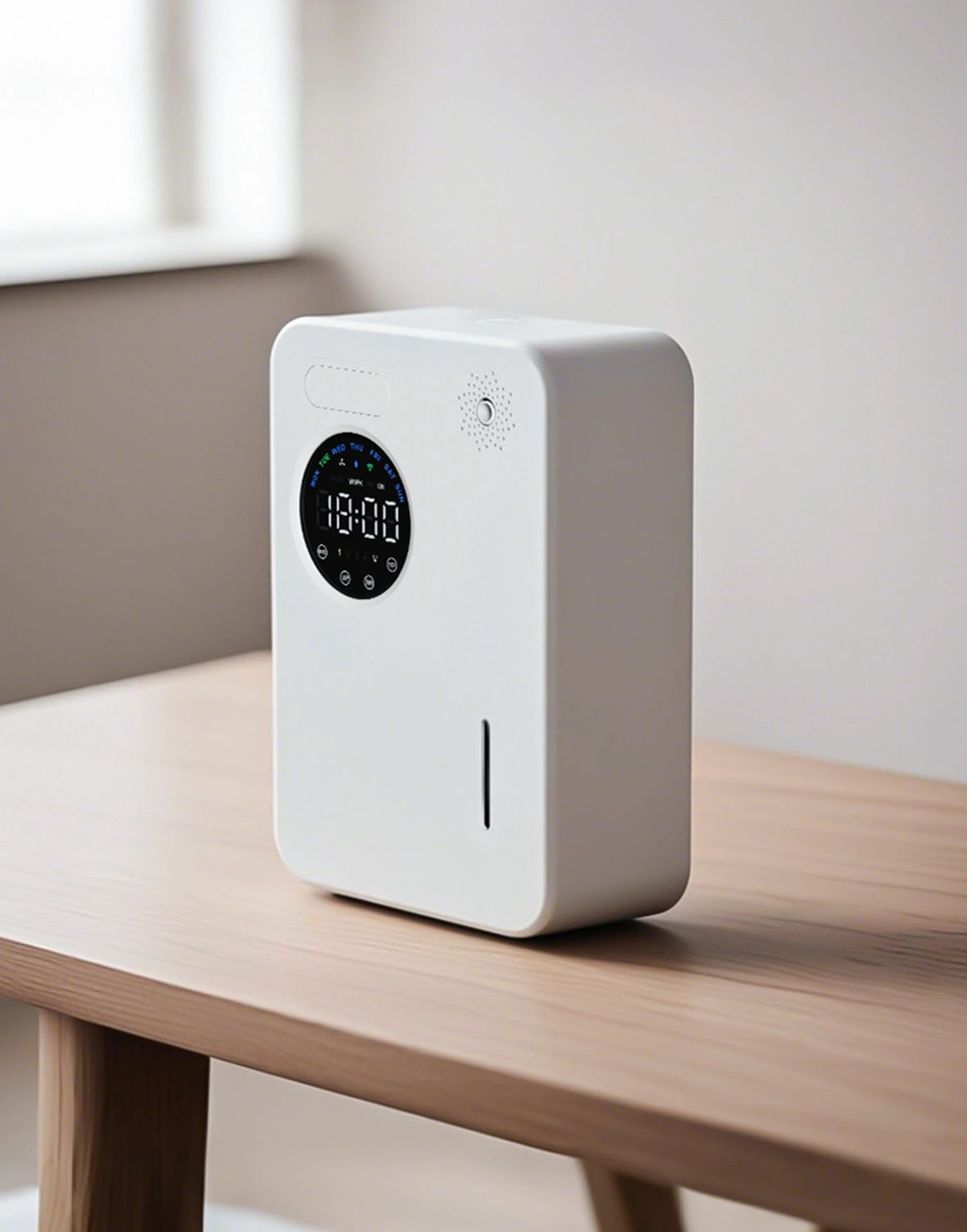
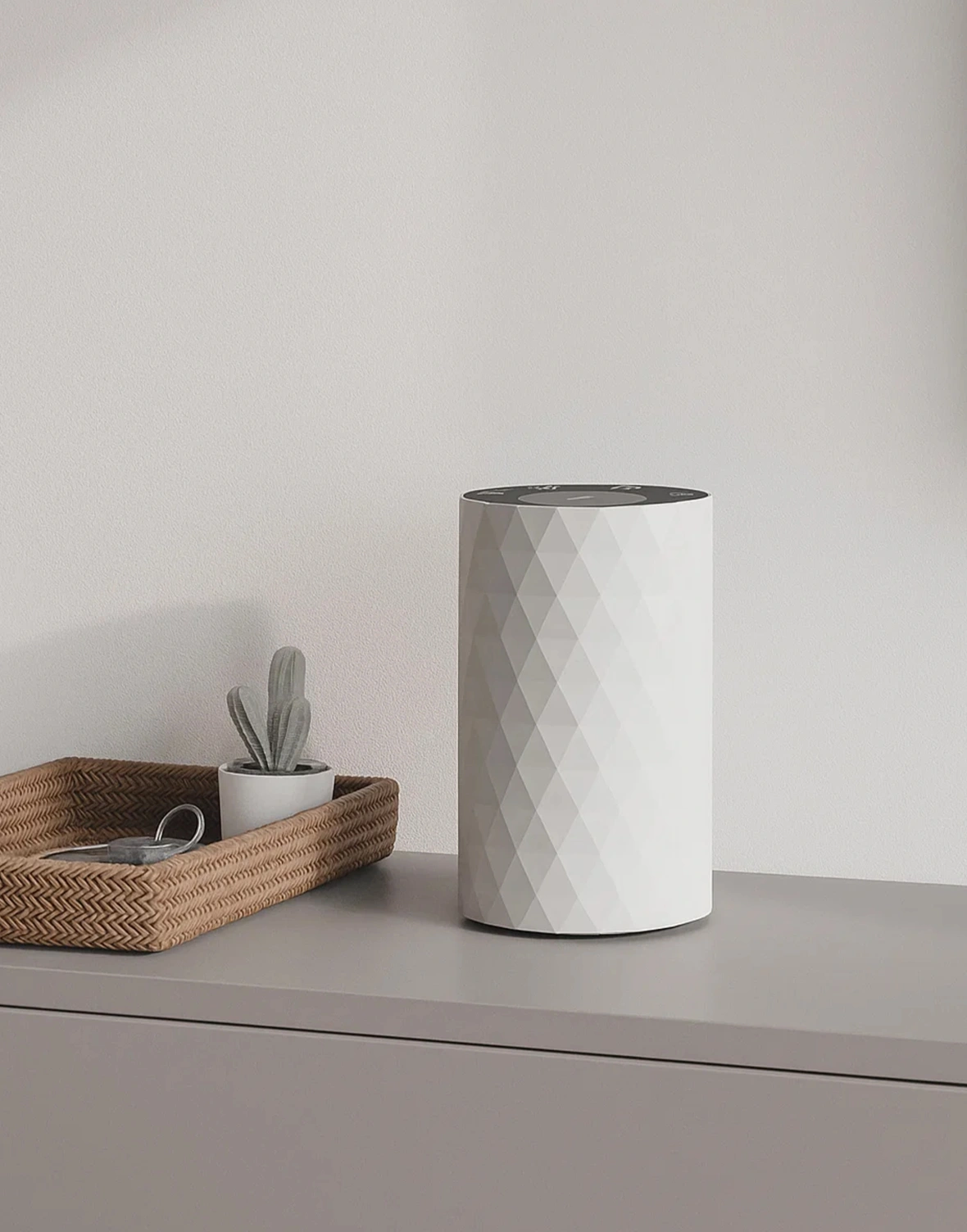
For example, the Hotel Scent Oil Diffuser Tower covers 3,000 m³ and suits open lobby volumes, while ceiling track mount diffusers cover 500 m³ each and make corridor-level zoning practical. Luxury properties often pair these with an HVAC system that treats 8,000 m³ for ballrooms and conference floors.
What Makes a Hotel Signature Scent Work?
A signature scent is not a bottle of fragrance. It is a formula built around a brand’s architecture: top notes that register immediately, heart notes that carry through the lobby, and base notes that linger on linens and return guests. We develop these from a library of more than 300 scent types, then adjust the formula for each property. A beach resort will push marine and citrus notes; a business hotel in a cold climate may need wood and white tea to feel warm without being sweet.
In the Middle East, oud-forward profiles often signal luxury to local and regional guests. In Northern Europe, lighter aquatic and green notes tend to read as clean rather than perfumed. These differences matter because the same oil that feels premium in one market can feel heavy in another.
How Should Hotel Diffuser Systems Be Selected?
System selection starts with three numbers: room volume in cubic meters, air changes per hour, and the number of rooms per zone. The wrong decision is usually not a cheap machine; it is a machine with the correct coverage but the wrong atomization for the ceiling height. HVAC systems work best where ducting exists and where the scent must serve very large volumes. Standalone cold air diffusers work better in spaces that need independent scheduling or where adding ductwork is not an option.
| System | Coverage | Best Use |
|---|---|---|
| Hotel Scent Oil Diffuser Tower | 3,000 m³ (11,000 sq ft) | Open lobbies and atriums |
| Commercial HVAC Scent Diffuser | 8,000 m³ (30,000 sq ft) | Ballrooms, conference floors, full HVAC zones |
| Dual-System HVAC Scent Diffuser | 5,000-15,000 m³ (15,000-55,000 sq ft) | Mixed-use towers with two separate zones |
| Ceiling Track-Mount Aroma Diffuser | 500 m³ (2,000 sq ft) | Corridors and smaller meeting rooms |
Choice also depends on maintenance access. A tower in a lobby is easy to refill weekly. A ceiling diffuser over a stairwell is not. For high ceiling corridors, I prefer track mounted units because a technician can reach them with a standard lift, and the 500 m³ coverage is easier to tune than one large system covering the entire wing.
If your property includes a double-height lobby or an atrium, the oil throw has to be calculated against air exchange, not just square footage. Before you finalize your bill of materials, send your floor plan and ceiling heights to [email protected]. We will confirm the right diffuser technology and coverage for the space.
How Do You Scope a Hotel Fragrance Program?
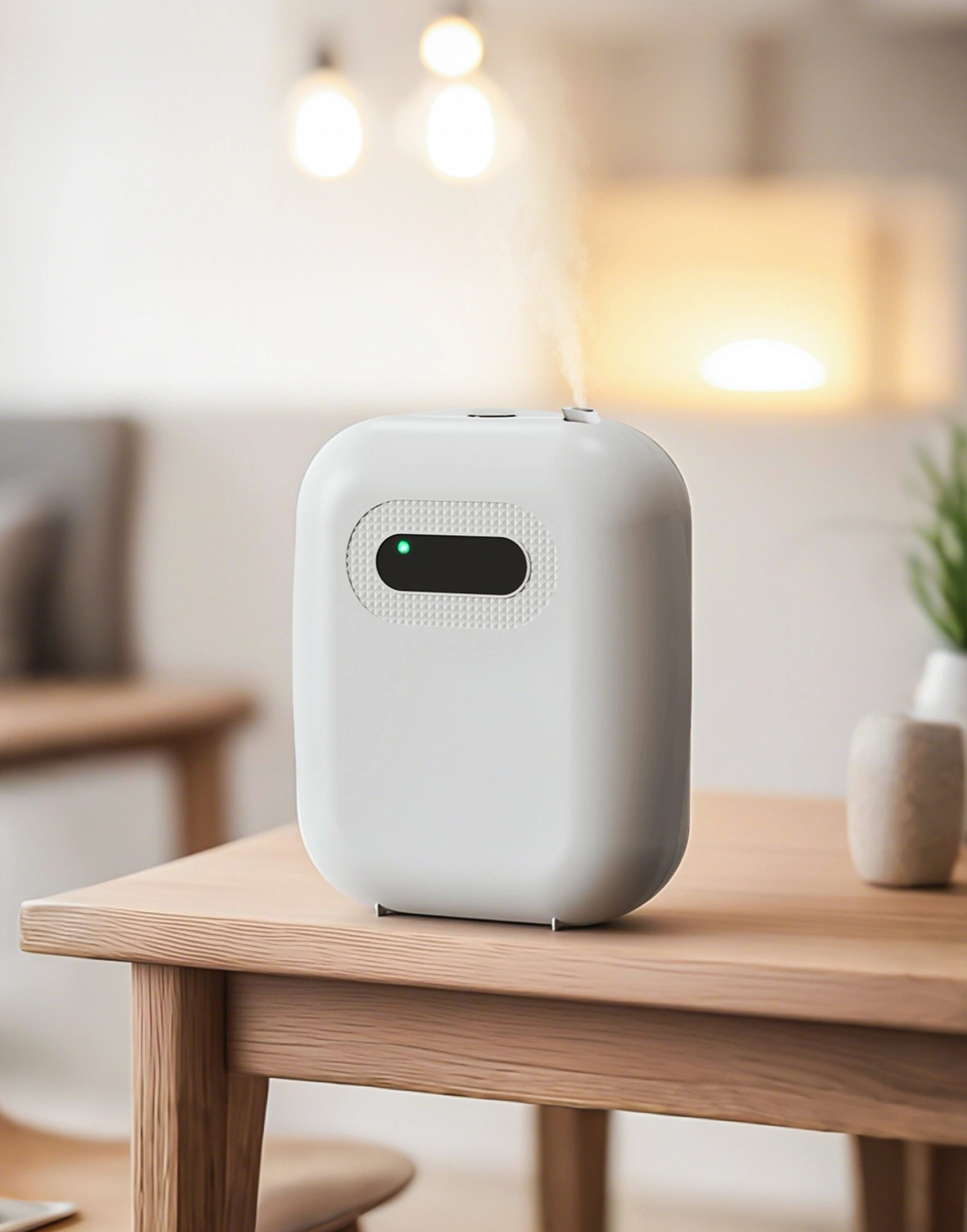
Most hotel teams start with a scent they like from another property, but they have not mapped it to their own air volumes, ceiling heights, or guest flow. That leads to uneven output and over-ordering. We run a simpler path: define the zones that guests remember, choose a base signature and intensity levels for each zone, then match the diffuser and oil volume to those zones. Scent-Share has completed this process with hotels in 68 countries, and the same method works for a 40-room boutique or a multi-building resort.
Send your property layout, ceiling heights, and first target zone to [email protected] or call +86 185 6557 5758 or +86 134 2048 5758. Tell us the arrival sequence you want to create, and we will confirm coverage and oil volume before you sign off.
What Should Hotel Teams Ask About Hotel Fragrance Solutions?
How long does it take to roll out a hotel fragrance program?
Most properties can move from floor plan review to a working lobby and corridor program in two to four weeks. The timing is driven by fragrance approval, diffuser production or stock availability, and installation access. A boutique property with one or two zones can go faster. A full tower with HVAC integration takes longer because the system must be tied into air handling schedules. We ask for floor plans and a decision date up front so the oil formulation and diffuser preparation run in parallel. If your opening date is fixed, share it early before fragrance trials begin.
Can a hotel use one scent across all zones?
It depends on the guest journey. A single scent can work in a small boutique hotel where the same note profile is desirable everywhere. In larger properties, the same fragrance family can be used, but intensity and accent notes should be adjusted: stronger in the lobby, softer in corridors, and faint in guest rooms. That approach keeps one identity without making guests feel they are walking through a perfume cloud. We usually develop a base signature and then create zone-specific dilutions rather than switching to unrelated scents.
What is the difference between cold air diffusion and HVAC scenting?
A common mistake is to assume HVAC scenting is always the better option. Cold air diffusion uses a standalone pump to atomize fragrance oil into a space. HVAC scenting injects the fragrance into the air handling system so every connected room receives the scent at the same time. Cold air works well for lobbies, corridors, and areas requiring independent control. HVAC works better for very large or fully ducted spaces. The right choice depends on air exchange, access to ductwork, and whether the property needs zoning.
How do we maintain consistent scent output in a hotel?
In programs we have installed, the most common consistency issue is not the fragrance oil. It is a maintenance schedule that drifts. A diffuser may be refilled late, a filter may be cleaned less often than planned, or an HVAC schedule may override the scent program during save-energy hours. We set fixed checks per zone, monitor liquid level remotely on our Bluetooth-enabled systems, and keep the same oil batch for critical zones to avoid drift. If your team cannot manage weekly refills, ask for a larger reservoir or remote monitoring before ordering. Send your staffing plan and zone count to [email protected] and we will confirm the right maintenance setup.
If you’re interested, check out these related articles: