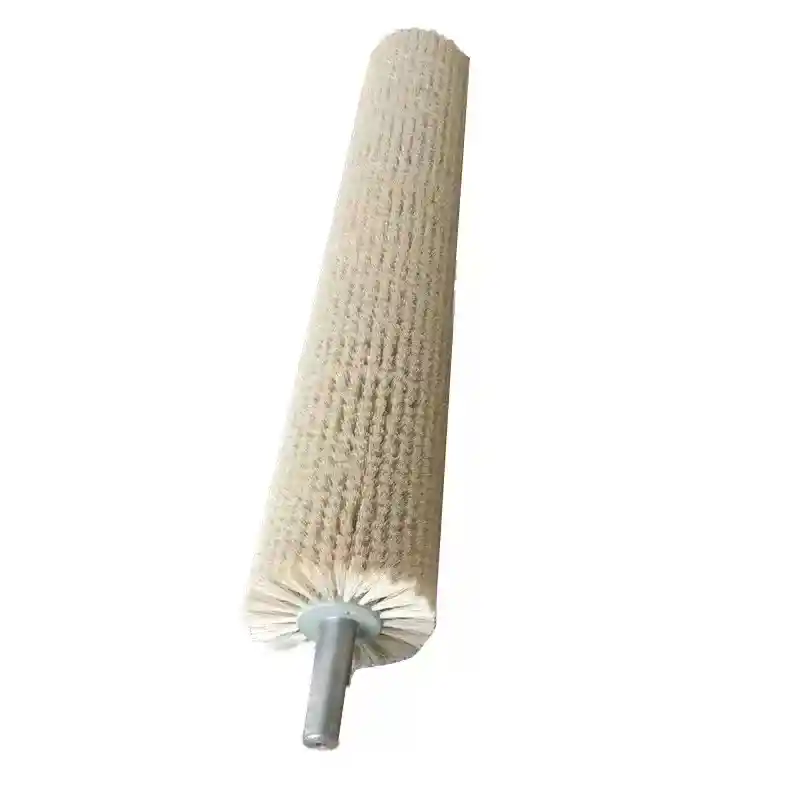

Solar panel cleaning brush selection often goes wrong before any cleaning starts. Maintenance teams focus on reach, speed, and machine compatibility, but the first failure point is usually bristle material. A brush that removes dust aggressively can also abrade the anti-reflective coating, and that loss in panel efficiency is permanent. The correct soft-bristle PV module cleaning brush is not simply the softest one available. It is a matched set of filament chemistry, fill density, and backing dimensions that keeps glass clean while controlling contact pressure.
Why Do Solar Panel Cleaning Brush Specifications Matter More Than Speed?
A cleaning cycle can look productive at high travel speed and still leave a residue layer that reduces output. The specification that determines whether the brush cleans safely is contact pressure, not motor power. Contact pressure comes from bristle length, filament diameter, fill density, and the operator’s downforce. When those variables are wrong, a soft-looking brush can still produce enough tip pressure to scratch the glass or wear the anti-reflective coating. We treat panel glass as an optical surface, not as a structural surface. That changes the brush design target. Brush face relief matters more than top speed, especially on dry panels where fine dust is often caked by morning dew or a thin boundary film.
Fine dust behaves more like a polishing compound than loose debris. Under pressure, it can produce micro-scratches that reduce light transmission. That is why filament selection starts with the panel surface, not the soil type.
Which Solar Panel Cleaning Brush Bristles Protect PV Module Coatings?
For most PV modules, the safe choices are polypropylene (PP) and nylon 6/12. Both can be extruded with a soft crimp or flagged tip that removes dust without aggressive edge contact. We avoid brass, steel, and abrasive-impregnated nylon for solar glass. Metallic wire is for metal descaling and tube work, not for anti-reflective coated panels. Within the plastic filament group, the choice depends on water exposure and machine duty. Nylon 6/12 absorbs less water than standard nylon 6 and keeps a more consistent flex when wet. Polypropylene is available at lower cost and has good chemical resistance for dry and deionized water cleaning. For long automated rows, the more important variable is not whether the filament is PP or nylon but whether the brush maker has matched filament diameter to trim length.
| Filament | Surface risk | Best use |
|---|---|---|
| Polypropylene (PP) | Low | Dry dust removal and deionized water cleaning with light contact pressure |
| Nylon 6/12 | Low | Wet or condensation-heavy sites where flex stability matters |
| PET/PBT polyester | Medium | Firmer scrubbing on thick or uncoated glass panels |
| Abrasive nylon or wire | High | Not recommended for PV module glass coatings |
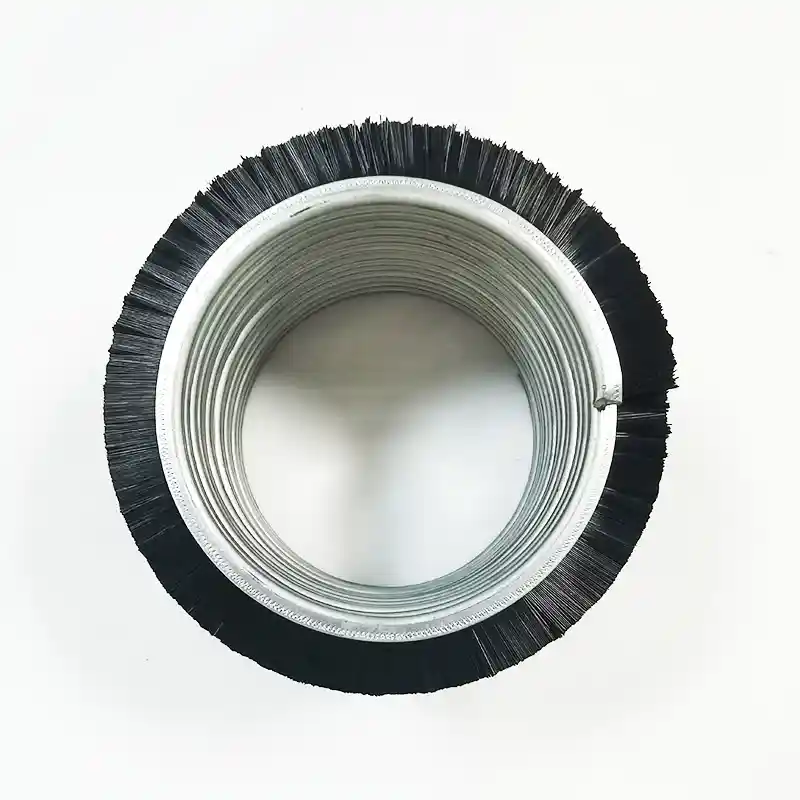
For cylindrical solar panel cleaning brushes, <advantage of hx cylindrical nylon brushes> covers how nylon filament diameter and trimmed length affect surface contact and flex recovery.
Before locking a brush specification, the panel surface is the deciding variable. If your program includes thin-film modules, bifacial glass, or coated panels, it is worth confirming filament hardness and fill density before finalizing the bill of materials. Send your module type and cleaning width to [email protected].
How Does Fill Density Change Dust Removal Without Extra Pressure?
Fill density is the number of filaments packed into each brush face area. A brush with high fill density at the same filament diameter is stiffer because adjacent filaments brace each other. That matters more than many buyers expect. If density is too high, the brush acts like a scrub pad and requires more downforce to flex. If density is too low, the brush face collapses and the backing can contact the module. The right combination for solar panel cleaning is usually a medium to high fill density with a thin-gauge filament. The thin filament bends easily, while the dense pattern gives enough tip contact to lift fine dust. That is the opposite of a heavy industrial descaling brush, where thick wire and open fill produce impact energy.
Cleaning speed should be adjusted by brush face width and rotation rate, not by pressing harder. When operators add downforce to compensate for a worn brush, the tip pressure rises rapidly. We ask customers to record brush outside diameter after each service interval. Once the trim length is visibly shorter than the specified free length, the brush no longer cleans at the intended contact pressure and should be replaced. This is a maintenance flag, not a reason to increase motor torque or push the head closer.
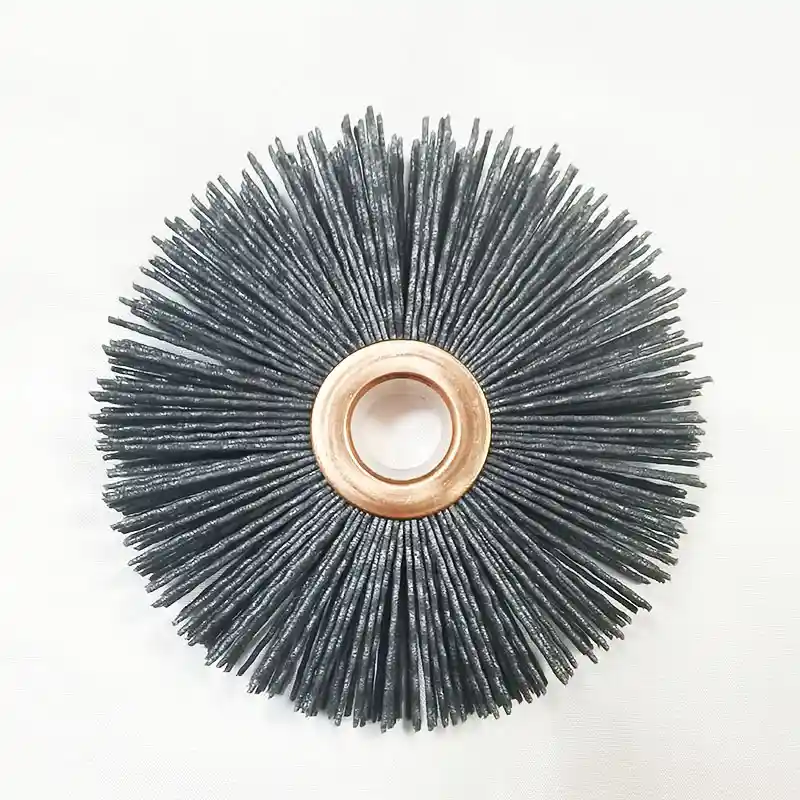
In rotary brush designs, <the differences between inward and outward spiral brush> explains how spiral direction controls debris discharge and brush face loading. That matters on long PV rows where a brush that pushes dust outward can cut re-deposition on the next pass.
What Mounting and Backing Details Should Buyers Confirm Early?
The most common quotation delay is not filament choice; it is missing shaft or backing data. A brush that matches the panel row may still be unusable if the shaft diameter, keyway, or mounting direction is wrong. We ask for the machine interface first. Confirm shaft diameter and material, overall brush length, brush outside diameter, trim length, and end treatment. For a rotating brush, also check the rotation direction and whether the machine uses a keyed shaft, a clamp collar, or a through-bore. If the brush is for a vehicle-mounted or tractor-mounted cleaner, the weight distribution of the brush core matters because it affects arm stability on uneven ground.
When customers send a full specification with the first inquiry, the drawing review moves quickly. When they send only a photo or a panel width, we have to ask follow-up questions that add days to the process. The practical check is to place the brush core on the machine and verify that the end clearance and bearing surfaces match. For wet cleaning systems, stainless steel shafts and polypropylene or nylon hubs resist corrosion better than plain steel. For dry cleaning, the brush face should shed dust rather than trap it in a metal cup or solid backing. These details are easy to confirm early and expensive to change after a production run.
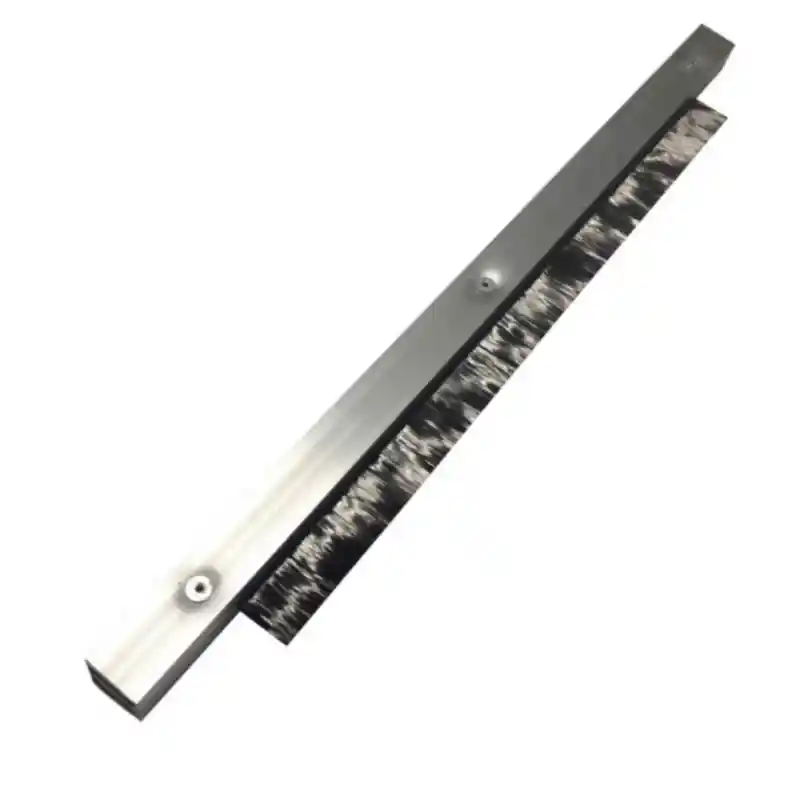
For longer cylindrical brush rollers used on automated cleaning rigs, <main features and applications of hx nylon cylindrical brush> covers core fill, shaft options, and typical application ranges.
What to Send When You Request a Solar Panel Cleaning Brush Quote?
Most brush failures in solar panel cleaning trace back to a missing specification, not a bad production choice. Before you issue an inquiry, record five items: module size and glass type, cleaning width and brush length, shaft diameter and mounting style, wet or dry operation, and current failure mode if you already have a brush. With those data points, a brush supplier can confirm whether a soft PP or nylon 6/12 filament should be used, what fill density suits the machine speed, and whether the backing must be changed for corrosion resistance. Send that list to [email protected] or call +86 1580 0932 713, and we will review the drawing against your cleaning environment and confirm a compatible specification before sampling.
What Questions Do Buyers Ask About Solar Panel Cleaning Brushes?
Are softer solar panel cleaning brushes always safer for PV glass?
Not always. A very soft filament can still cause abrasion if the brush is pressed hard or if the trim length is too long. The safer measure is controlled tip pressure, not softness alone. A medium-soft polypropylene or nylon 6/12 filament with the correct fill density cleans well without high downforce. If operators must push the machine down to get the glass clean, the specification needs review. We would rather reduce pressure and keep the brush face at the designed contact line than use an ultra-soft brush that wears out in a few weeks.
How do I know whether to run the solar panel cleaning brush wet or dry?
It depends on the site and the panel surface. Dry cleaning suits light dust and avoids water logistics, but it requires a brush that can discharge fine particles without building static. Wet cleaning with deionized water is better for caked soil and bird droppings, especially where hard water minerals would leave residue. The brush material must stay stable with the chosen method. Nylon 6/12 holds flex better in water than some lower-cost fills. Trade-offs come down to water access, labor cost, and local environmental rules. Both methods can work if the brush and machine settings are matched.
Does a solar panel cleaning brush need an anti-static feature?
A common mistake is assuming every cleaning brush requires a conductive filament. Static is a real issue in dry, dusty conditions, but it is not solved only by the brush. Some operations use carbon-loaded or conductive filaments to dissipate charge. The more practical step is to control dust re-deposition through brush movement, airflow, and cleaning frequency. If static discharge is a known problem on your site, tell the brush supplier before sampling. The filament grade and backing can then be selected together rather than adding a coating later.
When should I replace a solar panel cleaning brush instead of pressing harder?
In field inquiries, replacement questions surface after cleaning crews add downforce to restore performance. The visible check is the brush outside diameter. Once the filament tip is worn below the specified free length, the brush no longer delivers the designed contact pressure. Pressing harder raises tip pressure and increases scratch risk. We use the outside diameter as a wear limit. Record the measurement at each service interval. Matted fill or a cracked backing means immediate replacement. Share your current brush dimensions and wear data with [email protected] or +86 1580 0932 713, and we will confirm whether a different filament grade or fill density would last longer.
If you’re interested, check out these related articles:
descaling spiral brush an innovative tool and generalist in the field of industrial cleaning
advantage of hx boiler tube brush
the differences between inward and outward spiral brush
what you know about brass wire brush strip
honing brush a magic tool for flexible burr removal