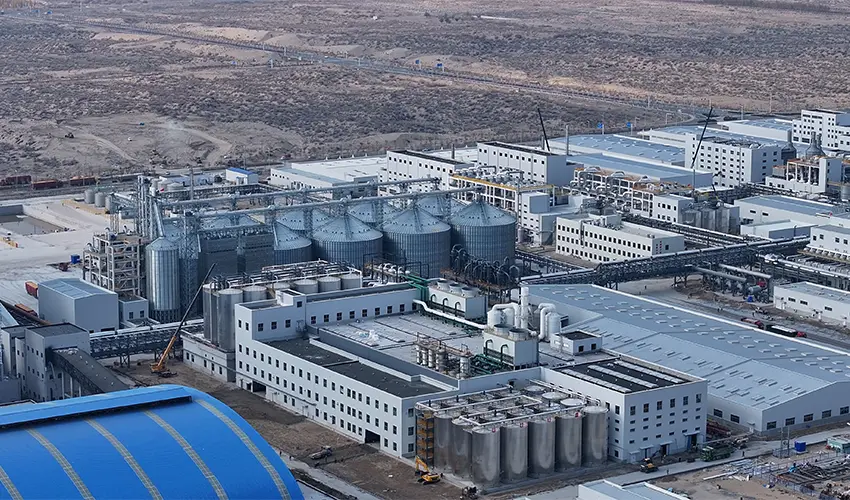

Corn ethanol co-products now determine whether a fuel ethanol plant operates at a real margin or leaves value in the stillage stream. Most feasibility studies still treat DDGS, CO2, and biogas as disposal issues or postponed opportunities, but developers who integrate these streams from the first process flow diagram recover revenue that changes project payback. In our planning work, we view every tonne of corn as a three-output system: fuel ethanol, saleable feed or gas products, and recovered energy. That integration, not ethanol yield alone, separates projects that meet financing thresholds from those that struggle with thin margins.
Why Do Corn Ethanol Co-Products Decide Project Profitability?
Ethanol prices move with fuel market cycles. Co-product prices move with feed, food, and energy demand, and they often move independently. A dry mill designed only around distillation returns one volatile revenue stream. A dry mill designed around the full mass balance returns several, each with a different buyer and margin profile. The result is not just more revenue. It is a more stable cash flow that can carry a project through a weak ethanol price period.
Before we size any equipment, we map the split among DDGS, CO2, and biogas for the planned crush level. This is not a downstream exercise. It changes evaporation load, dryer capacity, compression scope, boiler size, and wastewater treatment volume. AGRIFAM’s alcohol EPC scope is built around a circular production system, with 100 percent by-product resource utilization and 25 percent energy consumption reduction as design targets. Those targets only hold when co-product revenue streams are specified before the distillation train is sized.
| Co-product stream | Primary value driver | Key integration requirement |
|---|---|---|
| DDGS | Protein, fat, fiber, color | Dryer sizing and evaporator load |
| Liquid CO2 | Purity, compression, offtake | Fermentation gas capture and purification |
| Biogas | Methane content, sulfur load | Anaerobic digestion and boiler fuel train |
| Digestate | Nutrient content, moisture | Solids separation and land application |
How Should DDGS Co-Product Quality Be Designed for Feed Markets?
DDGS is not a single product. Poultry, swine, dairy, and export buyers pay on different protein, fat, fiber, and color expectations. Overdrying can bind lysine and darken the product, which cuts value in poultry and aquaculture markets. Underdrying raises moisture and shortens shelf life, which limits storage and export. The dryer, evaporator, and stillage separation system have to be matched to the target buyer before mechanical equipment is ordered.
Wet distillers grains with solubles may make sense near a feedlot because it skips drying energy and cost. Dried DDGS with consistent color and flowability makes sense for feed mills and export cargoes. The revenue difference between these choices is not a marketing problem. It is an equipment and process layout problem.

What Makes CO2 Recovery Economically Viable for an Ethanol Plant?
Fermentation CO2 is already produced in high purity. The economics depend on whether the plant captures, compresses, purifies, and sells it, or vents it. Food-grade liquid CO2 requires tighter moisture, odor, and impurity control plus compression, dehydration, and storage. Merchant CO2 markets can be valuable near beverage, food processing, and cooling demand, but they are also regional. An isolated plant may be better positioned with lower-grade CO2 or a smaller capture scope.
When Does Food-Grade CO2 Make Sense?
When the plant has an offtake contract or a regional merchant buyer within reasonable haul distance. The incremental equipment for food-grade CO2 includes compression, dehydration, purification, and refrigerated storage. These units must be placed next to fermentation gas lines before the plant layout is locked.
What Changes When CO2 Offtake Is Far From the Plant?
Then we usually size CO2 capture for the highest-value local use only. Compression and liquefaction energy can exceed the margin of a distant sale. The remaining CO2 may still contribute through greenhouse gas accounting or future offtake, but it should not be treated as guaranteed revenue in the financial model.
How Can Biogas From Ethanol Wastewater Offset Plant Energy Costs?
Thin stillage and process wastewater carry organic material that can be converted to biogas through anaerobic digestion. That gas can be burned in a boiler or used in combined heat and power to offset natural gas or coal. AGRIFAM’s alcohol EPC scope treats biogas as part of the energy cascade, not as a separate waste treatment line. This is one of the clearest ways to reduce operating cost, because the gas comes from material the plant already pays to handle.
Why Is Biogas More Useful Than Flaring?
Flaring eliminates methane but creates no value. Piping biogas into a boiler train reduces purchased fuel and stabilizes the plant’s energy balance. The design decision is made early: sulfur content, gas storage volume, and boiler turndown must match the variable biogas output from wastewater treatment.
If your project includes anaerobic digestion, confirming biogas sulfur content and condensate return before boiler selection avoids a later scope change. Send your wastewater composition and target steam load to [email protected].
Where Should Co-Product Revenue Be Locked Into Turnkey Project Planning?
Most co-product revenue problems start in feasibility. DDGS drying capacity is sized for average ethanol output rather than peak corn quality, CO2 capture is deferred as a future option, and biogas is flared because the boiler was not specified to accept it. By the time the plant starts up, the retrofit cost is higher than the margin those streams would have delivered. We lock co-product streams into the process flow diagram before equipment selection. This includes evaporation load, dryer type, compression scope, digestion capacity, and utility demands.
If you are planning a corn ethanol project or upgrading an existing line, send your planned crush capacity, target co-product specifications, and offtake constraints to [email protected] or call 010-8591 2286. We will map the DDGS, CO2, and biogas revenue contribution against your capital and operating budget.
What Do Plant Developers Ask About Corn Ethanol Co-Product Revenue?
Which Co-Product Usually Contributes the Most Revenue?
DDGS usually leads by volume and often by revenue, but the local feed market decides whether dried DDGS or wet cake is more attractive. In our planning work, we compare net margin after drying energy against CO2 compression margin and biogas fuel value on the same mass balance. A plant near a feedlot may prefer wet distillers grains, while a plant near beverage or food processing may find CO2 more important. The ranking should come from the offtake map, not a standard assumption.
Does Food-Grade CO2 Certification Add Too Much Project Cost?
Many developers assume food-grade CO2 always adds too much project cost. That is only true when the capture scope is built on speculative merchant demand. The equipment becomes a burden if no regional offtake exists. We usually stage the system: size gas collection and piping for full flow from the start, then install purification, dehydration, and liquefaction only when signed demand justifies it. That keeps the initial capital down without blocking the future option.
Can Existing Ethanol Plants Add Co-Product Revenue Without a Full Rebuild?
It depends on the existing evaporator, dryer, and wastewater capacity. A plant with excess dryer capacity may add more DDGS value without a full rebuild. A plant already operating at evaporator limits may need to address bottlenecks before co-product recovery improves. The most common low-capex opportunity is biogas, because anaerobic digestion and a boiler fuel train can often be added without disturbing distillation. We evaluate each stream against the existing mass balance before recommending scope.
How Should We Compare DDGS Drying Against Selling Wet Feed?
In projects we have planned, co-product integration works best when the owner stops treating DDGS, CO2, and biogas as waste lines and starts treating them as product lines. That shift changes instrumentation, quality sampling, storage, and sales contracts. It also changes the way we size equipment, because product specifications govern dryer temperature, gas purity, and digestion residence time. Share your current stream composition and product moisture targets, and we can confirm what can be added without disturbing the main process.
If you’re interested, check out these related articles:
Driving Global Food Conservation Through Technological Innovation