
Door seal brush selection turns on three measurements most specification sheets leave out: gap width at the widest point, door speed, and the number of cycles the seal must survive. A brush that blocks dust at 2 mm may whistle or bind at 4 mm. I treat the carrier, filament density, and trim length as one system because changing one variable changes the other two. Most underperforming seals I review were never wrong in category. They were wrong at the edge.
Door Seal Brush Profiles That Match the Gap
A straight door seal brush is the right starting point only when the door edge is straight and the gap is uniform. Sliding doors and overlapping panels often work better with an angled brush that trails across the sealing surface. If the frame is warped or the opening has been modified, a flexible holder or a formed strip brush can follow the irregular line without leaving open corners. I have replaced more straight strip seals than worn ones because the gap itself was not straight.
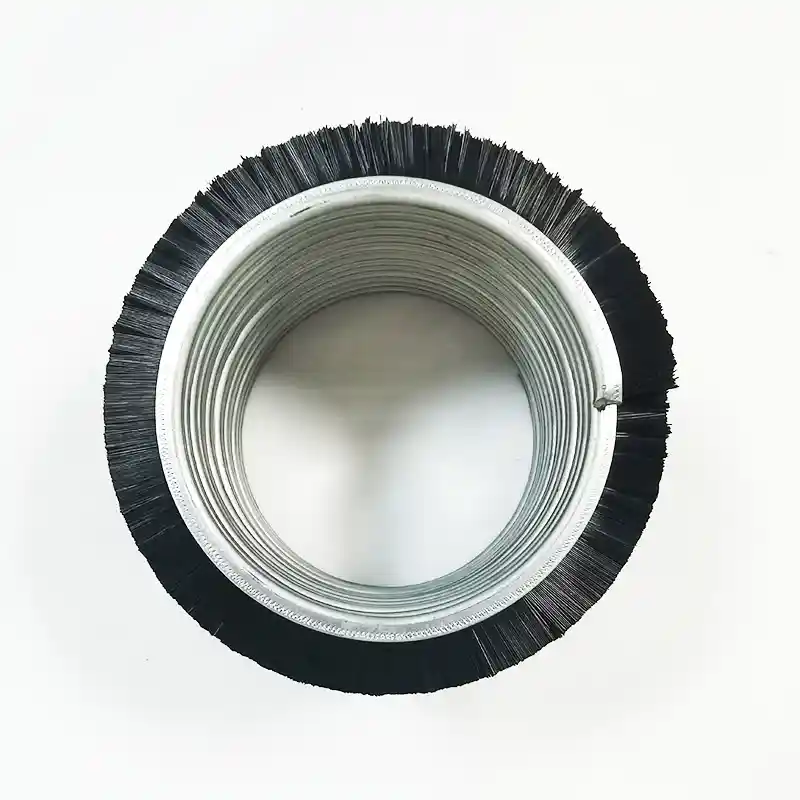
For round frames and shaft pass throughs, the same sealing logic moves to a spiral brush or cylindrical brush.
Filament Choices That Decide Dust Blocking and Wear
Filament material sets the recovery, friction, and chemical tolerance of a door seal brush. Nylon and polypropylene cover most industrial doors. Horsehair still earns its place on uneven wood doors because it flexes without marking. Brass wire is the exception reserved for high heat, static dissipation, or conductive contact. Density matters as much as material. A dense fill blocks fine dust but stores more friction on a fast door. A sparse fill clears the door easily but lets drafts through at the channel.
| Filament | Best use | Wear behavior | Notes |
|---|---|---|---|
| Nylon | Dry dust, painted or anodized frames | Long, moderate friction | Keep contact light to preserve recovery |
| Polypropylene | Wet washdowns and chemical areas | Long, chemical resistant | Use higher density when fine dust is the main problem |
| Horsehair | Fine dust on uneven or wood doors | Medium, natural variability | Soft contact, avoid constant wet cycles |
| Polyester | Warm or dry industrial openings | Long, heat tolerant | Check stiffness before specifying a long trim |
| Brass wire | High heat or static dissipation | Slow unless side load is high | Use only when metal contact is required |
Within the same filament, fill density changes the performance of a door seal brush more than most buyers expect. A soft filament at high density can seal as well as a stiffer filament at low density, but it will drag more. I ask for the density and trim length to be stated on the same drawing line, not as separate notes.
Where the sealing surface is metallic and the door movement is low, brass wire strip can double as a conductive or high temperature edge. <what you know about brass wire brush strip> covers how brass filament density and trim length change the contact pattern, which matters when a seal has to do more than close a gap.
Why nylon and polypropylene filaments behave differently
Nylon keeps its recovery after many deflections, so it suits doors with regular cycling and light side load. It takes up some moisture in high humidity or washdown duty, which can make the trim length feel slightly longer at the contact face. Polypropylene is the safer default in wet or chemical areas because it absorbs less and resists most cleaning agents. The trade off is a softer contact, so I specify a higher density when fine dust has to be kept out.
These same material decisions apply to cylindrical brush seals around inspection ports and rotating shafts. 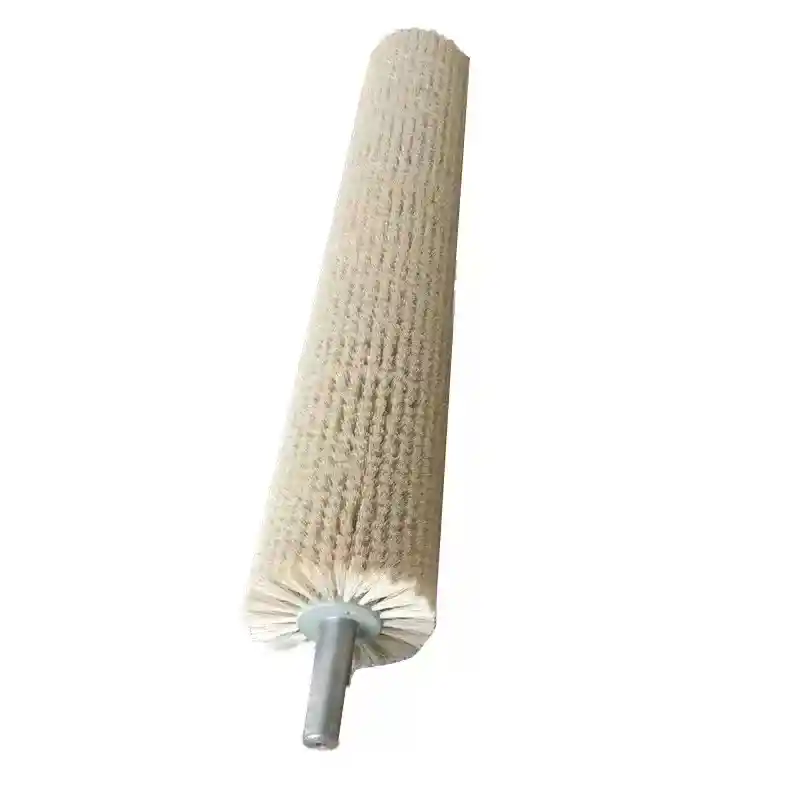
When horsehair is still a practical choice
Horsehair works well on old wooden doors, uneven stone openings, and light dust barriers where a synthetic filament would mark the surface or bounce too much. It is less uniform than nylon, both in diameter and recovery. That variability is not a defect when the door moves slowly and the gap changes along its length. I would not put horsehair in a washdown line or on a door that cycles every few seconds.
Door Seal Brush Sizing Without Choking the Door
Measure the gap from the mounting surface to the sealing surface at three points: both ends and the middle. The brush trim length needs to reach past the tightest gap while still contacting the widest gap without folding over. For a straight industrial door with a stable frame, I start with 1 to 3 mm of contact past the narrowest reading and then measure how much the filament deflects at the widest reading. A brush seals by filament deflection and recovery, not by compression set. If the trim is too long, the filaments fold and the door works against the brush on every cycle.
Door speed and cycle rate are part of sizing, not just maintenance notes. A door that cycles every few seconds needs a shorter contact length than a door that opens twice a shift. The heat from friction builds at the filament tips, and long trim creates more bending at the channel. When the brush begins to whine or the motor current rises, the first thing I check is whether the trim length was set for a static gap rather than a moving door.
At this point, if your gap varies by more than 3 mm along the frame, the channel, filament length, and backing must be reviewed together. Send the gap measurements from three points along the door edge to [email protected] before you lock the drawing.
Installation Details That Keep the Seal Working
Most door seal brush failures I see start at the mounting line, not at the filament. A screw driven through the channel can tear the backing or force the fill sideways. A bent channel can open a gap behind the brush. When I review an installation problem, I look at the fasteners first and the filament second.
Fastening methods for irregular frames
Slotted carriers and clips work better than fixed screw holes when the frame is not flat. They let the installer follow the existing line without stretching or kinking the channel. A continuous backing plate spreads the clamping load, which is useful on thin panels. If the frame has a deep step, an angled brush strip keeps the fill against the sealing surface instead of floating above it.
Why filament trim length changes after installation
The trim length changes when a straight brush is bent around a corner or pushed into a recess. Inside corners make the filament more crowded, so the contact feels heavier. Outside corners open the fill and can leave a gap at the tip. I trim or specify a formed section at those points instead of forcing one length through the entire opening. A quick pass with a wheel brush can clear loose fibers after the strip is cut. 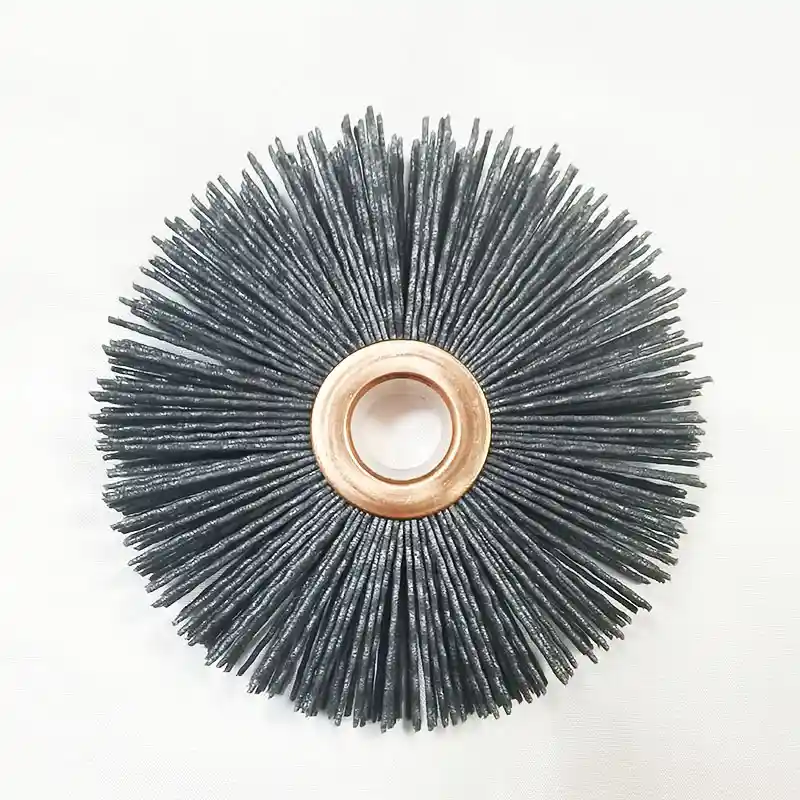
For sealing surfaces that pass across painted metal or anodized frames, nylon filament with the right density reduces visible wear. <advantage of hx cylindrical nylon brushes> covers how nylon filament stiffness and fill density are controlled in cylindrical brushing, and the same trim and density logic applies to a straight door seal brush.
Door Seal Brush Sourcing Based on Measured Gaps
The most common sourcing mistake is ordering a door seal brush by length only. A given length says nothing about whether the fill reaches the sealing surface, how hard it touches, or whether the carrier will fit the existing slot. The safer specification starts with three gap readings, the door movement type, and the expected cycle rate.
Send those numbers with a photo of the existing channel to [email protected] or call +86 1580 0932 713. A Huixi Brush application engineer will return a filament, channel profile, and mounting recommendation with pricing for the required length and quantity. That keeps the first sample close enough to test without rebuilding the door frame.
Common Questions About Door Seal Brushes
How is a door seal brush different from a rubber or vinyl gasket?
A door seal brush works by deflection, not compression. The filaments bend at the contact face and recover when the door moves away. A rubber or vinyl gasket depends on being squeezed and returns by its own elasticity. That difference matters on moving doors. A brush tolerates sliding movement and rough edges without tearing; a rubber gasket can catch, bind, or wear at the contact line. Brush seals also pass a small amount of air, which makes them better for ventilation while still blocking dust and drafts.
Can a door seal brush handle washdown or outdoor weather?
It depends on the channel material and the filament. For washdown areas, choose a stainless steel or plastic channel with polypropylene filament. Galvanized steel works for dry indoor applications but will degrade faster in constant moisture or outdoor exposure. Horsehair is not a good wet duty choice. For outdoor door sealing, UV exposure and temperature swings matter just as much as rain. Nylon can work outdoors if the fill is UV stabilized, but polypropylene remains the lower risk option for wet and chemical contact.
What gap tolerance should I call out on the drawing?
Many buyers treat gap tolerance as a frame dimension. The more useful callout is a trim length plus a deflection allowance at the widest point. For a typical straight frame, call out the gap from the mounting face to the sealing surface with a tolerance, then state the required filament contact length. The tolerance band should be wider at the ends than at the center if the door has a latch or corner pull. Loose tolerances with a flexible formed strip are often cheaper than tight frame machining.
Does a denser brush always block more dust?
In the sealing projects we review, a denser brush often masks the wrong trim length. Higher density blocks fine dust up to a point, but it also increases friction on a fast moving door. If the trim is too short, adding density will not close the gap. The better fix is to increase contact length first, then raise density only enough to catch the specific particle size. Send your door drawing, cycle count, and the required sealing condition to [email protected], and we will confirm whether a standard strip brush or a formed brush strip is the safer fit.
If you’re interested, check out these related articles:
abrasive disc brush an efficient tool for many applications
the differences between inward and outward spiral brush