A commercial scent diffuser is not a larger home aroma machine. It is the hardware layer of a scent strategy, built to move fragrance oil consistently across a lobby, showroom, hotel corridor, or office floor for 24-hour operation. In projects I have supported across 68 countries, the diffuser decision usually determines whether a scent program reads as intentional or disappears into the air. It shapes covering power, oil consumption, maintenance workload, and the final customer perception. Choose the machine around the space and the brand outcome, not around a fragrance sample.
The Real Job of a Commercial Scent Diffuser
A commercial scent diffuser takes fragrance oil and breaks it into a dry, breathable mist that stays suspended long enough to reach the nose, not the floor. Most professional systems use cold-air diffusion or pump-driven atomization rather than the ultrasonic water mist common in home units. That distinction matters because water-based mist can fall quickly, raise humidity, and feel like a home product. A dry scent droplet is smaller and moves farther on air currents.
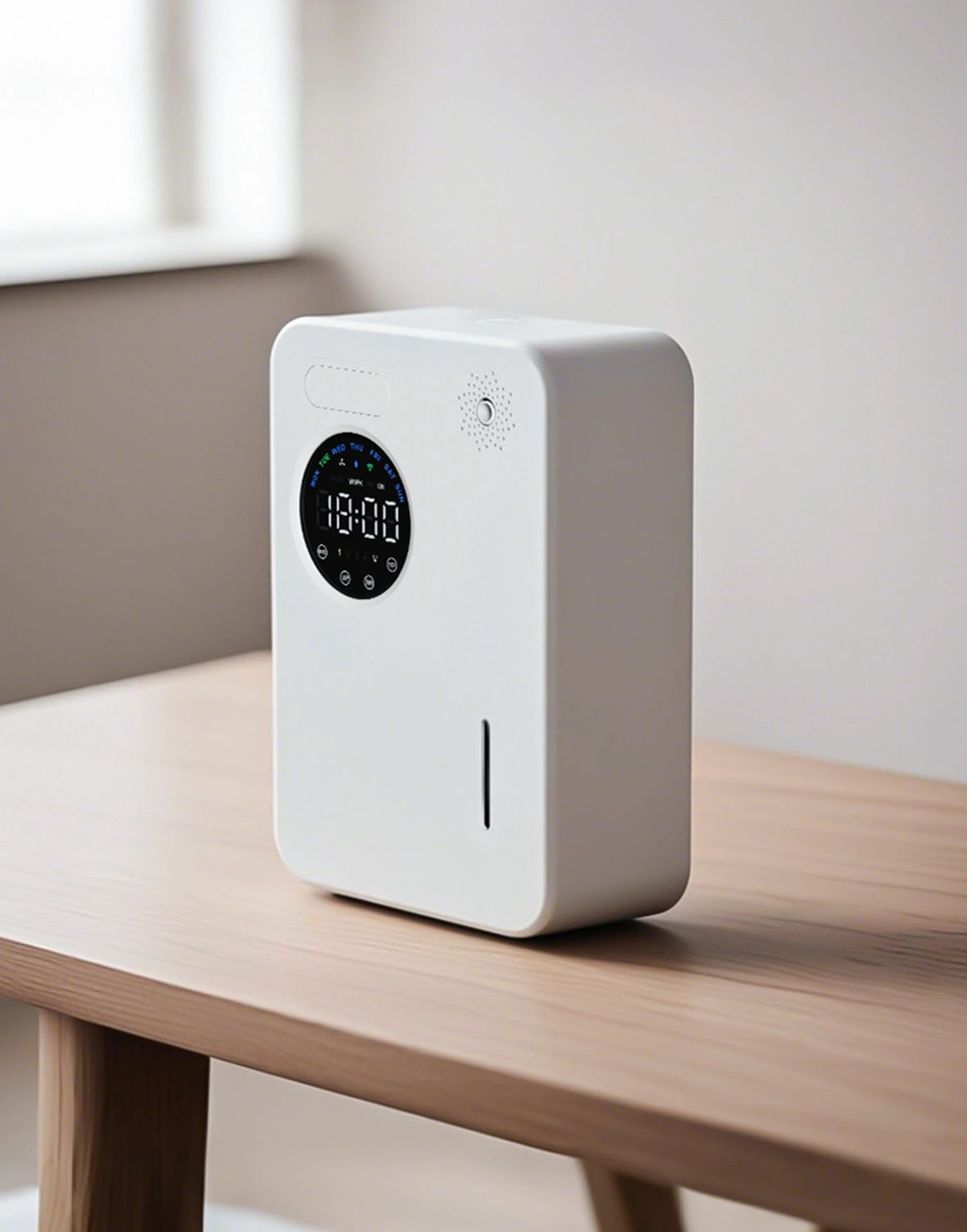
What the machine actually controls is repeatable delivery. A timer schedules operation around business hours. A duty cycle adjusts the off and on pulse so the nose does not adapt to a constant smell. Adjustable intensity changes the oil atomization rate. Some models add Bluetooth or WiFi control, lockable bottles, and liquid level detection. These features are not extras in a commercial setting. They are the line between a scent that stays consistent and one that disappears by mid-afternoon.
Coverage and Airflow Planning
Coverage data on a commercial scent diffuser only becomes useful when compared with the actual cubic volume of a space. A 200 m² lobby with a 3 m ceiling is 600 m³. The same footprint with a 6 m ceiling is 1,200 m³. Air changes per hour and open stairwells add another variable.
| Model | Rated Coverage | Best Fit |
|---|---|---|
| Commercial Scent Oil Diffuser (Bluetooth APP) | 300 m³ (1,000 sq ft) | Single office, fitting room, compact retail floor |
| Ceiling Diffuser Commercial Scent Machine (Round) | 600 m³ (2,000 sq ft) | Boutique, meeting room, compact lounge |
| Hotel Scent Oil Diffuser Tower | 3,000 m³ (11,000 sq ft) | Lobby, double-height reception, showroom |
| Commercial HVAC Scent Diffuser | 8,000 m³ (30,000 sq ft) | Full-building HVAC integration or large floor plate |
Why Ceiling Height Changes Coverage More Than Square Footage
A diffuser rated for 600 m³ covers a 150 m² room only when the ceiling is 4 m. The same unit in a 7 m ceiling space covers roughly 85 m². If you only look at square footage, you will under-spec the machine. In high ceiling spaces, look for a fan-driven unit with horizontal throw strong enough to push dry scent across the occupied zone instead of letting it pool near the mounting point.
How HVAC Return Air Can Pull Scent the Wrong Way
Position matters as much as coverage. If a diffuser sits near a return air vent, the fragrance gets pulled into the duct before it reaches guests. Strong return air can also make one corner smell intense and another completely neutral. Check the airflow path before mounting. If the space has strong or uneven air movement, a standalone unit may need repositioning, or the scent may need to travel through the HVAC system itself.
Midway through a specification, the main decision point is not the fragrance. If your program includes a lobby larger than 3,000 m³ or multiple HVAC zones, it is worth confirming coverage, air change rate, and mounting position before finalizing the equipment list. Send your floor plan to [email protected].
Cold-Air Versus HVAC Scent Systems
A standalone cold-air diffuser works well when a single zone needs a controlled scent level, a hotel lobby, a showroom, a flagship store. It mounts on a wall or sits in a corner and pushes dry scent directly into the space. An HVAC scent diffuser connects into the air handling system and distributes the same baseline fragrance through existing ducts. The first is surgical. The second is whole-building.
Our team tends to start with standalone systems for one or two connected zones. When a client moves from a single flagship to multiple floors or a full property, HVAC integration becomes the more economical route. The tradeoff is control. Standalone units let you vary scent intensity by zone. HVAC integration delivers uniform coverage but depends on the condition and balancing of the ductwork. A 150 ml bottle on a standalone unit will also run out faster than a 1 L bottle on an HVAC system, so the oil schedule changes with the system choice.
Fragrance Oil Consumption and Maintenance
Oil consumption is the budget line most new buyers underestimate. A medium-intensity program in an active commercial space may go through a 150 ml bottle in a week, while a large HVAC system with a 1 L bottle may run several weeks at a lower dose. These are not fixed numbers. They shift with intensity, operating hours, air movement, and the density of the fragrance oil itself. Heavier base notes do not always mean longer runtime. The atomizer’s dosing rate drives consumption first.
Maintenance is the quieter cost. A commercial diffuser running 24/7 accumulates oil film around the nozzle and inside the bottle path. If the atomizer is not cleaned on schedule, output drops before the sensor or app flags it. The bottle, wick, or pump lines may need replacement well before the machine itself wears out. In high-turnover spaces, we schedule maintenance by operating hours, not by calendar months. A machine that runs 18 hours a day in a hotel lobby ages differently from one that runs 8 hours in a retail store. This is where a cheap home unit fails fastest, it was not built for daily diffuser oil turnover.
Matching the Diffuser to the Scent Program
The biggest specification error I see is buying the largest diffuser in the catalog because the space looks big on paper. A 3,000 m³ tower in a 600 m³ boutique creates a wall of scent in the first hour and forces the client to shut it off. Under-specifying is just as costly. A small 300 m³ unit in a double-height lobby will run constantly and still leave dead zones.
Start with the floor plan. Mark the zones where scent should be noticeable, the transition points, and the areas that should stay neutral, such as dining counters or medical areas. Then match each zone to a diffuser class, not a fragrance. Fragrance selection is easier once the delivery hardware is right. If the space has central HVAC, decide early whether scent should travel through the ducts or stay local. This decision changes the unit type, the oil bottle size, and the maintenance schedule.
The pain point is not that businesses cannot find a diffuser. The pain point is that many choose before measuring, then adjust the fragrance to fix a delivery problem. If you send your floor plan, ceiling height, operating hours, and target intensity to [email protected] or call +86 185 6557 5758 / +86 134 2048 5758, we will confirm the right diffuser class and oil schedule instead of selling you the largest unit.
Common Questions About Commercial Scent Diffusers
What is the difference between a commercial scent diffuser and a home diffuser?
A commercial scent diffuser is built for longer runtimes, larger coverage, and repeatable dosing. Home units usually rely on ultrasonic mist and smaller bottles, which makes them less consistent in high-traffic spaces. Commercial units use dry mist or HVAC integration, lockable bottles, scheduling, and more durable pumps. The commercial machine is also rated by cubic volume rather than simple room size. That rating matters when ceilings are high and air movement is constant.
How much fragrance oil does a commercial scent diffuser use in a week?
The common assumption is that oil consumption follows bottle size. It actually follows dosing rate, operating hours, and airflow. A 150 ml bottle on a moderate setting in an active retail space may last about a week, while a 1 L bottle on an HVAC system can run several weeks. The same fragrance will behave differently in a quiet office and a busy lobby. Before ordering refills, confirm the intensity setting and daily operating schedule for each zone.
Can one commercial scent diffuser cover multiple rooms?
It depends on whether the rooms share an open air path. A single diffuser covers connected spaces only when the air can move through them naturally. A separate room with a closed door needs its own unit or HVAC distribution. For open floor plans, higher coverage models can handle a wide area, but strong walls and partitions will block the mist. Map the airflow first, then count the machines.
Do commercial scent diffusers require professional installation?
In most programs we support, wall-mounted or standalone units need only mounting and a power connection. HVAC scent diffusers are different because they connect into the air handling system and should be fitted by a technician who understands duct placement and airflow. A standalone unit can be installed quickly, but the mounting height and position still affect performance. Share your floor plan and operating hours and we will confirm whether your installation is plug-in or duct-connected.
If you’re interested, check out these related articles: