The right way to choose the right scent for your business is less about the fragrance you personally like and more about what a space should make customers feel. I have watched the same woody amber smell upscale in a small boutique and muddy in a high ceiling restaurant, because airflow and dwell time had not been considered. This article gives a practical selection path: match the scent to the room’s emotional job, then match the diffusion system to air volume, then test before rollout. It is the method I use with clients and it prevents the most common expensive mistake.
What Does a Business Scent Actually Need to Solve?
Most teams start with fragrance notes. I start with the room’s problem. A hotel lobby has to overcome breakfast exhaust and wet umbrella odor. A jewelry store needs a scent quiet enough to stay behind the product. A gym needs something that reads clean after the HVAC (heating, ventilation, and air conditioning) has been running for hours. The note itself matters less than those operational conditions.
Four jobs a business scent should handle:
- Neutralize or mask nuisance odor without smelling like air freshener.
- Create a consistent first impression for repeat visitors.
- Fit the amount of time people stay, not work against it.
- Remain stable across temperature, airflow, and occupancy changes.
If a scent cannot do all four in a specific space, it is the wrong scent no matter how pleasant it is in the bottle. That is the first filter.
How Do You Choose the Right Scent for Your Business?
The selection should move from the room’s job to the fragrance, not the other way around. I use two filters before any note discussion.
Pin Down the Room’s Emotional Job
Start by writing one sentence: after 15 minutes in this space, what should a visitor feel and remember? A boutique may want intimate and curated. A corporate lobby may want clean and assured. A fitness center may want fresh and active. The note should serve that sentence, not a boardroom preference.
Use Air Volume and Dwell Time as Filters
When a client sends me a floor plan, I look at cubic volume before notes. A 300 m3 retail floor and a 3,000 m3 lobby need different diffusion coverage and different fragrance behavior. Top notes dissipate quickly and suit short dwell spaces. Mid and base notes persist, which makes them safer for long stay environments where people might otherwise tire of the scent.
I once audited a meeting center where a strong citrus top note turned synthetic in under an hour, because the HVAC was recirculating the same fragrance without enough fresh air. The fix was a lower intensity base with woody and green notes. That experience made me treat air volume and dwell time as hard filters.
Follow this sequence:
- Write one emotional outcome sentence for the space.
- List operational conditions: air volume, dwell time, odor source, temperature.
- Choose three fragrance directions that fit those conditions.
- Test the shortlist in the actual space, not from a sample strip.
Which Scent Families Match the Response You Want?
After the operational filters, use scent families not individual notes. I keep the selection broad until test.
| Scent family | Common notes | Best when the space should feel | Watch for |
|---|---|---|---|
| Citrus green | Bergamot, lemon leaf, green tea, petitgrain | Clean, bright, active | Can read synthetic or sharp in long HVAC loops |
| Woody amber | Cedar, sandalwood, amber, vetiver | Warm, grounded, premium | May feel heavy in small hot rooms |
| Floral white | Jasmine, gardenia, white tea, soft musk | Polished, calm, welcoming | Can cloy in high humidity |
| Spicy oriental | Cardamom, clove, oud, leather | Intimate, dramatic, memorable | Risky for broad audiences and long dwell |
These categories are starting points, not rules. A 300 m3 meeting room can carry a light floral; a hotel bar can use woody amber well. The test phase settles it.
Which Diffuser and Coverage Decisions Do Buyers Skip?
The wrong diffuser can make a good fragrance fail. Buyers often choose by cost per unit and ignore coverage, placement, refill interval, and whether the system runs on a schedule or all day. I treat the fragrance and the machine as one decision.
Standalone, HVAC, or Ceiling Placement
Airflow direction matters more than placement height. Standalone diffusers work for one zone but depend on outlet position. HVAC integration distributes scent through the existing air system, which suits large or segmented buildings. Ceiling mounts fit corridors and meeting rooms where floor units would obstruct movement.
Why Coverage Area Changes Fragrance Oil Use
Rated coverage decides how many machines a site needs and how much oil the program consumes. A 500 m3 ceiling unit and an 8,000 m3 HVAC system are not interchangeable. Overrating coverage may leave far corners unscented; underrating coverage can produce a foggy entrance.
| System type | Rated coverage | Best placement | Planning note |
|---|---|---|---|
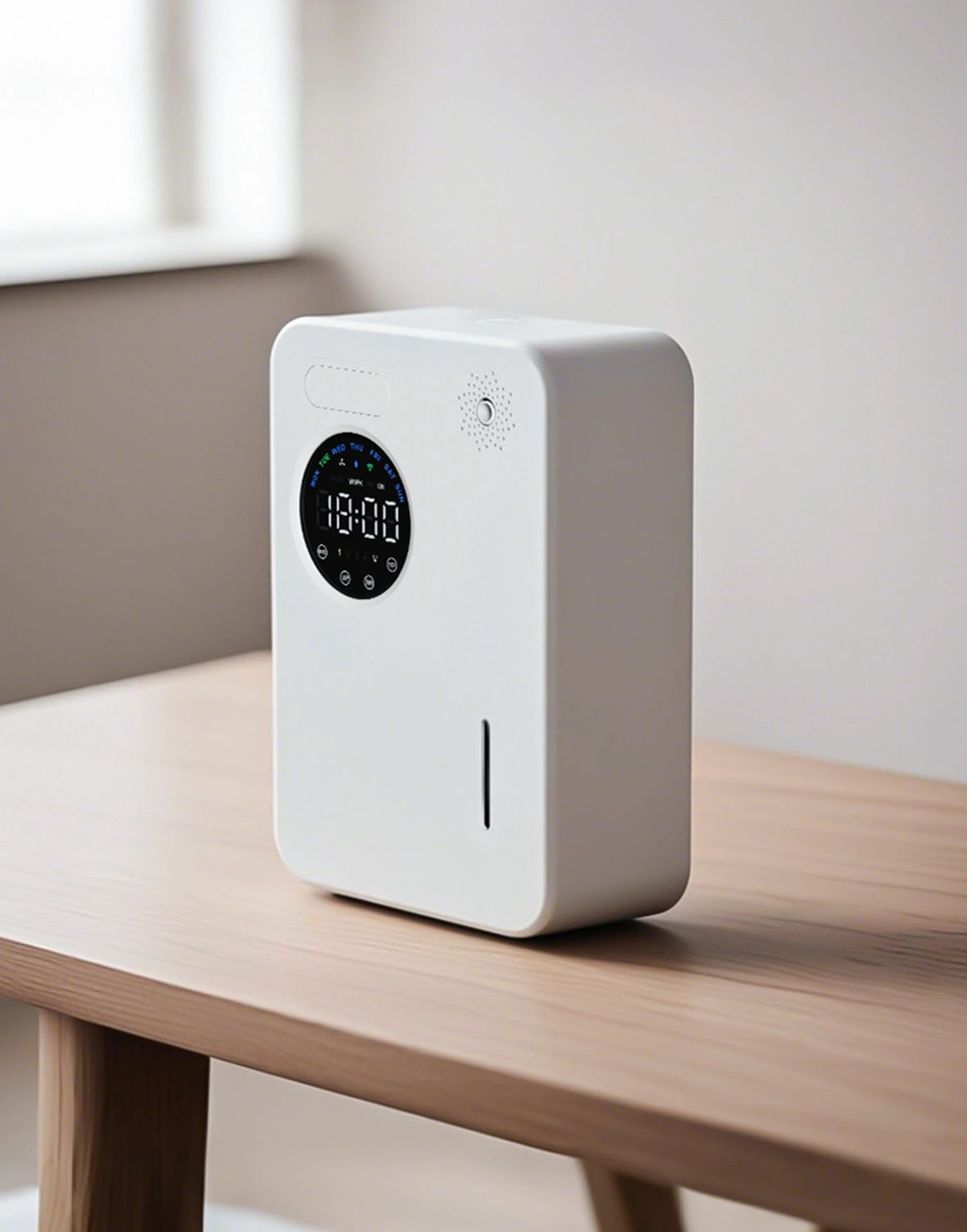
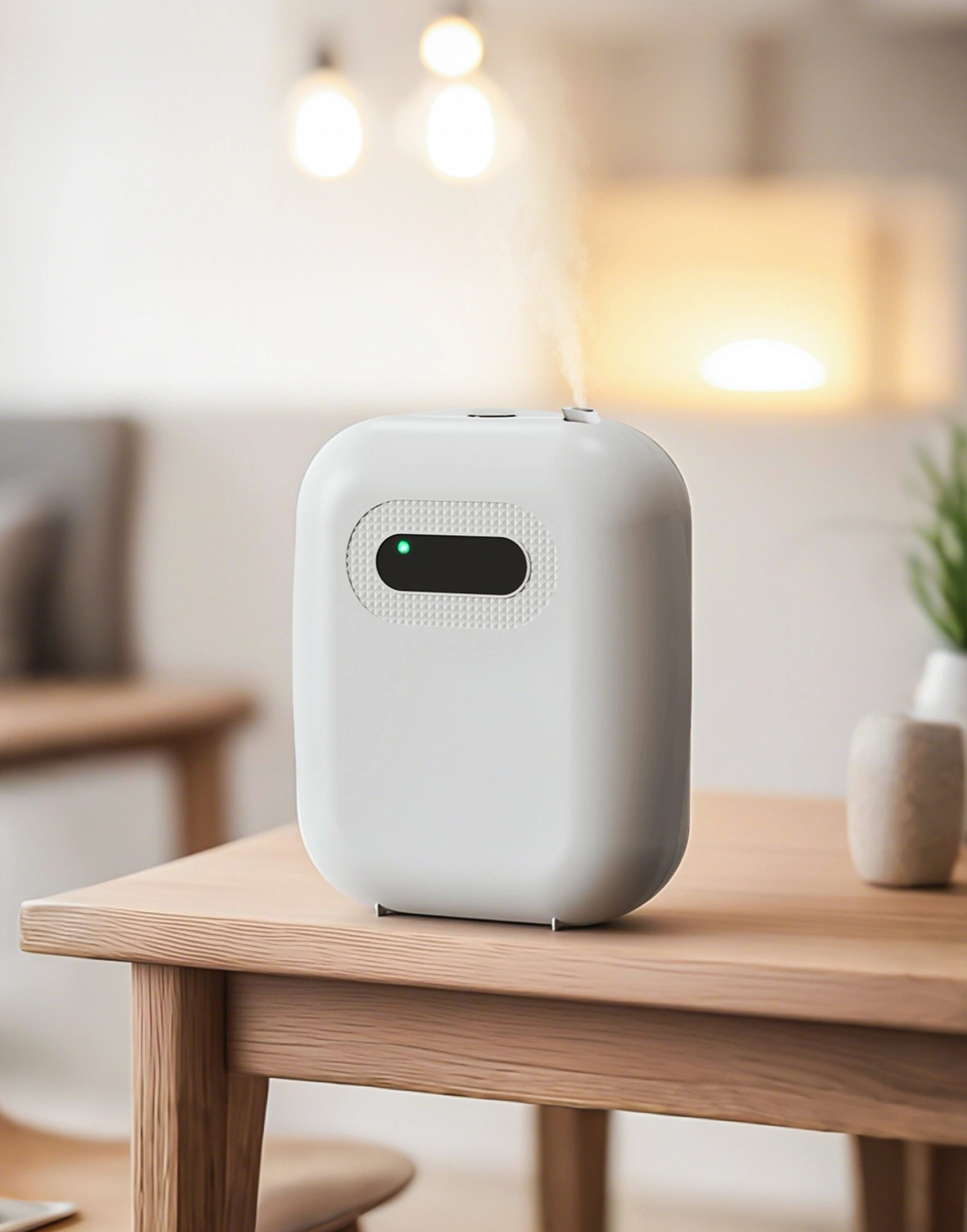
| Commercial Bluetooth oil diffuser | 300 m3 / 1,000 sq ft | Small retail, private office, boutique | Check noise level and programmable schedule |
| Ceiling track mount diffuser | 500 m3 | Low ceiling retail, meeting room | Needs contactless access for refills |
| Wall mount HVAC diffuser | 3,000 m3 / 10,000 sq ft | Hotel corridor, midsize lobby | Time refills to HVAC fan schedule |
| Hotel scent oil diffuser tower | 3,000 m3 / 11,000 sq ft | Hotel lobby, open lounge | Visible tower, easy refill, touch control |
| Commercial HVAC scent diffuser | 8,000 m3 / 30,000 sq ft | Whole building, atrium, large venue | Requires HVAC integration and zoning |
Scent-Share’s catalog spans from 300 m3 standalone diffusers to 8,000 m3 HVAC systems, with a 300+ scent library built over 10 years of projects across 68 countries.
 If your program spans multiple locations, ceiling mounted units, or an HVAC connected building, it is worth confirming coverage, zoning, and local compliance before finalizing your scent shortlist. Send your floor plans and target zones to [email protected] and we will confirm the right diffuser class and projected oil consumption.
What Should You Confirm Before a Full Scent Rollout?
Never roll out a new scent to an entire chain from a paper strip test or a single sample in a quiet office. Run a 2 to 4 week pilot in one zone with real occupancy. Track three things: how strong the scent reads at the entrance, whether staff stop noticing it after 20 minutes, and whether visitors linger or leave earlier than expected. If the scent is too soft at hour one, adjust intensity before adding more zones. If it is too strong at hour three, switch to a lower volatility formulation.
A pilot should capture:
- A baseline: air volume, occupancy, HVAC schedule, diffuser settings.
- Diffuser placement near the entry point but away from direct exhaust.
- Refill rate and oil consumption across the pilot.
- Blind feedback from staff and returning customers, not only the project team.
- Scent level at different times: opening, midmorning, after meal service.
If a scent pilot leaves your team guessing about coverage or oil use, it is cheaper to pause and confirm the numbers than to buy a full rollout. Send your floor plan, target zones, and brand direction to [email protected] or call +86 185 6557 5758. We will confirm the diffuser class, projected fragrance consumption, and a three scent shortlist matched to your space.
What Do Buyers Ask Before Choosing a Business Scent?
Does a Business Scent Have to Match the Owner’s Personal Taste?
Not at all. The owner’s taste is the least reliable filter, because the owner spends far more time in the space than customers do. A scent that feels comfortable to a daily occupant can read as too strong or too cold to a first time visitor. The better test is whether the scent matches the emotional job of the room and the expectations of the customer segment. If the owner still wants involvement, use their preference only as a veto, not as the starting point.
How Much Fragrance Oil Will a Commercial Diffuser Use?
Oil use depends on three variables: diffuser coverage, run schedule, and fragrance concentration. A higher concentration fragrance needs less oil per hour than a diluted blend, but it may cost more per liter. Confirm the grams per hour or milliliters per day rating from the supplier’s technical sheet before ordering refills. The same fragrance can consume very different volumes in a 300 m3 boutique and a 3,000 m3 lobby.
Can We Use the Same Scent in Every Location?
It depends on layout and climate. The same scent can work in a hotel chain if the diffuser coverage and intensity are recalibrated by zone, but a bakery and a spa in the same building should use different fragrance directions. High humidity and high temperature also change how fast top notes burn off. A normalized brand palette is useful, but it usually needs zone-specific intensity settings rather than identical equipment settings at every site.
What Should We Ask for Before Signing a Supply Agreement?
In projects we have run across 68 countries, the most useful requests are sample vials from the same production batch, IFRA and SDS (safety data sheet) documentation, and a written consumption estimate for your actual floor plan. Ask for those before comparing unit price. A lower price per liter means little if the fragrance is diluted further or the supplier cannot document the same consistency across repeat orders. Share your floor plan and target zones with [email protected] and we will confirm the relevant compliance documentation and a realistic oil budget before you order.
If you’re interested, check out these related articles: