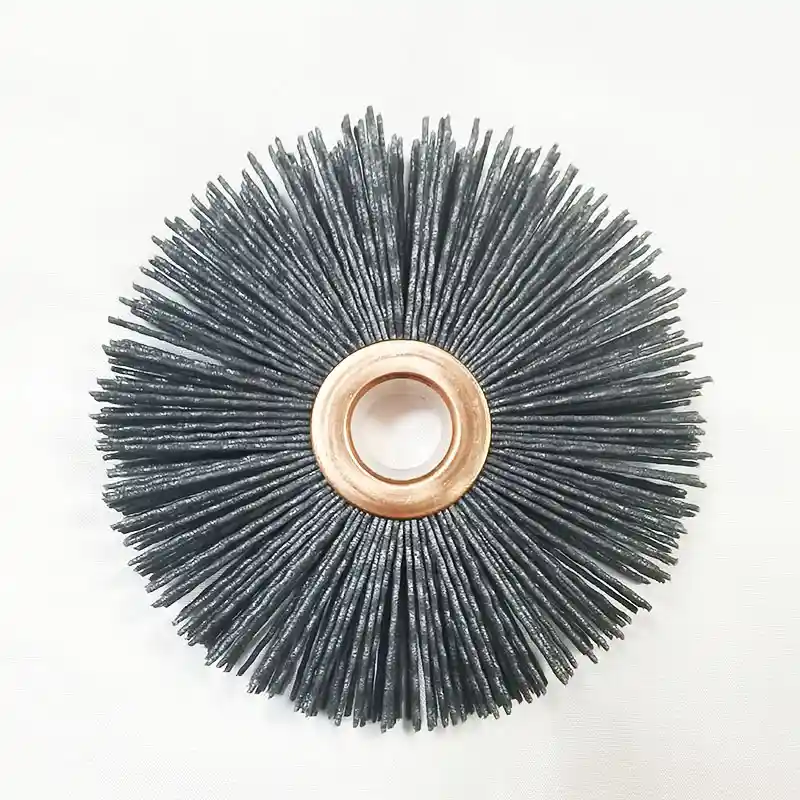

A crimped wire wheel brush removes light burrs and surface oxide with less tearing than a knotted wheel, and that control is what makes it the safer first choice for many machined metal parts. The difference comes down to how the crimped filaments flex under load. In my experience with machined brackets and laser-cut blanks, most smooth deburring and surface finishing problems are not caused by the brush type alone but by specification choices such as wire diameter, trim length, and wheel density. Those details decide whether the brush deburrs cleanly or leaves a deeper scratch pattern than the part allows.
How Does a Crimped Wire Wheel Brush Differ From a Knotted Wire Wheel?
Crimped wire wheels are built from filament that is formed into small waves or crimps before it is packed around the hub. The crimping creates independent flex points, so each wire tip can give way slightly when it contacts an edge. A knotted wheel uses straight wire twisted into tight bundles, and those bundles behave more like rigid cutting tools. That difference changes what happens to the metal surface. The crimped wheel scrapes and polishes with a lighter contact; the knotted wheel bites and removes material faster.
| Feature | Crimped Wire Wheel Brush | Knotted Wire Wheel Brush |
|---|---|---|
| Wire construction | Crimped or wavy filaments that flex individually | Straight or twist-knotted wire bundles |
| Cutting action | Light scraping and low-impact brushing | Aggressive cutting and scale removal |
| Surface result | Smoother finish with a shallow scratch pattern | Coarser finish with deeper marking risk |
| Better fit | Burr removal, oxide cleaning, pre-coating prep | Weld slag, heavy rust, thick scale removal |
| Risk on thin metal | Lower | Higher |
The line between crimped and knotted wheels is not only about wire type; it changes the amount of pressure that reaches the part. <the differences between knotted wire wheel brush and crimped wire wheel brush> covers how the two filament structures behave under load and why choosing the wrong one can slow down a finishing line.
For a part that only needs a uniform satin finish after machining, I would select the crimped wheel before a knotted wheel. The finish is easier to control, and the brush leaves enough tooth for coating adhesion without cutting through the part profile. Heavy weld spatter or mill scale is the point where a knotted wheel earns its place, and that decision should be made before the job reaches the finishing cell.
Which Metal Finishing Jobs Are Crimped Wheel Brushes Best For?
Crimped wheel brushes perform best in light edge finishing, scale and oxide removal on non-structural surfaces, and pre-treatment conditioning before coating or bonding. Machined brackets, laser-cut blanks, shaft ends, and formed sheet metal parts are the typical applications. The brush removes raised burrs without changing the parent material when the wire grade and speed are matched.
The same brush often serves two passes in one cell. The first pass takes off the loose edge condition, and the second pass blends the surface so the part is ready for washing, phosphating, or painting. In production support, we see the strongest results when shops use a crimped wheel as a finishing step after a harder carbon steel brush or file has removed the heavy material.
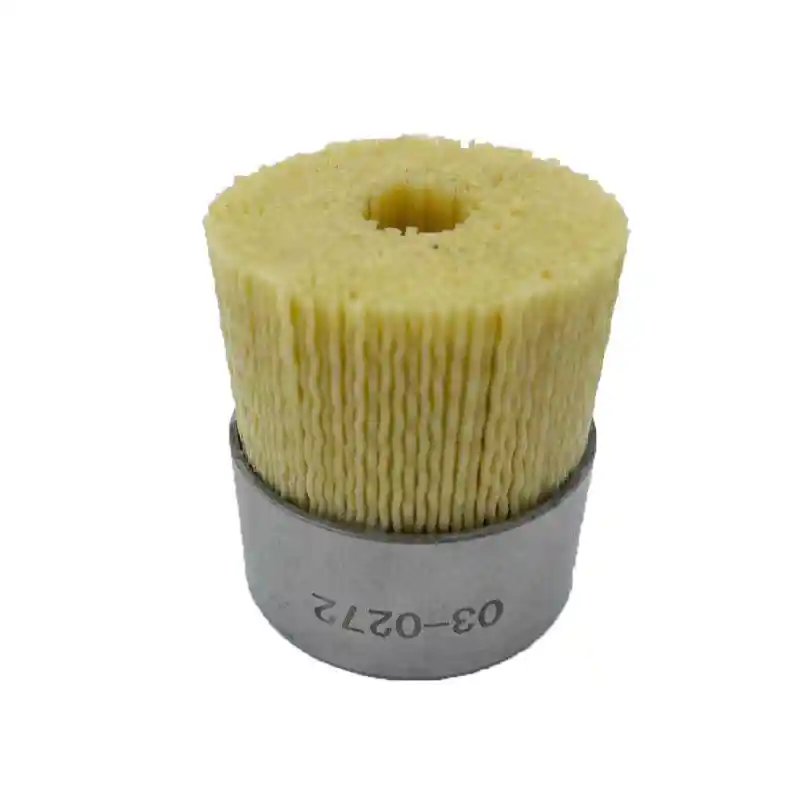
That said, the brush is not a substitute for grinding when burr height is large. If the edge condition is closer to a raised nib than a cut edge, the crimped wheel will knock it down. If the burr is thick enough to catch a thumbnail, a different removal step should come first.
What Specification Choices Control Deburring Pressure and Surface Finish With a Crimped Wire Wheel?
Three specification choices have more effect on the result than almost anything else: wire diameter, trim length, and fill density. A buyer who specifies only wheel diameter and arbor hole has not yet controlled the part finish, and that gap creates most of the variation between two suppliers.
If your part has very fine surface limits or thin edges, it is worth confirming wire diameter and trim length before finalizing the specification. Send the part drawing to [email protected] and we will check the filament contact pattern for your edge condition.
What Wire Diameter Works for Light Deburring?
Thin wire in the 0.20 to 0.30 mm range usually gives the most compliant contact and the least risk of deep marking on aluminum or cold-rolled steel. Thicker wire, around 0.40 to 0.50 mm, raises the cutting effect and works better on hardened steel or heavier oxide. Wire material adds another layer: stainless steel wire avoids rust contamination, while carbon steel wire costs less and cuts faster. The right choice depends on whether the part can accept a trace of carbon transfer or must stay clean for later welding or coating.
How Does Trim Length Change Contact Pressure?
A longer trim creates a softer, broader face because more wire can flex before the tip loads up. A shorter trim stiffens the wheel and makes the contact more direct, which is useful when the operator needs to remove a burr in a tight corner. For large flat surfaces, we usually start with a longer trim and adjust only if the brush leaves shadow marks at the stroke edges.
Why Does Fill Density Matter More Than Wheel Diameter?
Fill density controls the number of wire tips that pass across a given area. A dense wheel produces a more uniform line pattern and wears more slowly, but it also transfers more pressure across the full face. A lower-density wheel exposes fewer tips, lets each filament work harder, and can be gentler on open profiles. When a customer tells us a brush is cutting unevenly, the first thing I check is usually not the wheel diameter but the fill pattern and whether the wheel was dressed after mounting.
How Should You Run a Crimped Wheel Brush Without Damaging the Workpiece?
Correct wheel speed and feed pressure prevent most surface damage. Crimped wire wheels are not grinding wheels, and the same spindle speed that works for a flap disc can heat and fold the wire tips into the part.
Crimped wheel performance also depends on machine setup and contact angle. <wire wheel brush the right assistant for industrial cleaning and polishing> covers how wheel speed, workpiece feed, and contact angle affect cleaning and polishing results on a production line.
Why Does Surface Speed Change the Cut?
At higher surface speed, the wire tips strike the part more times per second and generate more heat at the contact line. A crimped wheel that slips across the surface polishes; a wheel pushed too hard at high speed scores the part and leaves a burnished edge. We usually run crimped wire wheels at lower speed than the wheel’s maximum rating and let the wire tips do the work under light pressure.
What Operator Patterns Cause Uneven Finishes?
One common failure is rocking the wheel on its face so only the outer third of the trim contacts the part. That cuts a narrow band and looks like a shadow line. Keeping the wheel flat and moving at a steady pass rate spreads the contact evenly. Another failure is letting the wheel dwell on the same edge too long. The metal heats, the surface smears, and the brush can leave a harder polished line that shows through paint.
How Can You Confirm the Right Crimped Wire Wheel Brush Setup for Your Production?
Surface finish calls that look fine on a drawing still fail in production when the brush specification does not match the part geometry. A wheel that works on a flat bracket may not reach the root of a bent sheet metal return, and a dense face may leave marks where a narrow edge blends into a radius. The fastest way to avoid that trial loop is to confirm the wheel build against the actual part profile before the purchase order is written.
Send your part drawing, material, and target finish to [email protected] or call +86 1580 0932 713. We will confirm wire type, trim length, and wheel density for your edge condition and arrange a sample for line testing.
What Else Do Buyers Need to Know About Crimped Wire Wheel Brushes?
How do I choose between steel, stainless steel, and brass wire for a crimped wheel?
Start with the part material and the next process. Carbon steel wire cuts faster and costs less, but it can leave rust traces on parts that go into wet storage or hygienic assembly. Stainless steel wire avoids that contamination risk and is the usual choice for food machinery, medical hardware, and stainless steel parts. Brass wire is softer and works well where spark-free contact matters. If the finish is more important than removal rate, choose stainless or brass and run the wheel at a lower surface speed.
Can a crimped wire wheel brush contaminate stainless steel workpieces?
Many shops assume that any stainless steel wire is inert enough, but trace iron from an unclean wheel or a shared fixture can still discolor the surface after passivation. The contamination usually comes from the operating environment rather than the brush itself. For stainless steel parts, use a dedicated stainless steel wire wheel and keep it away from carbon steel dust and grinding debris. That separation matters more than the wire grade printed on the wheel.
Will a crimped wheel remove heavy weld scale or deep rust?
It depends on the thickness and how tightly the scale is bonded to the parent metal. A crimped wheel works on light surface rust, mill discoloration, and loose scale. Deep rust or heavy weld scale usually needs a knotted wheel or a mechanical removal step before the crimped wheel enters the line. If the brush is forced into that heavy work, the wire folds over quickly and the part heats up, which leaves a smeared finish that is harder to correct later.
What information should I prepare before requesting a crimped wheel quotation?
In the quotation requests we review, the projects move fastest when the buyer sends three things: the part drawing or a clear photo with dimensions, the base material and hardness, and the surface finish requirement after brushing. With those details we can specify the wire diameter, trim length, and wheel density without sending the same blank sample back and forth. Share your part drawing, current burr condition, and target finish to [email protected] and we will confirm the brush build for your line.
If you’re interested, check out these related articles:
advantage of hx boiler tube brush
abrasive disc brush an excellent industrial surface treatment tool