Brands invest in visuals and sound, yet the most primal sense remains overlooked until a customer walks into a lobby that smells exactly right. Creating a signature scent for your brand is not a quick project—it is a long-term brand asset that requires a structured partnership with a fragrance manufacturer. At Scent-Share, we have spent years helping brands translate their identity into scents that customers remember. The process is equal parts creative and technical, and getting it right can strengthen brand loyalty in ways a logo alone never will.
What Makes a Scent “Signature”?
A signature scent does more than smell pleasant. It triggers an emotional connection that links your brand to a feeling. When a customer walks into a retail store and immediately recognizes the aroma, they have already started associating that experience with your identity. This is not about covering odors; it is about creating a consistent sensory anchor.
I have worked with a hotel chain that chose a custom marine scent to reflect its seaside location. Guests associated that scent with the brand long after they checked out. The scent became a memory anchor. For smaller brands, the effect can be even more powerful because it creates authenticity. A café that smells of roasted coffee and warm vanilla communicates comfort before the first sip.
The key is consistency. A signature scent must be present across every customer touchpoint, from the lobby to the packaging. Without that, the association weakens. This is why we always advise clients to treat fragrance as part of the brand manual, not a one-time event.
Translating Brand Identity into Fragrance Notes
Before a single drop of oil is blended, you need to define what your brand should smell like. This is not about what you personally like; it is about the story you want the scent to tell. A luxury fashion boutique has a different set of sensory cues than a wellness spa.
We start by mapping brand values to fragrance families. A modern, minimalist tech showroom might need a crisp, green, slightly metallic edge (think cucumber, ozone, and white tea). A heritage leather goods store might call for rich woods, tobacco, and amber. Color palette, materials, and even the lighting inform the final direction.
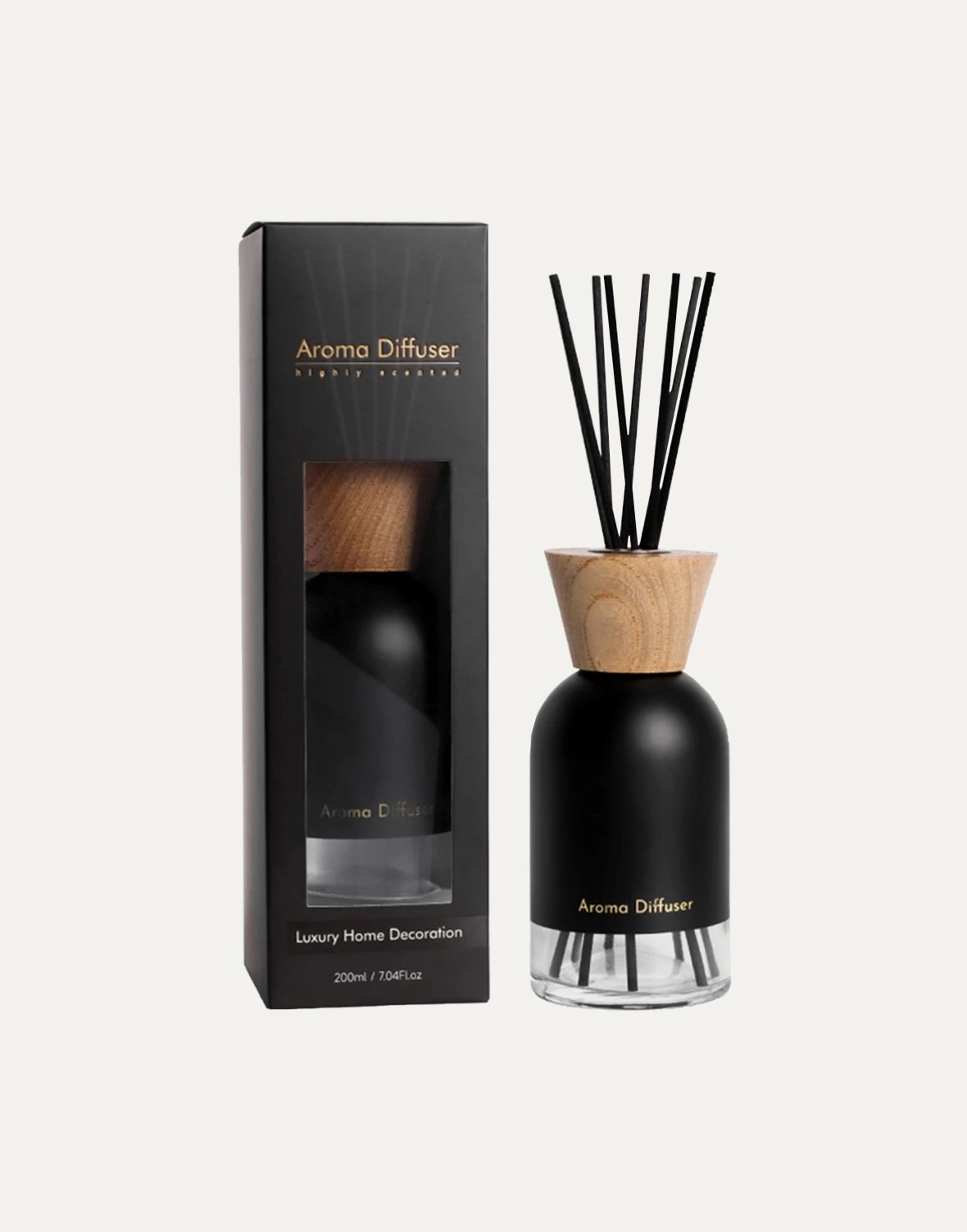
The fragrance pyramid helps structure these choices. Top notes are the first impression, often citrus, aquatic, or green. Middle notes form the heart of the scent and carry the narrative—floral, herbal, or spicy elements. Base notes provide depth and longevity, typically woods, musks, or resins. A balanced pyramid keeps the scent evolving without becoming overpowering.
We often ask clients to collect a few reference scents they admire, not to copy them, but to understand what emotional register they want to hit. One luxury boutique we worked with wanted something that felt like “an old-world library with fresh flowers on the table.” That became our creative brief, and we developed a formulation with aged paper, leather, and light peony that tested extremely well with their clientele.
The Custom Fragrance Development Process
Developing a custom scent does not happen in one meeting. It is a collaboration that moves through several stages, each designed to reduce risk and sharpen the final result.
Step 1: Discovery and Briefing. You share everything about your brand, your space, your customer demographics, and the emotions you want to evoke. We ask about the size of the area, ceiling height, air flow, and any existing scents in your products. All these factors affect the formulation and the diffusion strategy.
Step 2: Fragrance Design and Sampling. Our team creates three to five sample formulations based on the brief. These are not final products; they are directional interpretations. You test them in your actual environment, not from a blotter strip. I cannot overstate this—a scent that smells perfect in a small office can feel completely different in a hotel lobby with large open spaces and HVAC systems. We have had clients who rejected samples in the lab but fell in love with them once we diffused them on-site.
Step 3: Iteration and Feedback. After testing, you provide feedback on throw, character, and longevity. We adjust the formulation, tweaking the concentration of specific notes or changing the carrier oil to suit the diffuser you plan to use. One corporate client needed a scent that performed well in a 15-meter-high atrium; we had to increase orange oil and reduce the heavier base notes to prevent the fragrance from becoming oppressive at ground level while remaining detectable on the upper floors.
Step 4: Finalization and Batch Production. Once the formula is approved, we produce the scent in bulk, with strict quality control and IFRA compliance. We batch-test every production run to maintain consistency over time. If your brand expands to new locations, the same formula can be reproduced exactly, ensuring your scent identity stays intact worldwide.
Choosing the Right Manufacturer for Your Signature Scent
Not all fragrance providers can support a full signature scent program. A manufacturer that understands both scent creation and hardware deployment will save you months of coordination and help avoid costly mistakes.
 When you evaluate a partner, look beyond the scent library. Ask about their track record with brands similar to yours. Can they reference specific global projects? Do they offer in-house R&D, or do they outsource formulation? Scent-Share, for instance, has served 68 countries with over 300 scent types, all developed and produced in-house. That vertical integration matters because it means one team handles everything from fragrance development to diffuser engineering and after-sales support.
Safety is another cornerstone. Your scent must comply with IFRA standards and relevant regional regulations like REACH. I have seen companies launch a beautiful fragrance only to discover it could not be imported into certain markets due to a single restricted ingredient. A reliable manufacturer flags these issues during the development phase, not after production.
Finally, assess their support model. You will need ongoing refills, diffuser maintenance, and possibly adjustments as your brand evolves. A manufacturer with a dedicated after-sales team can respond quickly when a new storefront opens or an existing location needs a seasonal variation.
Deploying Your Scent: Diffuser Options for Every Space
The best fragrance formulation in the world will fail without the right diffusion system. Matching the diffuser to your space’s size, layout, and ventilation is as critical as the scent itself.
For large commercial spaces like hotel lobbies, airports, or conference centers, HVAC-integrated systems are often the best solution. Our dual-system HVAC scent diffuser can cover up to 15,000 cubic meters and allows independent control of two fragrances, which is useful for zoning different areas or rotating scents seasonally. For mid-sized areas (around 3,000 cubic meters), a floor-standing tower diffuser offers Bluetooth app control and touchscreen operation, making it easy for staff to manage.
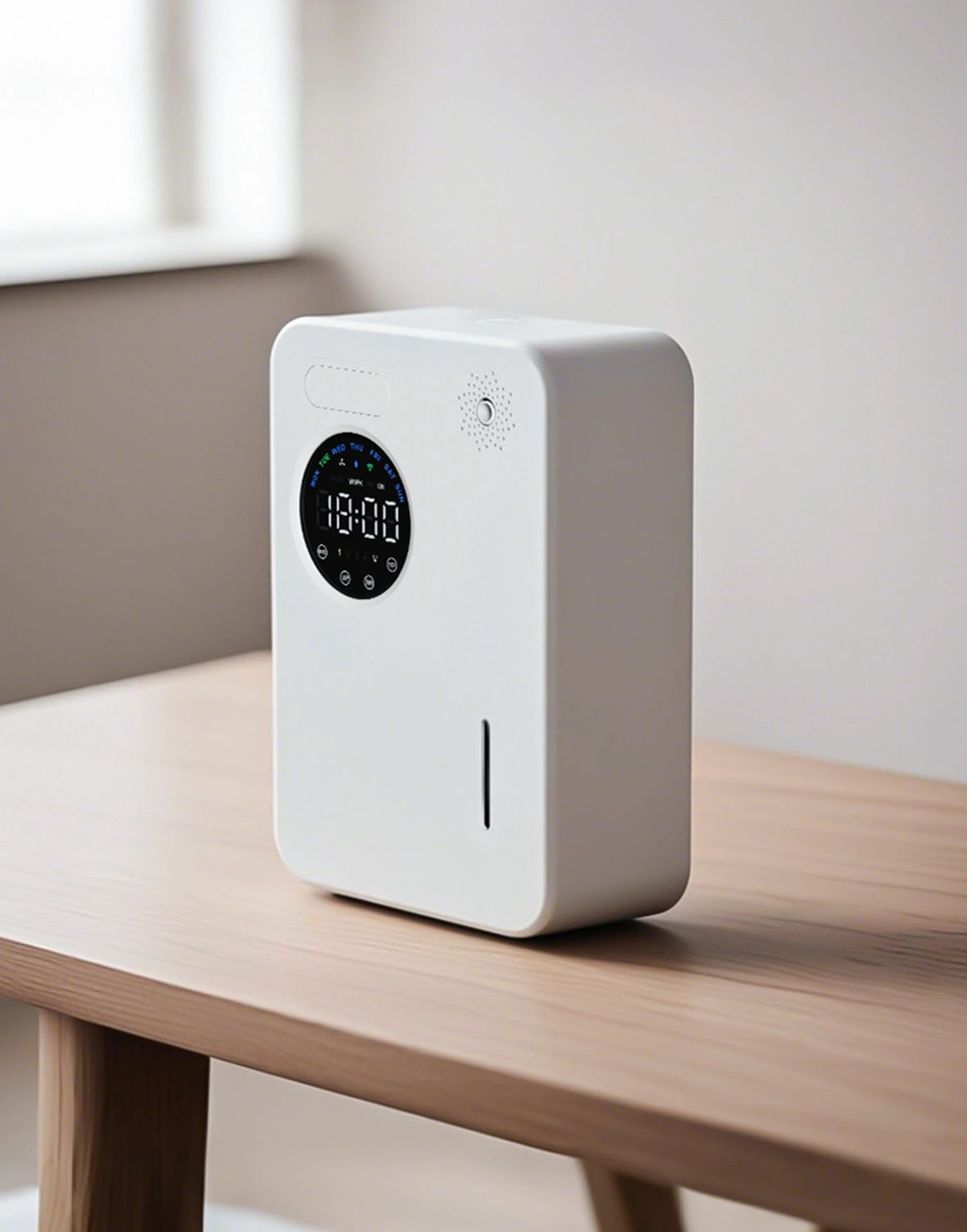
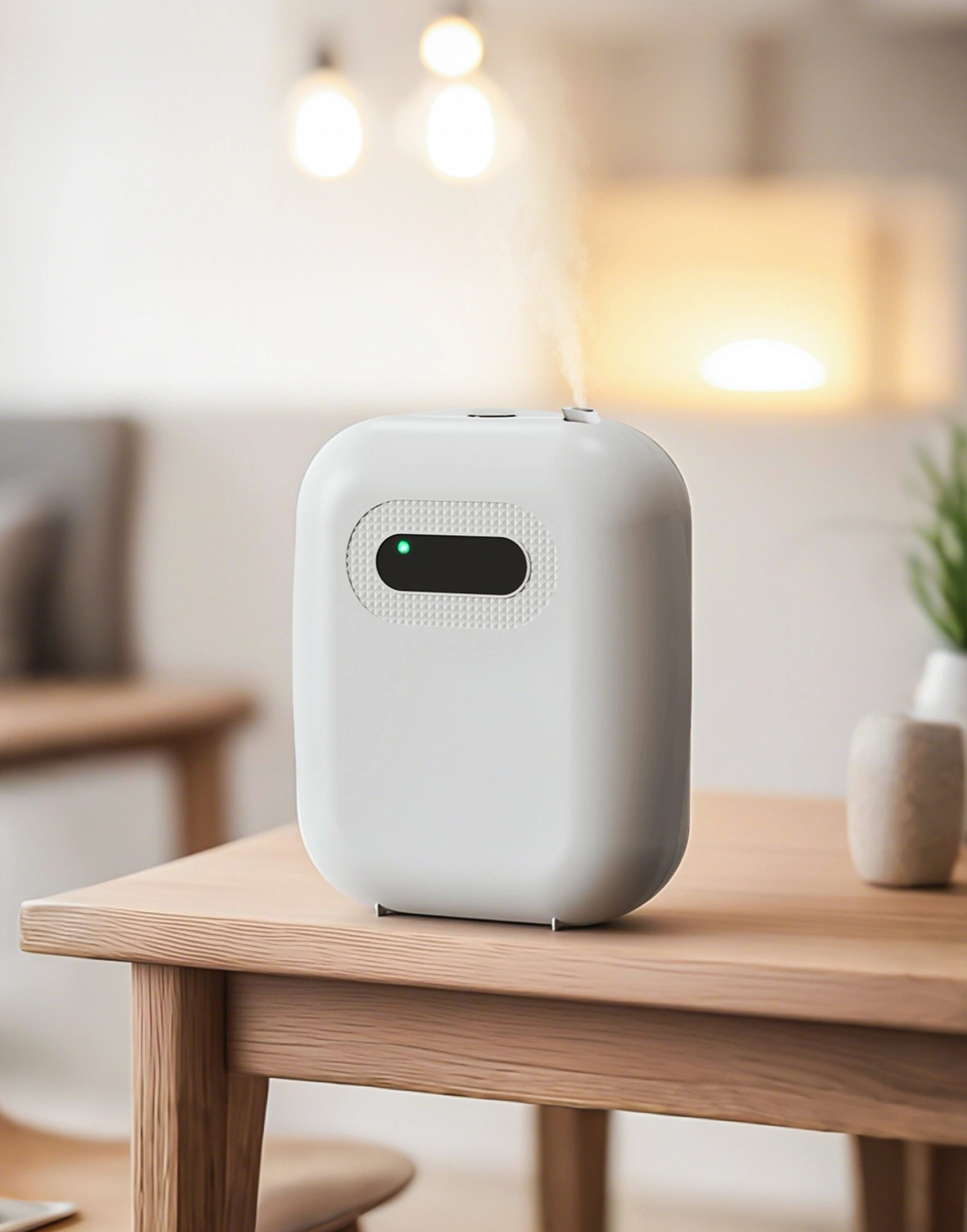
Smaller spaces such as boutiques, offices, or spa treatment rooms work well with standalone diffusers. The Scent-Share commercial scent oil diffuser covers about 300 cubic meters and operates 24/7 with app-based scheduling. For areas where wall outlets are scarce, a battery-operated wall-mount model with up to 99 days of runtime provides flexibility without visible cabling.
If you are unsure which system fits your space, we typically ask for a floor plan and ceiling height to calculate the required coverage and recommend a configuration. This avoids overspending on overpowered equipment or undershooting and creating dead zones.
Maintaining a Consistent Brand Fragrance Over Time
Your signature scent is not a set-and-forget asset. As your brand grows, maintaining consistency requires planning for refills, equipment upkeep, and eventual formula adjustments.
Fragrance oils are consumable. A hotel diffuser using a 500ml bottle might need a refill every few weeks depending on the intensity setting. We help clients forecast consumption based on machine runtime and space volume so they can schedule bulk refill orders and avoid running out. Most of our commercial clients place quarterly refill orders, which keeps costs predictable and storage manageable.
Diffusers also need periodic cleaning. Over time, oil residue can clog atomizers or affect scent output. Our remote Bluetooth management allows diagnostics without on-site visits, and our after-sales team can walk local staff through basic maintenance or dispatch a technician for complex installations.
Seasonal adjustments are another factor. While your core scent should remain stable, you might want a lighter version for summer or a warmer variation for winter holidays. A manufacturer with an internal fragrance library can modify your existing formula rather than starting from scratch, saving development time and preserving brand consistency.
Finally, as your brand opens new locations, maintaining identical scent output across different climates and building types becomes a specialized challenge. A scent that lingers perfectly in a humid coastal city might dissipate too quickly in a dry desert climate. We have adjusted diffusion pressure and oil concentration for multi-location brands to ensure the experience remains identical regardless of environment.
What Brands Often Ask Before Creating a Signature Scent
How much does it cost to create a custom signature scent?
Cost depends on the number of development rounds, ingredient rarity, and the diffuser hardware you choose. A basic custom formulation with sampling and revisions typically starts at a few thousand dollars, with bulk oil pricing based on volume and complexity. We provide transparent quotes after reviewing your brief and space specifications, so you know the full cost before we begin.
How long does fragrance development take?
Most projects complete within four to eight weeks from briefing to approved sample. The longest phase is usually testing and iteration, because a scent must be evaluated in the actual environment. I have seen projects that went through six rounds of adjustments before the client was satisfied, but that is rare. Most brands reach approval at the third round.
Can I change my scent later if my brand evolves?
You can, and many brands do as they refresh their identity. However, consistency builds recognition, so frequent changes dilute the effect. We recommend creating a core scent that can carry variations—a “flanker” approach—rather than replacing the signature entirely. This way, loyal customers still feel the brand they know, but the experience feels updated.
Is a signature scent only for luxury brands?
Not at all. Small businesses, boutique hotels, and regional retailers often benefit the most because a memorable scent sets them apart in a crowded market. The investment scales with the space and the complexity, so you can start with a modest setup and expand. I have worked with a single-site yoga studio that wanted a calming sandalwood and lavender blend; the cost was comparable to a good-quality commercial visual branding kit.
What if my customers are sensitive to fragrances?
Safety and inclusivity are priorities. All our custom formulations comply with IFRA standards and include ingredient safety assessments. We can formulate hypoallergenic blends using single-molecule ingredients with lower sensitization potential. The intensity can also be controlled through the diffuser settings, so the scent is present but never overwhelming. If you have specific safety concerns, share your requirements and we will confirm the documentation is available for your market.
If you’re interested, check out these related articles: