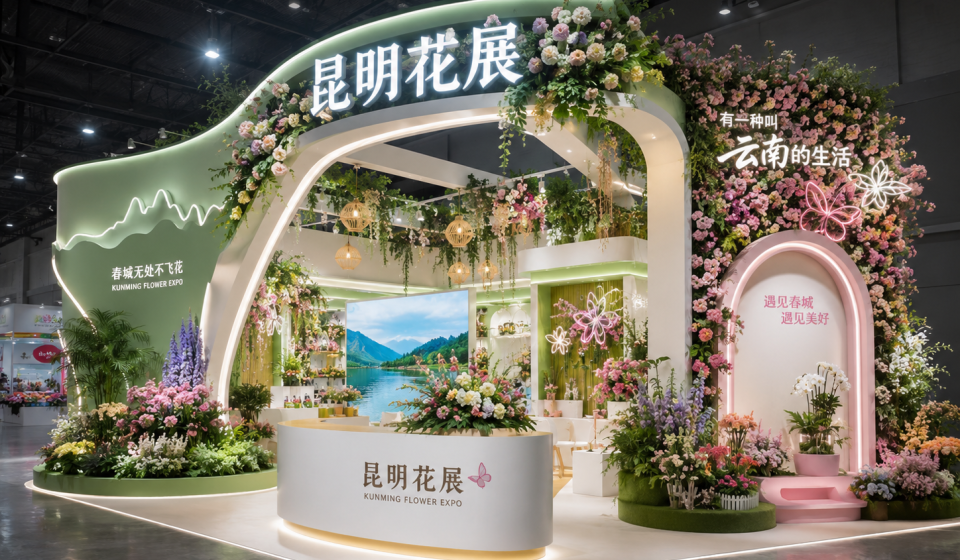

Sourcing flowers for a hotel or commercial venue is not the same as buying for a retail shop. Lobbies, restaurants, and event spaces demand consistent quality, high volumes, and year-round availability. IFEX Kunming offers a concentrated market where procurement managers can connect directly with Yunnan’s top growers and exporters under one roof. My fifteen years in floriculture trade show strategy have shown me that the buyers who treat IFEX as a supply-chain building platform, not a one-time order book, walk away with the best long-term results. This guide covers exactly how to make that happen.
Why IFEX Matters for Hotel and Commercial Flower Buyers
Yunnan Province supplies over 70% of China’s fresh-cut flowers, and Kunming is the axis around which the entire regional industry turns. For a commercial buyer, that means access to enormous production capacity and variety diversity unmatched by any other single event in Asia. The exhibition floor brings together growers of roses, carnations, lilies, chrysanthemums, anthuriums, orchids, and scores of potted and foliage plants—suppliers who understand contract growing and can scale output to match the needs of multi-property hotel groups or large commercial spaces.
The difference from a generic trade show is that IFEX deliberately integrates the whole supply chain. Cold chain providers, packaging specialists, phytosanitary service agencies, and logistics companies exhibit alongside the growers. As a buyer, you can evaluate not just the flower quality but also the export and transport capability behind it. That integration turns a sourcing trip into a single-point validation of an entire commercial supply line.
Preparing for IFEX: A Commercial Buyer’s Pre-Trip Checklist
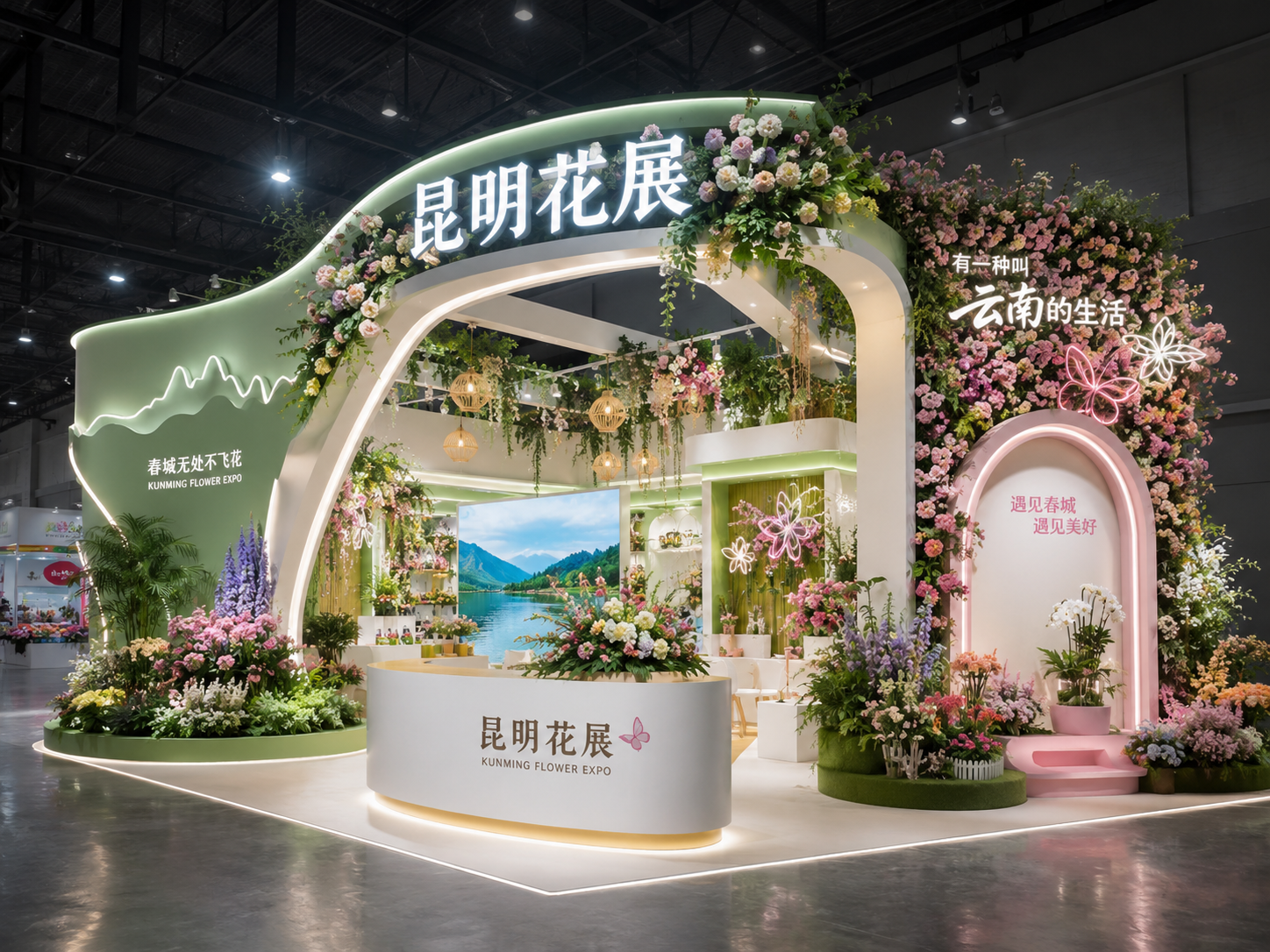
A productive IFEX visit starts long before the plane lands. First, define your buying specifications clearly. Are you sourcing centerpiece roses for a hotel chain, long-lasting greenery for office lobbies, or preserved flowers for permanent installations? Different growers specialize in different segments, and a precise brief lets you skip the suppliers who cannot meet your exact format and grade.
Second, register for your buyer badge through IFEX’s official online system at least two weeks ahead. The pre-registered credentials get you faster entry and access to the business matchmaking program, which can schedule targeted meetings with pre-screened growers. Third, set a daily budget that accounts for translator services if you don’t speak Mandarin—though the exhibition offers on-site translation, having a dedicated interpreter for negotiations often pays for itself. Bring high-resolution photos of your existing floral designs and venue spaces. Suppliers respond to visual references; they help them understand your style and volume needs immediately.
Evaluating Suppliers for High-Volume, Consistent Quality
The key metric for any hotel or commercial contract is not just how the sample blooms look, but whether the grower can replicate that quality across weekly shipments for two years. When I walk a booth, I ask four questions that reveal capacity faster than any brochure.
First, what is the planted area devoted to this variety? A supplier with a few thousand square meters can produce pulses of good flowers; one with twenty hectares can sustain a steady commercial program. Second, ask about post-harvest handling and cold storage on-site. A greenhouse without pre-cooling or a refrigerated packing line will struggle to deliver consistent vase life after international transit. Third, check certifications. GlobalG.A.P., MPS-ABC, or ISO 9001 are not just paperwork; they signal that the operation measures what it claims. Fourth, observe the grading. If you see uniform stem length, head size, and maturity stage across every bucket, that tells you the packhouse operates under tight quality control.
A practical move is to request a blind sample from the back of the display, not the curated front row. How the grower reacts to that request tells you nearly as much as the flower itself.
From Handshake to Shipment: Contracts, Logistics, and Payment
Once you have identified the right growers, the commercial terms need to be locked down before the exhibition ends. At a minimum, your memorandum of understanding should spell out variety, grade, stem length, bunch size, packaging specification, delivery schedule, and Incoterm—typically FOB or CIF for overseas shipments. Vague descriptions lead to disputes six months later when the roses you receive are shorter than the ones you approved at the show.
For first-time transactions, a letter of credit (LC) provides the strongest protection, though many mid-size growers prefer T/T with a percentage deposit. I advise buyers never to send the full amount upfront to an unverified counterparty. Use the contractual stage to also agree on a quality tolerance clause: what happens if a shipment arrives with 10% or more borderline flowers? Those details keep the relationship professional.
Logistics cannot be an afterthought. Confirm that the grower’s freight forwarder has cold chain experience to your destination port. Kunming’s air freight capacity is substantial, but transit times and temperature logs must be monitored. You will also need valid phytosanitary certificates and, for many countries, an import permit. The IFEX team can connect you with logistics partners on-site who handle these documents routinely for international hotel supply programs.
Turn Your IFEX Visit Into a Year-Round Supply Chain
Building a multi-grower portfolio takes more than a few booth visits, and the complexity of aligning harvest windows, flight schedules, and import clearances across several suppliers is real. However, IFEX’s infrastructure is designed specifically to reduce that friction. The exhibition’s business matching service pre-selects suppliers based on your category and volume, and the on-floor advisory desk can help verify a grower’s export credentials on the spot.
If you arrived with a list of requirements but left without a complete plan, that’s where the real work starts. Send your specific sourcing brief—including target varieties, monthly volume estimates, and destination market—to [email protected] or call +86 10 5933 9349. The IFEX team can help you schedule follow-up factory visits, arrange virtual quality inspections after the event, and facilitate introductions to logistics providers that already serve commercial flower programs in your region.
Common Questions About Commercial Flower Sourcing at IFEX
Can I really find growers who can supply a hotel chain consistently?
Yes, and the reason is structural. Yunnan’s mid-to-large growers routinely serve the domestic hotel and event market, which demands weekly deliveries to specific standards. Many of those same growers are now expanding export capacity. The trick is to be explicit about your chain’s volume forecast and seasonal fluctuation. A supplier who handles ten hotels in Kunming can often replicate that model for ten properties abroad, provided the logistics piece fits.
What payment terms are safest for a first-time buyer from China?
An irrevocable letter of credit remains the benchmark for a first transaction. It aligns expectations on both sides and ties payment to shipping documents rather than trust. If the grower insists on T/T, negotiate a 30% deposit with the balance against a copy of the bill of lading. Do not transfer the full amount before goods leave the farm.
How do I ensure the flowers’ freshness during international shipping?
Start by confirming the grower’s pre-cooling method. Cut flowers should be cooled to 2–4°C within an hour of harvest and remain in that range through cargo handling. Ask to see a sample temperature logger report from a recent export shipment. At the exhibition, the freight forwarders displaying in the logistics zone can walk you through the specific transit time and cold chain configuration for your destination.
Is IFEX only for large-volume buyers, or can small boutique hotels also benefit?
The show floor is not reserved for bulk buyers. Many niche growers focus on specialty cuts or small-batch preserved materials that suit boutique properties perfectly. The benefit for a smaller buyer is that you face the same growers that high-volume buyers evaluate, giving you an unobstructed view of the entire quality spectrum. You can place a trial order of a few thousand stems without anyone blinking.
Should I visit Dounan Market as well?
I always recommend combining IFEX with a visit to the Dounan flower trading market. The exhibition shows you the export-grade product; Dounan shows you the market’s pulse—what volumes are moving daily, which colors and varieties are peaking, and how pricing behaves in real time. Together, they give you a much sharper picture of what is a genuine price and what is a trade-show premium. If your schedule permits, allocate a full morning to Dounan after the exhibition to contextualize everything you saw on the floor.