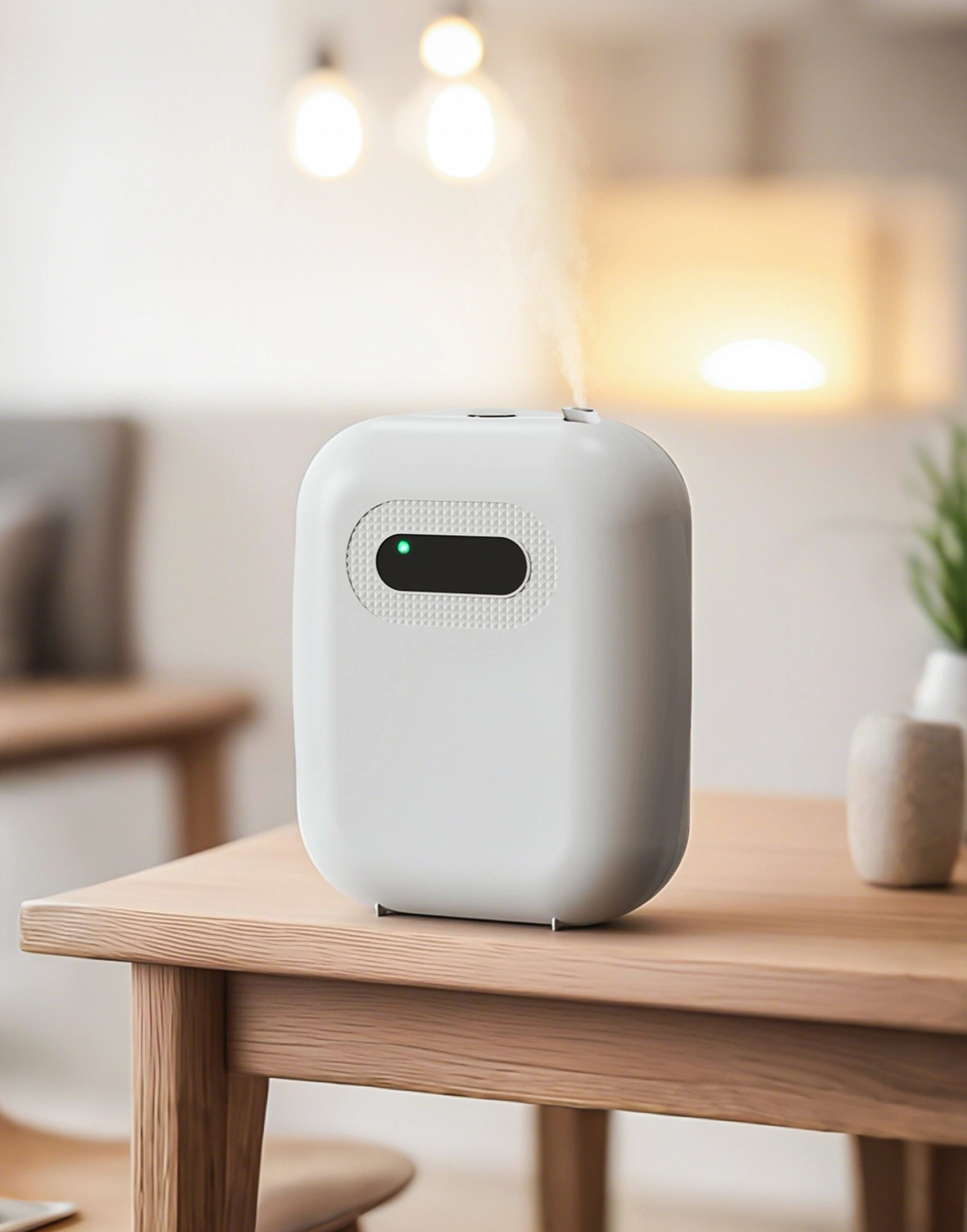
Today’s luxury brand fragrance trends reveal a decisive move beyond generic “signature scents” toward deeply personalized, technology-enhanced sensory experiences. While many brands still chase current olfactory fads, the brands that win are those that treat fragrance as a strategic extension of identity — and they demand flawless execution across every location, from flagship store to hotel lobby. Drawing from a decade of scent solution development across 68 countries, this article unpacks what is shaping luxury fragrance now, how brands are making smarter scent choices, and where procurement and technology intersect to create experiences that feel indigenous to a brand, not borrowed from a catalog.
The Shifting Landscape of Luxury Brand Fragrances
The dominant note in luxury fragrance today is authenticity. Brands are moving away from overpowering, perfume-counter style scents toward nuanced, multi-layered compositions that evoke a specific time, place, or memory. We see major hospitality groups commissioning fragrances that smell like the ironed linen in a heritage suite or the rain on stone in a courtyard — these are narrative-driven, not merely “pleasant.” At the same time, the luxury consumer’s nose has become more educated; they recognize quality ingredients and reject synthetic cheapness. This has pushed fragrance development toward natural oils and sophisticated blending techniques, often inspired by niche perfumery rather than mass-market air care.
Another undercurrent is the demand for “wellness-integrated” fragrances. Luxury retailers and spas are selecting scents that promise not just ambiance but also a psychological benefit — calm, focus, or restoration. A fragrance must now perform double duty: reinforce brand identity and contribute to the guest’s emotional state. This shift is driving the rapid expansion of custom fragrance programs in high-end hospitality and retail, where off-the-shelf solutions no longer suffice.
How Luxury Brands Are Crafting Their Signature Scents
The selection process begins with the brand’s story, not with a scent catalog. In my experience developing custom fragrances for international hotel groups, the most successful projects start with an immersive briefing: what does the brand stand for? What textures, colors, and sounds define the guest journey? The scent must translate that abstract identity into an olfactory form.
The Role of Emotion in Scent Selection
Scent operates directly on the limbic system, making it the most emotionally charged of the senses. Luxury brands are capitalizing on this by choosing fragrance notes that trigger specific emotional responses: bergamot and leather for warm exclusivity in a men’s boutique, green tea and bamboo for serene sophistication in a spa. The key is consistency; a fragrance that thrills in a private fitting room but overwhelms in an open lobby fails the brand promise. Stress-testing a scent across different zones and times of day is a non-negotiable step that many brands overlook in their hurry to launch.
Consumer Psychology and Scent Preferences
Consumer scent preferences vary significantly by region and demographic, yet luxury shoppers consistently gravitate toward complex, woody, and oriental profiles that signal rarity. Floral notes remain popular, but they are being reinterpreted with drier, less sweet interpretations — think iris or violet leaf rather than rose absolute. Brands expanding into the Middle East market, for instance, are incorporating oud and amber accords that resonate culturally while maintaining a modern edge. This level of fine-tuning requires a fragrance partner who can iterate rapidly and provide small-batch pilot formulations for market testing.
Implementing Scent: Technology and Space Considerations
Selecting the right fragrance is only half the equation. Delivery technology determines how the scent is perceived and how much maintenance is required. Luxury spaces demand invisible, silent diffusion with precise intensity control. A cold-air or nebulizing diffuser that produces a fine mist without heat preserves the integrity of delicate top notes, while HVAC integration allows for uniform coverage across thousands of square meters without visible equipment.
Standalone Diffusers vs. HVAC Systems
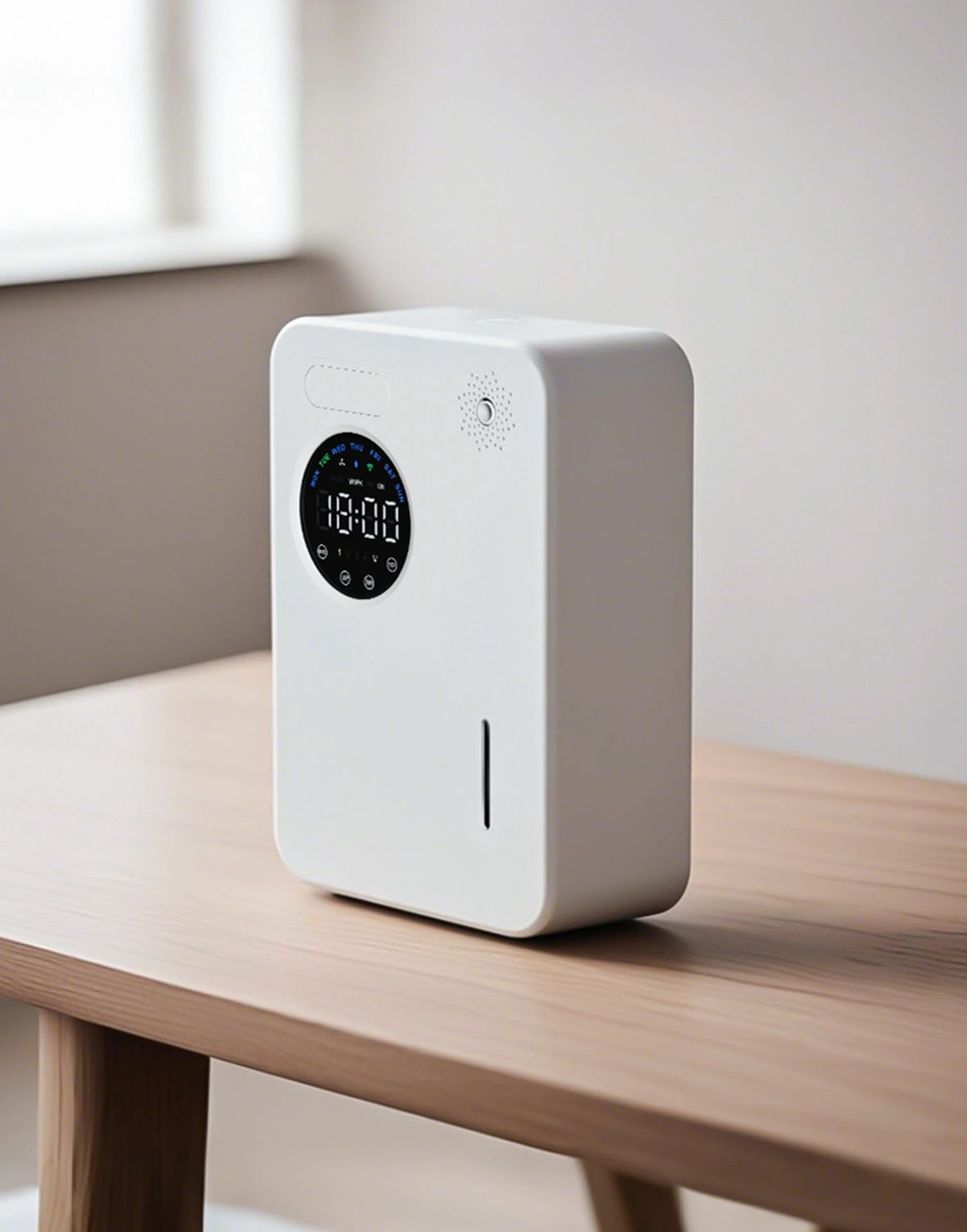
For boutique stores or hotel lobbies under 500 square meters, standalone commercial diffusers with programmable settings and Bluetooth app control offer a flexible, quick-deploy solution. These units — like the ones we’ve deployed in boutique hotels across Southeast Asia — can cover up to 300 cubic meters while operating below 30 decibels, staying imperceptible. For larger properties or multi-location chains, HVAC-integrated scent systems are the standard; they utilize existing ductwork to distribute fragrance evenly, with models capable of servicing up to 30,000 square feet from a single unit. The upfront engineering cost is higher, but the operational savings in maintenance and fragrance oil consumption are substantial over a 3-year contract.
Smart Diffuser Technology
Today’s commercial diffusers are essentially IoT devices. They support remote monitoring, automated scheduling, and real-time oil level alerts. This is not a gimmick — when a luxury hotel group operates across 50 properties, the ability to push a single fragrance program update from a central dashboard, and receive diagnostic alerts before a pump fails, prevents the brand embarrassment of a silent lobby. We have seen adoption of smart diffusion cut field maintenance calls by over 40% in large deployments, because issues are caught and addressed remotely before the client even notices.
| Diffuser Type | Coverage (m³) | Key Feature | Best For |
|---|---|---|---|
| Commercial Scent Oil Diffuser with Bluetooth | 300 | App control, compact design | Boutique stores, private suites |
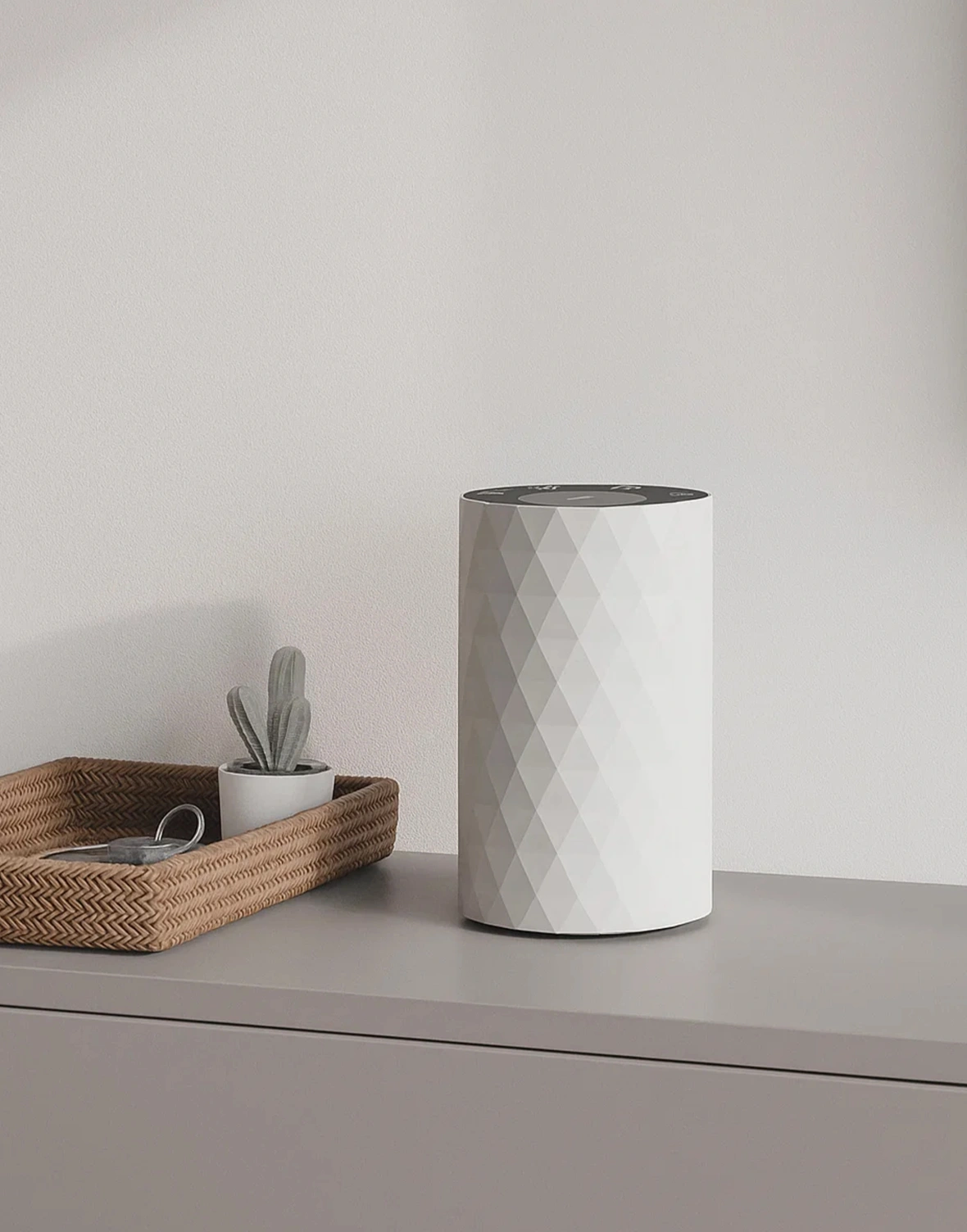
| Hotel Scent Oil Diffuser Tower | 3,000 | High-volume, touch-control display | Hotel lobbies, large event spaces |
| HVAC Scent System with 5L Capacity | 8,000 | Duct integration, heavy-duty pump | Multi-story retail, airports |
| Dual-System HVAC Diffuser | Up to 15,000 | Independent dual atomizers | Mega-malls, convention centers |
If your program spans different space types — say, a flagship store and several in-line mall locations — it is worth confirming whether your supplier can offer a unified control platform across these varying hardware categories before finalizing your equipment spec. Reach out at [email protected] to discuss your particular floor plan.
 ## Global Sourcing for Consistent Luxury Fragrance Experiences
Luxury is global, and so is the demand for consistent scent. A brand flagship in Paris, a boutique in Dubai, and a resort in Bali must deliver the identical sensory signature. Achieving this requires a fragrance partner that controls the entire supply chain — from R&D and manufacturing to logistics and after-sales support. At Scent-Share, our vertically integrated model means we formulate, produce, and package fragrance oils in-house, so that every batch matches the original approved profile, regardless of destination. We have supported international brands in rolling out custom scent programs across multiple continents without the typical batch-to-batch drift that comes from relying on third-party blenders.
What to Look for in a Fragrance Oil Supplier
Beyond raw material quality, a supplier’s ability to provide regulatory documentation — IFRA certificates, Safety Data Sheets, REACH compliance — is critical for smooth customs clearance and legal safety. A supplier that cannot produce these within 24 hours of request will become a bottleneck. Also, inquire about minimum order quantities and lead times for custom formulations. Some factories require 500-litre minimums and 8-week lead times, which can kill a pilot program. The right partner offers scalable production with small-batch prototyping, so you can test and iterate without committing to massive volumes upfront.
Ensuring Consistency Across Multinational Brands
Consistency challenges multiply with geography. Differences in climate, ventilation systems, and even local odor backgrounds (like street food aromas near a retail entrance) affect how a fragrance performs. We always recommend a site survey before deployment, using portable test diffusers to measure scent throw and perception. Adjustments to concentration or diffusion schedule can then be pre-set rather than discovered through guest complaints. This level of calibration, while initially time-consuming, pays for itself in brand protection.
 ## Future Trends: AI, IoT, and Personalized Scent Journeys
Looking ahead, the convergence of AI with scent diffusion is set to redefine luxury experiences. Imagine a hotel room that adjusts its fragrance in real time based on guest preferences stored in a loyalty profile, or a retail store that intensifies a certain woody note when a VIP client enters, as signaled by a Bluetooth beacon. Early prototypes of AI-driven scent generators can now compose novel fragrance accords by analyzing customer sentiment data, creating truly on-demand signature scents for limited-time campaigns.
The Rise of IoT-Enabled Scent Networks
Interconnected diffusion systems are becoming standard in high-end properties. These networks report usage data, predict maintenance needs, and enable hyper-local scent zoning — so the fragrance in the spa corridor differs subtly from that in the fitness studio, all managed from one cloud platform. The cost of this technology is dropping rapidly, making it accessible not just to global luxury chains but to boutique hotels and high-end residential buildings. The brands that invest now are building a moat of sensory equity that competitors will find hard to replicate.
Aligning Fragrance Strategy with Long-Term Brand Value
A fragrance program is not a campaign expense; it is a brand asset. The brands that succeed are those that partner with manufacturers who understand both the romance of scent and the rigor of global production. Without that dual expertise, a signature scent risks becoming an inconsistent, costly experiment.
If your team is evaluating a new fragrance direction, we can walk through our 300+ scent library and help you shortlist accords that align with your brand story. We also handle the entire technical side — from formulation to diffusion hardware to ongoing supply — so your team can focus on brand storytelling. For a consultation or to request sample kits, contact us at [email protected] or call +86 185 6557 5758. Share your concept, and we will assemble a pilot program tailored to your timeline and geography.
Practical Answers for Luxury Brand Fragrance Programs
What makes a luxury brand fragrance different from a standard commercial scent?
It comes down to ingredient quality and narrative coherence. A luxury fragrance uses higher concentrations of natural essential oils and more complex accords — sometimes incorporating 20 or more components — to create a multi-phase dry-down that evolves over time in the air, rather than delivering a flat, single-note impression. Equally important, the scent must tell the brand’s unique story; there is no generic “luxury smell.” Our team invests significant time in brand immersion before offering any formulation, because the difference between a generic luxury scent and a true brand signature is that the latter could not belong to anyone else.
How do cultural preferences influence fragrance selection for international luxury brands?
Olfactory preferences are deeply cultural, and a fragrance that performs beautifully in Milan may fall flat in Shanghai or Riyadh. In our experience, Middle Eastern markets prefer rich, opulent profiles centered on oud, amber, and musk, while East Asian luxury consumers lean toward transparent, green, or tea-infused notes. European markets appreciate dry woods and chypre structures. The solution is not to create a disparate scent for each region — that fragments the brand — but to design a “core accord” that can be subtly modulated with regional top notes while preserving the recognizable signature. We have done this successfully for several hotel groups expanding across Asia and the GCC.
Can a small luxury boutique afford a custom fragrance program?
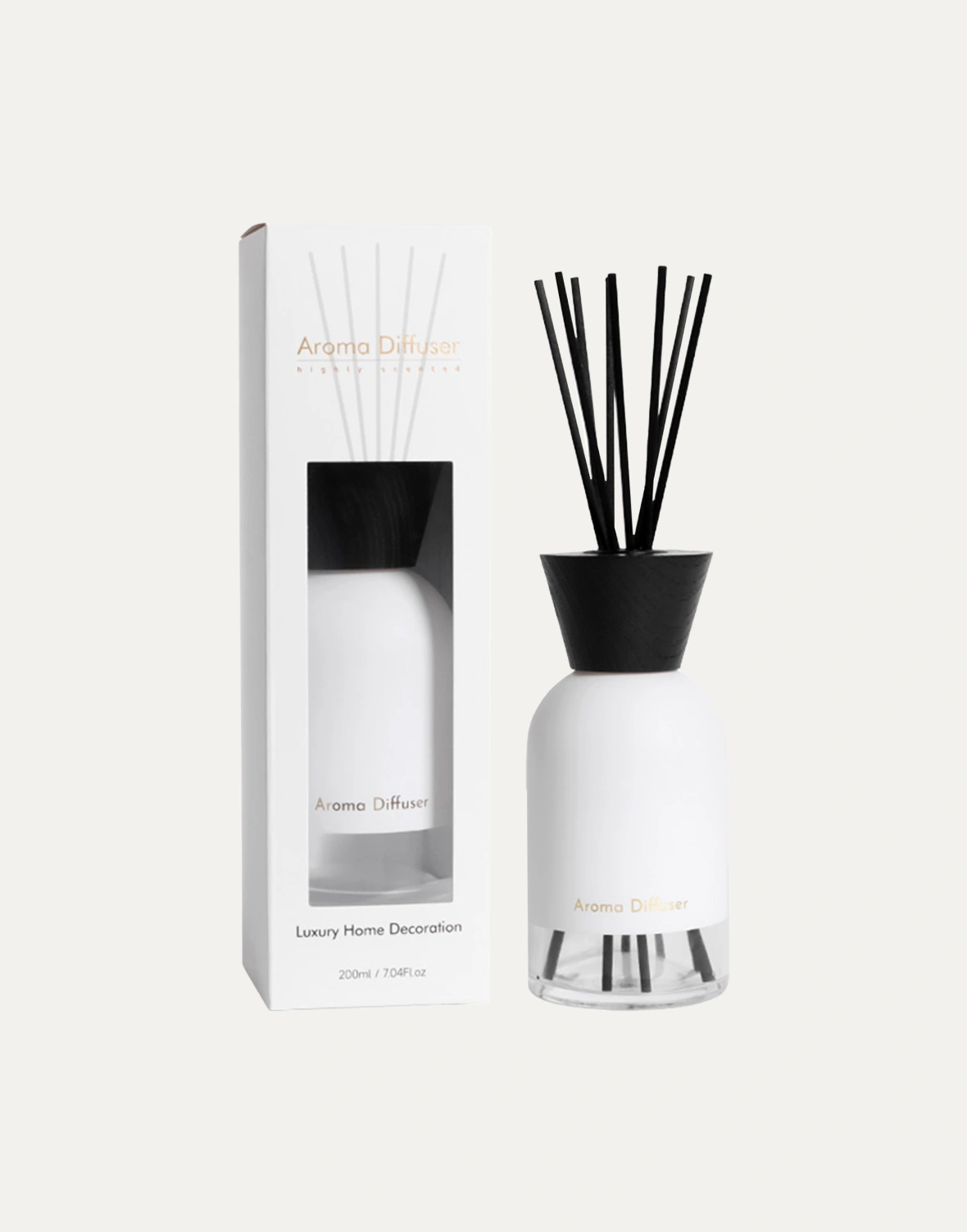
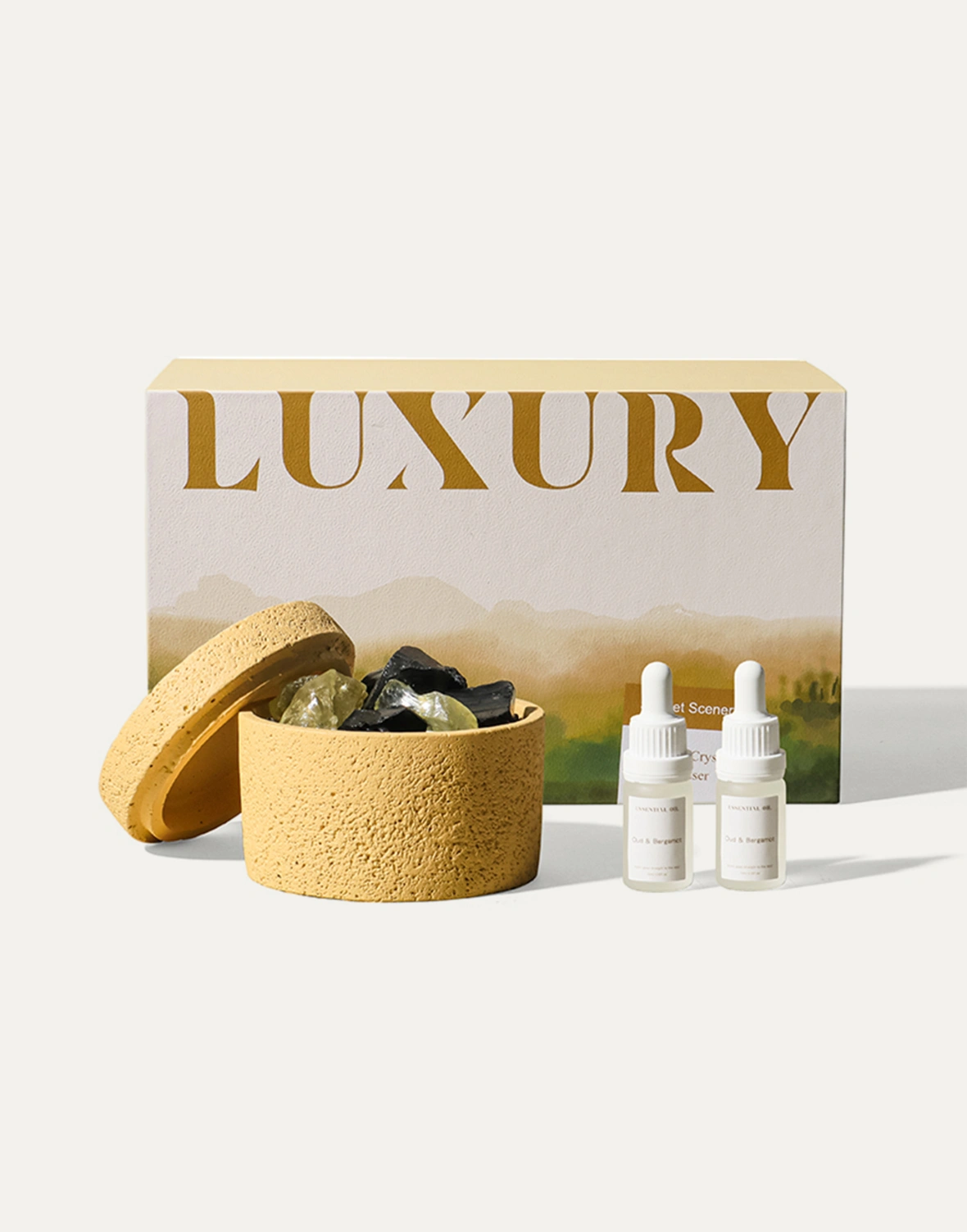
Yes, the barrier is lower than most assume. While a fully bespoke fragrance with multi-region deployment involves investment, small businesses can begin with a curated selection of existing high-end accords, then customize the finishing touches: a specific bottle design, a unique blend ratio, or a personalized packaging story. We offer low minimum order quantities for our reed diffuser and crystal stone product lines, enabling boutique owners to test the concept in-store before scaling. Share your store concept and we can propose a starter kit that fits your budget.
How long does it take to develop a custom luxury fragrance end-to-end?
A typical custom fragrance development timeline spans 12 to 16 weeks from initial brief to first production batch. This includes the immersion and concept phase, laboratory formulation and iteration, client sampling and feedback rounds, regulatory documentation, and pilot production. Rushed timelines inevitably compromise quality, and we always counsel clients to plan fragrance rollouts alongside other pre-opening activities rather than treating it as a last-minute detail. If your project has a hard launch date, it is helpful to align your fragrance brief with our production calendar early on — reach out at [email protected] with your timeline and we will confirm feasibility.
If you’re interested, check out these related articles: