Hotel scent marketing trends are moving from fragrance choice to intelligent diffusion that delivers scalability. Without the right hardware, even a signature scent fails to create brand impact. Over the past decade, I’ve worked with properties across 68 countries, and the most successful hotels treat scent as an experiential layer that adapts to guest flow, time of day, and seasonal shifts. The trend isn’t just about which notes are popular; it’s about how technology is making scent personal, measurable, and effortlessly consistent across every zone of a property.
The Current Shift in Hotel Scent Marketing
Hoteliers used to ask me, “What perfume oil should I pick for my lobby?” That question has grown into something deeper. Today, the conversation starts with how scent behaves in a space, how it can be tuned to support different guest moods, and whether the diffusion system can integrate with existing building management. The push toward wellness, biophilic design, and hyper-personalization means a signature scent is no longer a static asset. It’s a programmable tool.
My team recently helped a boutique chain retrofit three properties in Southeast Asia. Their brief was simple: create a unified olfactory identity that still felt local to each location. The solution wasn’t a single oil blend, it was a flexible diffusion network that allowed each property to layer a regional top note over the same base accord. That’s the level of control modern hotel scent programs demand.
How Smart Diffusion Technology Is Changing Hotel Scenting
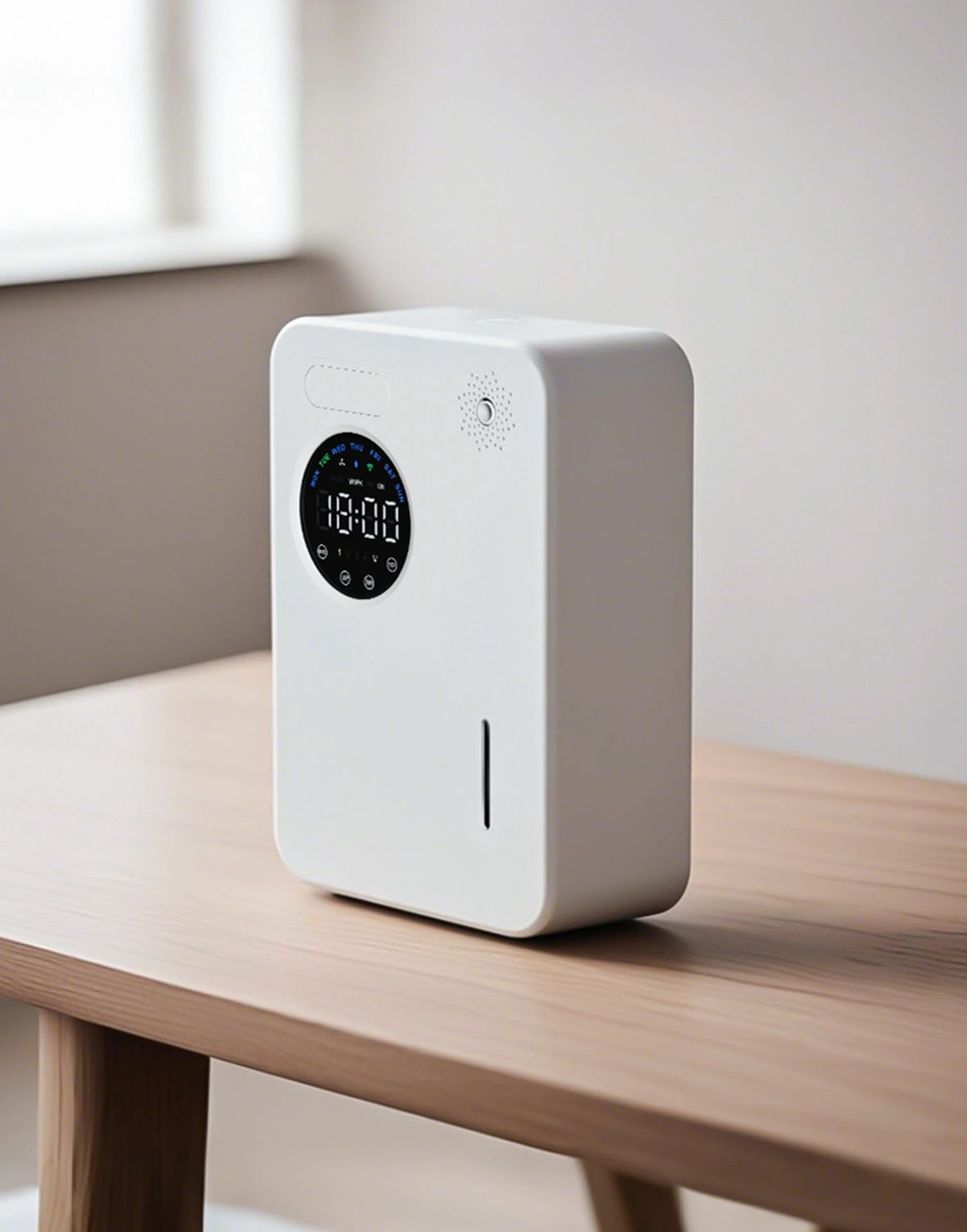 The real engine behind hotel scent marketing trends in 2025 is the technology that delivers the fragrance. Smart diffusion systems now include Bluetooth and WiFi app control, freeing hotel teams from climbing ladders to adjust settings on hidden units. Through a single dashboard, a facility manager can modify scent intensity, schedule on/off cycles, and monitor oil consumption across dozens of zones. This is not a futuristic concept; it’s a specification we deliver with our Commercial Scent Oil Diffuser and HVAC-integrated units.
For properties with high ceilings and multi-story atriums, coverage matters. Our Commercial HVAC Scent Diffuser, for instance, can scent up to 8,000m³ by connecting directly to existing air handlers. The atomization pump runs at a measured rate, ensuring concentration stays within a subtle, non-intrusive band. Meanwhile, ceiling-mounted units like the Ceiling Track-Mount Aroma Diffuser serve individual corridors or meeting rooms with 500m³ capacity. The key advantage is consistency: the system compensates for air exchange rates and foot traffic so the same perceived intensity reaches the nose whether the lobby is empty or packed.
If your property includes tall-ceiling lobbies or multiple wings, it’s worth confirming HVAC compatibility before selecting standalone units. Reach out at [email protected] with your floor plan and we’ll advise.
Integrating Scent into Existing Hotel Infrastructure
When I walk through a property, I look at airflow patterns before I think about fragrance notes. A scent that performs beautifully in a test vial can vanish in a drafty atrium or become overwhelming in a low-circulation corridor. The trend toward seamless integration starts with matching the diffuser placement to the building’s architecture.
Standalone diffusers like our Battery Aroma Oil Dispenser Wall Mount Diffuser work well for boutique hotels and smaller lobbies up to 200m³. They install in minutes, run on batteries or DC power, and need minimal maintenance. For larger properties, HVAC scent systems bypass the limitations of free-standing units altogether. The Scent-Share Wall Mount Aroma Diffuser HVAC System covers 3,000m³ and blends into the supply duct, delivering uniformly scented air without visible hardware in guest spaces.
One practical detail hoteliers often overlook is fragrance refill logistics. A property with fifty standalone units will need a steady stream of replacement oil bottles and periodic cleaning. With a centralized HVAC system, a single 5-liter bottle can run for weeks, and the app notifies staff when it’s time to swap. That shift in maintenance overhead directly affects the total cost of ownership and operational viability, especially for multi-location brands.
Choosing the Right Commercial Diffuser for Different Hotel Spaces
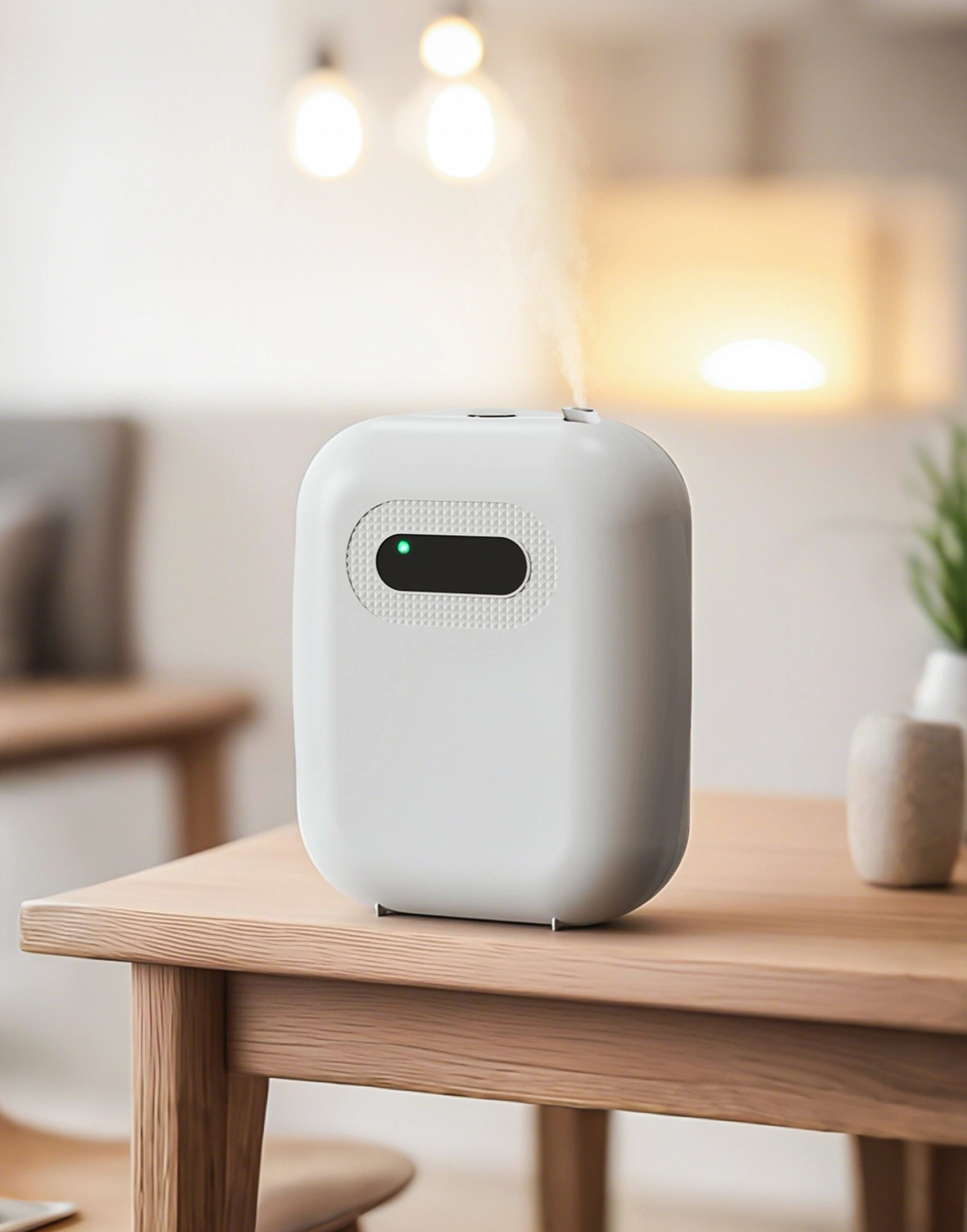
A single diffuser model rarely fits every zone. The table below breaks down four categories of Scent-Share diffusion hardware matched to common hotel applications.
| Diffuser Model | Coverage | Key Feature | Best For |
|---|---|---|---|
| Commercial Scent Oil Diffuser (Bluetooth APP) | 300m³ | Bluetooth control, long-life pump | Boutique lobbies, meeting rooms |
| Hotel Scent Oil Diffuser Tower | 3,000m³ | Touch-control, aluminum body, 500ml/1L bottle | Grand lobbies, ballrooms |
| Commercial HVAC Scent Diffuser | 8,000m³ | Direct air-handler integration, 1L/2.5L/5L options | Large resorts, multi-story hotels |
| Ceiling Track-Mount Aroma Diffuser | 500m³ | Track-mounted, contactless operation | Corridors, executive floors |
My rule of thumb is that any space exceeding 1,500m³ with variable occupancy should move toward HVAC delivery. The upfront installation is more involved, but the long-term consistency and lower labor cost tip the scale.
What’s Next for Hotel Scent Marketing
Hotel scent marketing trends are already pointing toward AI-driven scent management. I expect the next iteration to include occupancy sensors that automatically adjust intensity based on real-time guest movement, much like smart lighting systems. Data analytics will eventually let hotels track which scent profiles correlate with higher dwell time in lobby bars or better spa treatment bookings.
I also see a rise in “conscious scenting,” where wellness properties use diffusion to support circadian rhythm and relaxation in guest rooms. Combining gentle woody profiles during evening turndown with crisp citrus in morning common areas creates a non-verbal service cue that guests feel before they articulate it.
These advances rely on hardware that can interpret data and modulate output with precision. The trend isn’t about chasing novelty scents; it’s about building a scent infrastructure that grows with the brand.
If your hotel is evaluating a scenting upgrade or planning a new build, the technology decisions you make now will define guest perception for years. Share your property specifications and scent goals with us at [email protected], and we’ll recommend a diffusion configuration tailored to your spaces. Need a faster response? Call +86 185 6557 5758.
Common Questions About Hotel Scent Marketing Trends
How much does a commercial hotel scent system cost?
It depends on the coverage area and system type. A standalone Bluetooth-controlled diffuser starts at a few hundred dollars, while a full HVAC-integrated setup with multi-zone control can reach several thousand dollars for a large resort. The ongoing cost includes fragrance oil refills and periodic maintenance. In my experience, the total investment often breaks even within the first year through improved guest satisfaction scores and return visits.
Can hotel scent marketing really increase guest satisfaction?
Yes, but the effect hinges on consistency. A poorly maintained system that blasts a lobby with fragrance for two hours and then goes silent does more harm than good. When the scent is steady, subtle, and aligned with the property’s identity, guests report feeling that the hotel is cleaner, more luxurious, and more memorable. I’ve seen guest comment cards specifically mention the fragrance after a properly tuned installation.
How do I maintain a hotel scent diffuser system?
Maintenance varies by type. Standalone units need monthly cleaning of the atomizer head and bottle change roughly every 30 to 60 days depending on settings. HVAC systems typically run longer between refills, but the diffuser head and tubing should be inspected quarterly. Our app-based models send automatic reminders when oil levels drop or when a cleaning cycle is due, which removes the guesswork for housekeeping teams.
Is HVAC integration always better than standalone diffusers?
Not always. Small boutique properties with compact lobbies often achieve excellent results with a well-placed tower diffuser without the cost of duct modifications. HVAC integration excels in larger hotels, especially those with forced-air systems, because it leverages existing airflow and delivers scent invisibly. If your lobby spans multiple levels or connects to a large atrium, I recommend at least evaluating an HVAC-based solution. Share your floor plan with us at [email protected] and we’ll confirm which approach fits your infrastructure.
If you’re interested, check out these related articles: