
Ethanol storage and transportation safety is a critical consideration for any facility handling this flammable liquid, yet many operators treat it as a compliance checklist rather than an integrated design principle. AGRIFAM’s experience in deploying complete alcohol production systems across multiple continents has made one thing clear: the safest facilities are those where storage, handling, and logistics are engineered together from the grain receiving pit to the fuel loadout rack, not patched together after the fact. This article distills the essential standards and field-proven best practices that plant managers, safety officers, and project engineers need to build or upgrade ethanol storage systems that prevent incidents before they can occur.
Regulatory Framework and Tank Design for Ethanol Storage
Ethanol storage in the United States falls under a combination of Occupational Safety and Health Administration (OSHA) regulations and National Fire Protection Association (NFPA) codes, primarily NFPA 30 (Flammable and Combustible Liquids Code) and OSHA 29 CFR 1910.106. These standards establish requirements for tank construction, ventilation, electrical classification, and spill control. For aboveground storage tanks larger than 660 gallons (2,500 liters), NFPA 30 mandates minimum separation distances from property lines and buildings, secondary containment with 110% of the largest tank’s volume, and emergency venting sized for fire exposure. Codes require tanks to be carbon steel or stainless steel; aluminum and some plastics are incompatible due to ethanol’s corrosivity to certain materials and its ability to absorb water, which can accelerate internal corrosion.
| Standard | Key Requirement |
|---|---|
| NFPA 30 | Secondary containment (110% of largest tank), emergency venting, separation distances |
| OSHA 1910.106 | Flammable liquid classification, ignition source control, employee training |
| EPA 40 CFR 112 | Spill Prevention, Control, and Countermeasure (SPCC) plan for facilities storing >1,320 gallons |
| NFPA 704 | Hazard diamond: ethanol has a flammability rating of 3 (severe) |
Tank venting is another area where experience teaches more than the code. Normal vents prevent pressure buildup from temperature changes, while emergency vents must relieve pressure during a fire to prevent tank rupture. In practice, combining both into a properly sized conservation vent with flame arrester is the most reliable approach. Bonding and grounding connections should be checked visually during each transfer operation; static electricity is one of the most common ignition sources in ethanol handling incidents.

Ethanol Transportation and Fire Protection Best Practices
Transporting ethanol by road, rail, or barge subjects the operation to Department of Transportation (DOT) hazardous materials regulations under 49 CFR. Ethanol is classified as UN1170 (Ethanol or Ethanol solutions) with a hazard class 3 (flammable liquid). Tank trucks must display placards, and drivers need hazardous materials endorsements. For rail, tank cars must meet DOT-111 or DOT-117 specifications, with the latter offering enhanced puncture resistance. The loading and unloading area design is where safety is most frequently compromised. At least one documented incident involved a fire caused by a loose vapor hose connection during top loading, highlighting the need for dry break couplings and vapor recovery lines.
Fire protection for ethanol storage requires a system that can handle polar solvent fires. Ethanol mixes with water, which means water-only sprinklers are ineffective; foam concentrates, specifically alcohol-resistant aqueous film-forming foam (AR-AFFF), are necessary to blanket the fuel surface and prevent reignition. Fixed foam chambers on storage tanks, combined with hose lines and portable monitors, create a layered defense. Additionally, every transfer area should have an emergency shutoff valve within 75 feet, clearly marked and accessible. Personnel training on activating these systems at the first sign of an incident is more valuable than the equipment itself. Spill containment plans, including diking around the loading rack and drain valves to route spilled ethanol away from ignition sources, complete the fire protection strategy.

Integrating Safety Across the Corn-to-Fuel Supply Chain
A corn-based ethanol plant is not just a collection of independent processes; it is an interconnected system where safety decisions in one area affect risk in another. Grain handling generates combustible dust, fermentation releases carbon dioxide and flammable ethanol vapor, and distillation concentrates the product. Designing storage and transportation safety without considering these interactions leads to gaps. Placing ethanol storage tanks too close to grain silos increases the risk that a dust explosion in the silo could trigger a secondary ethanol tank fire. A HAZOP (Hazard and Operability) study that covers the entire site, from corn receiving to ethanol loadout, identifies these domino-effect scenarios.
If your facility handles both ethanol and combustible grain dust, a site-wide hazard assessment that addresses dust-ethanol interaction is the most direct way to close latent gaps. This kind of evaluation goes beyond standard consulting checklists and looks at how explosion scenarios cascade across your property. For an operational review tailored to your site layout, contact our engineering team at [email protected].
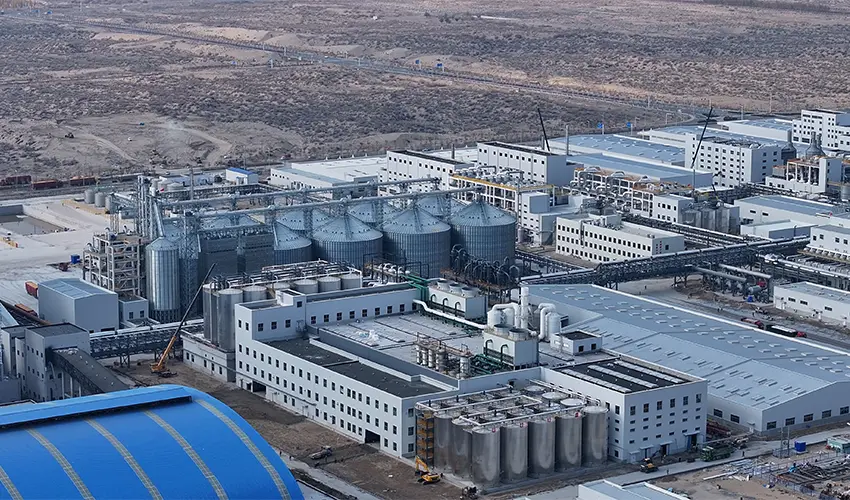
I have seen too many projects where safety retrofits doubled the engineering cost and still left the facility with awkwardly placed storage that complicated daily operations. AGRIFAM’s alcohol EPC projects, which include integrated grain handling, fermentation, distillation, and byproduct recovery, demonstrate that safety performance improves when storage layout is part of the initial process design rather than an afterthought. In one large-scale fuel ethanol plant, we located the tank farm downwind of the main processing building and separated it with a blast wall, while the truck loading rack was placed at the opposite end of the site to avoid traffic congestion near flammable storage. This spatial sequencing also simplifies emergency access and reduces the distance personnel must travel to reach assembly points.
Planning Your Ethanol Storage Safety System
Safety systems that are bought as retrofits nearly always cost more and deliver less than those incorporated from the first engineering drawing. If you are planning a new ethanol storage facility or upgrading an existing one, start with a site-specific risk assessment that accounts for your throughput, tank sizes, and proximity to other operations. The right tank material, secondary containment, and fire protection should be specified before breaking ground. For brownfield projects where space is limited, double-wall tanks with integrated leak detection can be a practical alternative to large diked areas.
AGRIFAM supports plant developers through this process, from feasibility studies to full turnkey delivery of alcohol production and storage systems. To discuss your specific project requirements, send your site plan and throughput targets to [email protected] or call 010-8591 2286. A conversation early in the design phase can prevent rework that compromises both safety and budget.
Common Questions About Ethanol Storage and Transportation Safety
What are the most common causes of ethanol storage fires?
Static discharge during product transfer, hot work near open tank hatches, and failure of emergency venting are the leading causes of ethanol storage fires. In a typical incident, ethanol vapors ignite when a tank truck is not properly bonded before loading, producing a flash fire at the manhole. The best prevention is a documented step that requires the operator to verify bonding and grounding before any transfer pump can start.
How often do ethanol storage tanks need to be inspected?
Aboveground tanks should receive an external visual inspection monthly and a formal internal inspection at least every five years, or more frequently if the tank stores water-saturated ethanol that accelerates corrosion. API 653 provides detailed guidance on inspection intervals and thickness measurements. Deferring an internal inspection because the tank looks fine from the outside is a common mistake, as internal corrosion can progress unseen. Storage tank integrity is not something to stretch beyond its schedule.
Is ethanol more dangerous to store than gasoline?
Ethanol has a lower vapor pressure than gasoline at ambient temperatures, which means it is less likely to form flammable vapor clouds in open conditions. However, ethanol burns with a nearly invisible flame in daylight and mixes with water, making foam the only effective suppressant. Site fire brigades and local fire departments should conduct joint drills using alcohol-resistant foam to maintain readiness, as a delayed response to an ethanol pool fire can allow the fire to spread to storage tanks. These properties demand specific firefighting tactics that all site personnel should know.
What personal protective equipment is required for handling ethanol?
Operators must wear chemical-resistant gloves (butyl rubber or Viton), safety goggles with splash shields, and flame-resistant clothing during loading, sampling, or maintenance. A self-contained breathing apparatus (SCBA) is necessary for emergency response in confined spaces with high vapor concentrations. Do not rely on air-purifying respirators for ethanol vapors; they have limited capacity. Regular fit testing and equipment inspection should be part of the monthly safety walk, and all PPE should be staged at clearly marked stations near transfer points.
If your operation involves multiple hazardous materials beyond ethanol, a comprehensive site safety review can clarify how storage systems should be designed to handle different risks simultaneously. Share your requirements with us at [email protected] and we can discuss how an integrated engineering approach improves safety without duplicating cost.
If you’re interested, check out these related articles:
Driving Global Food Conservation Through Technological Innovation