Commercial scenting market growth is accelerating because businesses increasingly treat ambient fragrance as a measurable brand asset rather than an aesthetic afterthought. Over the past decade, I have watched this industry shift from a niche luxury service into a standard operational consideration for hotels, retailers, and corporate environments. The change is not mysterious. Hardware costs have fallen, fragrance quality has improved, and the measurable impact on dwell time, perceived value, and customer recall has moved scent from the “nice to have” column into the same conversation as lighting design and acoustics. This article examines the forces shaping that growth, which sectors are leading adoption, and what technology trends will influence procurement decisions in the coming year.
What Drives the Commercial Scenting Market Today
The strongest driver is not novelty. It is consistency. Brands operating across multiple locations need identical ambient experiences in every property, and that requirement creates recurring demand for fragrance oil, diffuser hardware, and maintenance services. A hotel group with 30 properties typically orders quarterly refills of signature scent oil, and each refill cycle generates predictable revenue for the supplier. This operational rhythm, repeated across hospitality, retail, and workplace sectors, produces a stable growth baseline that has attracted investment into formulation R&D and diffuser engineering.
Beyond operations, consumer expectations have shifted. After a decade of curated retail environments and Instagram-worthy hotel lobbies, walking into an unscented luxury space feels incomplete. Consumers may not articulate it, but they associate the absence of ambient fragrance with lower quality. That perceptual gap creates competitive pressure for businesses to adopt scenting even when they cannot calculate exact ROI, simply because the cost of appearing behind the curve is higher than the cost of installation.
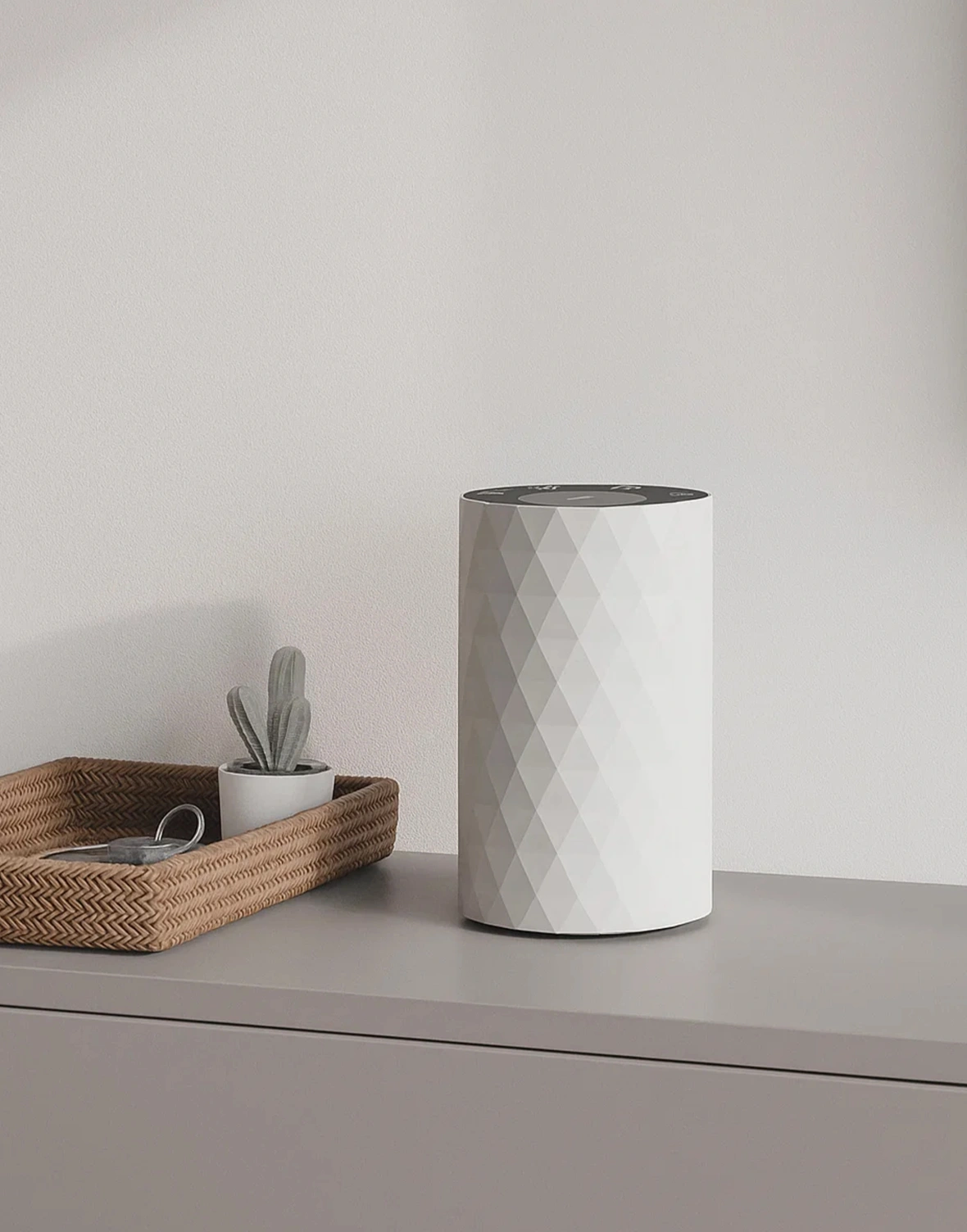 A third driver is the expansion of applicable sectors. Scenting is no longer confined to five-star hotel lobbies. Gym chains use custom fragrances to neutralize odors and energize workout zones. Co-working spaces scent common areas to differentiate their brand from generic office buildings. Real estate developers install ambient fragrance in show flats to increase emotional connection during tours. Each new vertical adds addressable market depth without cannibalizing existing demand, which broadens the total growth pool.
Sector-by-Sector Growth Patterns
Hospitality remains the largest commercial scenting vertical, but it is no longer the fastest growing. Luxury hotel groups were early adopters, and most major chains now have signature scent programs. Growth in hospitality is shifting toward mid-tier and boutique properties that previously considered scenting too expensive. These buyers are price-sensitive and prefer modular systems with Bluetooth app control and wall-mount installation, which has pushed manufacturers to develop cost-efficient options that still deliver reliable coverage.
Retail is where I see the most aggressive adoption curve right now. Fashion brands, jewelry stores, and flagship showrooms use ambient fragrance to reinforce brand identity at the point of sale. A multi-sensory environment increases dwell time by a measurable margin, and retail operators track that metric obsessively. The data feedback loop means that once a retail chain tests scenting in a pilot location and sees the numbers, rollout typically follows within six months. No other vertical converts pilot results into multi-site orders that quickly.
The workplace sector is emerging as a dark horse. Corporate offices, particularly in technology and professional services, are investing in ambient scenting for reception areas and communal zones. The rationale blends wellness signaling with brand perception. A law firm wants its lobby to smell like competence. A tech company wants its visitor area to feel innovative. These abstract goals translate into specific fragrance profiles and ongoing oil consumption, building a B2B revenue stream that barely existed five years ago.
 Healthcare and senior living facilities represent a niche but expanding segment. The challenge here is functional: odor mitigation in high-traffic corridors and waiting rooms. The fragrance selection must be subtle, non-allergenic, and compatible with clinical environments. I have worked on programs where the brief required IFRA-compliant formulations with zero sensitizers and documentation traceable to batch level. These projects move slowly due to compliance review cycles, but once a facility standardizes on a scenting program, the contract value tends to be stable and long-term.
Technology Shifts That Change the Growth Calculation
The hardware side has evolved substantially. Five years ago, commercial diffusers were standalone units that required manual refilling and schedule programming on the device itself. Today, Bluetooth app-managed systems with coverage up to 3,000 cubic meters are mainstream, and HVAC-integrated scent systems covering 8,000 cubic meters or more are available for large venues. This technology leap matters for growth because it reduces the labor cost of ongoing operation and gives facilities managers centralized control over multiple units.
Smart features change the procurement conversation. Buyers now expect liquid-level detection, remote scheduling, and usage analytics. When a hotel group’s engineering director can monitor fragrance oil consumption across all properties from a single dashboard, the scenting program becomes manageable at scale rather than a local headache. This scalability directly supports multi-location adoption, which is the growth engine for the entire industry.
The table below compares a selection of commercial diffuser types based on coverage and application, drawn from product specifications:
| Diffuser Type | Coverage (m³) | Key Feature | Typical Use |
|---|---|---|---|
| Hotel Scent Oil Diffuser Tower | 3,000 | Bluetooth APP, touch-control | Hotel lobbies, large retail |
| Commercial HVAC Scent System | 8,000 | HVAC integration, aluminum body | Large venues, malls |
| Ceiling Diffuser (Round) | 600 | Track-mounted, built-in fan | Offices, corridors |
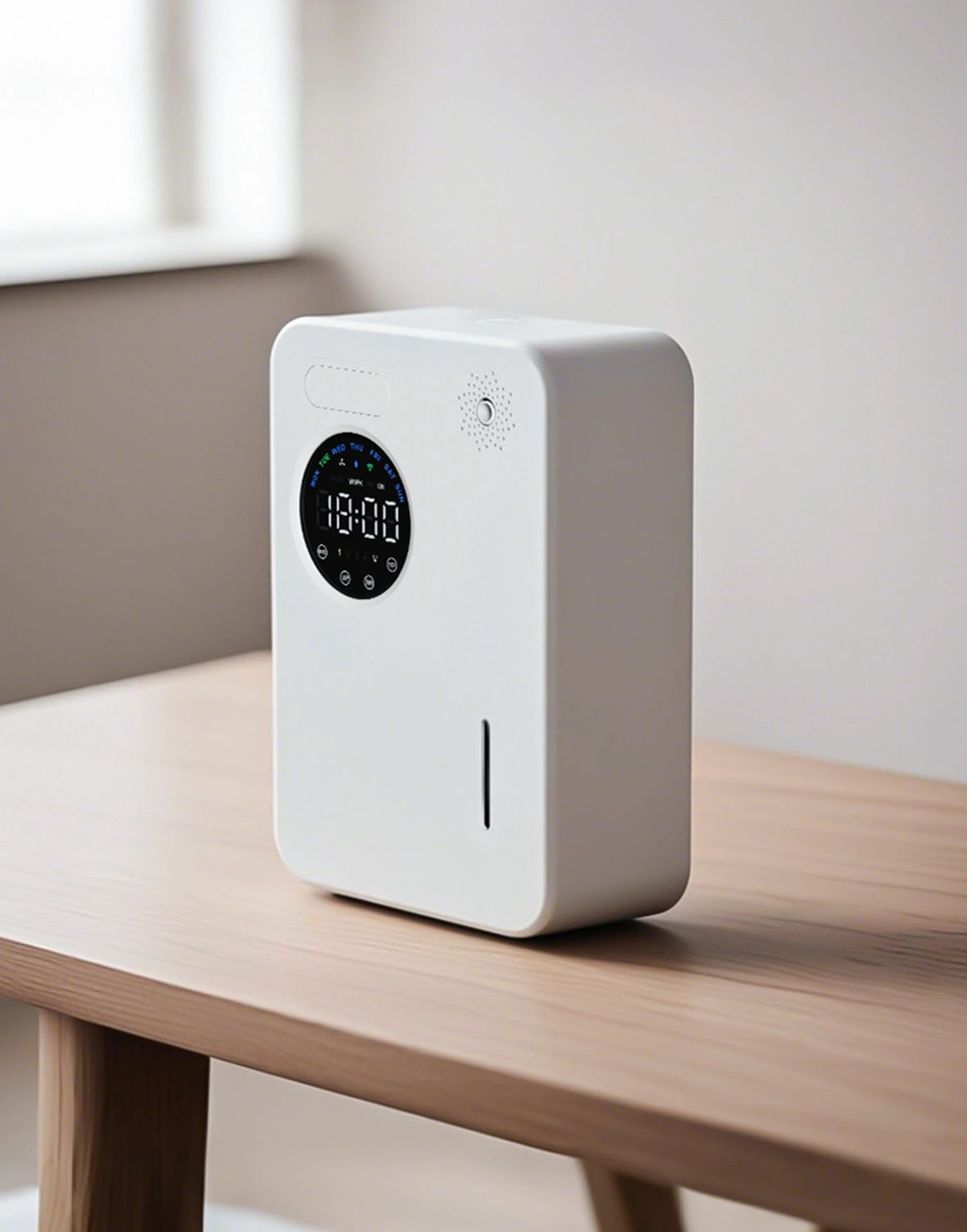
| Wall Mount HVAC System | 3,000 | Soft-line design, multi-install | Mid-scale hotels, showrooms |
| Dual-System HVAC Diffuser | 5,000–15,000 | Independent dual pumps | Airports, convention centers |
The integration of IoT capabilities into diffuser hardware also creates data that feeds back into the fragrance supply chain. Usage patterns inform oil formulation volumes, which improves production planning and reduces waste. In-house manufacturing teams, including ours at Scent-Share, use this operational visibility to shorten OEM lead times and maintain stock consistency for bulk clients.
If your project involves selecting between standalone and HVAC-integrated systems for multiple sites, the upfront cost difference is only part of the equation. Operational overhead and maintenance access often tip the balance, and it is worth confirming your facilities team’s preference before finalizing hardware specifications. Reach out at [email protected] for guidance on site-specific recommendations.
Forecast and Strategic Considerations
The commercial scenting market will continue growing, but the growth will concentrate in companies that offer integrated hardware and fragrance solutions, not piecemeal product sales. Buyers are consolidating supplier relationships because managing separate vendors for diffusers, oils, and maintenance generates unnecessary coordination cost. This trend favors manufacturers with in-house R&D and global logistics capability, the kind that can deliver a complete scent program rather than just shipping boxes.
Geographic expansion is another growth vector. The Middle East and Southeast Asian markets have shown rising demand for luxury hospitality scenting, and these regions value customization and brand exclusivity more than price sensitivity. Serving those markets effectively requires local fragrance preferences, not simply exporting a European scent catalog. Our team has developed over 300 fragrance types specifically to accommodate regional taste differences, and that formulation depth is often the deciding factor in cross-border procurement decisions.
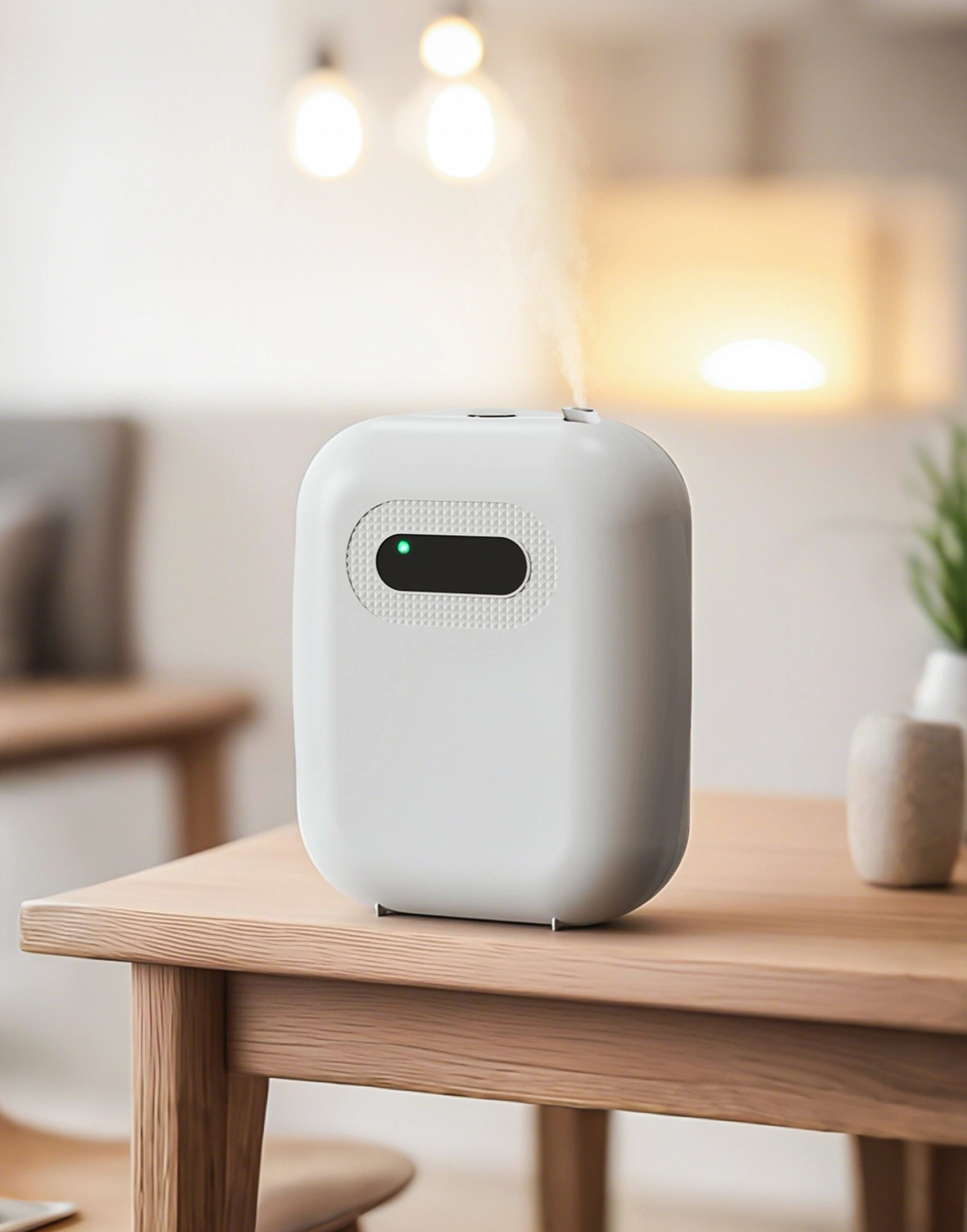
The risk to the forecast is not demand, but quality inconsistency. If substandard oils or unreliable hardware erode trust in commercial scenting, the market’s growth trajectory could flatten. I have encountered programs where cheap diffusers failed within months and poor-quality oils oxidized in the bottle, leaving a sour smell that damaged the client’s brand. These failures make buyers more cautious, which paradoxically benefits established manufacturers with verifiable production quality. The market is growing, but it is also maturing in its supplier evaluation criteria.
Practical Questions Buyers Ask About Commercial Scenting
What does a commercial scenting program actually cost?
It depends on coverage area, system type, and fragrance complexity. A small boutique hotel with one lobby diffuser and a 150ml fragrance bottle may start at a few hundred dollars in hardware, with monthly oil refills under fifty dollars. A multi-property deployment with HVAC-integrated systems and custom signature fragrance development runs into five-figure initial investments. The recurring cost structure, not the hardware price, determines the true program budget over time.
Will customers notice the scent, or does it stay in the background?
The goal is subconscious perception. If someone walks into a space and immediately thinks “it smells strong in here,” the intensity is set too high. Properly calibrated ambient scenting operates just above detection threshold. Customers will not articulate the fragrance, but they will rate the environment as more pleasant, cleaner, or more premium. We adjust diffuser output and scheduling per space to maintain that sweet spot.
In programs I have managed, scent consistency across locations is the hardest part. How do you handle that?
Centralized control through Bluetooth or WiFi app-managed diffusers is the standard solution. The same fragrance oil batch is deployed across all sites, and scheduling parameters are set identically. The hardware itself matters: diffusion pump precision and fan speed consistency determine whether a lobby in Dubai smells the same as one in London. Spending on reliable hardware upfront eliminates months of troubleshooting later.
Is scent marketing measurable, or is it purely about ambiance?
Measurable, but the metrics are indirect. Dwell time tracking in retail, guest satisfaction survey scores in hotels, and repeat visit rates are the standard proxy measurements. A luxury retail client of ours saw a meaningful uplift in average transaction value after deploying signature scent, though they did not isolate scent as the single variable. What consistently shows up is improved emotional recall in post-visit brand surveys. Share your measurement priorities with us and we can recommend the right fragrance intensity and diffuser placement for data collection at [email protected] or +86 185 6557 5758.
If you’re interested, check out these related articles: