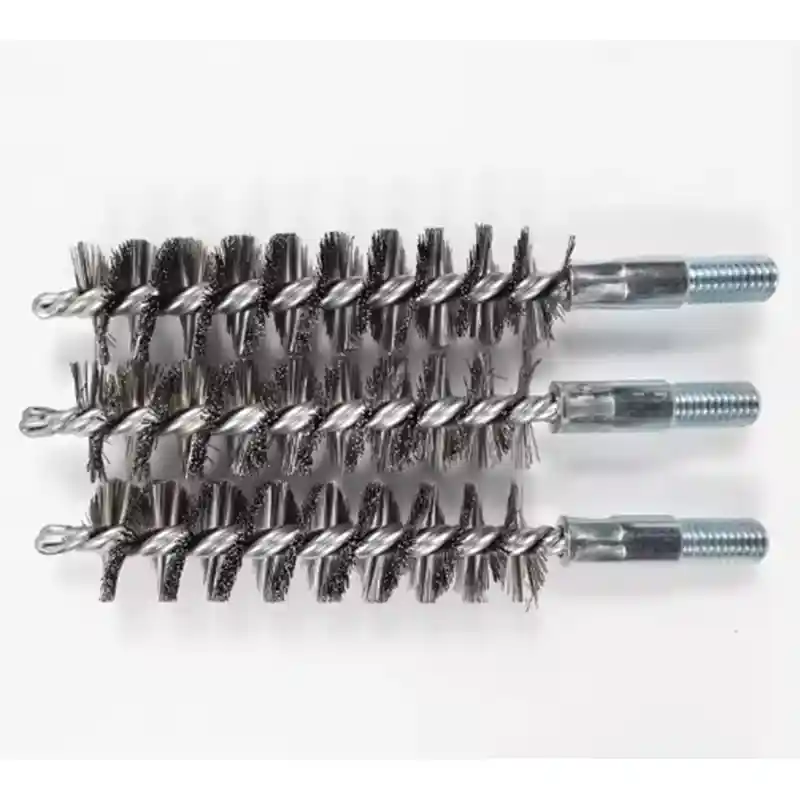

A tube deburring brush that fits is not the same as one that works. In automated production, a brush selected by diameter alone often produces uneven burr removal, short tool life, and recurring quality holds. I have worked with procurement teams who reorder the same brush for years without knowing the filament material they are using, only to question why their reject rate climbs when a new batch of tubing arrives with slightly different burr characteristics. Sorting out the right specification—filament type, stem length, density, and interference—takes a few minutes up front and prevents most of the field issues I see across our global customer base.
What Makes a Tube Deburring Brush Effective?
Performance in a tube deburring brush comes down to three interdependent choices: the filament, the stem, and the fill density. The standard construction is a twisted wire stem that traps the filament ends radially, forming a bristle cylinder. When the brush rotates inside the tube, the bristle tips scrape or impact the inner wall at a controlled interference, knocking off burrs left by cutting, drilling, or threading.
If the bristle length does not suit the tube ID, the result is predictable. Bristles that are too short hit at low pressure and burnish the burr instead of cutting it. Bristles that are too long fold back under rotation, leaving high spots that operators try to correct by raising RPM, which fatigues the filament and generates bristle fragments inside the part. I recommend a brush OD that is 1.05 to 1.12 times the tube ID for wire filament brushes, adjusted for bristle stiffness—softer filaments need a slightly larger oversize to maintain working pressure.
The twisted stem wire also deserves attention. In tubes deeper than roughly 300 mm, a single-stem brush can whip if the core wire is too thin. A thicker core or a double-stem build eliminates the wobble and keeps bristle contact uniform across the full depth.
Selecting the Right Brush Material for Your Tube Material and Burr Problem
The filament decides whether the burr cuts cleanly or the tube wall gets scratched. Choosing it requires balancing aggressiveness against the risk of surface marking. In our production, the filament inquiry is the most frequent clarification we make before quoting.
| Filament Material | Best for Tube Material | Burr Type | Key Consideration |
|---|---|---|---|
| Stainless steel wire | Carbon steel, stainless steel, brass | Heavy machining burrs, weld slag | Can mark soft metals; high wear resistance |
| Brass wire | Copper, aluminum, brass | Light to medium burrs | Non-sparking; gentle on soft surfaces |
| Abrasive nylon (e.g. SiC or AlOx) | Aluminum, stainless steel, plastic | Fine sharp edges after CNC | Generates radius edge; no metal contamination |
| Natural fiber (Tampico) | Plated or polished tubes | Light burrs, final finish | Minimal material removal |
Stainless steel wire brushes hold up well under high-speed contact with carbon and stainless tubing, but I have seen them leave faint scoring on aluminum if the interference is even slightly too high. Brass wire is safer for soft metals but wears faster and needs more frequent replacement. Abrasive nylon has gained a strong position among our clients producing hydraulic fittings and medical tubing because it gives a consistent edge break without introducing metal particles. If your line handles multiple tube materials, plan on stocking at least two filament types; a single brush type rarely serves both steel and aluminum without compromise.
If your production involves mixed tube materials and you are unsure which filament combination yields the longest tool life, it is worth reviewing your current burr types and tube alloys before locking in a specification. You can send your part drawings to [email protected] for a filament recommendation based on our production data.
Why Brush Dimensions and Stem Design Are Critical for Consistent Deburring
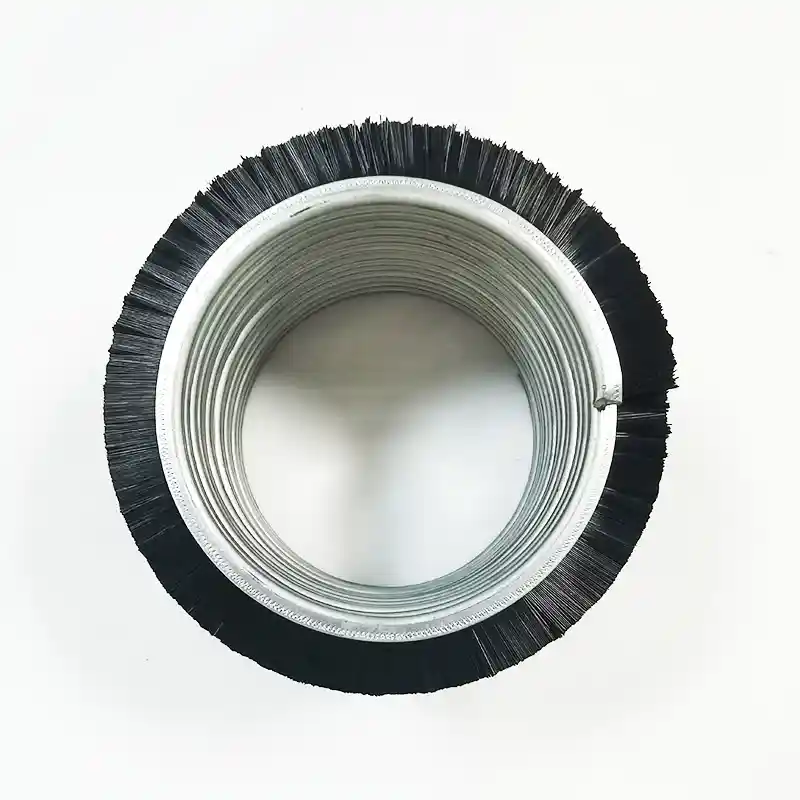
Beyond the filament, two dimension sets determine whether the brush performs in your automated station: stem length and wire core diameter, and the bristle fill density. A stem that is too long for its core diameter bends under rotation, creating runout that causes uneven deburring and accelerated wear on one side of the brush. We calculate stem specifications based on the tube depth and the spindle speed you intend to run. For production lines that push 3,000 RPM and above, a thicker core is almost always worth the small upcharge.
Fill density—the number of bristle rows per centimeter of stem—decides tool life and chip evacuation. A sparse brush clears chips well but wears quickly because fewer filaments share the load. A dense brush lasts longer but can trap swarf and increase drag. For metal tubes in the 10 mm to 50 mm range, I typically specify 8 to 12 bristles per centimeter, adjusting upward for fine wire filaments that remove less material per pass and downward when the burr is coarse and chip volume is high.
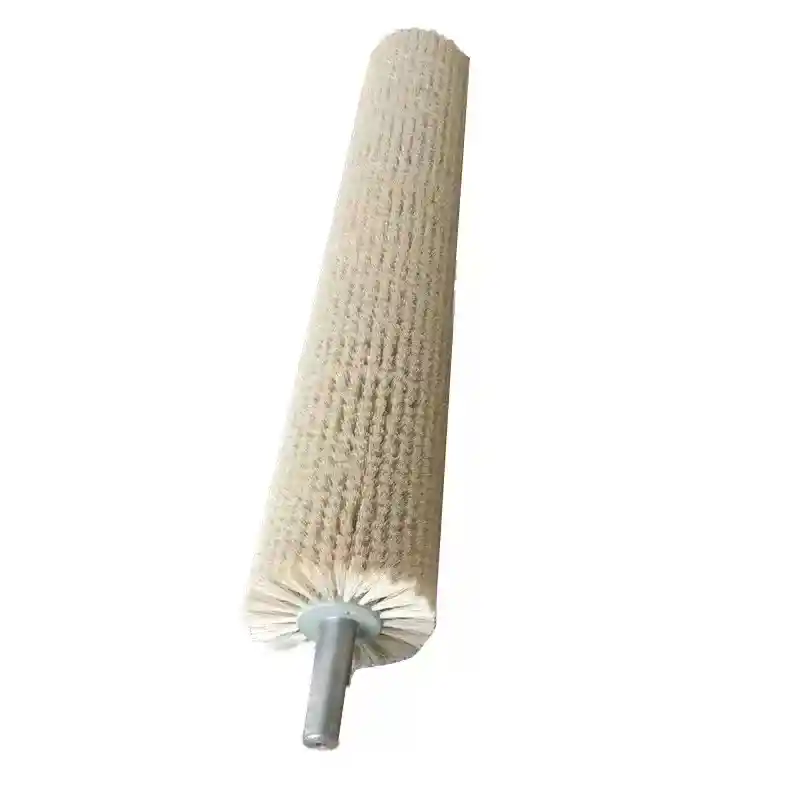
These dimensional details may seem secondary, but in automation, a stem that wobbles or a brush that loads with debris will stop a machine just as effectively as a broken tool. Getting them right in the initial order avoids the most common cause of urgent reorders.
Custom Tube Deburring Brushes: Key Parameters That Affect Lead Time and Performance
When an off-the-shelf brush does not match your tube ID, burr location, or cycle life target, a custom-built brush is often the most economical path. We manufacture custom tube deburring brushes at Huixi Brush based on six inputs: tube ID and OD, burr location, target RPM range, workpiece material, required surface finish, and expected cycles per brush.
Lead time varies with filament material availability. Stainless steel and brass filaments are standard stock items, so we can move into production quickly. Abrasive nylon with a specific grit size sometimes requires a filament sourcing step that adds a couple of weeks. If your application allows a filament alternative—for example, switching from a 180 grit nylon to a 120 grit that we already stock—we can often cut lead time by 10 to 14 days without meaningfully changing deburring performance. I have seen this accelerate sampling for US and European clients by roughly 30% on average.
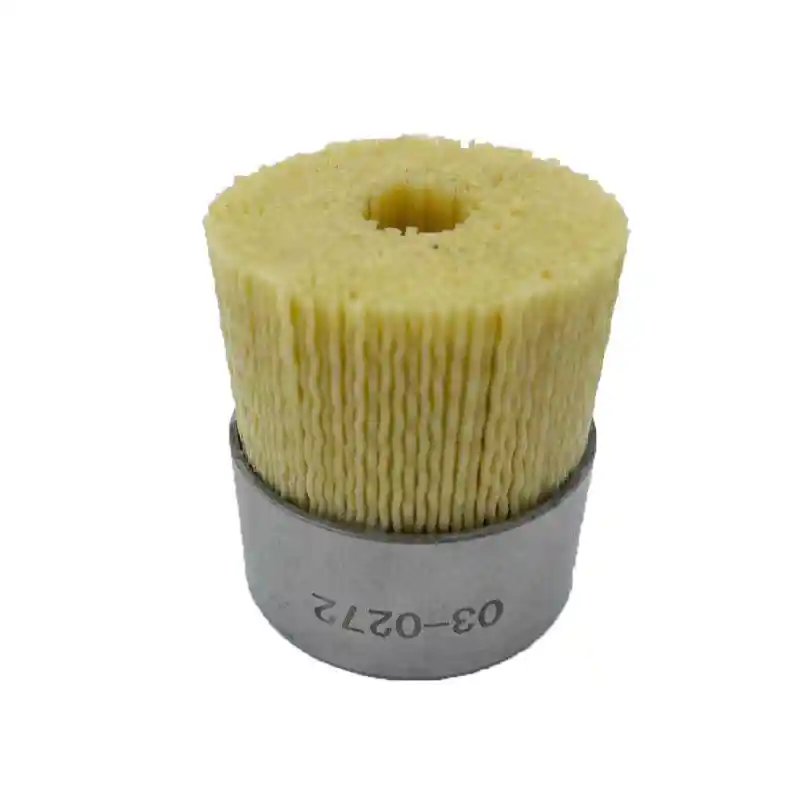
Most custom tube deburring brushes ship within 15 to 25 working days, including a sample stage for diameter confirmation. We keep a low MOQ and provide free samples so you can validate fit and performance before committing to a full batch.
Confirm Your Brush Specification Before the Next Order
If your current tube deburring brush is causing inconsistent burr removal, wearing out faster than expected, or failing to hold tolerance, the issue is usually in the specification, not the supplier. A filament change, a density adjustment, or a stem upgrade often fixes the problem without increasing per-unit cost. We review incoming brush specifications daily and can confirm the right parameters for your tube dimensions and production speed. Send your tube ID, burr location, and material details to [email protected] or call +86 1580 0932 713, and we will provide a specification with lead time and pricing within one business day.
Common Questions About Tube Deburring Brushes
Can the same brush handle both ID and OD deburring on a tube?
Not effectively. ID brushes are built with radial bristles directed outward from the stem. For OD deburring, a cup brush, wheel brush, or an externally oriented tube brush applies bristle tips at a much more efficient cutting angle. In our experience, separating ID and OD brushing stations reduces rework rates and lets you optimize the filament for each surface independently. When a client’s part layout forces combined ID and OD deburring in one fixture, we sometimes design a special two-zone brush, but that requires a detailed drawing review first.
What stem material should I request for a tube deburring brush?
Carbon steel stem wire works well in dry applications where no corrosion risk exists. If the process uses coolant, involves moisture, or must meet clean room standards, choose stainless steel stem wire. The price difference is small and easily offset by avoiding rust contamination on finished parts. We stock both types in standard diameters.
How do I determine the correct brush diameter if I have no physical sample?
Send the exact tube ID measurement in millimeters. We calculate the recommended brush OD based on filament material and stiffness, typically 0.5 mm to 3 mm over the tube ID. For abrasive nylon, the oversize is smaller because the filament compresses under load. If you can mail a tube sample, we can physically verify the interference fit before production begins. Share your print and tube material to [email protected], and we will return a specification proposal within one working day.
If you’re interested, check out these related articles:
main features and applications of hx nylon cylindrical brush
introduction of our concrete block machine brushes
honing brush a magic tool for flexible burr removal
the differences between knotted wire wheel brush and crimped wire wheel brush