Shopping mall fragrance design is more than placing diffusers at entrances — it requires coordinating infrastructure, zoning, and scent intensity to create a cohesive atmosphere across sprawling public areas. A well-executed scent plan can increase dwell time and strengthen brand identity, but without proper technical planning, results can be inconsistent. Drawing on a decade of global scenting projects across 68 countries, I’ll walk through the key considerations for designing a scalable fragrance system that integrates with existing mall operations, from HVAC airflow to maintenance schedules.
Shopping Mall Fragrance Needs Assessment
Before selecting diffusers, we assess the physical layout, ceiling heights, foot traffic patterns, and existing ventilation. In a multi-level mall, atriums often reach 10–20 meters, which demands high-capacity diffusion that standalone desktop units can’t deliver. I’ve learned from projects in Dubai and Southeast Asia that open‑plan food courts create stronger competing odors, so they typically need a higher fragrance intensity than retail corridors.
Start by measuring the total cubic volume of each target zone, not just floor area. When ceiling height varies, a 20,000 m³ atrium with full-height glass generates significant thermal stacking — scent tends to rise and escape through upper vents if the system isn’t designed to push fragrance into the occupied breathing zone. A thorough site audit also identifies dead spots behind escalators or near service entrances where airflow is stagnant. Document these early: they will determine both diffuser placement and the number of units required.
Choosing Commercial Diffusers for Public Areas
Selecting the right hardware means matching coverage capacity to the actual air volume of each zone, with enough margin for peak traffic periods when doors open frequently and outside air rushes in. The table below compares several diffuser classes that we regularly deploy in large commercial projects.
| Diffuser Class | Coverage Volume | Power | Key Features |
|---|---|---|---|
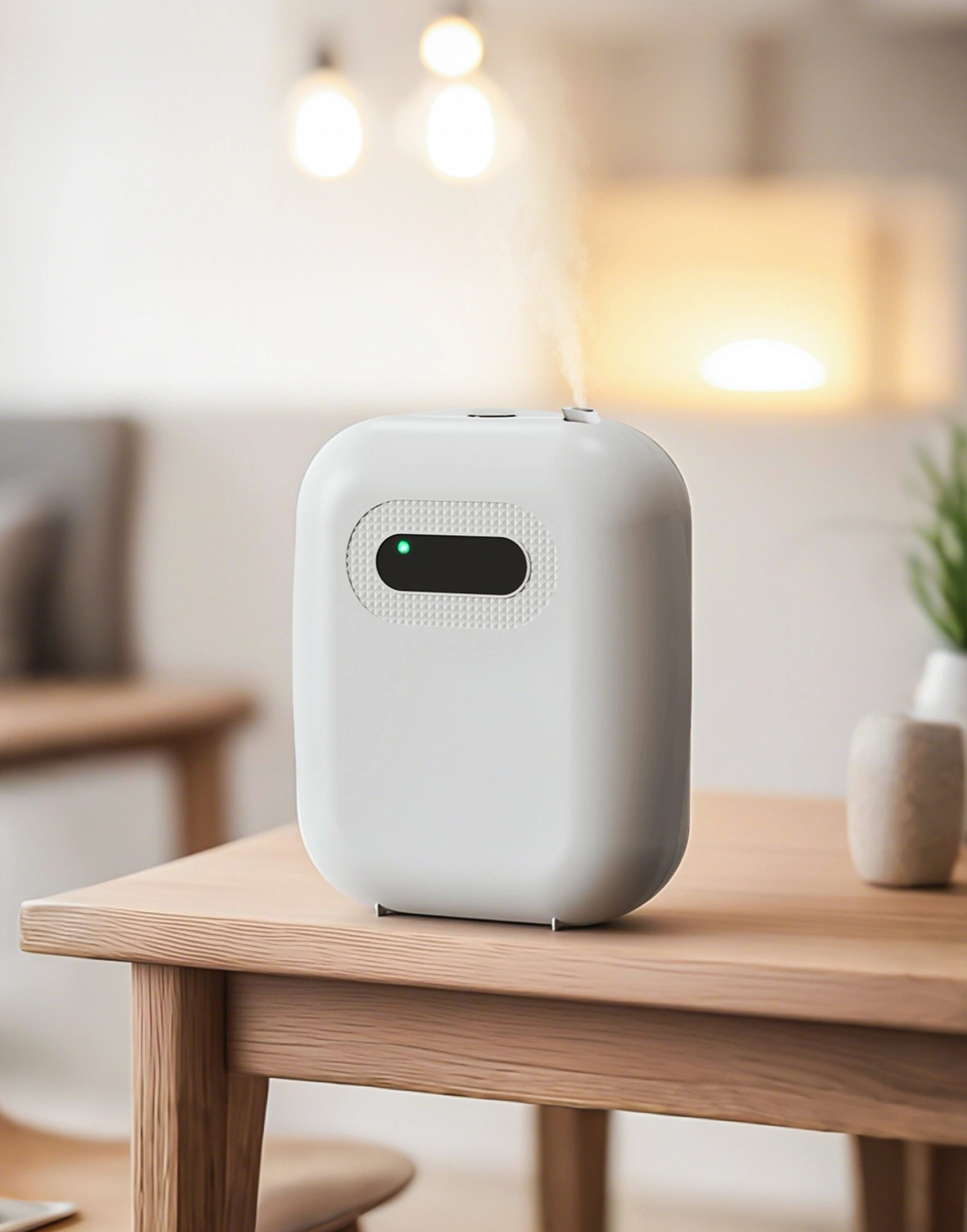
| Compact Commercial Diffuser (Bluetooth APP) | 300 m³ | DC12V‑1A | 24/7 operation, APP scheduling |
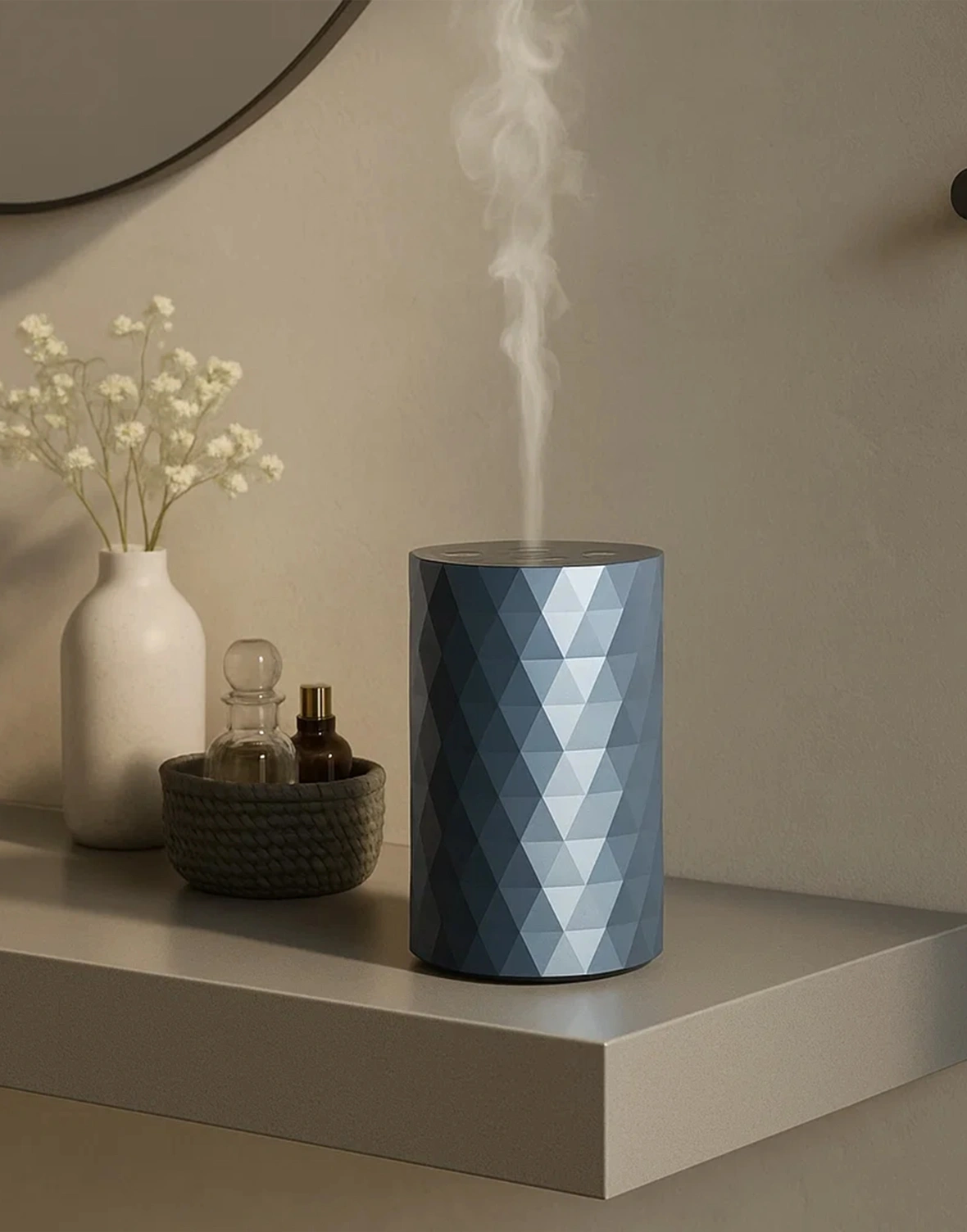
| Tower‑style Hotel Diffuser | 3,000 m³ | DC12V‑2A | Aluminum body, touch control, high‑volume pump |
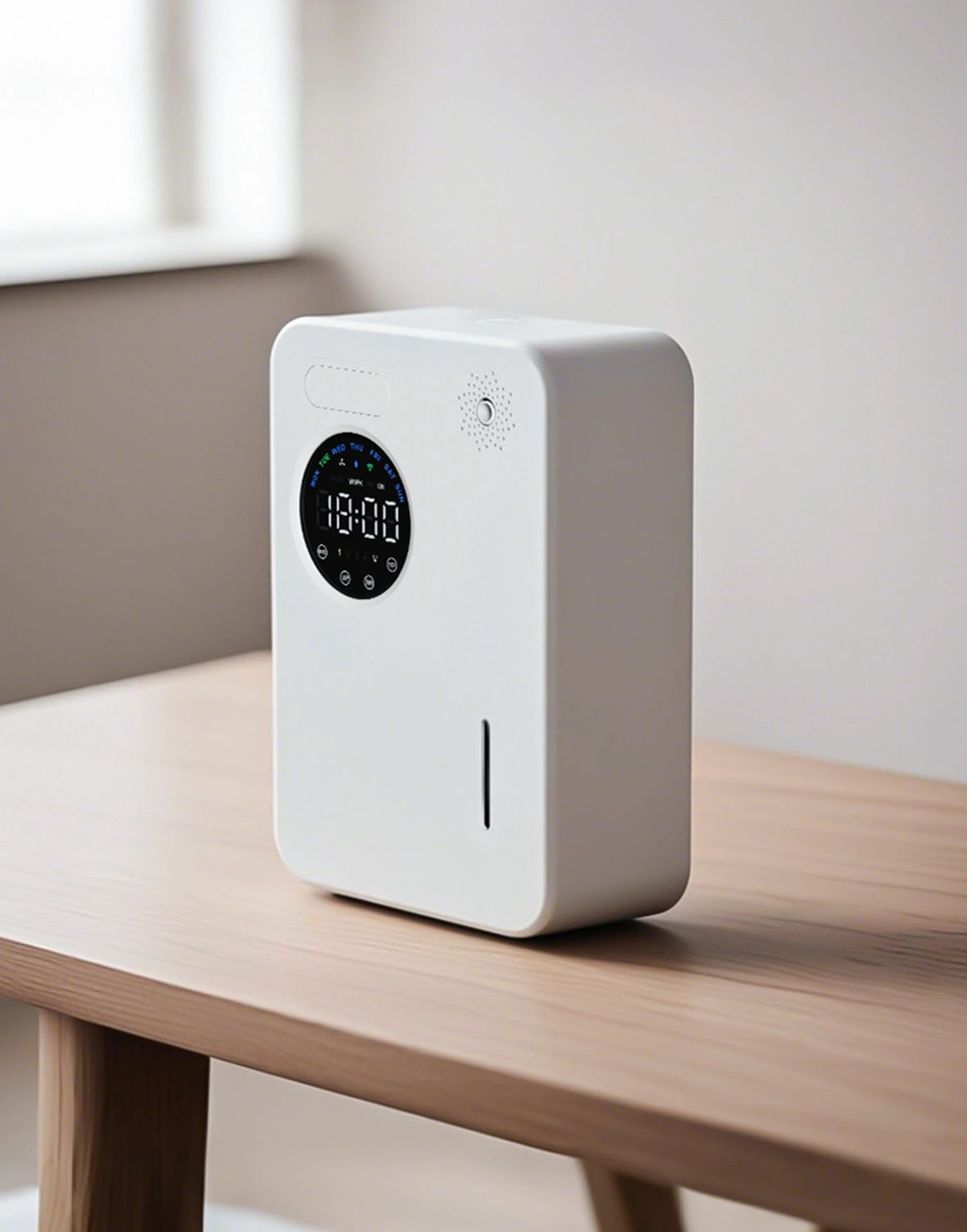
| Rectangular HVAC Scent System | 3,000‑4,000 m³ | DC12V | Multi‑control (physical/Bluetooth/WiFi), HDPE bottle |
| Heavy‑duty HVAC Diffuser | 8,000 m³ | DC12V‑3A | Aluminum, direct AHU integration, large 1‑5 L bottles |
For a typical multi‑floor mall, the 8,000 m³ HVAC unit can serve a sizable atrium, while the 3,000 m³ class units handle corridors and separate wings. Noise is also a factor in public areas — all the models we recommend operate below 35 dBa, so shoppers hear music and conversation, not machine hum. The Bluetooth APP control on each unit lets facility managers adjust intensity by time of day and day of week, without physically visiting the device.
 If your mall’s architecture includes unusually high ceilings or glass dome atriums that amplify buoyancy, it’s worth discussing pressure‑balanced diffusion with a specialist: airflow modeling can prevent fragrance from pooling at the top of the space. Reach out at [email protected] to share a sketch of the section, and we’ll suggest a coverage plan.
Shopping Mall Fragrance Zoning and Placement
Zoning is where the design becomes tangible. I divide a mall into at least four scent zones: main entrances, core atriums, retail corridors, and food service areas. Each zone gets its own intensity schedule and sometimes a different fragrance note — lighter citrus at entrances to create an immediate clean impression, warmer woodier scents in lounge zones to encourage lingering.
Placement height matters more than most realize. Mounting a diffuser too high sends fragrance above the occupied zone, wasting oil and reducing perceived intensity. Where ceiling height permits, we aim for 3.5–4 meters above the floor and angle the atomizer slightly downward toward the center of the traffic flow. In corridors with forced air from fan coil units, we position the diffuser upstream of the FCU so the airstream carries the scent uniformly across the length of the passage.
Dead spots — areas behind large structural columns or near freight elevator lobbies — can be covered with small supplementary wall‑mount diffusers. These secondary units often run at a lower intensity and sync via the same Bluetooth group as the primary unit, so the scent profile stays consistent.
Integrating Scent with HVAC Systems
The most impactful upgrade I’ve seen in mall scenting is integrating fragrance directly with the HVAC system, rather than treating diffusers as standalone devices. This approach uses the building’s own air distribution network to move scent through ductwork, delivering a uniform fragrance level across large zones without visible equipment.
Our dedicated HVAC scent diffuser connects to the supply duct after the air handler, using a positive-pressure injection nozzle that atomizes fragrance oil into the airstream. The injection rate is calibrated to the fan speed, so when the air handler runs at higher volume during peak hours, the scent delivery increases proportionally. This is far more reliable than trying to manually adjust diffuser output every few hours.
Proper integration also requires understanding static pressure. If the ductwork has high static pressure, a weak atomizer will not overcome it, and oil will simply sit in the line. The diffuser must be specified with a pump that can handle the expected back‑pressure, and the installation point must be downstream of the main filter bank to avoid oil residue clogging the filters. These are details your HVAC contractor may not consider unless the scent system supplier provides clear installation specifications.
Maintaining Consistent Fragrance Over Time
Once the system is running, a structured maintenance plan keeps the experience reliable. Scent oil consumption depends on the intensity setting and air exchange rate; for a 3,000 m³ corridor zone running 12 hours a day at medium intensity, a 500 ml aluminum bottle typically lasts around four to six weeks. The app notifies facility managers when oil level drops below a set threshold, so refills can be scheduled before the scent fades.
Atomizer nozzles need periodic cleaning — in dusty environments, this may be every two to three months — to maintain consistent droplet size. We also advise recalibrating scent intensity after seasonal HVAC adjustments, because summer cooling mode often runs fans harder than winter heating mode, changing the dilution rate. These small operational practices make the difference between a scent system that impresses visitors year‑round and one that gradually fades into invisibility.
A fragrance program that feels haphazard undermines the emotional connection it’s supposed to create. Working with a team that understands the technical interplay of equipment, airflow, and fragrance chemistry can prevent that slow drift. If you’re ready to map out a scent design for your mall, share your floor plans and target zones with us at [email protected] or call +86 185 6557 5758. We’ll help you match diffuser capacity to actual air volumes and build a maintenance schedule that keeps the scent consistent every day.
Common Questions About Mall Fragrance Design
How many diffusers does a typical shopping mall need?
It depends entirely on the total cubic volume and the number of zones. A 30,000 m³ mall with a central atrium and two wings might need one high‑capacity HVAC unit for the atrium, two medium‑sized units for the wings, and a few supplementary wall‑mount units for entrance vestibules. A detailed site survey is the only way to get an accurate count.
Can I use different scents in different parts of the mall?
Yes, and it’s a common practice. An invigorating citrus note at the entrance can transition to a softer floral‑woody blend in the retail corridors, with a neutral fresh scent in the food court to neutralize cooking odors. The key is ensuring the transitions are gradual so the change doesn’t feel jarring. Independent zone control via app makes it manageable.
What happens if the scent system needs maintenance during business hours?
Most maintenance tasks — oil refills, nozzle cleaning — can be completed without disrupting shoppers. Diffusers installed behind ceiling grilles or inside service closets are accessible from maintenance corridors, and the work typically takes only a few minutes per unit. We recommend a quarterly check that can be scheduled early morning or late night.
What support does Scent-Share provide during the design phase?
We start with a review of your floor plans and air handling system layout, then produce a preliminary coverage map that identifies diffuser types, mounting locations, and proposed intensity settings for each zone. This is followed by a sample scent trial so you can evaluate the fragrance in the actual space. Share your requirements and we’ll confirm a timeline and pricing for the design consultation.
If you’re interested, check out these related articles: