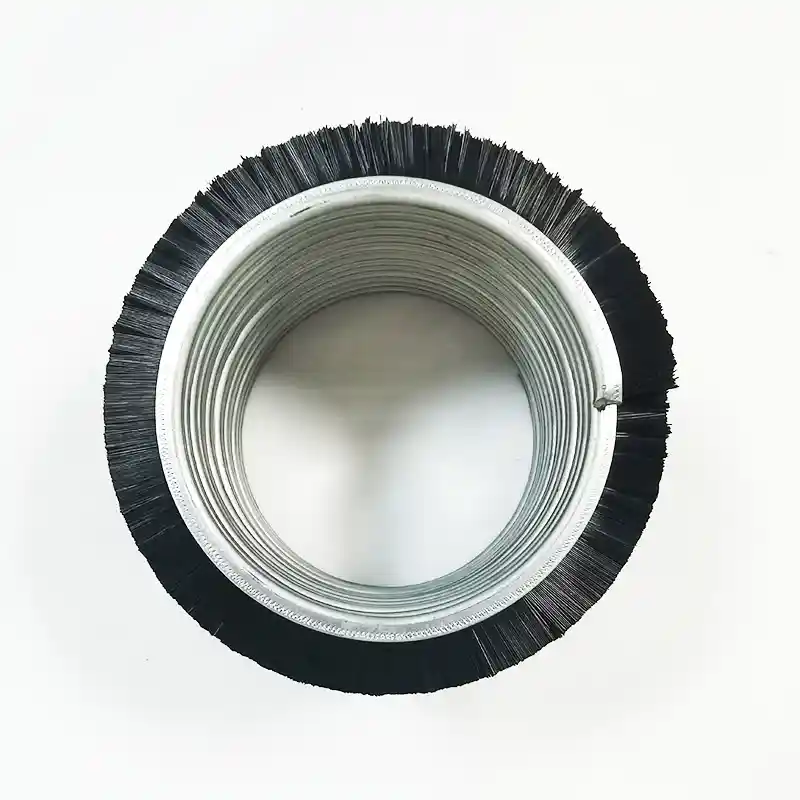

Mill scale on hot-rolled tubes and rods creates real production problems: poor coating adhesion, contaminated drawing lubricants, faster die wear, and surface defects hidden under a tightly bonded oxide layer. A descaling spiral brush removes that layer through controlled mechanical abrasion, but the correct bristle material depends on the substrate, the scale condition, and the required finish. Steel wire and abrasive nylon are the two main choices, and they deliver different results. This guide explains how descaling spiral brushes work, compares the two bristle types, and walks through the setup and specification steps for tube and rod descaling.
Why Oxide Scale Removal Matters on Tubes and Rods
Mill scale forms during hot rolling when steel at rolling temperature reacts with oxygen in the air. The resulting layer is a mixture of iron oxides — mainly hematite, magnetite, and wüstite — whose thickness depends on rolling temperature, cooling rate, and alloy composition [1]. On tubes, bars, and wire rod, this scale remains on the surface unless it is removed by pickling, blasting, grinding, or mechanical brushing.
Leaving the scale in place affects every downstream operation. Paint, powder coating, and conversion coatings bond poorly to scale, leading to premature adhesion failure [2][3]. In drawing operations, scale breaks off and contaminates the lubricant while accelerating die wear. Scale can also conceal cracks, laps, and seams that should have been found during surface inspection. For production lines that want continuous cleaning without acid handling or abrasive blast enclosures, a mechanical descaling spiral brush is a practical first step [2].
The scope here is specific: removing oxide scale, not just surface dust or light rust. A descaling spiral brush must be aggressive enough to fracture hard mill scale while still protecting the tube bore or rod surface underneath.
How a Descaling Spiral Brush Removes Oxide Scale
A descaling spiral brush is built on a twisted metal stem with bristles locked into the spiral between two or more wire twists. This construction gives the brush its characteristic flexure: when the brush rotates inside a tube or against a round bar, the bristles deflect, release, and spring back, which helps throw off loosened scale instead of loading the brush face. The spiral pattern also lets the brush follow slight bends in long tubes and wrap partially around round stock.
The brush is typically driven by a hand-held power tool, a dedicated spindle station, or a bench motor. As the bristle tips contact the scale, they remove material through impact and scraping. Steel wire cuts and gouges. Abrasive nylon grinds with the embedded grit. Both actions fracture the oxide layer, but the resulting surface texture is different, and that difference drives most of the bristle decision.
For internal bore work, a tube cleaning brush or a cylindrical spiral brush can be selected in a diameter that provides constant bristle contact as the brush wears. For rod and bar surfaces, the brush is often applied along the length of the rotating stock.
Steel Wire vs Nylon: Selection Criteria and Step-by-Step Process
Bristle choice comes down to three variables: scale type, substrate hardness, and final finish requirement. Steel wire is the more aggressive option. Carbon steel wire removes hard mill scale quickly and works well on unalloyed and low-alloy steel tubes and rods. Stainless steel wire is required when carbon steel residue is not acceptable, particularly on stainless steel parts, aluminum, and other non-ferrous substrates. The limitation is that steel wire can scratch soft surfaces and leaves a coarser finish.
Abrasive nylon filament is made from nylon loaded with silicon carbide or aluminum oxide grit. It removes scale more slowly than steel wire but produces a smoother, more uniform satin finish. Nylon is non-sparking, which is relevant in environments where flammable vapors or dust are present, and it does not transfer carbon steel smears onto stainless steel [4]. For thin-wall tubes, soft alloys, and surfaces that must go directly to coating or inspection, abrasive nylon is usually the safer choice.
| Criterion | Steel Wire | Abrasive Nylon |
|---|---|---|
| Scale removal speed | High | Medium |
| Surface finish | Coarse, matte | Fine, uniform satin |
| Substrate risk | Can scratch soft metals | Low risk of deep scratching |
| Sparking | Possible with carbon steel | Non-sparking |
| Stainless steel compatibility | Stainless wire required | Good |
| Typical use | Heavy mill scale, rust, weld prep | Light scale, pre-coating cleaning, deburring |
| Service life on heavy scale | Generally long | Shorter than aggressive steel |
This table is a starting point. Many lines run a two-step process: a steel wire spiral wire brush to break heavy scale, followed by an abrasive nylon brush to condition the surface for coating or inspection.
Bristle choice depends on scale adhesion and part geometry more than on part size alone. <descaling spiral brush an innovative tool and generalist in the field of industrial cleaning> covers additional industrial cleaning applications where spiral brush flexibility changes the result.
Need a specification check? Send your tube ID or rod diameter, scale condition, and target finish to [email protected]. Our engineers will confirm whether carbon steel wire, stainless steel wire, or abrasive nylon is the right match for your line speed and part geometry.
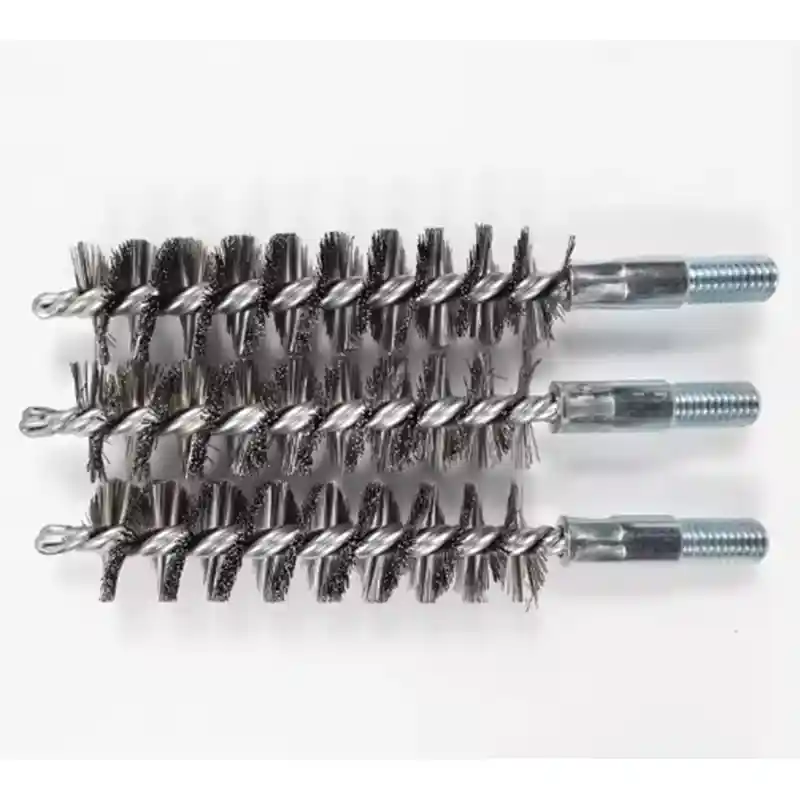
The step-by-step process uses the same principles for both bristle types:
- Remove loose contamination first. Oil, grease, and loose rust should be wiped or washed away so the bristles contact the scale layer directly instead of spreading contamination.
- Match the brush diameter to the part. For tube inner walls, choose a brush outside diameter slightly larger than the bore so contact pressure remains as the bristles wear. For rods and bars, run the brush along the surface while the stock rotates.
- Set a conservative speed. Small spiral brushes typically run between 1,500 and 3,500 RPM, but the safe maximum depends on brush diameter and the tool rating. Start low and increase until scale removal is visible without excessive bristle flaring.
- Feed steadily and inspect. Move the brush at a consistent rate, dwell only on heavy scale, and inspect under good light. Check for uniform cleaning, embedded bristle fragments, and — on stainless steel — carbon steel transfer [4].
- Finish with a conditioning pass. If coating or inspection requires a finer finish, follow with an abrasive nylon spiral brush or another approved conditioning step.
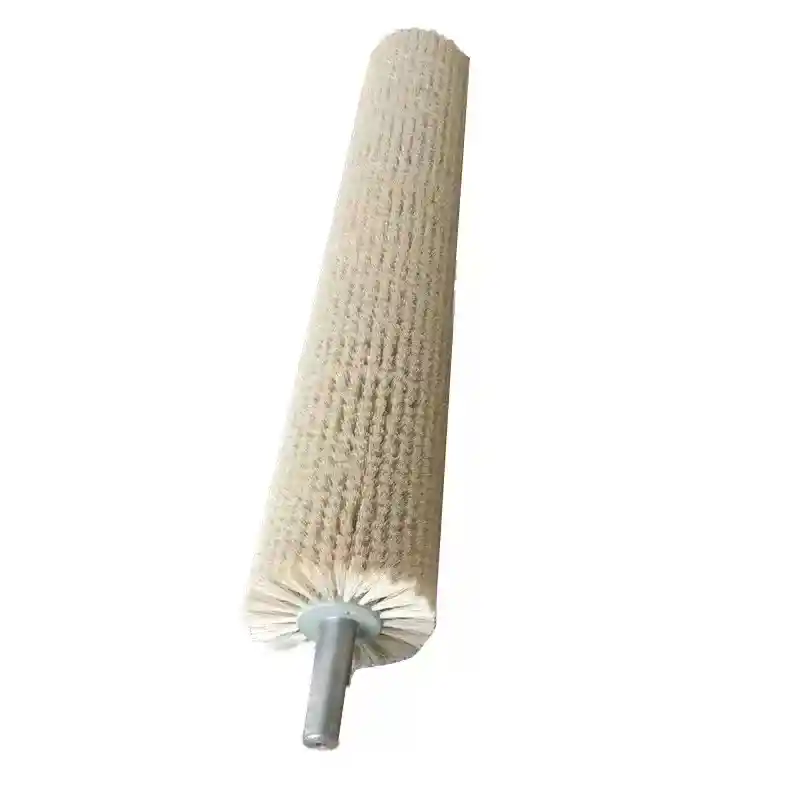
Key Specifications and Application Matching
Six dimensions and material choices control most descaling brush performance:
| Parameter | Common Range or Typical Values | Selection Note |
|---|---|---|
| Brush outside diameter | 6–100 mm for tube and rod work | Must exceed workpiece dimension to compensate for wear |
| Stem diameter | 3–12 mm | Thicker stems carry more torque for heavy scale |
| Bristle material | Carbon steel wire, stainless steel wire, abrasive nylon (SiC or Al2O3) | Match to substrate and finish |
| Wire gauge | 0.25–0.50 mm for descaling | Heavier gauge is more aggressive but may wear faster on hard scale |
| Abrasive grit | 46–120 grit common | Lower grit removes faster; higher grit gives smoother finish |
| Overall length | 100–600 mm typical | Longer lengths reach deep tube runs |
These ranges reflect common industrial practice, not universal limits. Exact values should be confirmed against the workpiece drawing and line speed. When standard catalog sizes cannot reach the cleaning point, custom stem adapters, double-stem construction, and specific bristle densities can be supplied.
Wire choice shifts again when the substrate changes from carbon steel to stainless steel. <where stainless wire spiral brush can be used> covers the substrates and cleaning environments where stainless wire prevents cross-contamination.
Most descaling jobs fall into three groups. Heavy mill scale on carbon steel tubes and rods calls for a carbon steel wire descaling spiral brush with a medium-to-heavy wire gauge. Light oxidation, flash rust, or pre-coating conditioning on stainless or non-ferrous parts calls for stainless steel wire or abrasive nylon. Deep internal cleaning of long tube runs often combines a spiral brush on an extension or a double-stem construction to hold bristle contact through the full bore.
Abrasive nylon spiral brushes are also the first choice when the surface finish requirement is tighter than steel wire can deliver, or when sparks and carbon steel smearing are not acceptable. The trade-off is throughput: nylon usually requires more passes than steel wire to remove the same volume of scale, so finish tolerance and production rate must be evaluated together.
Rotation direction and stem construction change how a spiral brush tracks inside a bore. <the differences between inward and outward spiral brush> covers the construction choices that affect brush behavior in tube cleaning.
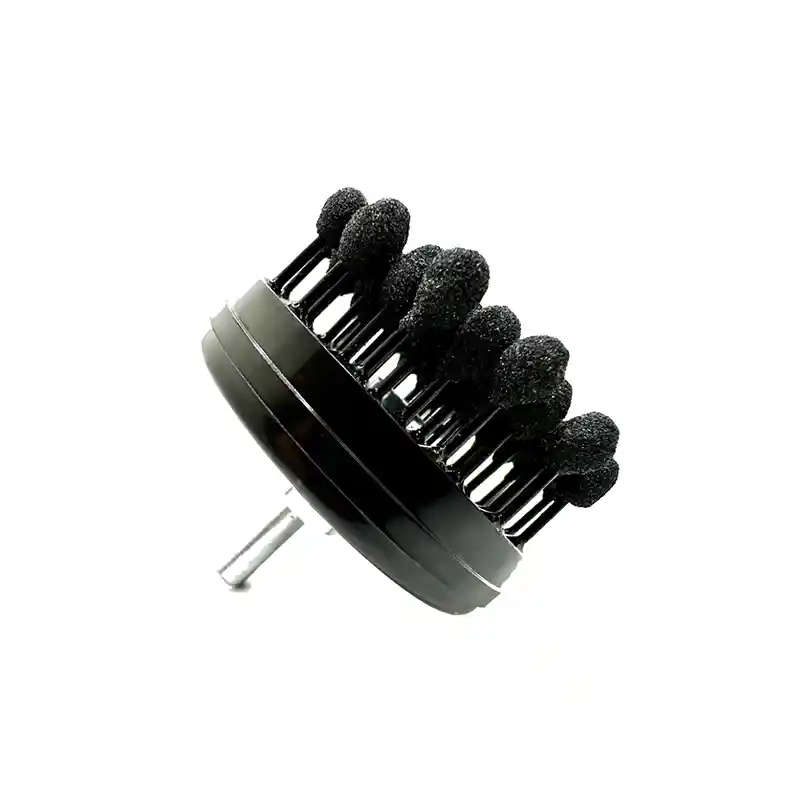
Get the Right Descaling Spiral Brush for Your Tube and Rod Line
Choosing between steel wire and abrasive nylon becomes straightforward when the brush specification is built around your actual tube bore, rod diameter, scale condition, and surface finish target. Huixi Brush supplies customized descaling spiral brushes in carbon steel wire, stainless steel wire, and abrasive nylon, with stem diameters, bristle gauges, and overall lengths matched to your production line.
To get a specification recommendation and sample quotation, send us the following:
- Tube inner diameter or rod outer diameter and part length
- Scale condition: heavy mill scale, light oxidation, or flash rust
- Substrate material and target surface finish
- Current line speed or cleaning machine type
- Required brush quantity and expected trial samples
Contact our technical team at [email protected] or call +86 1580 0932 713. We can provide a trial sample for evaluation before batch production, and adjust the brush construction after trial feedback if needed.
Frequently Asked Questions
What is the difference between a descaling spiral brush and a regular wire brush?
A descaling spiral brush is built on a twisted stem with bristles held in a spiral pattern, which makes it flexible and well suited to round bores, tubes, and rods. A regular wire brush usually has bristles set in a block, cup, or wheel and is designed for flat or open surfaces.
Can I use a steel wire descaling brush on stainless steel tubes?
Only with stainless steel wire bristles. Carbon steel wire can transfer particles that later rust on the stainless surface and can cause ferrous contamination that fails inspection [4]. For stainless steel, choose stainless steel wire or abrasive nylon.
How do I decide between steel wire and abrasive nylon?
Choose steel wire for thick mill scale on carbon steel and when removal speed is the priority. Choose abrasive nylon for softer metals, stainless steel, thin-wall tubes, non-sparking areas, or when the surface must go directly to coating or inspection with a smoother finish.
How fast should a descaling spiral brush rotate?
Typical operating speeds are between 1,500 and 3,500 RPM for small-diameter brushes, but the safe maximum depends on the brush diameter, stem construction, and the tool rating. Start low and follow the supplier’s maximum RPM rating.
How do I keep a spiral brush from wearing out too quickly?
Match the wire gauge or abrasive grit to the scale, use the lowest effective speed, avoid excessive pressure, and inspect regularly. On stainless steel, use the correct bristle material to prevent contamination that forces rework and extra brush changes [4].
Can descaling spiral brushes be customized?
Yes. Spiral brushes are commonly built to order for specific tube bores, rod diameters, and lengths. The manufacturer can adjust stem diameter, wire gauge, bristle density, overall length, and end fitting to match the cleaning station.
References
[1] E. P. DeGarmo, J. T. Black, and R. A. Kohser, Materials and Processes in Manufacturing, 11th ed. Hoboken, NJ, USA: Wiley, 2011.
[2] ISO 8501-1:2007, “Preparation of steel substrates before application of paints and related products — Visual assessment of surface cleanliness,” International Organization for Standardization, Geneva, Switzerland, 2007.
[3] Society for Protective Coatings (SSPC), “Surface Preparation Commentary for Steel and Concrete Substrates,” SSPC, Pittsburgh, PA, USA.
[4] ASTM A380/A380M, “Standard practice for cleaning, descaling, and passivation of stainless steel parts, equipment, and systems,” ASTM International, West Conshohocken, PA, USA.
If you’re interested, check out these related articles:
honing brush a magic tool for flexible burr removal
abrasive disc brush an efficient tool for many applications