
When a patient sits in a treatment chair and smells stale disinfectant mixed with latex, the body reacts before the dentist says a word. Dental office scent marketing changes that first sensory impression from threat to safety. In more than ten years of designing fragrance programs for clinics, I have seen teams overdo the scent and teams underuse it. The clinics that get the best result treat scent as a clinical tool, not a perfume statement. The sections below lay out how to choose, place, and evaluate a dental office scent program that calms patients and keeps staff comfortable.
Why Does Dental Office Scent Marketing Calm Patients?
A dental office is one of the few spaces where a person expects discomfort. The waiting room carries its own clues. Cold sterilant, acrylic monomer, and latex gloves are normal to clinicians but land differently for an anxious patient. Dental office scent marketing does not cover those odors. It shifts the sensory baseline so the first impression is clean air rather than chemical residue.
The nose is fast. It connects odor directly to emotion and memory before conscious evaluation starts, which is why a smell can return someone to a past dental experience in seconds. When that memory contains pain or loss of control, the patient arrives in the chair already guarded. A low dose mint and white tea profile in reception makes the handoff to the operatory feel less abrupt. We have found that a barely there scent is more effective than a noticeable one because it feels like air quality, not fragrance.
That is the difference between dental scent marketing and retail scent marketing. A retail store wants the scent to hold attention and extend dwell time. A dental office wants the opposite: a scent that disappears into the background and lets the patient breathe.
Which Diffuser Fits a Dental Office Scent Marketing Plan?
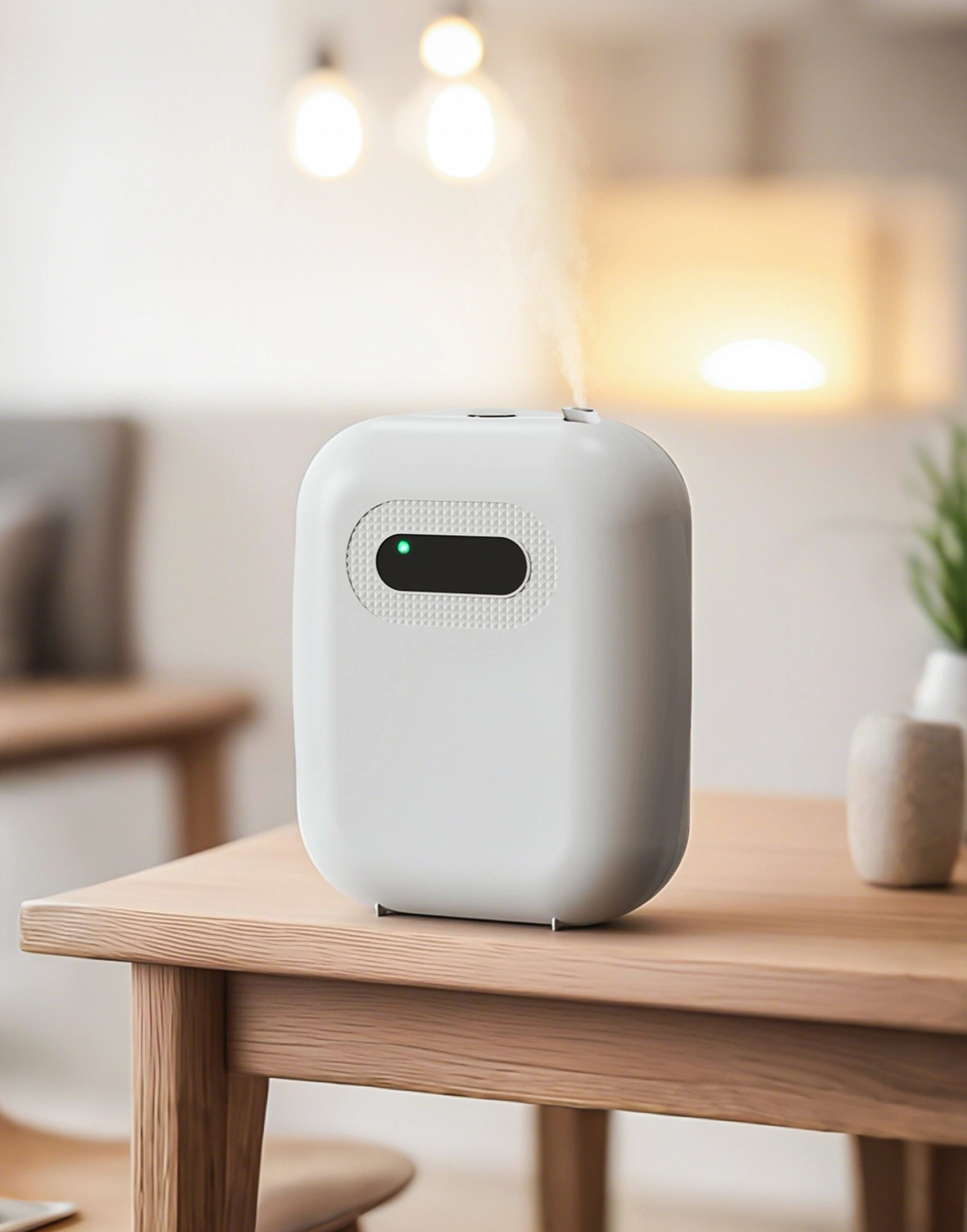
Equipment choice starts with the floor plan, not the fragrance. A reception area needs wide, even diffusion. An operatory needs very low output because the patient cannot move away from the source. Hallways need only enough scent to connect zones. I usually recommend a three zone approach for dental clinics: a diffuser in the waiting room, controlled units in operatories only if dilution is managed, and no diffusion in sterilization or lab areas where chemical signatures must stay detectable.
Which diffuser is quiet enough for a dental operatory?
Fan noise matters more in a dental office than in a hotel. A diffuser that clicks or hums under an ultrasonic scaler becomes another stress input. The quietest units we use run on DC power and produce less than 35 dBa, close to a soft conversation. In operatories, that is more important than coverage volume because the space is small and the patient is near the device.
How does HVAC scenting compare with standalone diffusers?
HVAC integration delivers scent through existing air handlers and matches multi chair clinics. It requires careful dilution and filter placement, and it is less forgiving during a trial. Standalone diffusers are easier to install, adjust, and remove if a fragrance fails. For a first dental pilot, we start with standalone delivery in reception and one test operatory before moving to HVAC.
| Model | Coverage | Power | Best dental placement |
|---|---|---|---|
| Battery Aroma Oil Dispenser Wall Mount Diffuser | 200m³ (750 sq ft) | 3×D batteries or DC5V-1.5A (Type-C) | Reception or hallway without wiring |
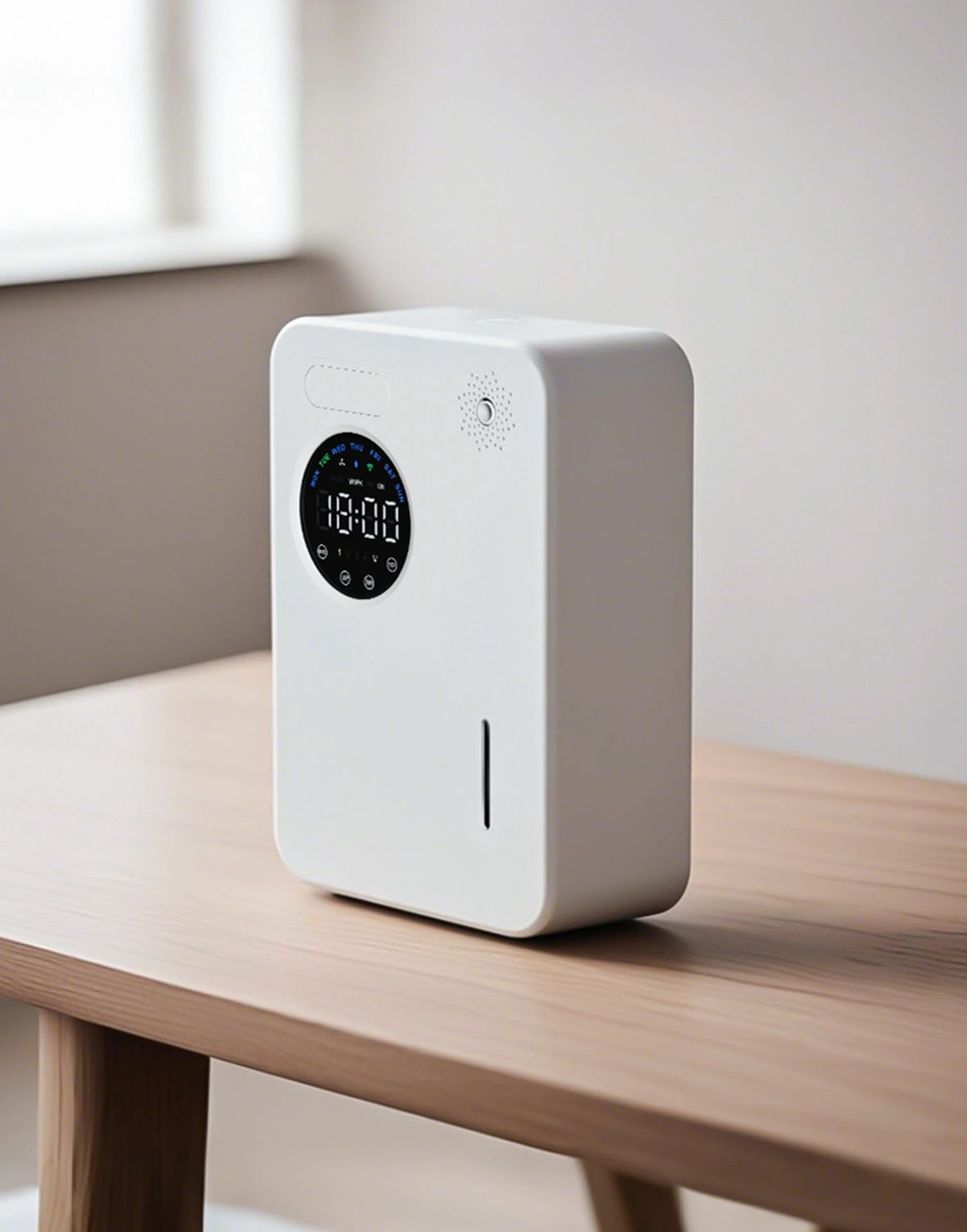
| Commercial Scent Oil Diffuser (Bluetooth APP) | 300m³ (1,000 sq ft) | DC12V-1A | Main waiting room with app scheduling |
| Ceiling Track-Mount Aroma Diffuser | 500m³ | DC12V-1A | Operatory with discreet overhead mounting |
| Commercial HVAC Scent Diffuser Aroma Dispenser System | 8,000m³ (30,000 sq ft) | DC12V-3A | Large multi chair clinic or whole floor delivery |
If your practice has low ceilings, variable HVAC zones, or a high patient count, it is worth confirming coverage and concentration before choosing equipment. Share your waiting room size and number of treatment rooms with us at [email protected], and we will recommend standalone or HVAC delivery that matches the air flow.
What Is the Best Fragrance Strategy for Dental Office Scent Marketing?
The wrong scent in a dental office reads as an attempt to disguise something. The right scent reads as clean, cool, and neutral. At Scent-Share, we build dental profiles from a 300 plus scent library, but the direction is always restrained. A common brief is sanitized air plus a faint cool finish, which usually translates to chilled mint, white tea, cucumber water, or a trace of eucalyptus.
Which scent families reduce dental anxiety best?
Cool, aqueous notes perform better than warm ones in dental settings because they align with a clean clinical feeling. Chilled mint, white tea, cotton, and light eucalyptus are the safest places to start. A small amount of citrus can brighten a waiting room, but it should stay light. These families say cleanliness without shouting, and they do not linger long enough to feel sticky.
Which fragrance mistakes make dental offices feel worse?
Heavy vanilla, baked goods, dark oud, and strong rose are the main offenders. Sweet gourmand scents conflict with the expectation of hygiene, and dark fragrances can feel like masking rather than cleaning. Strong florals also cause more sensitivity reactions in enclosed spaces. I have walked into clinics that smelled like a candle shop and patients commented on the scent before the treatment. That is the opposite of what dental office scent marketing should do.
How Do You Install and Maintain Dental Office Scent Marketing?
Start small. Run the scent in reception only for the first two weeks before adding an operatory. Keep output at the lowest setting that becomes noticeable after a few minutes, never at the door. A dental scent should arrive as a shift in air quality, not a burst, and staff should occasionally forget the system is on.
Weekly maintenance is straightforward but easy to skip. Check the oil bottle level, wipe the nozzle area to stop residue build up, and adjust intensity by season. Air conditioning in summer dries the air and reduces diffusion, while winter heating can lift scent faster. A schedule set once in spring will not perform the same in December.
Measuring results is not about claiming a sales increase. Dental office scent marketing shows up in three lagging signals: fewer complaints about clinical odor, more patients describing the office as clean, and fewer tense questions from patients before treatment. Record those comments for 60 days with the scent schedule, and the pattern will tell you whether the pilot is working.
Ready to Start a Dental Office Scent Marketing Pilot?
A dental team usually hesitates because scent marketing feels like another system to manage. The pilot can be small enough to avoid that burden: one waiting area, one scent, one diffuser, two weeks. Send your waiting area size, ceiling height, and treatment room count to [email protected] or call +86 185 6557 5758 / +86 134 2048 5758. We will recommend a matching diffuser and a fragrance concentration that stays clinical rather than retail.
What Questions Do Dental Teams Ask About Dental Office Scenting?
Will a dental scent mask sterilization odors instead of removing them?
A well designed dental scent does not mask chemical odor. It sits underneath the existing air and changes the overall sense of cleanliness. Masking happens when the dose is too high or the fragrance is heavy. In our audits, when the scent is barely noticeable at the reception desk, patients describe the clinic as clean without asking what the smell is. The goal is a shift in perception, not a cover up.
What if patients have fragrance sensitivities?
It depends on the concentration and scent family. Strong florals and sweet gourmands create more sensitivity reactions than light mint, white tea, or cotton. If a clinic has many sensitive patients, we recommend starting with only the waiting area at the lowest output and keeping one unscented operatory available. This gives the team a controlled way to evaluate reactions before scaling.
How often does the fragrance oil need replacing?
In clinic programs we have overseen, a 150ml bottle lasts several weeks in a reception area running at low to medium output, but the real issue is checking it weekly. We have seen clinics assume the diffuser is broken when the actual problem is an empty bottle hidden inside the cabinet. A quick fluid check during opening rounds removes that failure point.
Can a small dental office afford a dental scent program?
Most small practices start with a single battery or DC powered wall diffuser and a 150ml bottle, so the pilot cost is low. The important choice is not buying the largest system first. It is validating the scent in one waiting area before committing to more zones. Share your room dimensions and patient flow with us at [email protected] and we will suggest the smallest setup that still creates a noticeable calm.
If you’re interested, check out these related articles:
