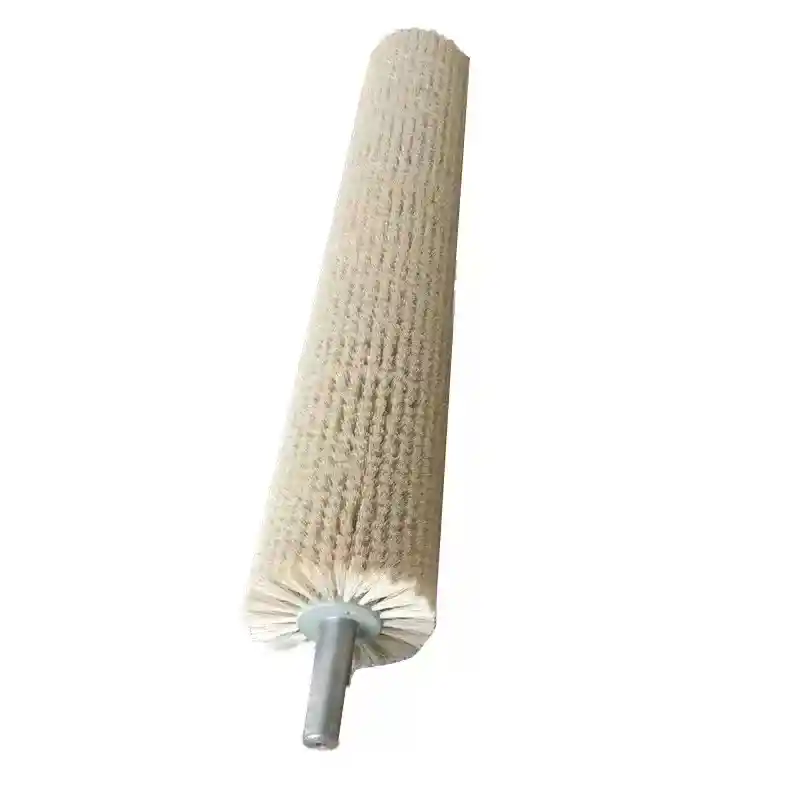

A sanding brush roller is not a universal abrasive roll. The right configuration depends on workpiece material, the defect being removed, and the surface finish you need to hold. In most production environments, the decision narrows to two filament families: abrasive nylon and steel wire. Each behaves differently under speed, pressure, and heat, so the selection should be made around the application, not around a general preference.
Industrial brush roller configurations use filament tips as the working surface. Filament length, density, grit loading, and rotational speed all change how the brush attacks a surface. A roller that sands wood panels aggressively may gouge stainless steel or leave an unacceptable profile on aluminum. For this reason, the first step is not choosing a product; it is defining the substrate, the current surface condition, and the acceptable final roughness.
Abrasive nylon filaments are made with abrasive grains embedded in the nylon structure. Grit designation follows coated abrasive grain sizing systems such as those described in ISO 6344-1 [1]. Steel wire filaments, by contrast, cut through impact and scraping action. Stainless steel wire is often specified from spring-temper stainless wire produced to standards such as ASTM A313/A313M [3]. These are different cutting mechanisms, and they create different surface results.
Abrasive Nylon vs Steel Wire: The Decision Matrix
Use the following conditions as the primary selection guide.
| Decision factor | Choose abrasive nylon | Choose steel wire |
|---|---|---|
| Workpiece material | Wood, composites, aluminum, brass, thin sheet metal | Carbon steel, stainless steel, cast iron, heavy profiles |
| Primary task | Sanding, graining, blending, light deburring, satin finishing | Rust removal, scale removal, weld cleaning, aggressive deburring |
| Surface result | More uniform finish, lower risk of deep scratching | Faster cut, coarser profile, more mechanical cleaning power |
| Heat sensitivity | Generally lower heat build-up | More friction and possible workpiece heating at high speed |
| Contamination risk | Low metallic transfer | Carbon steel wire can leave traces on nonferrous metal |
| Tool wear pattern | Wears progressively while exposing fresh abrasive | Bends, fractures, or dulls depending on wire hardness and speed |
Abrasive nylon is usually the better starting point when surface appearance matters and the material is softer than steel. Steel wire is more effective when the objective is heavy contaminant removal and the workpiece can tolerate a more aggressive mechanical profile.
In rotary sanding applications, filament material and trim length determine whether the brush cuts, blends, or polishes. <advantage of hx cylindrical sanding brushes> covers the design and use of cylindrical sanding brushes in surface finishing.
Matching Filament to Workpiece and Surface Goal
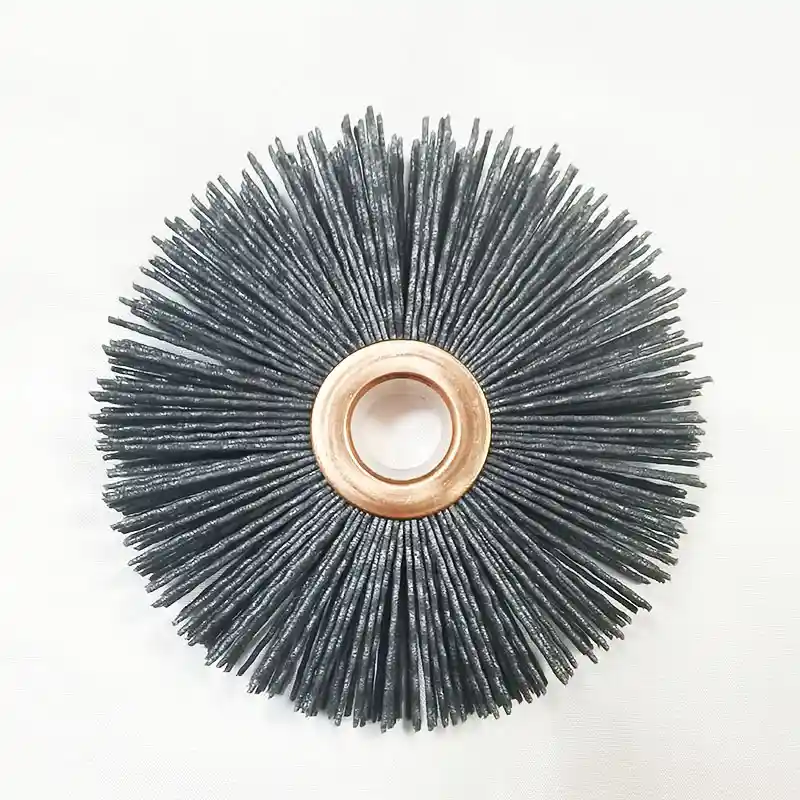
For wood sanding, abrasive nylon rollers are often preferred because they follow panel contours and reduce the risk of localized gouging. Common grit selections range from P80 for stock removal and defect blending to P180 or P240 for pre-finish sanding. The nylon carrier also produces less spark and generally runs quieter than wire in dry wood processing.
For metal surface preparation, steel wire roller brushes are frequently used before coating or welding. On steel substrates, mechanical cleaning targets are often specified by visual surface cleanliness grades such as Sa 2 or Sa 2½ under ISO 8501-1 [2]. This kind of requirement favors steel wire because the brush must remove rust, mill scale, or oxide layers before painting. An industrial wire brush roller can be configured with carbon steel or stainless steel wire depending on whether ferrous contamination is acceptable.
Abrasive nylon is also used on metal, but it is positioned differently. It is more suitable for deburring, edge blending, surface graining, and finishing after machining. It is not typically the first choice for heavy rust or thick scale. On aluminum and stainless steel, abrasive nylon brush rollers help create a clean satin finish without leaving carbon steel residue.
Key Specifications to Confirm Before Ordering
A workable brush roller inquiry should include more than the phrase “sanding brush roller.” The following specifications reduce sampling time and help the supplier match the roller to the existing machine.
- Roll outer diameter and face width
- Shaft diameter and end connection type
- Maximum operating speed or line speed
- Filament material and wire or grit grade
- Trim length and density pattern
- Workpiece material and target finish
- Wet or dry operation
- Current abrasive or brush roller used, if replacing
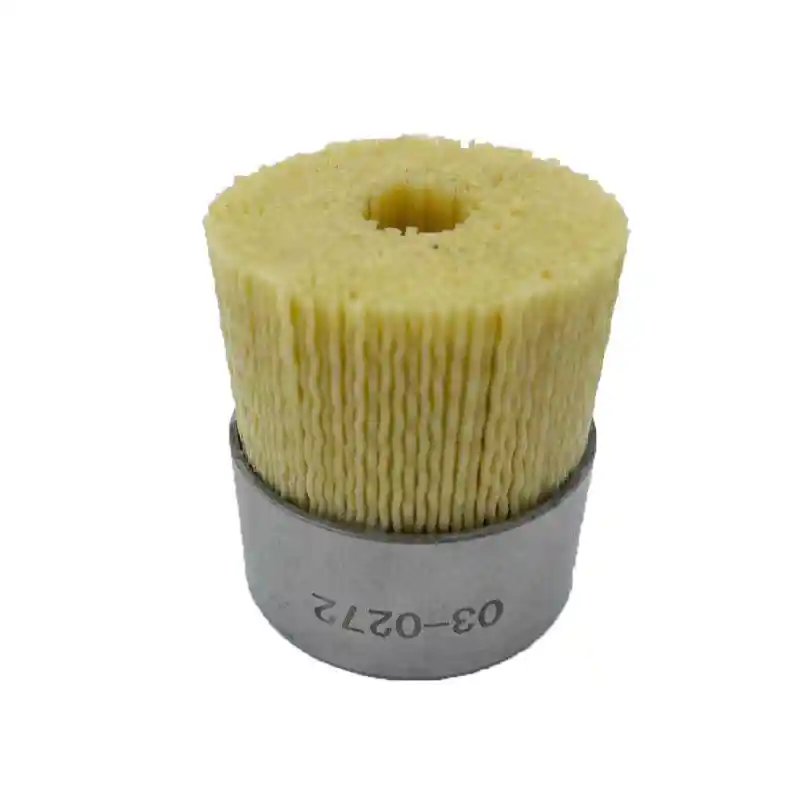
For drum-type sanding stations, a drum sanding brush roller must fit both the drive system and the workpiece clearance. Even a correct filament choice will perform poorly if the OD, arbor, or trim length is incompatible with the machine.
If you are already specifying a roller for an active production line, send the material, machine speed, roll dimensions, and target result directly to [email protected]. The inquiry goes to an application engineer rather than a general sales queue. That direct step usually reduces one round of trial sampling because the recommendation starts from the machine constraints.
Start Your Sanding Brush Roller Selection
Shanghai Huixi Trading Co., Ltd. supplies customized sanding brush rollers, wire brush rollers, and abrasive nylon roller configurations for wood, metal, and profile finishing. For a specific recommendation, send the workpiece material, desired finish, roller OD, face width, arbor size, and line speed to [email protected]. If the application is urgent or requires drawing review, call +86 1580 0932 713.
Frequently Asked Questions
Which filament lasts longer, abrasive nylon or steel wire?
There is no single answer. Abrasive nylon wears progressively and exposes new abrasive grain, so it often provides more consistent finish over the service life. Steel wire can last longer in heavy rust removal, but individual filaments may bend, fracture, or lose aggressiveness depending on impact and speed. The better comparison is service life per surface area processed under the same operating conditions.
Can one sanding brush roller process both wood and metal?
It is possible, but it is rarely ideal. Abrasive nylon can run on both wood and nonferrous metal when the grit and speed are controlled. However, a roller used on steel wire or heavy oxide may carry residues or wear patterns that affect later wood finishing. In most plants, separate roller sets by material group give more predictable results.
What grit should I specify for abrasive nylon rollers?
Start with the current sanding sequence. Use lower grit such as P80 or P120 for defect removal and stock blending, then move to P180 through P320 for finer pre-finish or satin work. The correct value depends on the workpiece, line speed, and whether the roller is wet or dry.
Does higher filament density always increase cut rate?
No. Higher density can increase the number of contact points, but if the filament cannot flex and clear debris, the roller may clog or burnish instead of cut. The best density is matched to the material, speed, and required finish. For heavy contaminant removal, a more open pattern can sometimes cut faster because each filament tip carries more impact energy.
References
[1] ISO 6344-1:1998. Coated abrasives — Grain size analysis — Part 1: Grain size distribution test. International Organization for Standardization.
[2] ISO 8501-1:2007. Preparation of steel substrates before application of paints and related products — Visual assessment of surface cleanliness — Part 1: Rust grades and preparation grades of uncoated steel substrates. International Organization for Standardization.
[3] ASTM A313/A313M-18. Standard Specification for Stainless Steel Spring Wire. ASTM International.
If you’re interested, check out these related articles:
what you know about brass wire brush strip
abrasive disc brush an efficient tool for many applications
wire wheel brush the right assistant for industrial cleaning and polishing
advantage of hx boiler tube brush