Healthcare facility fragrance solutions succeed only when scent intensity, placement, and safety documentation are controlled before aesthetics enter the conversation. I’ve spent ten years developing commercial scent systems, and the projects that fail in clinical settings almost always start with a home diffuser and a fragrance chosen for emotion alone. That approach ignores how healthcare environments amplify perception, especially in waiting rooms and corridors. The selection and zoning sequence below is the one we use when specifying a hospital or clinic program, before any fragrance reaches a patient area.
Safety Documentation as the First Step in Healthcare Facility Fragrance Solutions
Before reviewing diffuser coverage or scent notes, ask for three documents: an IFRA certificate, a full SDS, and a list of known sensitizers in the formulation. In a hospital or clinic, the decision maker is often not a scent buyer; it is a facilities director or infection prevention lead who must explain the system to clinical staff. Without paper, the project stalls. I’ve seen this happen in a private clinic where the fragrance sample was approved by the marketing team in one meeting and rejected by the operations team the next morning because no SDS had been attached. The scent itself was mild. The process failure killed it.
Commercial Diffuser Selection for Healthcare Facility Fragrance Solutions
Healthcare spaces are not one scent zone. A lobby with high ceilings, a corridor with laminar airflow, and an exam room with limited clearance each require different hardware. The table below lists the configurations we recommend most often.
| Space | Recommended Equipment | Coverage | Reason |
|---|---|---|---|
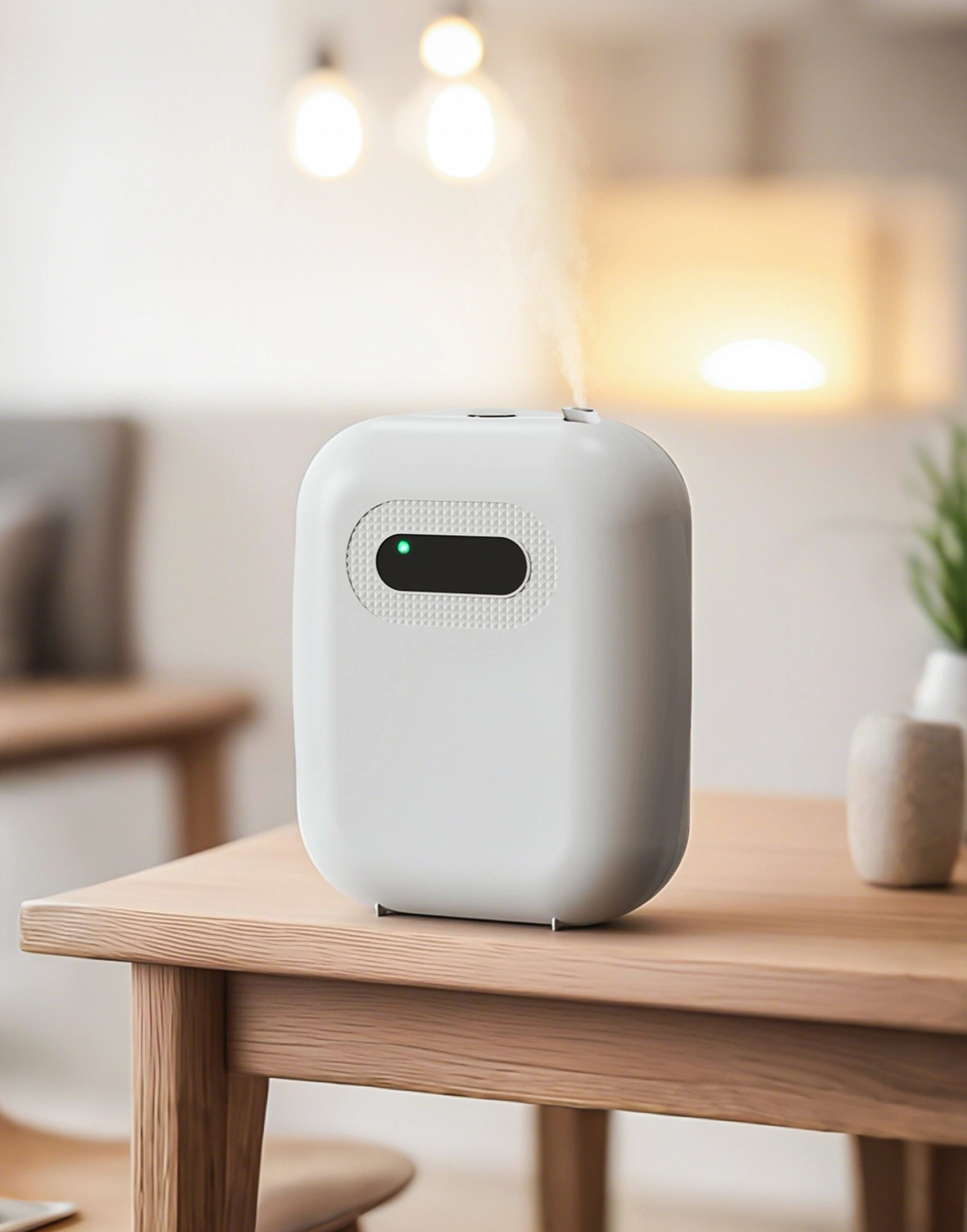
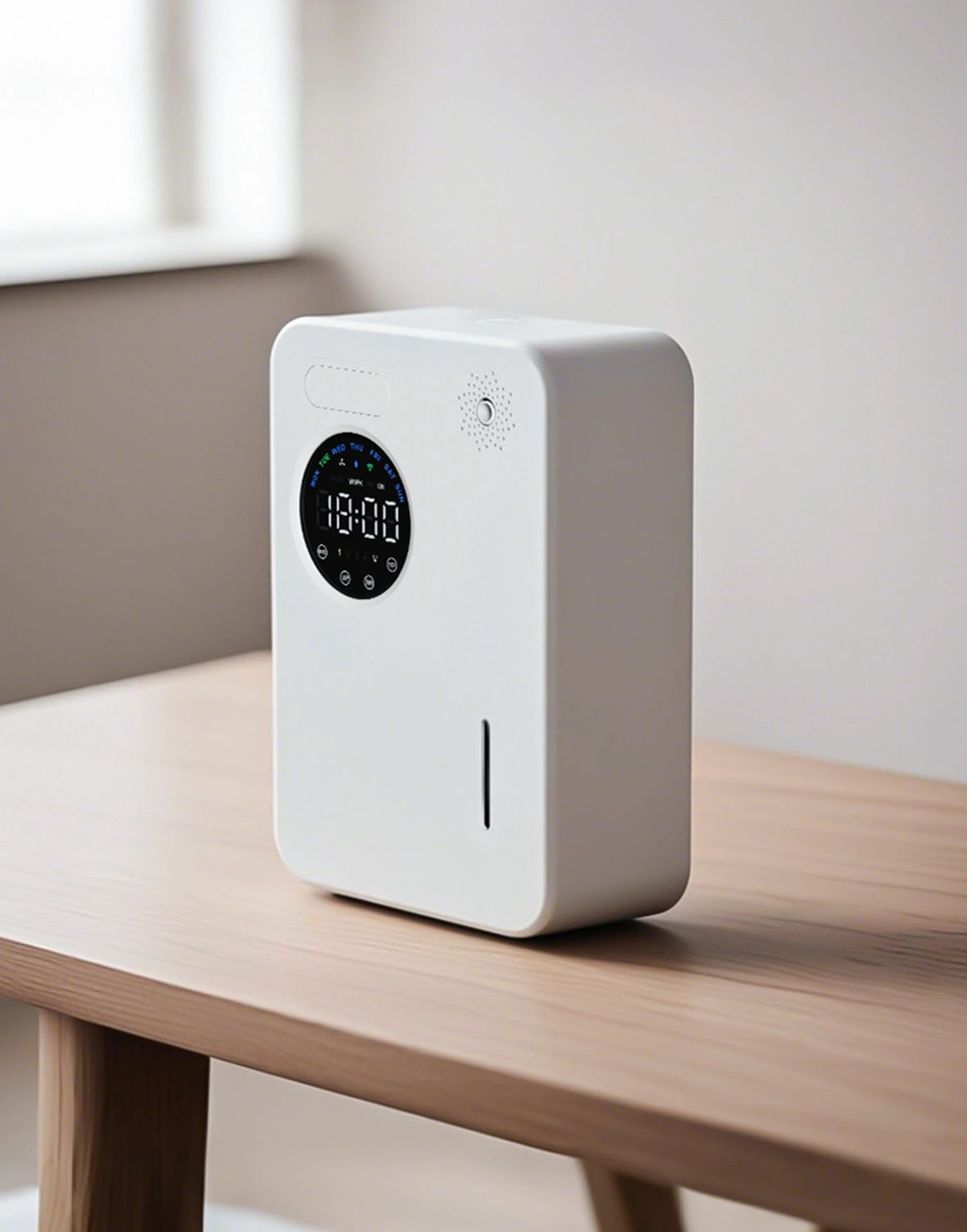
| Clinic waiting room | Commercial Scent Oil Diffuser (Bluetooth APP) | 300 m³ | Visible standalone unit with app control for low, scheduled output |
| Main lobby or atrium | Hotel Scent Oil Diffuser Tower | 3,000 m³ | High coverage without excessive equipment |
| Patient floor or corridor | Wall Mount Aroma Diffuser HVAC System | 3,000 m³ | Ties into HVAC supply and keeps floors clear |
| Whole facility or large zone | Commercial HVAC Scent Diffuser Aroma Dispenser System | 8,000 m³ | Central zoned control with one bottle set |
| Small exam room | Ceiling Track-Mount Aroma Diffuser | 500 m³ | Contactless ceiling installation and low noise |
For behavioral health or respiratory units, we avoid fragrance entirely unless the facility has a confirmed air change rate and written clinical approval for the specific zone.
Fragrance Restraint in Clinical Spaces
The right healthcare fragrance recedes into the background. Strong florals, sweet gourmands, and heavy oud are wrong for patient areas because they read as perfume rather than cleanliness. We formulate most clinical profiles around clean cotton, white tea, light citrus, and soft water notes. The dose matters more than the note. I’ve run trials where the same white tea oil was rejected at 40 percent output and accepted at 20 percent output in the identical waiting room. The perception changed from fragrance to fresh air, and that shifted the entire program.
If your project involves behavioral health, pediatric, or respiratory wards, it is worth confirming air change rates and zoning limits before finalizing equipment. Send those room details to [email protected] and we will confirm the right output setting.
A Controlled Pilot Before Facility Wide Deployment
Start with a two-week pilot in one lobby or staff area, not a full building rollout. Set the system at the lowest output that creates a subtle shift, then collect unfiltered feedback from nurses, receptionists, and facilities staff. Approval from a single administrator is not enough. The people who occupy the space for eight hours need to accept the scent daily. Once the pilot passes, scale by zone and schedule, keeping patient areas off during certain hours if anyone reports sensitivity. Maintenance is part of acceptance: a clogged atomizer or empty bottle eventually produces a weak, inconsistent smell, which staff read as a failing system even when the fragrance formula is fine.
If you are sourcing healthcare facility fragrance solutions, send your floor plan, room volume, and any clinical restrictions to [email protected] or call +86 185 6557 5758. We will recommend a diffuser configuration and a trial schedule instead of a generic product list.
Common Questions About Healthcare Facility Fragrance Solutions
Are fragrance oils safe in hospitals and clinics?
In most clinical spaces, yes, if the formulation is IFRA-compliant and accompanied by a full SDS. The key is not the diffuser; it is the documentation and the dosage. We avoid fragrances with sensitizer concentrations above IFRA limits and prefer low-diffusion oils designed for continuous ambient use. Staff should review the SDS before installation, and any area with immunocompromised or respiratory patients should get written approval. Placement also matters: keep the unit away from supply vents where fragrance could be pushed directly into a patient’s face.
How strong should a healthcare fragrance be?
The most common mistake is treating a hospital like a retail store. Healthcare scenting should be barely noticeable, not memorable. We typically start at 15 to 25 percent of a diffuser’s maximum output in a waiting room and adjust only after staff feedback. If a visitor can name the scent within three seconds, it is too strong. The goal is a shift in perceived air quality, not a branded fragrance moment. For corridors, even lower settings work because occupants pass through quickly and do not need sustained exposure.
Can fragrance systems integrate with an existing HVAC supply?
In facilities we’ve worked with, HVAC integration is the preferred choice for lobbies and long corridors because it spreads the fragrance evenly without adding visible equipment. The supply air carries a controlled amount of oil mist through the duct, and the system can be scheduled with the building’s air handler. This works best when the HVAC system runs consistently. If the facility reduces airflow at night, the diffuser should cycle off too. Standalone Bluetooth units remain better for small waiting rooms or converted spaces where duct modification is impractical.
What maintenance does a commercial healthcare diffuser need?
It depends on the equipment. HVAC systems need bottle checks, atomizer cleaning, and line inspection at least quarterly, with more frequent attention in dusty mechanical rooms. Standalone Bluetooth diffusers usually need a visual check every month and a deeper clean every three months. The bottle size also matters: a 500 ml unit in a lobby lasts longer than a 150 ml unit in a busy corridor, but both need empty-bottle alarms confirmed. If you are not sure which schedule fits your room volume, send your equipment list to [email protected] and we will build a basic service calendar.
If you’re interested, check out these related articles: