Office fragrance systems for large commercial buildings run into trouble when the floor plate is treated like a single room. I have reviewed scenting designs where a lobby smelled perfect while the floors above went unnoticed. The real challenge is not choosing a fragrance; it is matching system architecture to air volume, existing HVAC behavior, and daily occupancy patterns. A well planned system distributes scent in low, steady doses and stays consistent across zones without becoming intrusive. This article explains how to approach coverage, equipment selection, and maintenance so the final result lives up to the brief.
Why Do Large Office Buildings Need a Different Fragrance Strategy
Large commercial buildings are not uniform air spaces. Elevator shafts, stairwells, atrium voids, and return air plenums move scent vertically and horizontally. If a fragrance system is designed around a single lobby diffuser, the upper floors remain neutral while the entry level becomes saturated. That is the most common pattern I have seen in office scenting proposals.
In a multi-floor office, each HVAC zone has its own air change rate, occupancy pattern, and ceiling height. A unit sized for a small showroom cannot cover a 30,000 square foot floor plate. The failure mechanism is straightforward. The scent molecule concentration declines as it mixes with larger air volume, so perimeter offices near supply diffusers get too much scent and the interior open plan gets too little. Designing at the room scale produces the same uneven result at floor scale.
What changes at building scale is the need to treat scent as an air quality variable, not a fragrance accent. Large systems need zoning, output schedules, and HVAC or networked distribution. That is why office fragrance systems for large commercial buildings are often specified as infrastructure rather than as a single device purchase. The fragrance itself matters, but it cannot compensate for the wrong delivery architecture.
How Does HVAC Integration Compare With Standalone Diffusers
For large office buildings, two delivery methods are worth comparing early: HVAC integrated scenting and standalone diffusers. HVAC integration puts the atomizer into the existing ductwork. The scent travels with the conditioned air, which gives whole-floor coverage without adding visible equipment. This works when the building has accessible ducts, a clear filter location, and the facility team can lock out the system during maintenance.
Standalone diffusers create localized scent zones. They are easier to install and adjust, but each unit covers a limited area. In a large building, standalone units are best for lobbies, executive floors, training rooms, and areas where HVAC access is limited. They do not deliver consistent scent across a 10 floor open plan on their own.
| Factor | HVAC Integrated System | Standalone Diffusers |
|---|---|---|
| Coverage pattern | Whole-floor or multi-floor | Single zone or room |
| Control method | Building-wide schedule | Unit-level Bluetooth or timer |
| Visible equipment | Minimal | Wall or ceiling units |
| Maintenance points | Atomizer, filter, air pressure | Bottle, fan, nozzle |
| Best fit | Consistent background scent | Targeted experience areas |
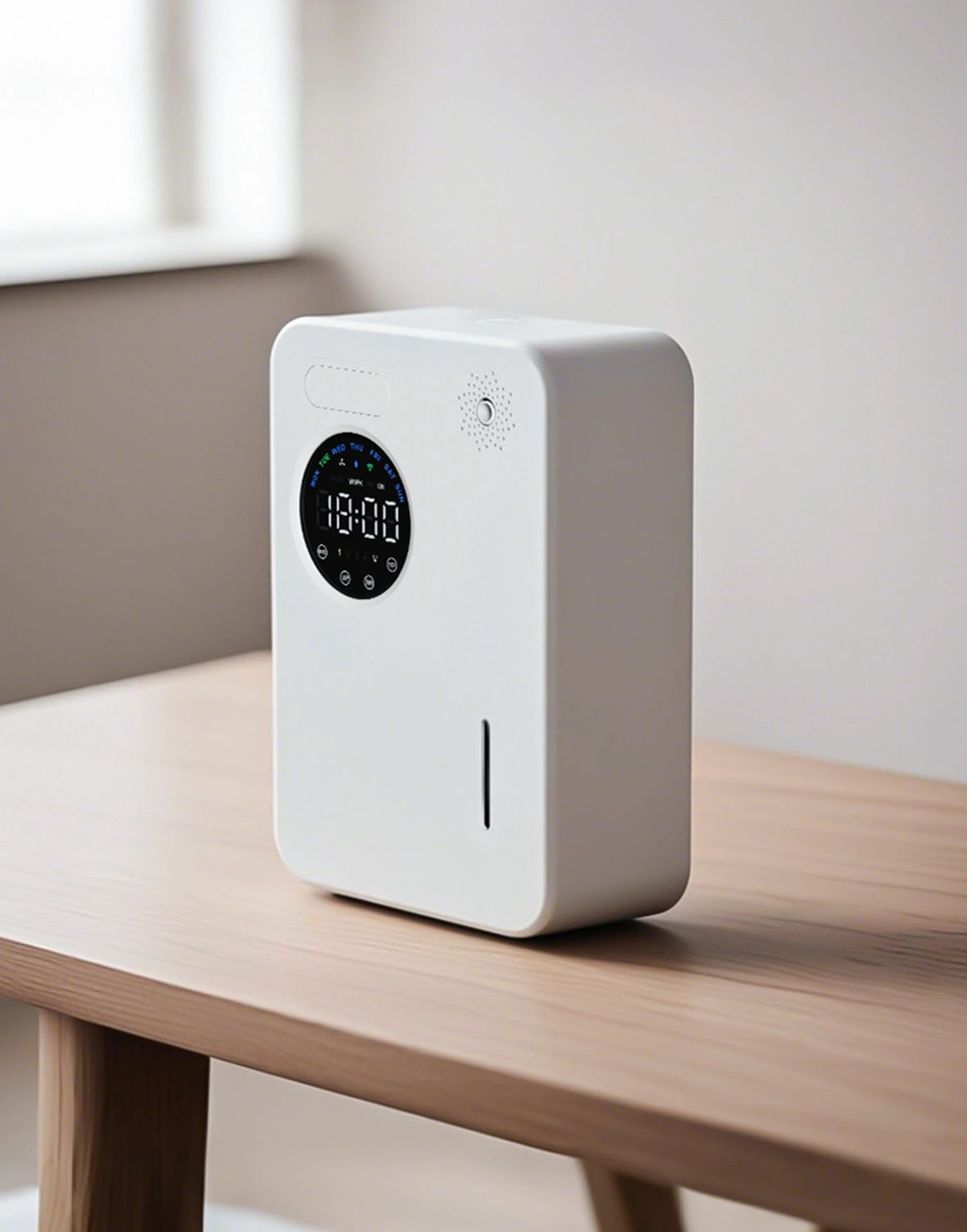 In our range, the commercial HVAC scent diffuser covers up to 8,000 cubic metres or about 30,000 square feet with 1 litre, 2.5 litre, and 5 litre bottle options. For very large buildings, the dual-system HVAC unit runs two independent atomizers and covers up to 15,000 cubic metres. Those specs matter less than the duct layout. I have seen a correctly rated HVAC unit perform badly because it was mounted before the main return air intake, pulling fragrance away from occupied zones instead of distributing it.
What Coverage and Zoning Plan Works for Multi-Floor Offices
Coverage planning starts with measured volume, not marketing square footage. Multiply the floor area by ceiling height for each zone. A 10,000 square foot floor with a 10 foot ceiling produces 100,000 cubic feet, or about 2,830 cubic metres, of air. The real planning number includes air changes per hour and how much conditioned air returns to the mechanical room. Scent follows the airflow path. If return air pulls toward the elevator lobby, that is where the fragrance will concentrate.
I divide large office plans into zones before selecting equipment. Lobbies and reception areas need a present note because that is where visitors form an impression. Open work areas need a lower, steadier level. Meeting rooms often need a lighter touch because occupancy is variable. Washrooms and breakout areas should not carry the same fragrance at all unless odor control is part of the program. Each zone gets its own output schedule.
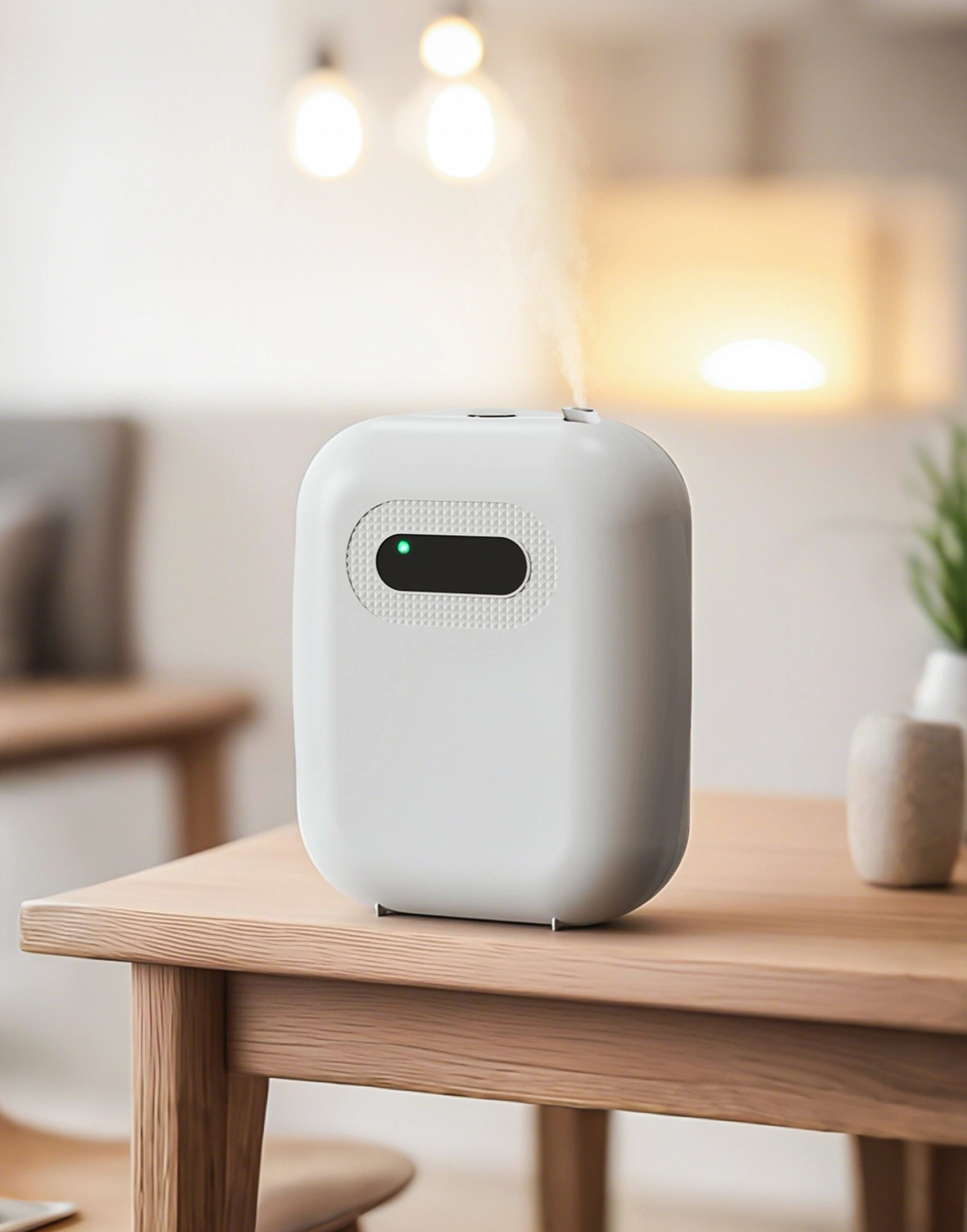
If the floor plan includes multiple elevator cores or separate air handling units, confirm the return air path for each zone before finalizing the quote. Send the layout to [email protected] and we will check which zones can share one atomizer.
The schedule matters as much as the placement. I set stronger output for arrival hours, reduce it through the working day, and add a short lift after lunch when stale air builds up. This pulse pattern keeps the scent noticeable without pushing employees into olfactory adaptation, where the scent fades from perception even though the machine is still running. A zoned plan also makes troubleshooting easier. If one floor is too strong, we adjust that floor without changing the whole building.
How Fragrance Load and Refill Schedules Affect Consistency
Fragrance load in a large building is a balance, not a higher setting. When facilities turn output to maximum to make the scent obvious during a walkthrough, the result is usually complaints within two weeks. The brain adapts to a constant high intensity, so employees stop smelling it while visitors find it overwhelming. A lower baseline delivered steadily holds up better over an eight hour day.
Oil consumption changes with atomizer settings, run hours, and the fragrance formula itself. A central HVAC system in a large building may use a 1 litre bottle in a few weeks, while a dual-system unit may draw from a 5 litre reservoir. Larger reservoirs reduce the number of refill interventions and keep the output consistent. I prefer to plan refills by runtime hours. That creates a stable schedule instead of relying on someone noticing that the scent has gone quiet.
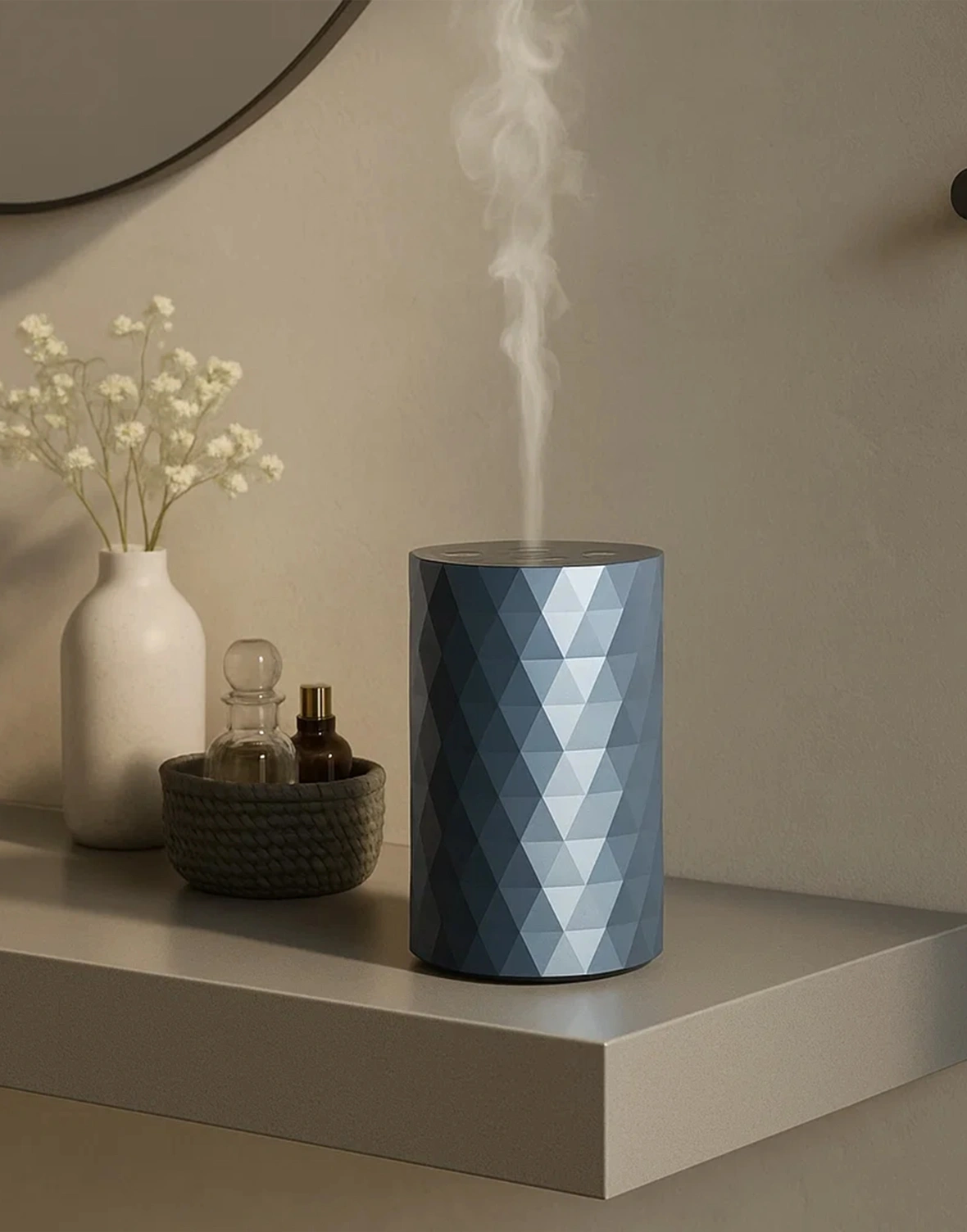
The refill schedule should also track which floors are served by each reservoir. If two floors share one atomizer and the schedule is ignored, the lower floor often becomes a scent dead zone while the upper floor stays fine. This is a logistics issue, not a fragrance failure. A simple log of bottle changes and runtime is enough to catch the drift before tenants notice.
How Do You Move From Floor Plan to Installed Office Fragrance System
Most office scenting proposals stop at fragrance selection, but the larger risk is the installation path. You need to confirm which HVAC zones can be accessed, where atomizers can be mounted, how power is supplied, and who will handle refill visits. Floor plans alone are not enough. Ceiling height, return air location, and duct access determine whether an integrated system or standalone units are the right fit.
That is where a direct consultation with Scent-Share shortens the process. Send us the floor plans, zone schedule, and any ceiling or HVAC access photos. We will review the air volume, propose a coverage layout, and give you an estimated fragrance consumption rate before you commit. Email the details to [email protected] or call +86 185 6557 5758. If the building has mixed use areas, include those too. We will specify which zones need HVAC integration and which can use smaller standalone units.
What Questions Do Facility Teams Ask About Office Fragrance Systems
Can office fragrance systems work with existing HVAC
Yes, in most cases they can. The diffuser installs into the ductwork and connects to the building schedule, so there is no new visible equipment in occupied spaces. The main conditions are access to a suitable duct section, available power, and enough straight duct length for the atomizer to mix properly. Maintenance crews should mark the system so filter changes do not damage the nozzle. If the building has sealed ceiling voids or restricted mechanical access, standalone units are simpler to service.
What is the right scent level for an open office
The right level depends on ceiling height, air change rate, and how often people move through the space. A setting that works in a 9 foot ceiling open plan will feel weak in a double-height reception hall. Start below the level you can clearly detect on day one, then run it for a full workday before adjusting. A scent that is barely there in the morning often reads as balanced by midday. For high density work areas, keep the fragrance lighter than in lobbies because employees spend hours in the same air.
Do large buildings need one scent throughout
Not necessarily. The better question is which zones need scent at all. A consistent signature scent supports brand identity in lobbies and shared spaces, but an entire building at the same intensity can become monotonous. Some floors may need only odor neutralization, not fragrance. We split large programs into scent zones so the experience changes with the journey: noticeable at arrival, softer in open areas, and absent or neutral in high focus zones.
How often do commercial diffusers need maintenance
A common assumption is that once installed, a diffuser runs without attention. That is not the case for HVAC systems. Atomizer nozzles, wick paths, and filters collect dust and oil residue. Without regular cleaning, the scent level drops even though the bottle still contains oil. For most office systems, a monthly check with a quarterly deep clean works well. Standalone units need bottle checks and fan cleaning on a similar cycle. The exact schedule depends on fragrance type and dust load. If your building has multiple HVAC zones, share the zone schedule with us and we will confirm the right oil load before you order.
If you’re interested, check out these related articles: