Most office scenting programs fail before the first fragrance is chosen. I have seen a citrus blend placed near a supply diffuser fill the hallway while the far workstations never notice it, and that is a ventilation problem, not a fragrance problem. Office scenting solutions work when you map airflow, occupancy, and equipment placement first, then match the formula and oil concentration to the space. In more than ten years of fragrance R&D and global scenting projects, the office programs that last treat scent as part of the building system rather than a plug-in afterthought.
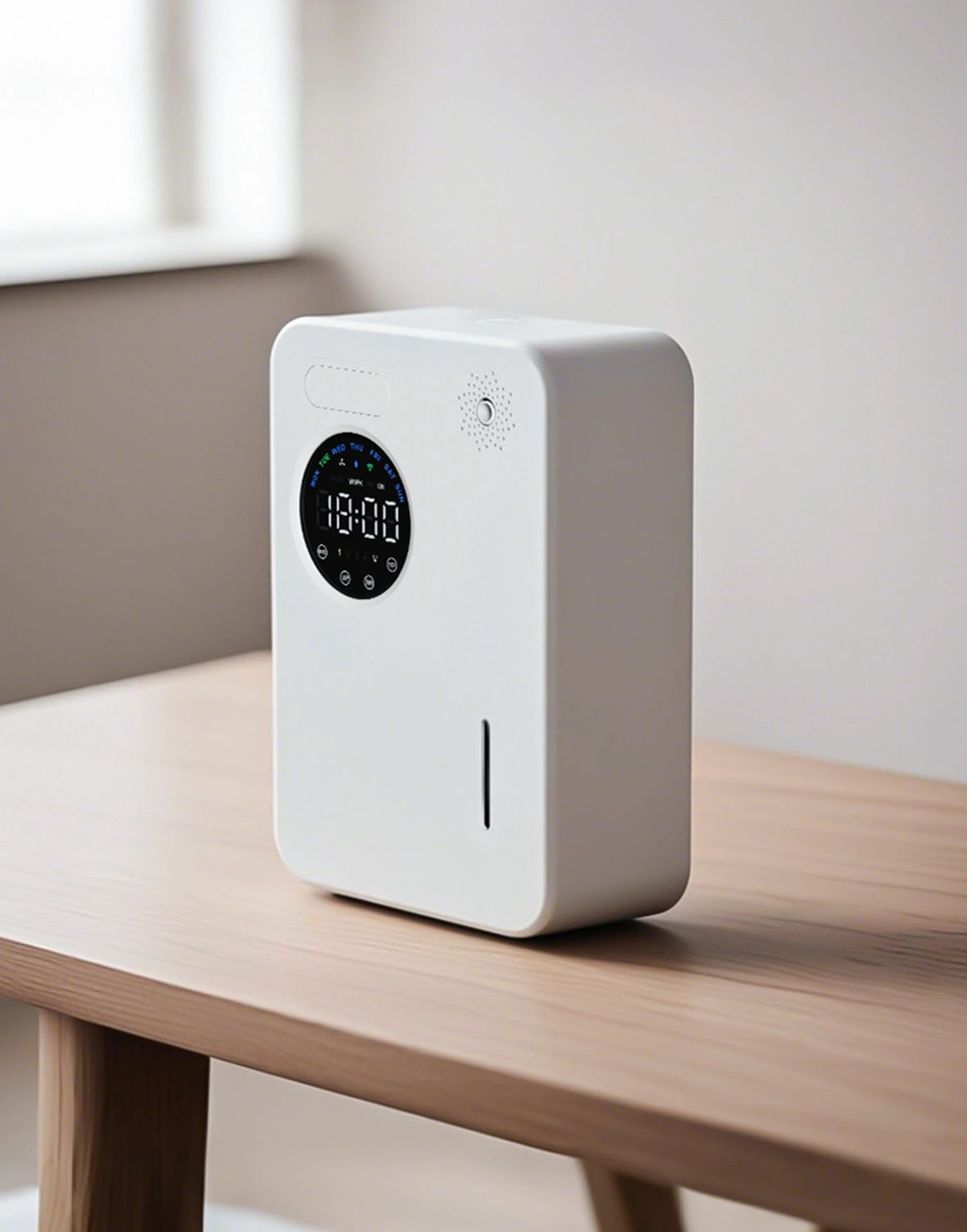
Office Scenting Solutions and the Airflow Baseline
Before selecting a diffuser or oil, I walk the space while the HVAC is running. Office air rarely moves the way a floor plan suggests. Return air grilles pull scent toward ceiling cavities, glass partitions block movement between desks, and stairwells create their own pressure zones. A fragrance released near a return grille can be removed before anyone smells it.
Why does airflow matter before fragrance selection?
Airflow decides whether the scent reaches the nose at a steady level or disappears into a return duct. In one 1,200 square meter open plan office, the strongest complaint came from a corner conference room ten meters from the diffuser. The supply air short-circuited along a curtain wall, so we moved the scent point into the duct branch serving that zone and reduced the overall output. After that change, staff at the far desks reported a light, continuous scent instead of occasional bursts.
Intensity Settings and Zoning in Office Scenting
Office scent intensity fails in two directions. Too high and employees complain about headaches; too low and management asks why the program is not visible. The target is not a constant smell. It is a barely noticeable presence that registers only when someone steps out and comes back.
How strong should office scenting be?
For most open plan offices, we start at a low setting and run a two-week adjustment period. The best signal is not direct feedback but absence of complaint. If nobody mentions the scent in the first week, we increase output slightly. If two or more people notice it in a shared area, we cut back. The threshold depends on air change rate, ceiling height, and fragrance type, not on a single universal concentration.
What changes in open plan seating?
Open plan zones need more devices at lower output than one strong source. A single powerful unit creates a sharp gradient: strong by the diffuser, nothing at the edge. I set smaller wall mount or ceiling units across the floor and align them with separate HVAC branches so each seat gets roughly the same exposure. That approach also simplifies zoning when meeting rooms need a different profile.
Diffuser Placement for Office Scenting Solutions
Placement follows the airflow map. For most office floors, diffusers work best near supply duct branches, not in the middle of the ceiling where air stagnates. We avoid installing them above return grilles, behind partition walls, or in direct line with open stairwells. Ceiling height changes, double height lobbies, and moving glass partitions all change how far a device can throw scent.
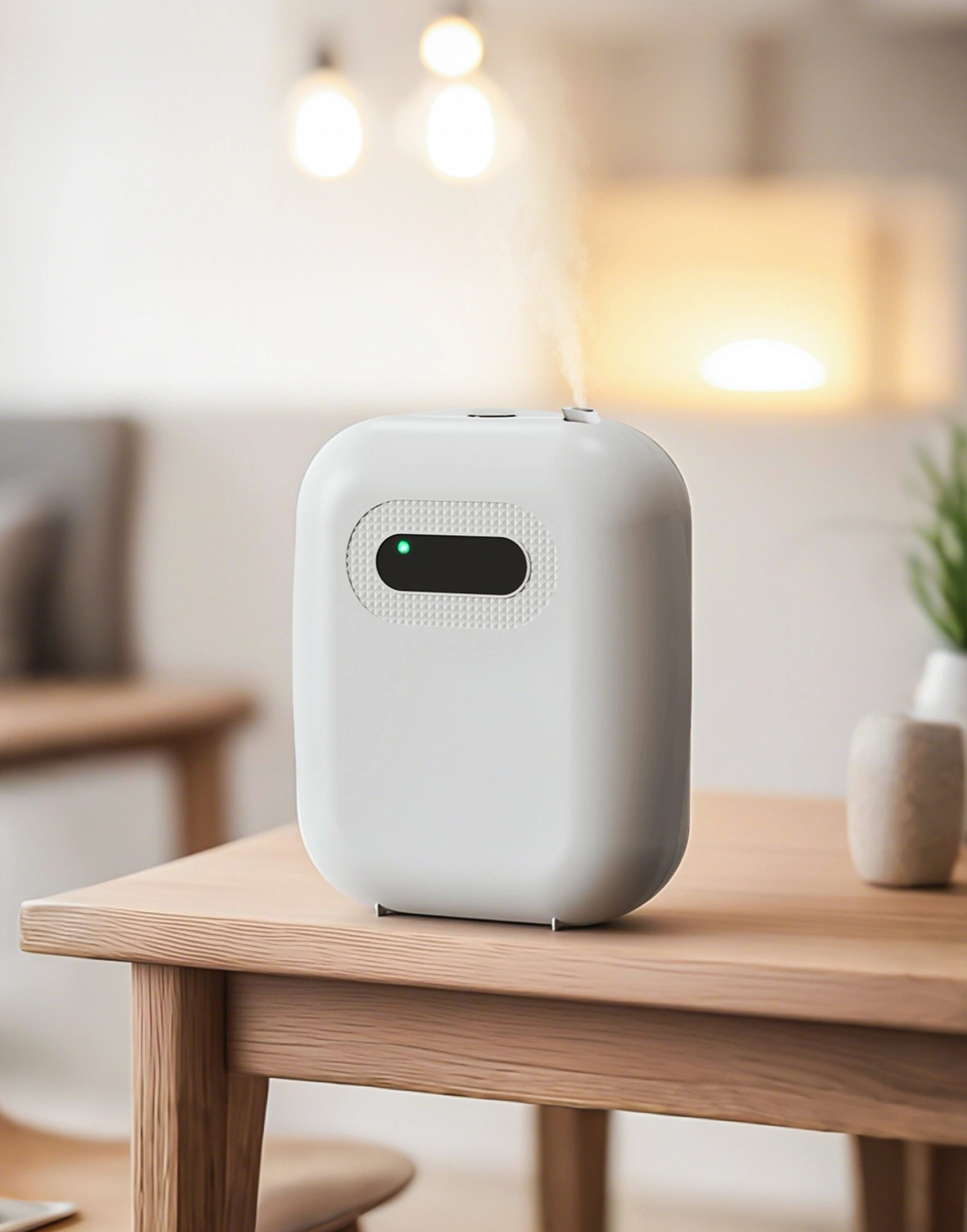
| Diffuser | Coverage | Office placement | Fragrance capacity |
|---|---|---|---|
| Commercial Scent Oil Diffuser (Bluetooth APP) | 300 m³ (1,000 sq ft) | Single department or open plan zone | 150 ml plastic |
| Battery Aroma Oil Dispenser Wall Mount Diffuser | 200 m³ (750 sq ft) | Meeting corridors, small offices, or areas without power | 150 ml plastic |
| Commercial HVAC Scent Diffuser Aroma Dispenser System | 8,000 m³ (30,000 sq ft) | Whole floor or multi-floor HVAC supply | 1 L, 2.5 L, or 5 L aluminum |
For a dense office with low ceilings, two 300 m³ diffusers at lower output often beat one larger unit. The oil does not need to travel far, and staff get an even layer. I have also seen a battery wall mount unit solve a meeting corridor where running cable was not allowed by the building owner. It held the 150 ml bottle long enough for a monthly service visit, with battery life rated up to 99 days depending on the schedule.
If your floor plate includes a double height lobby or a mixed layout of enclosed rooms and open desks, it is worth confirming diffuser coverage before finalizing the bill of materials. Send the floor plan and ceiling height to [email protected] and we will check placement against the airflow zones.
Fragrance Oil Selection for Productive Office Spaces
Office fragrance selection is different from hotel or retail scenting. The formula has to sit in the background for eight hours, not add character to a lobby. We lean toward light woody, green tea, or white musk bases with low diffusion aggression. Heavy florals and sweet food notes usually create fatigue by mid-afternoon, especially in closed meeting rooms.
Why does fragrance type affect productivity?
Fragrance is not a direct performance tool. In my experience, the practical value is consistency: a light, clean scent makes a room feel maintained, while cluttered or jarring notes draw attention away. We choose fragrances with a narrow volatility curve so the scent character stays stable over the working day instead of shifting from top note to drydown between morning and afternoon. Our fragrance library includes more than 300 scent types, which makes it easier to find a quiet office profile without settling for a retail fragrance.
Office Scenting Solutions Support for Facilities Teams
A badly matched diffuser or oil becomes a facilities complaint list within a month. The reverse is also true: when airflow, zoning, and oil selection are aligned, the program runs quietly and no one asks for constant adjustments. If you are planning an office scenting rollout or fixing an uneven one, send your floor area, ceiling height, and meeting room locations to [email protected], or call +86 185 6557 5758 / +86 134 2048 5758. We will confirm which diffuser and fragrance fit your zone plan before ordering.
Common Questions About Office Scenting Solutions
How long does an office scenting program take to set up?
Most office deployments take one to two weeks from site details to the first test run, not months. We start with a floor plan and ceiling height review, then ship the first diffusers and a light oil set. On site, the device schedule and output are adjusted over a few days to match HVAC run hours. The full adjustment period usually runs two weeks because staff need time to stop noticing the scent. By week three, the program settles into a maintenance pattern with monthly or bimonthly fragrance refills.
Is scenting safe for employees with allergies or sensitivities?
Many facilities teams assume any scent is a risk for allergy-prone staff, but the larger risk is uncontrolled odor buildup. We keep office oils at IFRA compliant levels and run low concentrations in shared air streams. For a known sensitivity policy, we zone the fragrance away from that department or switch to a waterless cold air diffuser that releases less visible mist. The correct first step is not to cancel scenting but to map the affected workstations and confirm the air handler path before applying fragrance in those areas.
Will one diffuser cover a mid-size office?
It depends on the ceiling height, partitions, and air changes. A 300 m³ rated device can cover a small department in ideal conditions, but a subdivided floor with glass walls usually needs several lower-output units. The rating assumes open air and steady supply flow; it does not assume scent that crosses a wall. For any space over roughly 200 square meters with enclosed rooms, we plan for multiple points rather than one strong source.
How do we keep office scent consistent without staff complaining?
In programs we have run, consistency comes from stable output and predictable maintenance, not from a stronger fragrance. We set the diffuser schedule around HVAC run times and send refills before the bottle runs dry. When a zone drops out, the first check is airflow, not oil level. If your office has a shared air handler or a fragrance sensitivity policy, send the layout to [email protected] and we will confirm whether zoning or a lighter formula fits.
If you’re interested, check out these related articles: