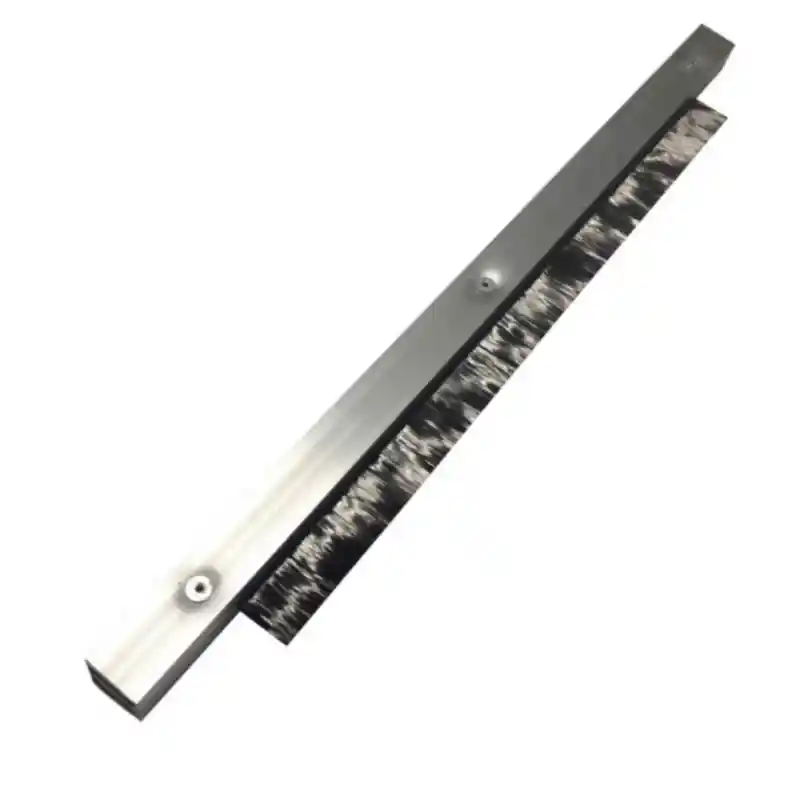

Formed strip brushes are used where a standard straight brush cannot follow a machine profile. They are pre-shaped to a specified contour, which simplifies installation and gives repeatable contact in sealing, wiping, cleaning, and light deburring applications.
What Is a Formed Strip Brush?
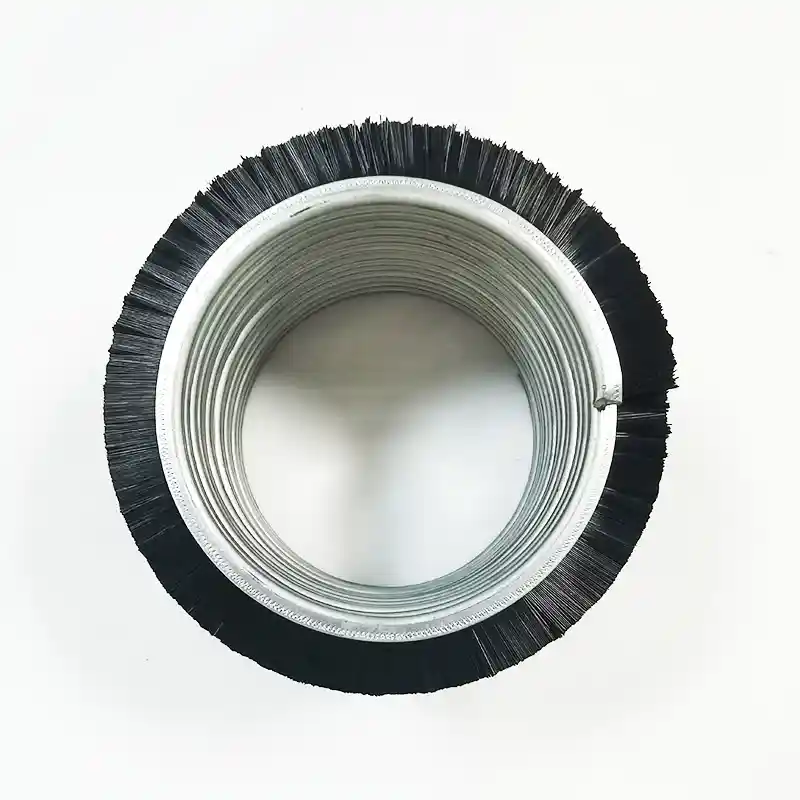
A formed strip brush is a strip-type industrial brush that is fabricated to a fixed shape before it reaches the production line. The shape can be a U-bend, L-bend, round segment, stepped profile, or a customer-specific contour. Because the brush is formed in the factory, it does not need to be forced into place on site.
The main components are a channel backing, a filament row, and a retention wire or clamp. The backing is often aluminum, galvanized steel, stainless steel, or PVC. The filament material determines how the brush behaves: nylon for general sealing, abrasive nylon for edge conditioning, brass wire for non-sparking cleaning, and stainless steel wire for rust removal or wet zones.
This type of brush is a direct extension of the industrial strip brush family, but with the shape engineered for a particular machine envelope.
Formed strip brush profiles often build on the same backing and filament-setting methods as standard strip brush production. <What you know about brass wire brush strip> covers material and backing choices that also affect formed profiles.
How a Formed Strip Brush Is Different from a Standard Strip Brush
A standard strip brush is usually supplied in straight lengths. It can often be curved slightly by hand, but the installer has limited control over the final contact angle. A formed strip brush is different because the radius, angle, notch, and mounting points are produced to the drawing.
Key differences include:
- Backing profile is pre-bent or roll-formed.
- Ends are closed, notched, or drilled for fasteners.
- Filament trim and angle are set to the final contact surface.
- Repeat orders match the original shape with less setup time.
Compared with a flexible strip brush, the formed version is less dependent on installer skill. The flexible type is intended for field bending; the formed type is intended for stable, repeatable machine installation.
Key Design Variables
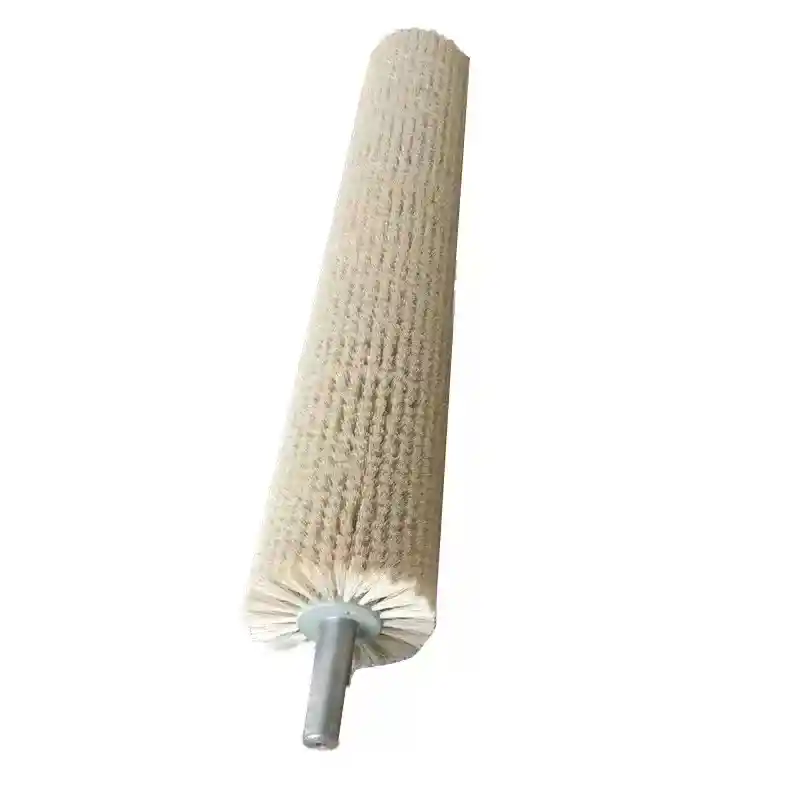
Backing material
Aluminum is lightweight and corrosion-resistant. Galvanized steel offers higher rigidity. Stainless steel suits washdown and chemical environments. PVC is used where electrical isolation or chemical resistance is more important than mechanical strength.
Filament material and density
For general dust sealing, nylon 6/12 is common. In wet or chemical environments, polypropylene offers better moisture resistance. Abrasive nylon is selected when the brush must remove light burrs. Brass wire reduces spark risk on soft metal surfaces. Stainless steel wire is used for high-temperature, wet, or corrosive applications and is commonly specified to ASTM A313/A313M [2] for consistent spring properties.
| Filament material | Typical use in a formed strip brush |
|---|---|
| Nylon 6/12 | Dry dust sealing, light wiping |
| Polypropylene | Wet sealing, chemical contact |
| Abrasive nylon | Light deburring, surface conditioning |
| Brass wire | Non-sparking cleaning on soft metals |
| Stainless steel wire | Rust removal, high-temperature or washdown areas |
| Horsehair | Fine dust or delicate surfaces |
Mounting details
The backing can include punched holes, clamp strips, or continuous channel. Mounting details should be locked into the drawing early because they affect how the filament row sits relative to the moving part.
Common Applications in Specialized Equipment
Formed strip brushes are used in equipment where the brush must follow a non-linear path:
- Sealing gaps on curved guards and covers. The brush blocks dust, chips, or light while moving with the machine contour.
- Wiping conveyor edges and shaped transfer points. The brush clears debris without scratching the workpiece.
- Cleaning rotary or reciprocating machine components. A curved brush can contact the part at a consistent angle.
- Static dissipation and light edge finishing. Conductive or abrasive filaments can be combined with the formed profile.
Industrial cleaning lines frequently combine several brush types. <Brushes for steel wire industries — cleaning, descaling, derusting, polishing> covers how rotary and linear brushes work together on steel processing lines.
Selection Criteria and Customization
To specify a formed strip brush correctly, prepare the following information:
- Profile drawing or traced shape of the mounting groove.
- Overall length, width, and filament trim length.
- Working temperature and chemical exposure.
- Surface speed and contact pressure.
- Mounting method: clip, clamp, channel, or pre-drilled holes.
- Required filament material and diameter.
When auditing a supplier, an ISO 9001:2015 quality management system [1] provides a baseline for process control and traceability. A supplier that manufactures both the backing and the filament pre-setting process can usually hold the profile more consistently from batch to batch.
Deburring is a common secondary requirement on formed equipment. <How do you know about deburring brushes> covers edge-finishing options that can supplement a formed strip brush installation.
Need a pre-shaped profile for your machine? Send your mounting drawing or profile dimensions to [email protected]. Include the equipment name, working temperature, and target surface condition so the backing and filament can be specified correctly.
Maintenance and Replacement
Formed strip brushes need periodic inspection because the formed backing can trap debris. Check the filament length, backing straightness, and mounting hardware at scheduled machine stops. If the brush shows uneven wear, the contact angle may need adjustment or the mounting surface may have shifted.
Before adjusting or replacing a brush near powered drives, isolate the equipment and follow lockout/tagout procedures such as those described in OSHA 29 CFR 1910.147 [3]. Cleaning the brush with dry compressed air can remove light dust, but chemical contamination may require a filament change rather than cleaning.
Ready to Specify a Formed Strip Brush?
Contact Shanghai Huixi Trading Co., Ltd. at +86 1580 0932 713 or [email protected] with your profile drawing, filament requirements, and fixture dimensions. We provide ODM/OEM service, technical support, and sample evaluation for formed strip brush profiles.
Frequently Asked Questions
What is the difference between a formed strip brush and a flexible strip brush?
A formed strip brush is manufactured to a final shape at the factory, while a flexible strip brush is intended to be bent by the installer. Formed profiles give more repeatable contact on complex machine geometries.
Which filament should I choose for wet or chemical cleaning?
Polypropylene generally offers better moisture and chemical resistance than nylon. Stainless steel wire can be used where the brush must withstand wet, corrosive, or high-temperature conditions.
Can formed strip brushes be made to my existing profile?
Yes. A profile drawing, flat pattern, or traced shape of the mounting groove is usually enough to start the specification. Include overall length, trim length, and mounting method for the most accurate quotation.
How do I send a formed strip brush inquiry?
Prepare the profile drawing, working temperature, chemical exposure, and mounting details. The technical team can then check the profile against the equipment operating conditions before quotation.
References
[1] International Organization for Standardization, ISO 9001:2015 Quality management systems — Requirements, Geneva, Switzerland, 2015.
[2] ASTM International, ASTM A313/A313M-18 Standard Specification for Stainless Steel Spring Wire, West Conshohocken, PA, USA, 2018.
[3] Occupational Safety and Health Administration, 29 CFR 1910.147 The control of hazardous energy (lockout/tagout), U.S. Department of Labor, Washington, DC, USA.
If you’re interested, check out these related articles:
rope cleaning brush for industrial use a key tool for maintaining safe production
brass brushes work perfectly for pipe cleaning
