


When 38 Turkish hardware buyers walk into one fair, the real advantage is not the group size by itself. The advantage is that the visit can be run as a sourcing operation: pre-matched meeting slots, category-level hall coverage, shared due-diligence checklists, and one common follow-up system. At CIHS 2025, the delegation treated 120,000 sqm of exhibition space as a structured buying route rather than an open-ended walk.
The 2025 edition brought together 2,977 exhibitors and 77,016 professional visitors from 123 countries [1]. The 2026 edition is planned at 120,000 sqm with more than 3,000 exhibitors across the full hardware chain: hand tools, power tools, fasteners, building hardware, garden tools, PPE, welding, abrasives, and smart locking systems [2]. For a Turkish buying group, that breadth is useful only if the group knows what it wants to resolve on each day.
What a 38-Buyer Delegation Changes
A delegation changes the supplier conversation. A single buyer can be hosted politely; a group of 38 buyers representing multiple importers gets booth-level attention and faster access to decision-makers. But the group also brings risk: if members move without a plan, they can spend hours in low-relevance meetings and leave with a pile of catalogs instead of vetted shortlists.
Turkish import demand concentrates in hand tools, power tools, fasteners, and building hardware [3]. Within the delegation, members often split these categories by mandate: one buyer focuses on cordless power tools, another on professional hand tools, another on fasteners for construction distribution, and another on garden tools. That division turns a large group into a set of focused sourcing cells.
The delegation works best when every member carries the same qualification framework: factory or trading company, export markets served, certification status, MOQ flexibility, and production lead time. Without that, group size only adds noise.
Pre-Show: The Online Showroom Comes First
The Turkish buyers did not arrive without a shortlist. Before flying, they used the CIHS online showroom to filter exhibitors by product category, export market, and certification information. That pre-show step is where a delegation saves days: instead of discovering suppliers while walking, buyers arrive knowing which booths are relevant and which questions remain open.
A practical pre-show discipline is to rank each supplier into three groups: priority meetings, walk-by checks, and backup options. This means the on-site day becomes a verification exercise rather than a discovery exercise. The delegation can also align internal needs: one buyer may need garden tools for the spring season, while another needs fasteners for ongoing infrastructure projects. A single shared shortlist with category owners prevents overlap and missed booths.
On the Floor: Dividing 120,000 sqm by Category
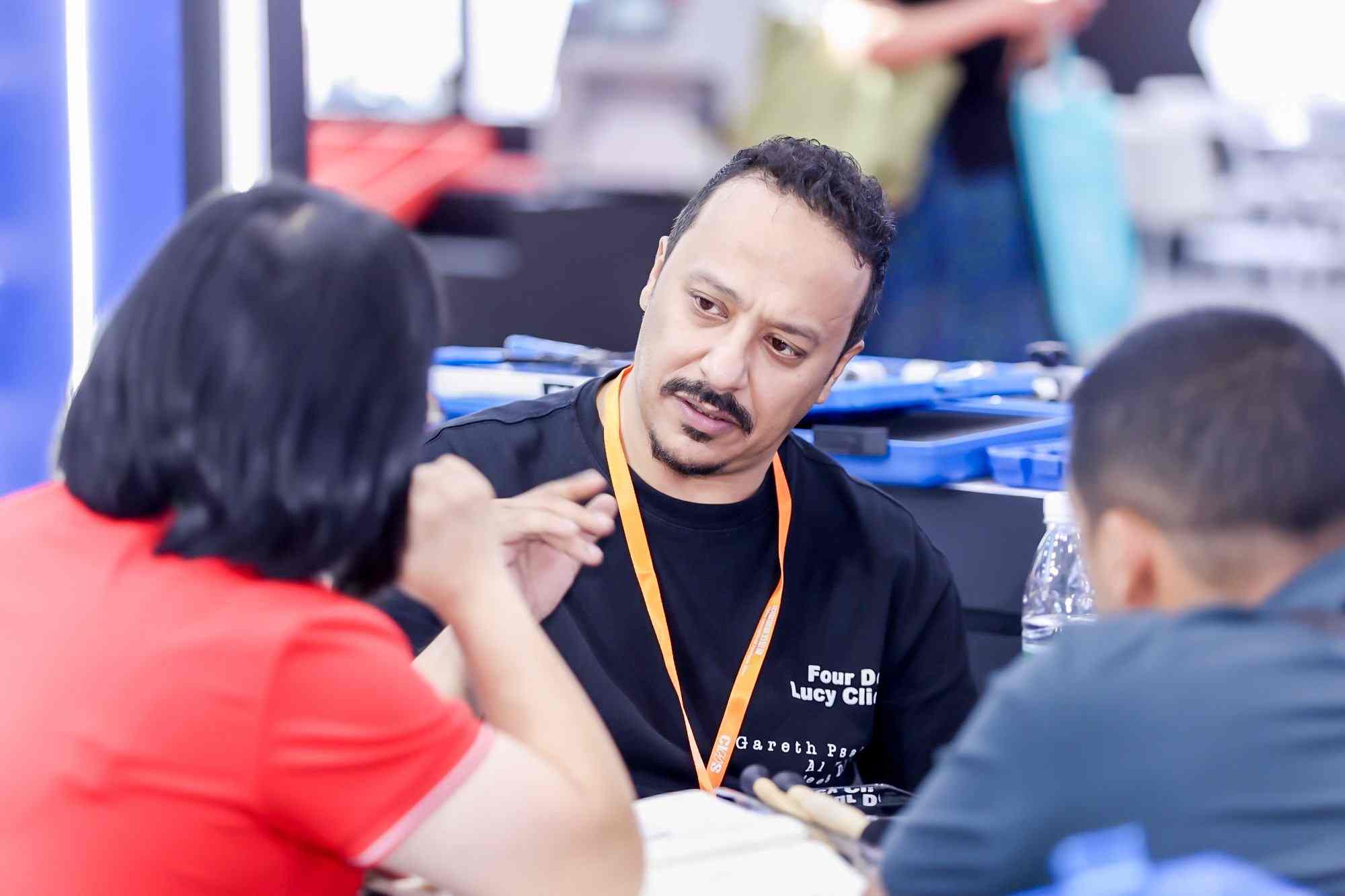
The delegation approached the floor with cluster logic. Chinese hardware production is concentrated in specific regions: Yongkang for hand tools, Qidong for power tools, the Zhejiang fastener belt around Haining and Ningbo, and Guangdong building hardware [4]. At CIHS, those clusters show up as dense category zones, so a buyer who knows the cluster can move from booth to booth with a sharper eye for specialization.
Rather than trying to cover every hall as one group, the Turkish delegation split by product mandate. Each category owner worked the relevant halls, then the group compared notes in the evening. That rhythm creates a fast feedback loop: if one buyer finds a supplier relevant to another member, the introduction happens before the next fair day.
The goal on the floor is not to count booths. It is to test whether the supplier’s claim matches the booth reality: samples, price positioning, export experience, and willingness to discuss technical requirements.
The Matchmaking Room: Meetings That Begin with Intent
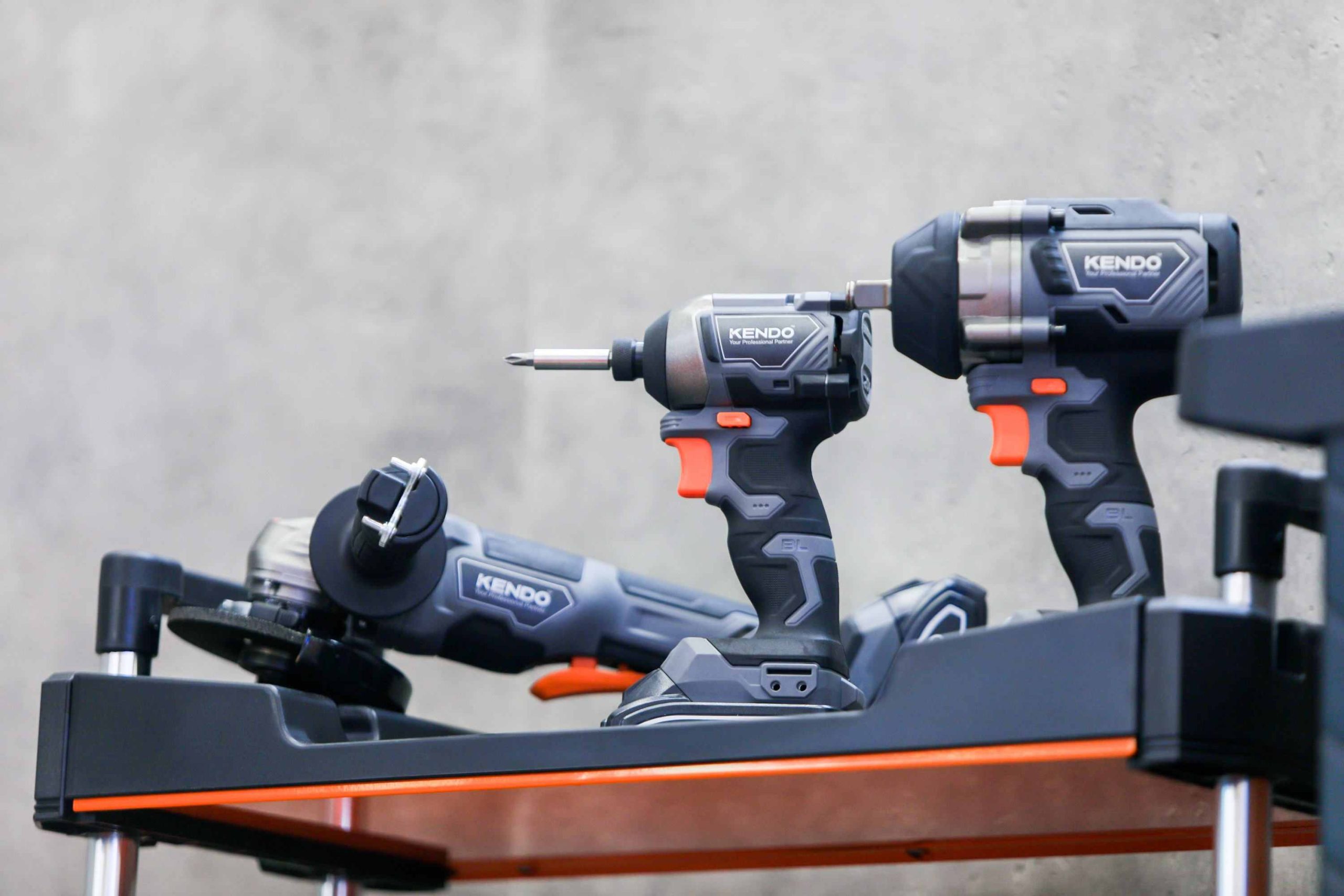
A large delegation also benefits from formal matchmaking. CIHS pre-matches purchasing requirements with exhibitors, so a buyer does not start a meeting by explaining what a product is or which market it must serve. The meeting starts with intent, specification, and commercial constraints.
CIHS 2025 reported that on-site matchmaking intent deals exceeded USD 80 million [1]. For a Turkish delegation, that format is especially useful because it compresses the gap between inquiry and negotiation. Buyers bring product lists, target price bands, and market certification needs; exhibitors respond with product availability, customization capacity, and export terms.
The matchmaking room is where the delegation moves from “who makes this” to “can you produce this under these terms.” That is the moment a trade fair visit becomes a buying trip.
If you are organizing a delegation, the same infrastructure can be set for your group. Contact the CIHS Buyer Services Team at [email protected] or call +86 21 6390 6161-832 to discuss pre-show matchmaking, category maps, and a group registration plan.
Supplier Checks: Certificates, Samples, and the Questions That Matter
The delegation’s real filtering happened at the booth. Buyers checked market certification requirements before asking for a price: CE and GS for Europe, UKCA where needed, REACH and RoHS for materials, and product-specific standards for electrical or safety equipment.
The table below shows the working checklist the delegation used.
| Check | What to verify | Why it matters for Turkish importers |
|---|---|---|
| Factory or trading company | Business license, export license, production site | Changes MOQ, lead time, and after-sales responsibility |
| Market access | CE, GS, UKCA, REACH, RoHS, or target-market equivalents | Prevents customs delays and non-compliant stock |
| Quality system | ISO 9001, BSCI, or sector-specific audits | Signals process control beyond booth samples |
| Export history | Existing markets, client types, container volumes | Shows whether the supplier understands your regulatory environment |
| Commercial terms | MOQ, tooling cost, sample policy, lead time | Separates serious suppliers from catalog sellers |
Buyers should also ask who holds the certification. A trading company can show a factory’s certificate, but the buyer should confirm that the certifying entity matches the producing entity. That distinction matters when import documents are checked later.
Negotiation and Payment: Terms Worth Locking In
The Turkish delegation did not chase the lowest booth price. They compared total landed cost: product price, freight, customs, and the cost of rework if quality fails. That is the correct frame for hardware sourcing, where a low unit price can disappear quickly in logistics or inspection failures.
Negotiation covered MOQ flexibility, deposit and balance structure, sample approval before mass production, and Incoterms such as FOB, CIF, or DDP. Payment terms were matched to risk: safer structures for new suppliers, with stronger open terms reserved for suppliers with verified export history and successful sample rounds.
For Turkish importers, currency planning also matters. Orders may be quoted in USD or EUR, and the time between deposit and shipment can expose the landed margin to exchange-rate movement. The delegation treated payment terms and currency as part of the same decision, not separate afterthoughts.
After CIHS: From Booth Conversations to Container Plans

The fair ends, but the sourcing decision does not. The delegation’s follow-up system was simple: within 48 hours, each member confirmed the supplier’s quotation, requested missing certificates, and locked sample shipments. Suppliers that hesitated on documents moved down the list.
After samples pass, buyers often consolidate orders from multiple CIHS suppliers into one shipment to improve freight efficiency and strengthen negotiating position with a freight forwarder. A shared vetted supplier base also gives a delegation leverage: if one supplier slips, another qualified option from the same fair is already in the group’s records.
The real outcome of a delegation is not 38 individual trips. It is a reusable supplier map, a shared qualification record, and a set of commercial terms that can support repeat orders across seasons.
Plan Your CIHS 2026 Delegation
A Turkish delegation succeeds when every member arrives with a category mandate, uses the online showroom before flying, enters matchmaking with a real purchase list, and leaves with documented supplier decisions rather than a stack of catalogs.
Register your group as professional visitors, map the halls by cluster, and book matchmaking early. For delegation planning, email [email protected] or call +86 21 6390 6161-832.
FAQ: Sourcing at CIHS with a Delegation
Can Turkish buyers attend CIHS without joining a delegation?
Yes. Individual registration is open to professional buyers, and the visitor badge gives access to the halls, matchmaking, and buyer services. A delegation is useful when you want shared category coverage, consolidated logistics, and a common supplier qualification record.
Which product categories should a Turkish delegation prioritize first?
Most Turkish buying groups start with hand tools, power tools, fasteners, and building hardware because these are steady import categories with broad distribution demand [3]. Garden tools, PPE, welding equipment, and smart locks are strong second-wave categories depending on your market channel.
How many days should a delegation reserve?
Three fair days are a practical baseline, plus one pre-fair day for shortlist alignment and one optional post-fair day for factory visits near Shanghai. This allows enough time for booth verification, matchmaking meetings, and next-step negotiation without rushing supplier checks.
Does CIHS verify suppliers?
CIHS screens exhibitors and organizes buyers by product focus, but no fair can replace buyer-side verification. Ask for certificates, export history, and factory audit reports at the booth, then confirm documents after the fair before the first order.
References
[1] China International Hardware Show, “CIHS 2025 Post-Show Report,” Koelnmesse (Beijing) Co., Ltd., Shanghai, China, 2025. [Online]. Available: https://www.cihs.com.cn/en/report2025
[2] China International Hardware Show, “About CIHS 2026,” Koelnmesse (Beijing) Co., Ltd., Shanghai, China, 2026. [Online]. Available: https://www.cihs.com.cn/en/about
[3] Turkish Statistical Institute (TÜİK), “Foreign Trade Statistics: Tools and Hardware Categories,” Ankara, Türkiye, 2025. [Online]. Available: https://data.tuik.gov.tr/
[4] China National Hardware Association, “China Hardware Industry Cluster Overview,” Beijing, China, 2025. [Online]. Available: http://www.cnhardware.org.cn/