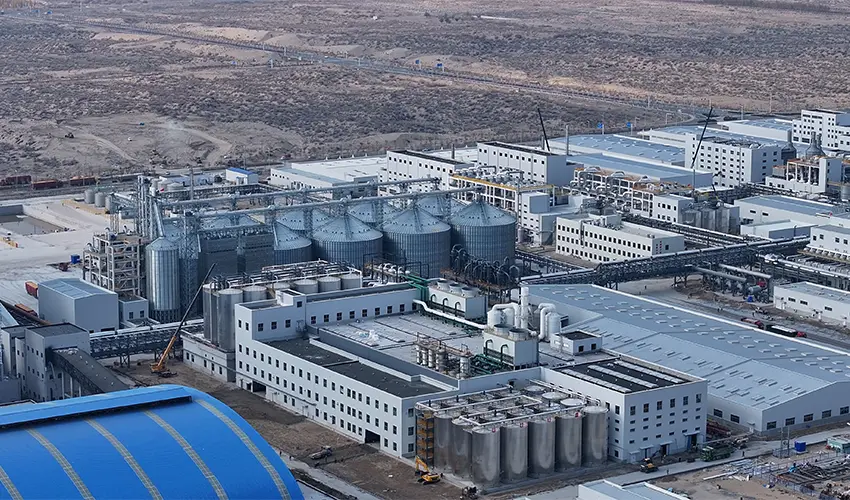

Ethanol plant instrumentation determines whether a facility runs at design yield or slowly gives away margin through steam, product, and downtime. In projects where measurement is treated as a late procurement task, the consequences show up in distillation control, energy use, and startup delays. I have learned to specify flow, level, temperature, and pressure devices alongside the process design, before piping and instrument diagrams are frozen. That sequence prevents the most common failure I see: correct instruments installed in the wrong place for the wrong phase. The measurement decisions that matter most fall into four groups: flow, level, temperature, and pressure.
Ethanol Plant Instrumentation Selection by Process Phase
The first step is not choosing a manufacturer. It is mapping each instrument to the phase it will see. Corn slurry behaves differently after liquefaction than it does before saccharification. Condensate, CIP solution, ethanol vapor, and stillage each impose different demands on the same measurement category. An instrument selected from a datasheet alone can meet the accuracy spec and still fail within months because the installation detail does not match the process condition. We treat the P&ID and tag number as a process document, not a draftsman’s list. When the phase changes, the instrument class often needs to change, even when the measured variable does not.
Flow Measurement Points That Reveal Yield and Steam Cost
Flow meters in an ethanol plant carry the plant economics. We look first at feed slurry flow because that number sets the mass balance. A magnetic flow meter works for water based corn slurry because the liquid carries enough conductive ions, but the meter must be sized to keep solids in suspension at low velocity. Steam flow is a separate problem. Wet steam and control valve pressure cuts create two phase slugs that defeat many meter types. I have seen a vortex meter installed downstream of a pressure reducing valve produce stable numbers that were wrong because the low pressure steam ran below the meter’s density correction range. The result was a distorted steam rate to the beer column and a margin loss that took months to identify.
| Location | Typical technology | Service condition to address | Specification principle |
|---|---|---|---|
| Feedstock slurry flow | Electromagnetic flow meter | Abrasive solids, varying viscosity | Size for low velocity solids suspension and abrasion resistant liner |
| Cook and mash flow | Coriolis or electromagnetic | High temperature, steam flashing | Select temperature rating above flash point and avoid gas pockets |
| Steam flow | Vortex or DP flow meter | Wet steam, pressure drops | Install upstream of the control valve with adequate straight run |
| Product ethanol flow | Coriolis mass flow | Non conductive, low viscosity | Read mass directly without requiring conductive liquid |
| Condensate return | DP or vortex | Two phase slugs | Add condensate separation or use a meter tolerant of two phase |
DP transmitters and Coriolis meters each have places. Ethanol product flow is a strong Coriolis application because the meter reads mass directly and does not require conductive liquid. The choice is less about brand and more about whether the meter can handle the actual phase at the actual location.
Level Instrumentation for Foam, Vapor, and Residual Solids
Level measurement is where ethanol plants learn to distrust a clean calibration bench. The beer well produces foam, the distillation column moves between vapor and liquid, and stillage lines leave solids on the probe. Differential pressure remains useful in many column sumps, but impulse lines can plug unless the taps are positioned with the process flow. Guided wave radar works in many tanks, though foam can reduce the signal margin. In one grain alcohol project I reviewed, the operator compensated for an unreliable beer well reading by opening a bypass valve, which defeated the level loop and created a spill risk. The meter was suitable; the installation did not account for foam and agitation. We specify a level device only after asking how the vessel behaves during startup, CIP, and upset conditions.

Ethanol Plant Instrumentation for Temperature and Pressure in Distillation
Distillation consumes the largest share of steam, so temperature and pressure signals here do more than display values. They control the split. A temperature probe inserted too shallow in a column reads the vapor space rather than the tray liquid, and the control loop then holds the wrong condition. Pressure transmitters with diaphragm seals may be needed on streams that foul or crystallize, but adding seals to every point creates another layer of potential error and cost. The molecular sieve dehydration unit is the most pressure sensitive part of the plant. Regeneration cycles alternate between vacuum, steam, and product flow, and a pressure transmitter with the wrong turn down or overpressure limit will lose calibration quickly. We treat each of those points as a separate service, not as a generic pressure reading.
Molecular Sieve Pressure Control
A dehydration unit cycles between adsorption and regeneration. Pressure transmitters must survive vacuum service and the rapid pressure reversal without losing zero. I have seen a standard gauge pressure transmitter drift after repeated vacuum cycles because its sensor capsule was rated for positive pressure only. The apparent leak was a measurement drift. Selecting a compound range transmitter solved the problem without changing a valve or gasket.
Temperature Probes in Column Bottoms
Bottom temperature is not a single value when solids and fouling are present. Thermowells should extend into the liquid flow path but not so far that vibration from the reboiler circulation creates fatigue. We use a thermowell length and material that can handle the abrasive movement, and we compare bottom temperature with pressure corrected boiling point. When the two signals diverge, the transmitter is probably wrong, and the loop is fighting the column.
If your process includes molecular sieve regeneration or beer column level, it is worth confirming the instrument tag ranges against the P&ID before the design freeze. Send the relevant P&ID sections and operating ranges to [email protected].
Early Instrument Specification Against the P&ID
Projects that delay instrumentation decisions until after piping is complete pay twice: once for revised drawings and once for field rework. The sequence I prefer puts instrument selection, tag range, and installation detail in the design review before procurement. If you are planning a fuel ethanol or grain alcohol line, send the P&ID sections and the instrument index to [email protected] or call 010-8591 2286. Include the operating range for each stream, and AGRIFAM engineers will check the measurement options against your process balance before the design freezes. That is the point where a small correction costs hours, not months.
Common Questions About Ethanol Plant Instrumentation
What flow meter works for corn slurry without plugging?
A magnetic flow meter with an abrasion resistant liner is the usual choice for water based corn slurry. The liquid conductivity must be high enough, which it normally is in a wet mill or dry mill slurry stream. The meter should be sized to keep the slurry moving fast enough that solids stay suspended. Slower velocities let grit settle in the sensor tube and damage the liner over time. For high solids or large particle streams, we add a straight run and avoid low flow bypass lines that can plug first.
Why do level readings drift in the beer well and distillation columns?
The usual assumption is that the transmitter has failed. In most cases the signal is real but the measurement is seeing foam, vapor, or a moving surface rather than the actual liquid level. Agitation and gas breakout below the liquid surface shift the reflection point for radar devices and introduce noise in differential pressure cells. A direct level instrument can read accurately during normal operation but become unreliable during CIP or upset conditions when the surface changes. The fix is usually installation geometry, not a new instrument.
Should pressure transmitters use diaphragm seals on every ethanol stream?
It depends on the stream. Clean vapor lines and instrument air do not need seals. Slurry, stillage, and streams that crystallize or polymerize often do. A diaphragm seal protects the transmitter from fouling but adds temperature shift and fill fluid effects, so we do not add one without a specific reason. For a dirty stream, the seal buys reliability. For a clean stream, it adds error and maintenance. The decision belongs on the P&ID next to the service conditions, not on a general specification.
When should instrumentation be finalized in a new ethanol plant project?
Before piping layouts are frozen. The best point is during the P&ID design review, when line sizes, valve locations, and tag ranges can still move without structural cost. If instrumentation is postponed until after equipment purchase, the installation usually forces compromises such as short straight runs, wrong tap orientations, or difficult access. The result is a working instrument in a bad location. If your project is at the P&ID stage, send the instrument index and operating data to [email protected] or call 010-8591 2286 and we will check the measurement options against the process design.
If you’re interested, check out these related articles:
Driving Global Food Conservation Through Technological Innovation