A shopper walks into a store with a task, a budget, and a limited amount of patience. Scent is rarely on the list. Scent marketing changes the background conditions around those decisions. I have spent ten years setting up commercial scent programs, and the stores that treat scent as a fixed sensory fixture tend to see longer dwell time and calmer purchase conversations. The sales lift does not come from a stronger fragrance. It comes from the right fragrance in the right zone at a level customers notice only when it is missing.
The Sales Effect of Scent Marketing in Retail
Scent marketing works beneath the verbal part of a purchase. A buyer can explain why a shirt fits or why a price feels high, but the reason a store feels easy to stay in is harder to articulate. That ease becomes commercial when it changes the pace of a visit. Shoppers who pause at a table, return to a rail, or ask a second question give staff more opportunities to close a sale. The path is not aroma to impulse in one step. It is aroma to comfort, comfort to longer dwell, and longer dwell to a larger basket.
I have walked retail floors where the diffuser was hidden behind a fixture and set to a safe default. The scent was present but not organized. Sales did not move much because the smell pooled near the door or near the cash desk while the middle of the floor stayed neutral. When the fragrance was rebalanced across the customer path, the change in shopping rhythm was visible within a week. That is the difference between air care and scent marketing. One freshens. The other directs attention.
The Zones and Equipment That Drive Scent-Led Sales
Entry zones create the first mental shift. A shopper leaves street noise and steps into a space that smells clean, styled, and slightly different from the building around it. That contrast primes the rest of the visit. Fitting rooms and consultation counters are the second zone for us to tune. These are the places where commitment happens, so the scent should drop slightly in intensity and move toward notes that feel private and settled. Open selling floors sit between the two. They need even diffusion more than a strong statement. Scent marketing has to be laid out by zone, not set once for the whole floor.
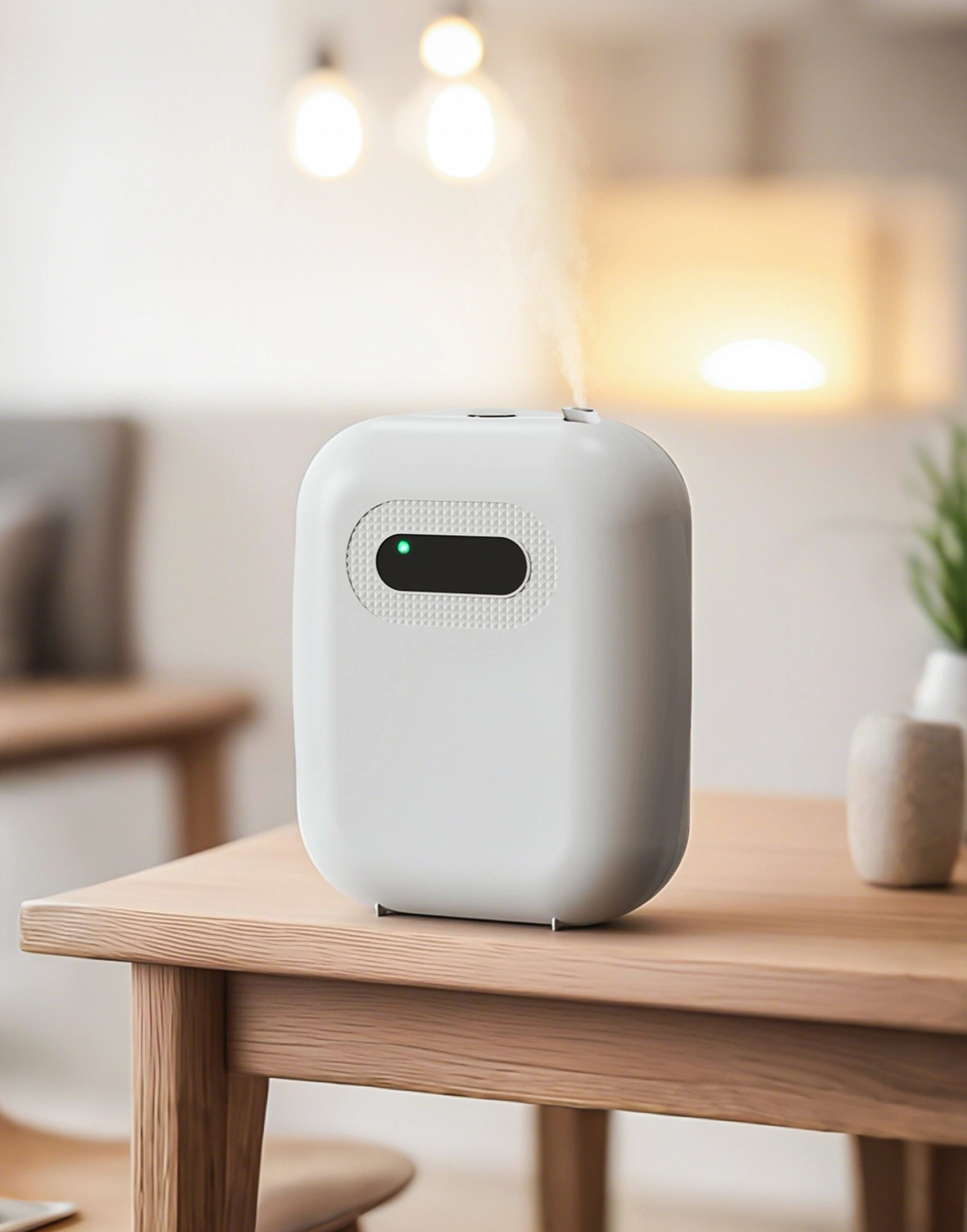
Scent marketing equipment decisions follow the same sequence: entry coverage, path coverage, and decision zone coverage.
| Retail zone | Equipment type | Coverage | Control |
|---|---|---|---|
| Boutique or fitting area | Commercial Scent Oil Diffuser (Bluetooth APP) | 300 m³ (1,000 sq ft) | Bluetooth app timing |
| Large floor or atrium | Hotel Scent Oil Diffuser Tower (Commercial) | 3,000 m³ (11,000 sq ft) | Touch and app control |
| Multi-floor or HVAC connected | Commercial HVAC Scent Diffuser Aroma Dispenser System | 8,000 m³ (30,000 sq ft) | HVAC airflow integration |
Equipment choice changes the sales result more than most people expect. A diffuser that covers a small area at full strength is wrong for a broad floor. An HVAC system that pushes fragrance through the full air handler works well for a large store, but it can waste oil and create fatigue if it is not zoned. I ask about ceiling height, vent placement, and the shape of the customer path before recommending a model. These details decide whether the scent reaches the decision zones or disappears into the ceiling. This is where scent marketing becomes an engineering choice rather than a fragrance choice.
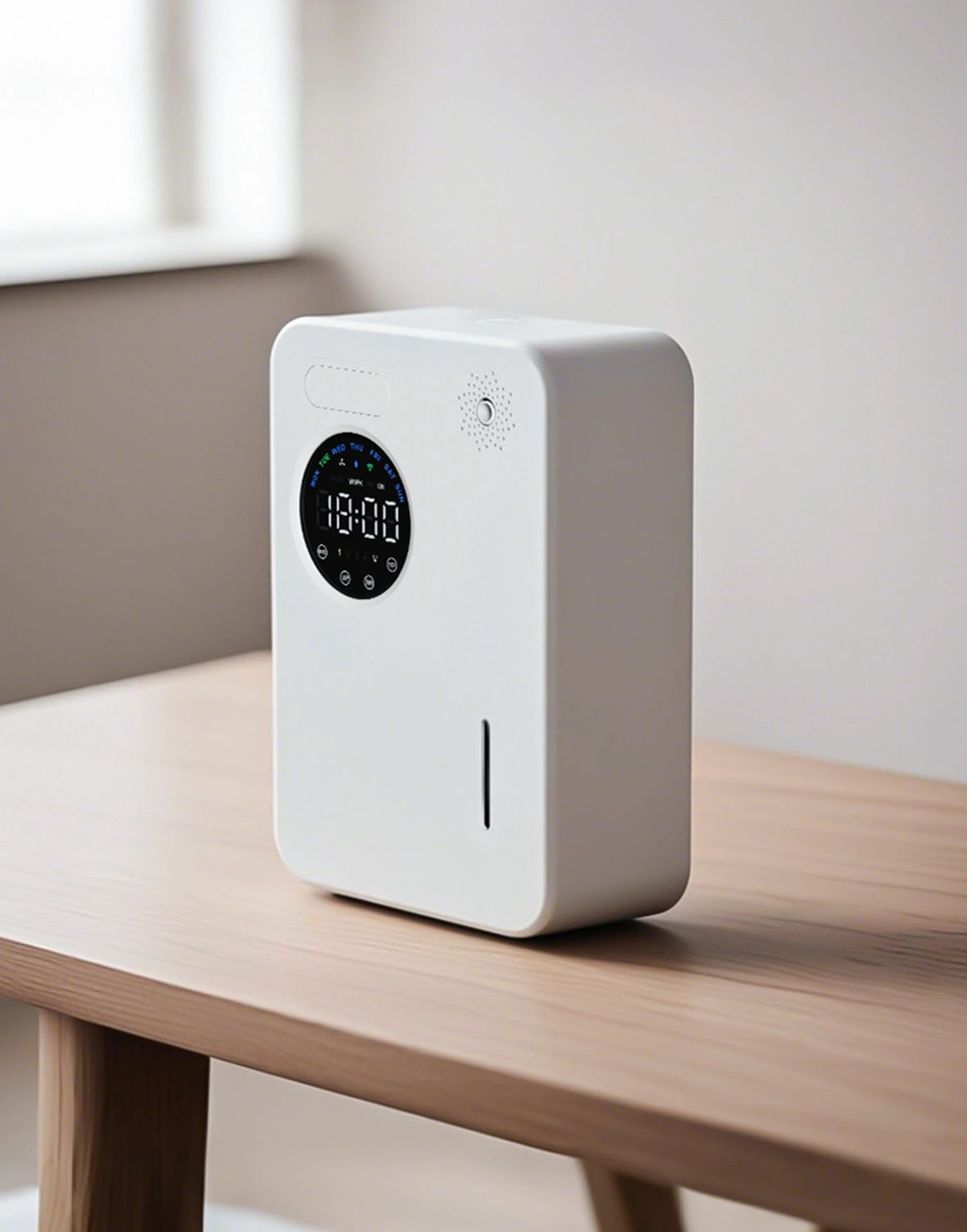 If your store has a high ceiling, a mixed open-plan floor, or strong HVAC airflow, those variables change both the throw distance and the ongoing oil cost. Before you commit equipment, it is worth confirming coverage against your actual air volume. Send your floor area, ceiling height, and vent layout to [email protected] and we will confirm the right diffuser class for the zones where purchase decisions happen.
The Fragrance Profiles That Move Baskets Instead of Just Air
Scent marketing fails when fragrance choice is led by personal taste. A store owner or a brand manager picks the scent they like, and then wonders why the sales floor does not change. The better starting point is the decision the customer is trying to make. For a leather goods or tailoring store, woody and dry notes reinforce the perception of material quality. For a fashion or jewelry space, white floral and sheer musk profiles keep attention on the product rather than the room. For a grocery or convenience format, clean citrus and green profiles read as freshness, which matters when customers are judging how well the store is kept.
We keep more than 300 scent types in our library because the correct profile depends on the merchandise, the ceiling height, the customer age band, and the brand’s visual language. A scent that works in a European luxury boutique can feel heavy in a Southeast Asian open-air mall. I have adjusted the same scent marketing concept from region to region by changing only the top note and the diffusion rate. This is why the brief should not start with ‘what smells good’. It should start with ‘what should this space prove’.
Intensity is the variable that separates effective scent marketing from a complaint. A scent should be noticeable at the entry, clear in the middle of the floor, and nearly absent by the time a customer reaches the cash desk. When fragrance sits too high everywhere, the brain filters it out or reads it as a nuisance. When it is too low, the store loses the emotional anchor and the program simply becomes an operating cost. I set intensity by zone and by time of day, not by a single dial for the whole floor.
The Next Step for a Retail Scent Marketing Program
Most retail scent programs stall at the same place. The fragrance is chosen, the equipment is installed, and the store still smells either too soft or too artificial. In scent marketing, the missing piece is usually not the fragrance. It is the mapping between the customer path, the air handling, and the moment of purchase. That mapping is what turns a scent machine into a sales fixture.
For a retail rollout, Scent-Share asks for three things before recommending equipment or oil volume: floor area, ceiling height, and a simple sketch of the entry, fitting, and cash zones. From there, we can match coverage, intensity, and refill frequency to the way people actually move through the space. Send those details to [email protected] or call +86 185 6557 5758. We will confirm the equipment class and fragrance direction for the zones where sales decisions happen.
Common Questions About Retail Scent Marketing
How Long Before Scent Marketing Affects Retail Sales?
Most stores see the first behavioral shift within a few days, but a stable sales comparison takes three to four weeks. The early change appears as longer time in the entry zone, more interaction with displays, and staff noticing that customers stay longer. Daily revenue is less useful in the first month because promotions, weather, and foot traffic blur the signal. I ask stores to track time in zone and basket size before judging the program. If the dwell time moves but the basket does not, the next adjustment is usually the offer, not the fragrance.
Does Scent Marketing Work for Grocery and Discount Stores?
Many owners assume scent is only for luxury retail. That assumption misses where the effect is most operational. In a grocery or discount store, the scent should promise order and freshness, not prestige. Clean citrus and green notes near the entry and the produce area make the store feel maintained, which matters when customers are judging how seriously the floor is run. The wrong profile is heavy or sweet. It clashes with cold cases and packaging. In a value store, the role of scent marketing is to lower the mental friction of shopping, not to create an escape.
Why Do Some Stores Smell Too Strong and Still Not Sell More?
Whether a strong scent hurts sales depends on where the intensity sits. A focused burst at the entry can draw customers in. The same strength across the whole floor usually creates scent fatigue, and fatigue leads to avoidance rather than dwell. Sales do not improve because the customer is trying to ignore the space, not settle into it. The fix is zoning: lower output near the entry and cash desk, and moderate output along the path where products are considered. If the entire store smells the same, the scent is no longer a cue. It is just a cloud.
Can Scent Marketing Work With Open Ceilings and Strong HVAC?
In stores I have set up with open ceilings, the problem is rarely the HVAC itself. It is the assumption that one diffuser can cover the full air path. An open ceiling lets scent rise, and strong airflow dilutes it before it settles at the level where customers breathe. We often match a higher-output unit to the main air intake and run smaller units near fitting zones. That keeps the fragrance in the decision areas instead of the upper air. If your store has this layout, send the ceiling height and vent positions to [email protected] and we can confirm whether a single unit or a zoned set makes more sense.
If you’re interested, check out these related articles: