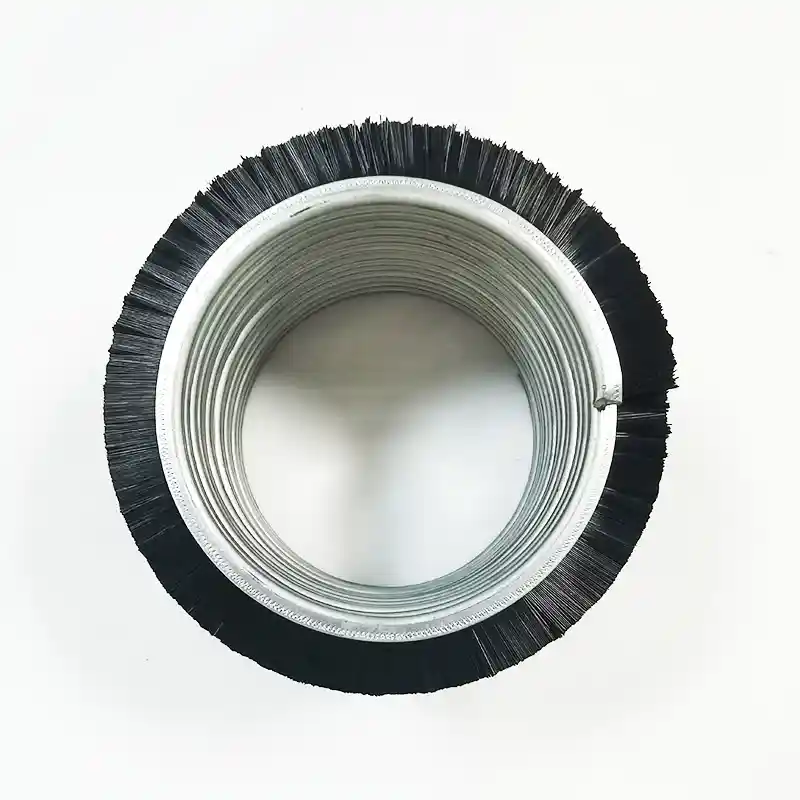

A pipe bore is often the last surface a maintenance team inspects, so scale, rust and residue can build until flow drops or pressure rises. When chemical flushing stops working, the direct mechanical option is usually a wire pipe brush sized to the bore and driven through the pipe. The goal is not simply to push the blockage out. It is to restore a clean metal surface while leaving the pipe wall dimensionally intact.
That balance depends on bristle material, filament diameter, brush outside diameter, stem stiffness and drive method. A poorly matched brush may load quickly, break bristles, or polish the deposit instead of removing it. The selection process below follows the same information a brush manufacturer needs to recommend a working configuration.
Why Hard Deposits Form Inside Pipes and Why Access Makes Removal Difficult
In water and process lines, mineral scale forms when dissolved salts precipitate as temperature or pressure changes. Rust develops where moisture and oxygen reach exposed steel, and residue from oils, sludges, powders or coatings remains when line flow drops or the product changes. Once a deposit layer covers the pipe wall, it creates a shielded area where under-deposit corrosion can continue even when the bulk fluid is not aggressive [1].
Removing those layers is not the same as cleaning an open surface. The brush must reach the full bore, follow bends if present, and maintain contact while debris is carried backwards or dissolved by flushing. That is why a wire pipe cleaning brush is usually built as a stem-mounted spiral fill, not as a wheel or cup brush. For stainless steel systems, the cleaning sequence must also avoid leaving free-iron contamination on the surface, which is one reason the brush fill material must be compatible with the pipe alloy [2].
What a Wire Pipe Cleaning Brush Removes and How It Works
At the working end, wire bristles are anchored to a central stem and arranged in a spiral or full-fill pattern. As the brush rotates or is pushed through the bore, each bristle tip scrapes the deposit layer. The bristle then flexes and rebounds, which helps the tip continue cutting instead of bedding into the deposit. A wire pipe cleaning brush removes rust, hard water scale, boiler scale, dried mud, carbon residue, old coating flakes and the soft under-layer that chemical flushing tends to leave behind.
The stem carries torque to the fill for power-driven brushes, or works as a pull/push handle for hand operation. Spiral construction also forms an open path for flushing water or air to move loosened debris out of the pipe, so the brush does not simply compact material at the far end.
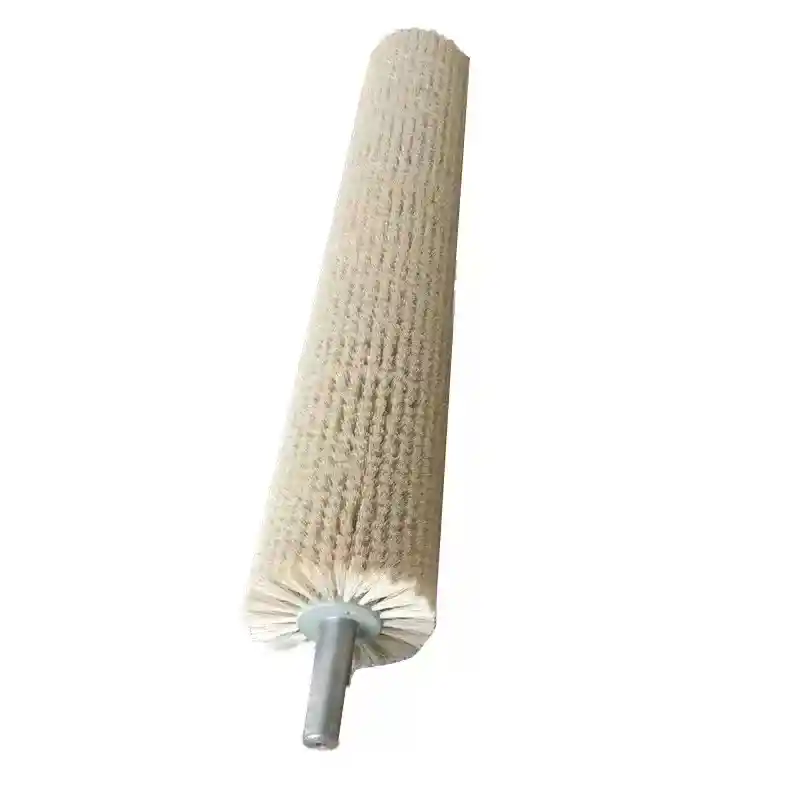
[Spiral brush geometry changes how bristles contact the pipe wall and how debris is moved.] <The differences between inward and outward spiral brush> covers how twist direction affects cleaning aggression and debris movement.
Bristle Material and Brush Configuration
Selection starts with the base pipe material and the deposit being removed.
| Bristle material | Deposit match | Pipe surface match |
|---|---|---|
| Carbon steel | Hard rust, mill scale, weld slag | Carbon steel; may require post-cleaning treatment |
| Stainless steel | Rust, scale, process residue | Stainless steel and alloys where free-iron pickup must be avoided [2] |
| Brass | Light scale, soft residue, non-sparking applications | Copper, brass, softer metals |
| Abrasive nylon or nylon | Light deposits, polishing after wire pass | Coated or sensitive bores where minimal scratching is required |
Fill density also matters. A dense fill carries more cutting tips and lasts longer in long production runs; an open spiral leaves more room for trapped debris to escape and is usually easier to flush through a small bore. When the deposit is primarily hard scale, a dedicated wire descaling spiral brush is often the better first pass.
[When the deposit is primarily hard mineral scale or heavy rust, a dedicated descaling brush is often the better first pass.] <Descaling spiral brush: an innovative tool and generalist in the field of industrial cleaning> covers design choices that improve inner-wall scale removal.
Sizing the Brush, Stem and Drive Method
Brush diameter is matched to the pipe’s inner diameter, not the nominal pipe size. The brush outside diameter should be equal to or slightly larger than the actual bore so that bristle tips remain loaded against the wall. If the brush is too large, it can buckle the stem or bind in the pipe. If it is too small, the tips skim over hard scale and leave a patchy clean surface. The same care applies to stem diameter: enough stiffness for the required length, small enough to flex around bends when access requires it.
Drive method affects configuration. A short hand brush can use a looped or straight stem. For a long set of tubes or a production line, a machine-mounted stem with a suitable connection is better. A drill-attached brush is convenient for single pipes and short runs, but speed should be controlled so the bristle tips do not overheat or break.
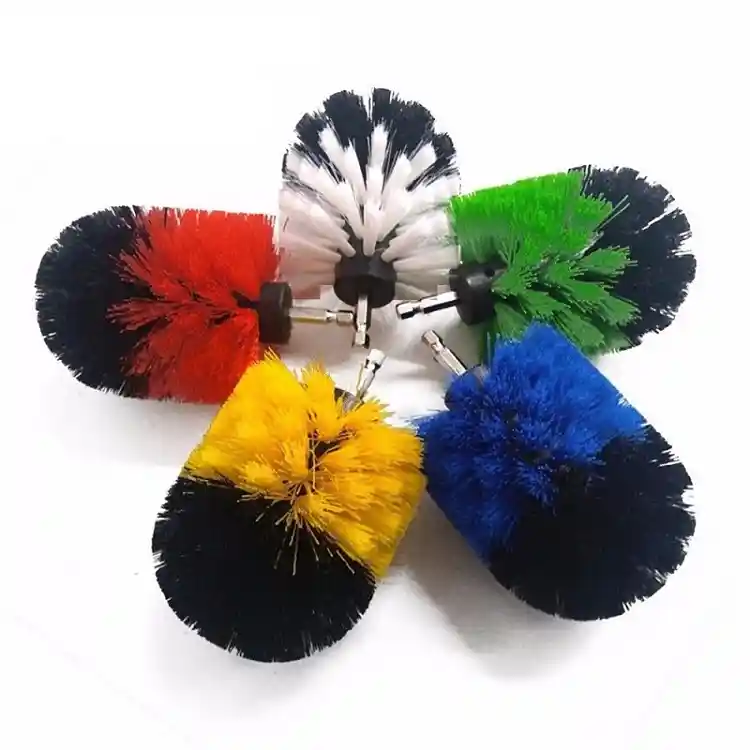
[If the pipe path is not straight, the bore changes, or the application requires an extended-reach cleaning head, a stainless wire spiral brush may be the more flexible option.] <Where stainless wire spiral brush can be used> covers material and geometry options for extended reach and stainless applications.
Operating Practices and Procurement Data
Even a correctly selected brush will wear quickly under poor operating conditions. Feed the brush at a steady rate and avoid dwelling in one spot, which flattens bristles and generates unnecessary heat. Use water or an approved cleaning medium to flush loosened material. Inspect the brush after each batch: look for flattened bristles, broken wire, stem damage, or wear that changes the outside diameter. Rotate the brush or reverse direction periodically to distribute wear and prevent the spiral from taking a set in one direction. For carbon steel pipe where the requirement is to reach bare metal before coating or lining, the finished surface should be evaluated against the visual and written requirements of SSPC-SP 11 [3].
Need a brush matched to your bore and deposit? Send [email protected] the pipe material, inner diameter, accessible length, deposit description and drive method. From those five points, a brush configuration and sample plan can be prepared without guessing.
For quoting, the following data set produces a clearer specification than a photo or general name.
| Required data | Why it matters |
|---|---|
| Pipe material | Prevents galvanic mismatch and contamination |
| Actual inner diameter | Controls brush outside diameter and fill trim length |
| Pipe/section length | Controls stem length, stiffness and connection |
| Deposit type and thickness | Controls bristle material and fill density |
| Drive method and available rpm | Controls stem connection and safe bristle speed |
| Quantity and sample needs | Controls trial run, MOQ and lead time |
Contact Huixi Brush for a Matched Pipe Brush
Huixi Brush supplies customized industrial brushes from a manufacturing base with 16 years of production experience. For wire pipe cleaning brushes, provide the pipe material, bore, length, deposit description, drive method and quantity. Contact the engineering team at [email protected] or +86 1580 0932 713 for a specification, sample plan or ODM/OEM quote.
Frequently Asked Questions
Can a wire pipe brush damage the inside of a pipe?
With a correctly matched brush, damage is normally limited to the deposit layer. The risk of scratching or removing base metal rises when the brush outside diameter is too large, the bristle wire is harder than the workpiece, or the brush is run at excessive speed. Stainless steel pipes should use a compatible stainless fill to avoid free-iron pickup [2].
Which wire material should I use for stainless steel pipes?
Use a stainless steel bristle fill. Carbon steel wire can leave iron particles that may promote surface corrosion or create a downstream contamination issue [2]. For softer stainless finishes, test abrasive nylon or a fine stainless fill before specifying the full production run.
What is the difference between a spiral pipe brush and a crimped wire wheel brush?
A spiral pipe brush is a stem-mounted tool made for reaching through bores. A crimped wire wheel brush is face- or circumference-driven and used on open surfaces, edges and weld seams. For pipe inner-wall work, the stem-mounted spiral design is usually the direct choice because it can follow the bore and flush debris along the stem path.
Can one wire pipe brush remove both rust and soft residue?
Yes, within reason. A medium stainless or carbon steel fill removes heavy rust and scale and also scrapes softer sludge. However, if the layer is thick or hard, a dedicated wire descaling spiral brush for the first pass followed by a lighter brush for finishing often produces a faster result and longer brush life.
References
[1] ISO 8501-1:2007, Preparation of steel substrates before application of paints and related products — Visual assessment of surface cleanliness — Part 1: Rust grades and preparation grades of uncoated steel substrates, ISO, Geneva, Switzerland.
[2] ASTM A380/A380M-17, Standard Practice for Cleaning, Descaling, and Passivation of Stainless Steel Parts, Equipment, and Systems, ASTM International, West Conshohocken, PA, 2017.
[3] SSPC-SP 11, Power Tool Cleaning to Bare Metal, SSPC: The Society for Protective Coatings, Pittsburgh, PA.
If you’re interested, check out these related articles:
how do you know about deburring brushes
brass brushes work perfectly for pipe cleaning
advantage of hx boiler tube brush
abrasive disc brush an efficient tool for many applications