
Hotel lobby scent programs usually fail at the diffuser, not the fragrance. A hotel lobby scent may smell perfect in a sample bottle and still disappear across a double-height arrival space, or arrive too strongly at the reception desk and too weakly at the seating area. At Scent-Share, we plan the delivery system and guest journey before finalizing fragrance notes. This guide covers the scent families worth testing, the equipment decisions that decide whether they perform, and the lobby conditions that change both.
Hotel Lobby Scent Delivery Sets the Arrival Impression
Most hotel teams begin with a fragrance sample and postpone the delivery question until after the scent is chosen. In our experience, that order creates two avoidable problems. A scent that performs beautifully in a small sample bottle can disappear in a large lobby, or it can sit heavily at the check-in counter while the seating area gets nothing. The lobby is the largest and most changeable space in a hotel. Doors open and close, staff circulate, and afternoon sun warms different zones at different times. A fragrance has to be delivered unevenly enough to reach every guest path, not just the entrance.
We look at ceiling height, door cycles, air handling, and guest dwell points before the fragrance brief is final. A commercial Bluetooth diffuser covering 300 m³ can handle a boutique lobby. A hotel tower unit covering 3,000 m³ fits a full-height arrival hall. The scent itself matters, but delivery decides whether guests remember it.
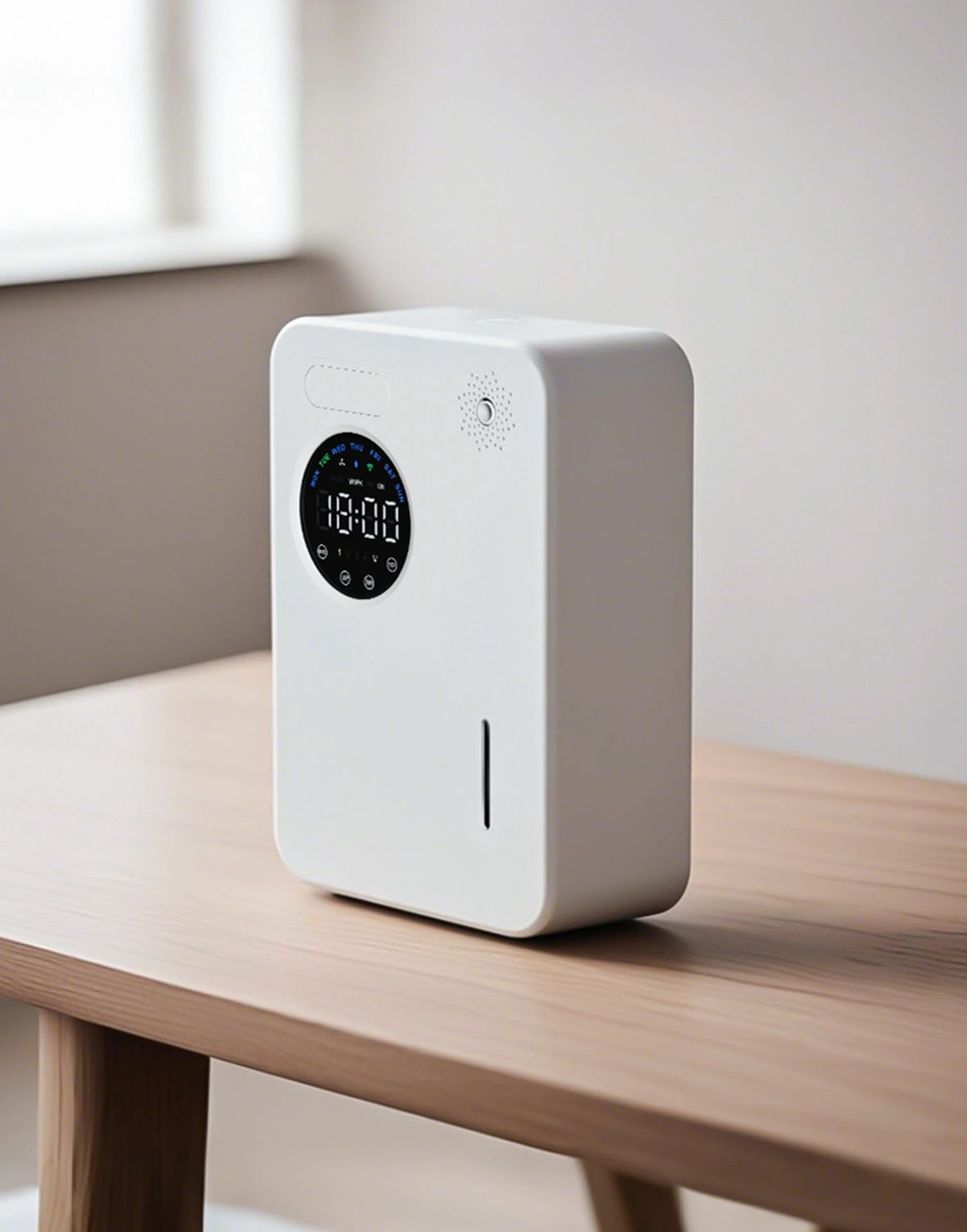
Scent Family Selection Determines Whether the Lobby Feels Calm or Charged
Not all hotel lobby scents translate well in a busy arrival hall. Sharp citrus reads clean at 9 a.m. but can feel thin at night. Dense amber reads warm in a cold climate but heavy in a tropical lobby. We classify scents by what they should do in the guest arrival sequence.
| Scent family | Lobby impression | Best used when |
| White tea | Clean, airy, controlled | Minimalist or business property |
| Citrus | Bright, energetic | Daytime check-in and breakfast adjacent |
| Woody amber | Warm, grounded, heavier | Luxury or cold-climate property |
| Aquatic | Fresh, neutral | High-humidity or pool-adjacent entries |
| Floral | Soft, welcoming | Boutique or resort lobby |
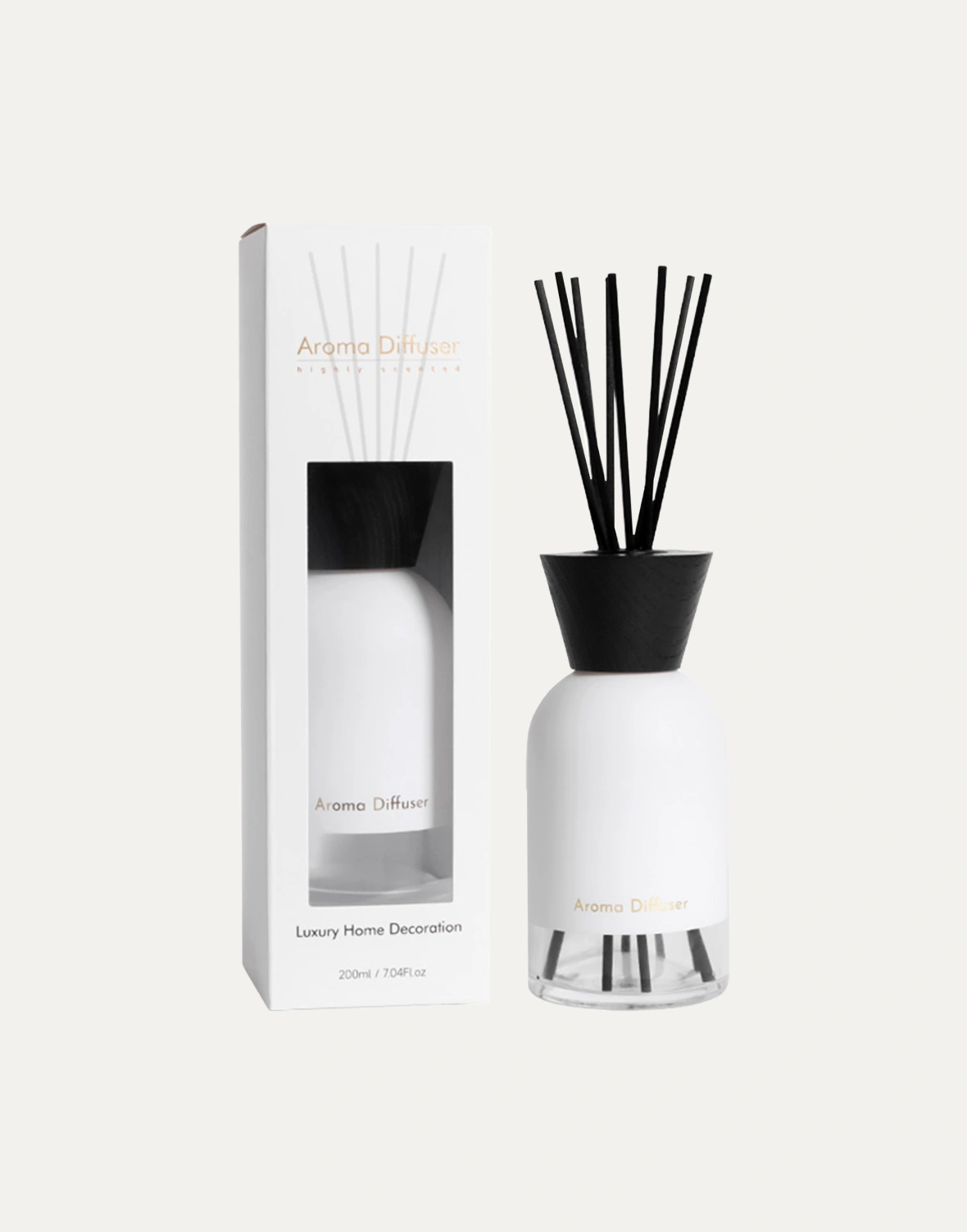
White tea and light citrus blends are the safest starting point for hotels that need broad appeal. Woody amber and spicy orientals work when the property wants a stronger memory hook. We recommend testing two scent families side by side in the actual lobby before committing, because fragrance oils change when they react with cleaning products, carpet, and outside air. A scent that feels elegant in a meeting room may not survive a lobby with restaurant exhaust and constant door activity.
Diffuser Placement and Ceiling Height Change How Far a Scent Travels
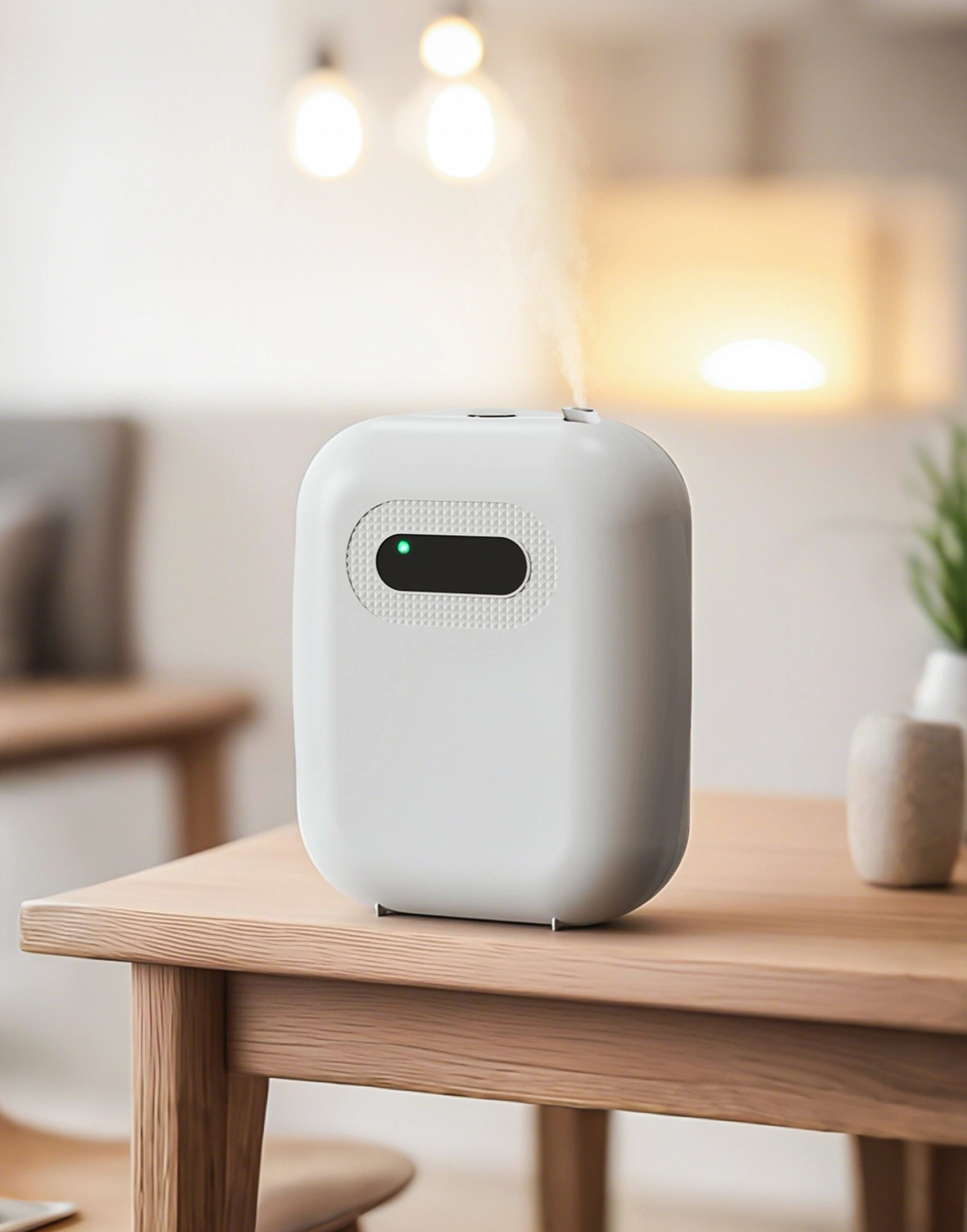
Lobby ceiling height changes everything. Scent drops through still air, so a diffuser placed near a high ceiling can leave the guest level underscented. A unit mounted too close to the check-in queue can create a concentrated cloud that staff stop noticing while guests find it overpowering. Placement should follow guest movement, not electrical convenience.
| Diffuser type | Coverage | Mounting | Typical lobby fit |
| Commercial scent oil diffuser | 300 m³ | Freestanding or wall | Boutique lobby |
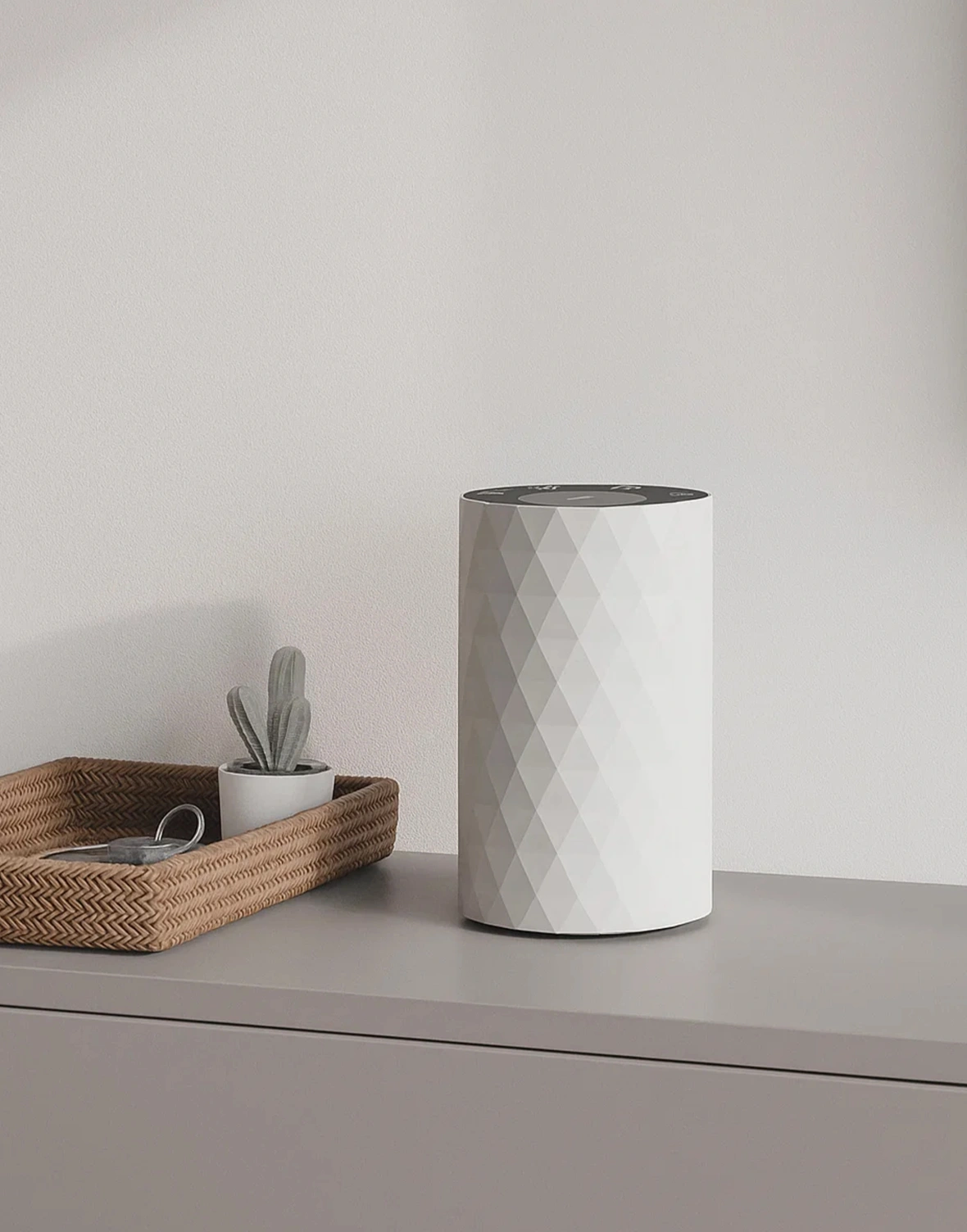
| Hotel scent oil diffuser tower | 3,000 m³ | Floor tower | Large arrival hall |
| Commercial HVAC scent system | 8,000 m³ | HVAC integrated | Central-air property |
| Ceiling track-mount diffuser | 500 m³ | Track or ceiling | Low-ceiling zones |
If your lobby has double-height ceilings or multiple seating zones, confirm coverage before finalizing your equipment list. Send your floor plan and ceiling height to [email protected] and we will verify which configuration fits. That one check prevents the most common failure we see.
Lobby Guest Flow Tells You Where to Place Scent Output
A hotel lobby scent should not be uniform from door to elevator. Guests moving through the doorway only need a light introduction. Guests waiting at check-in, concierge, or lobby seating are stationary, so those zones carry more weight. We map the guest path before assigning output levels.
In airport-adjacent properties, entry doors cycle constantly. The highest output often belongs near seating and elevator banks rather than the doorway, because that is where guests pause long enough to form a memory. In a resort lobby, the outdoor transition matters more, so the scent should bridge the change from outside air to conditioned interior. That difference is why a generic lobby plan underperforms.
Final Steps Turn a Scent Trial Into a Reliable Lobby Program
A scent that smells right in a one-hour trial can fade by week two or spike when housekeeping blocks a diffuser inlet. That is the gap between a fragrance sample and a dependable lobby program. We recommend a short site test with two scent families, a diffuser placement plan, and a service schedule before the opening rush.
Send your lobby floor plan, ceiling height, and opening date to [email protected]. We will confirm diffuser coverage, scent options, and installation requirements before you finalize the order. If the timeline is tight, call +86 185 6557 5758 or +86 134 2048 5758.
Hotel Teams Ask These Questions Before Committing to a Lobby Scent
How long does a hotel lobby scent take to fill the space?
A 300 m³ lobby reaches consistent scent coverage within 15 to 30 minutes with a properly sized commercial diffuser, but full sensory acceptance takes repeat exposure. The first minutes deliver the top notes, while the base notes settle over several hours. Coverage time also changes with ceiling height, HVAC airflow, and open doors. In high-cycling entry areas, we set the first activation earlier than the peak check-in period so that guests meet a stable scent rather than a burst.
Do strong lobby scents cause guest complaints?
Most complaints are not caused by the fragrance strength itself. They come from uneven delivery. A guest standing in a concentrated output point may find the same scent overwhelming while another zone remains barely scented. We schedule diffusion to avoid peaks and match strength to distance from seating. In sensitive areas, intensity stays lower near check-in queues and rises only in open circulation paths. A well-designed lobby scent should be perceived as background air, not a fragrance event.
Can we use the same scent in the lobby and guest rooms?
Only if the room diffuser output is set much lower and the fragrance has a simple drydown. Lobby scents carry top notes for arrival energy, while guest room scents need to repeat for hours without fatigue. Woody and white tea blends translate better than sharp citrus or heavy florals. We usually recommend a lobby signature plus a softer room companion from the same family. That keeps brand continuity without making the room feel occupied by the lobby.
What is the difference between HVAC and standalone diffusers for a lobby?
HVAC scent systems integrate with central air and cover up to 8,000 m³, which suits a hotel with closed or automated air handling. Standalone units cover 300 to 3,000 m³ and work better when the lobby has operable doors or variable airflow patterns. The real difference is control, not just coverage. If your property cannot adjust HVAC output per zone, a standalone network gives more flexible scheduling. Share your lobby layout and air handling details and we will confirm which configuration fits before ordering.
If you’re interested, check out these related articles:
