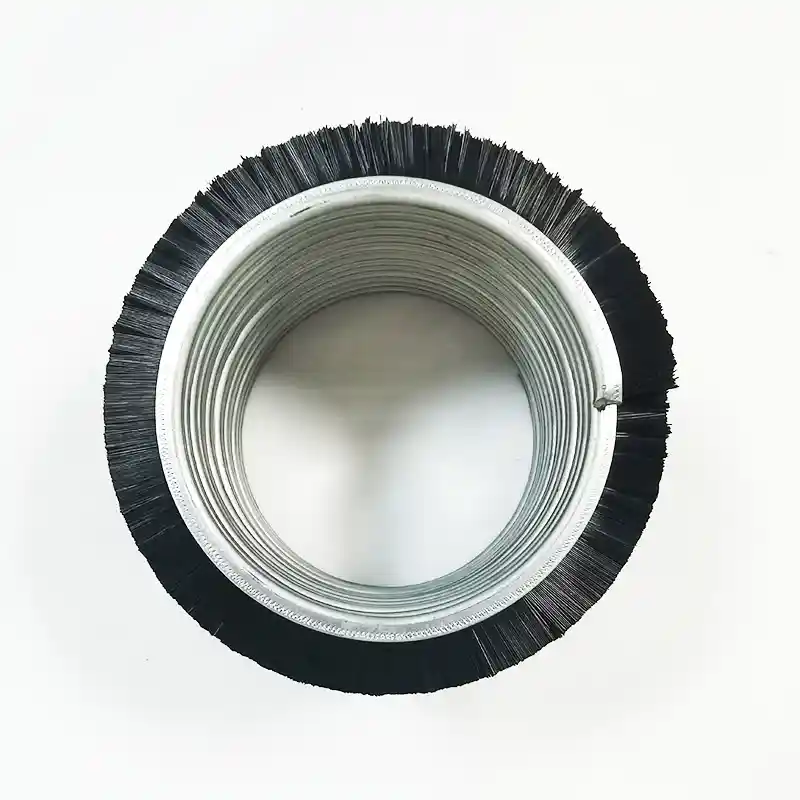

Rope cleaning brush selection starts with the rope, not the brush. I have watched maintenance teams order a standard rotary brush and then fight poor cleaning because the bristle fill could not reach the rope valleys. A properly specified rope cleaning brush matches rope diameter, strand contour, contamination type, and line speed before the first bristle is chosen. This article works through the rotary brush specifications that matter for dirt, mud, and contaminant removal, including full surround contact, bristle material, and mounting dimensions. The right call is to define those four variables first; the brush follows.
What Does a Rope Cleaning Brush Need to Do Before Specification?
Four operating conditions decide the brush before any catalog selection. Rope diameter across the widest crown sets the trim opening and free bristle length. Rope construction matters because a 6×19 rope has shallower valleys than a 6×36 rope. Contamination type changes everything: dry mud behaves differently from wet clay, salt, or compacted scale. Line speed or brush rotation speed then controls contact time. If the brush cannot reach the valley floors, it only polishes the crowns and leaves the contaminant trapped where corrosion starts.
Rope cleaning brushes are only as effective as the specification behind them. <rope cleaning brush for industrial use a key tool for maintaining safe production> covers how regular rope surface cleaning prevents mud and fine particles from working into the strand gaps and becoming an operating hazard.
How Does Spiral Brush Geometry Change Rope Cleaning Performance?
Spiral brush geometry sets the attack angle. A spiral brush wraps around the rope and sends bristles across the surface at an angle, which pushes loosened material along the rope rather than packing it into strand gaps. Inward spiral and outward spiral act differently. Inward spiral pulls debris toward the centerline and can hold it in the bristle mass longer. Outward spiral ejects debris to the sides and runs cleaner in wet mud, but it may clean slightly less aggressively at the valley floor. I specify outward spiral for sticky mud and inward spiral for dry scale that needs longer bristle dwell.
| Bristle pattern | Effect on rope cleaning | Best use |
|---|---|---|
| Inward spiral | Holds debris in bristle mass, longer dwell | Dry scale, compacted dirt |
| Outward spiral | Ejects debris quickly, cleaner in wet mud | Sticky mud, high moisture |
| Double spiral | Denser fill, more contact points | Larger rope diameters, heavy contaminant |
| Single spiral | Less aggressive, easier to clear | Light dust or frequent cleaning cycles |
Spiral orientation changes how bristles meet the rope surface. <the differences between inward and outward spiral brush> covers why the same bristle material feels more or less aggressive when the winding direction changes.
Which Bristle Material and Rotary Speed Fit Your Rope Line?
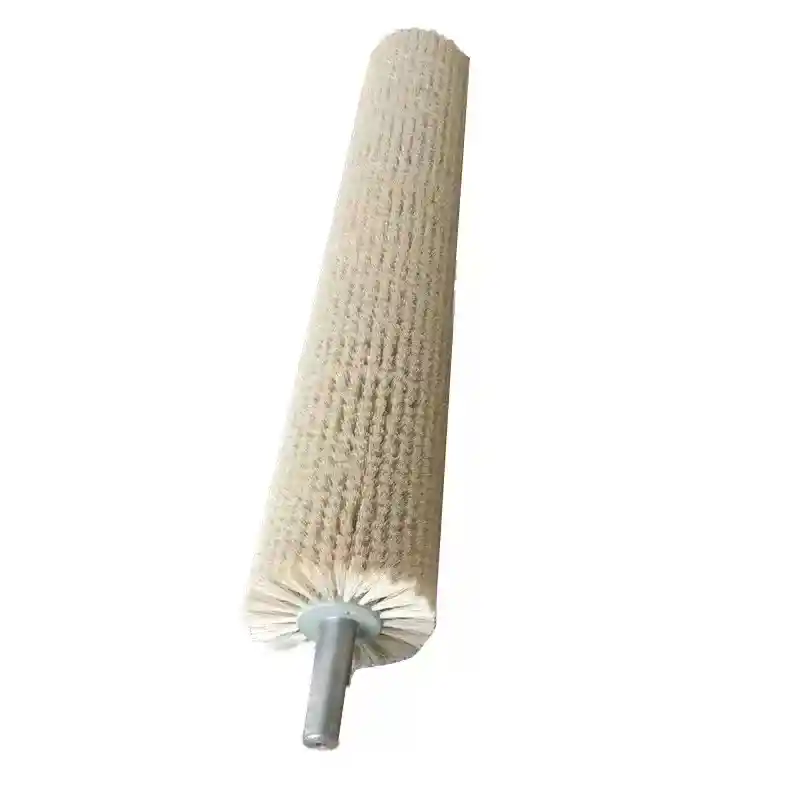
Bristle material and speed decide how much metal or polymer actually touches the rope. I start with stainless steel wire for steel wire rope carrying mud, rust, or hardened scale. Nylon or abrasive nylon fits synthetic rope and lighter dust because it will not tear fiber jackets. Brass wire works when the rope surface cannot tolerate scratching and the contaminant is soft.
Stainless steel wire is the default choice for many rope cleaning applications, but it is not the only one. <where stainless wire spiral brush can be used> covers how the same wire grade behaves in wet lines, high temperature areas, and food adjacent equipment.
Bristle material for the rope surface
For galvanized rope, I avoid hard carbon steel fill because it cuts the zinc layer. Stainless steel type 304 or 316 wire with a smaller diameter, around 0.15 mm to 0.25 mm, cleans without immediate coating loss. For bare steel rope, carbon steel wire can cut faster, but it rusts if the line is wet, so stainless may still be the better ownership choice.
Rotary speed and bore dimensions
Peripheral speed matters more than spindle rpm. For a 200 mm outside diameter brush, 900 to 1200 rpm is a practical starting point. For a 300 mm brush, 600 to 900 rpm works better. The bore must match the shaft with no reducer bushing when possible. A loose bushing throws the brush off center and creates uneven wear. Confirm keyway width, set screw position, and whether the brush rotates on a through shaft or stub shaft.
If your line runs galvanized rope or wet abrasive mud, it is worth confirming wire diameter and fill density before finalizing the BOM. Send the rope specification and line speed to [email protected].
What Procurement Mistakes Lead to Rope Cleaning Brush Failures?
The most frequent mistake is ordering by outside diameter and ignoring bore fit. I have seen a 28 mm wire rope destroy a brush set in under 200 operating hours because the hub was bushed instead of re-machined. The brush ran off center, the bristles cut a shallow wear path on one side, and the rope carried mud through the gaps the uneven fill left open.
Another failure mode is specifying dense fill without a wear allowance. Dense fill cleans well for the first shift, then the bristles bend and mat when the tips lose their edge. A slightly lower fill density with a harder wire often lasts longer on abrasive rope. The third issue is treating a rope cleaning brush as a stock commodity. The right brush matches the lay length, crown profile, and contaminant hardness; a generic brush only matches the outside diameter.
What Should You Send Before We Specify a Rope Cleaning Brush?
If you are replacing brushes too often or the rope still carries mud after cleaning, the next step is a fit check rather than another stock order. Rope diameter and construction set the trim profile, bristle length, and fill density. Contamination type sets the wire grade and spiral direction. Line speed sets the brush diameter and bore hardware.
Send the rope diameter, construction, contamination type, line speed, and current brush outer diameter to [email protected] or call +86 1580 0932 713. We will confirm bristle material, spiral direction, bore size, and a realistic service interval against your operating conditions.
What Questions Do Buyers Ask Before Ordering a Rope Cleaning Brush?
How do I measure rope diameter for a rope cleaning brush?
Measure across the widest point of the rope crown, not the valley between strands. The brush trim diameter and free bristle length calculate from that crown dimension, so an undersized reading produces a brush that only wipes the outer crowns and misses the contaminant packed between strands. For a 28 mm rope, do not round to 25 mm to match a stock bore. Specify the true crown diameter and let the brush builder set the inner opening, spiral angle, and fill density. If the rope is worn flat or oval, measure at several points and use the largest repeatable figure.
Will a stainless steel wire brush damage galvanized rope?
A stainless steel wire brush will remove galvanizing if the wire is too stiff or the fill density is too high, but that is a specification problem, not a material mismatch. Hard carbon steel cuts faster and is the worse choice on zinc coated rope. Stainless steel type 304 or 316 wire in a smaller diameter, roughly 0.15 mm to 0.25 mm, can clean surface mud without exposing the base steel in normal service. The real risk comes from heavy fill and high peripheral speed, which turn the brush tips into scrapers. I would rather reduce wire diameter and speed than switch to a polymer brush that cannot clear mineral scale.
What if my rope line runs wet mud and the brush clogs?
It depends on whether the mud is wet and sticky or dry and compacted. Wet sticky mud loads a dense spiral brush quickly, so an outward spiral with wider bristle spacing clears itself and keeps the line running. Dry compacted mud calls for more contact points, so a slightly denser inward spiral can break the crust without packing the debris into strand gaps. In both cases the brush needs enough free bristle length to flex and release. If the mud dries hard between shifts, a stainless wire fill will outlast nylon and resist taking a permanent set.
How many brushes do I need for continuous rope cleaning?
In continuous rope cleaning applications I have reviewed, one brush station is rarely enough when the rope carries heavy mud or runs at high speed. The first station breaks and loosens the contaminant. The second station removes what the first station lifted. A third station can finish the valleys and leave the rope dry enough for inspection. The exact count depends on speed, rope diameter, and how dry the contaminant is before the brush reaches it. If your line has a single station and still leaves mud streaks, share your rope specification, line speed, and current brush layout and we will confirm the fill and station count before you order.
If you’re interested, check out these related articles:
the differences between knotted wire wheel brush and crimped wire wheel brush
advantage of hx cylindrical nylon brushes