
Japanese florist chains rarely start their Yunnan sourcing journey by comparing prices. They start by comparing rejection rates, vase life after air freight, and whether a grower can hold a color tone across a seven-day delivery window. In fifteen years of working with international buyers at Kunming trade events, I have watched sourcing flowers from Yunnan shift from opportunistic buying to structured supply programs. This article explains how a Japanese florist chain moves from first visit to repeat orders, what decisions matter at each stage, and where IFEX Kunming fits.
How Do Japanese Florist Chains Start Sourcing from Yunnan?
Most Japanese chains begin with a small team and a narrow product list. They do not fly to Kunming to buy everything. They arrive with the flower categories their stores already sell, usually roses, spray carnations, and chrysanthemums, and they spend more time on grade consistency than on novelty. In our work with buyers at IFEX Kunming, the successful first trips are the ones that leave with three or four verified suppliers rather than thirty business cards. Starting small lets a chain test a supplier’s packing discipline and communication speed before committing to larger volumes.
Which flower categories work best for Japan-bound programs?
Roses, carnations, and chrysanthemums are the easiest first categories because Japan-bound grading rules are well established. Peonies and ranunculus carry higher value but require tighter temperature control. We usually tell chains to prove their cold chain on standard categories first, then add fragile varieties in the second season.
Why do chains prefer Yunnan over other Asian origins?
Yunnan’s altitude and temperature spread let growers produce consistent stem length and color over long seasons. Kunming also has the consolidation infrastructure that shortens the trip from farm to airport. When a Japanese chain can combine multiple farms into one truckload and one export batch, the cost and freshness advantage compounds.
What Should a First Sourcing Trip to Kunming Confirm?
A first trip should confirm three things: actual growing capacity, post-harvest handling discipline, and export documentation readiness. The mistake we see most often is too much time on flower color and too little time on phytosanitary process. You can fix a shade problem with a new supplier list, but you cannot fix a supplier that cannot produce a clean Japan phytosanitary certificate on schedule. Ask to see the cold room, the packing line temperature logs, and the last three phytosanitary certificate copies. If a grower hesitates on any of these, treat the low price as irrelevant.
What records should you request on site?
Request pesticide residue test results for the last three export lots, the pre-cooling log with temperatures and timestamps, sample phytosanitary certificates for Japan, and the packing specification sheet. These records are not optional paperwork. They show whether the supplier runs a process or only a sales pitch.
How Does Supplier Verification Change After the First Container?
After the first container arrives in Japan, verification shifts from documents to performance. We encourage buyers to track actual arrival temperature, breakage rate, vase life in store, and how quickly the supplier answers a claim. One Japanese chain we worked with created a scorecard before the order: 40 percent flower quality, 20 percent documentation accuracy, 40 percent cold chain performance. Only suppliers above a set score made the reorder list. This kind of structured review stops a friendly salesperson from winning business that the packing line should have lost.
If your program involves mixed flower categories with different temperature requirements, confirm pre-cooling capacity and ethylene management before finalizing your order specification. Reach out at [email protected].
Which Cold Chain Decisions Determine Vase Life in Japan?
Temperature consistency matters more than speed. Flowers cut in Yunnan should enter pre-cooling within 30 minutes of harvest, then move through a cold chain that stays between 2 and 4 degrees Celsius until they reach the airport. A single warm transfer at a consolidation warehouse can cut three days off vase life in a Tokyo store.
| Decision factor | Air freight from Kunming | Sea freight from Kunming |
|---|---|---|
| Transit time to Japan | 1 to 3 days | 7 to 14 days |
| Vase life impact | Minimal if pre-cooled correctly | Higher risk without airtight cold chain |
| Cost per stem | Higher | Lower |
| Best for | Roses, peonies, event orders | Carnations, chrysanthemums, planned volume |
| Main risk | Temperature spikes during transfers | Longer ethylene exposure and moisture loss |
Air freight is the default for shorter vase life flowers. Sea freight works when the exporter uses controlled atmosphere containers and the flower types can tolerate longer transit. The decision should follow the flower category, not the freight quote.
How Do You Turn IFEX Kunming into a Repeatable Buying Calendar?
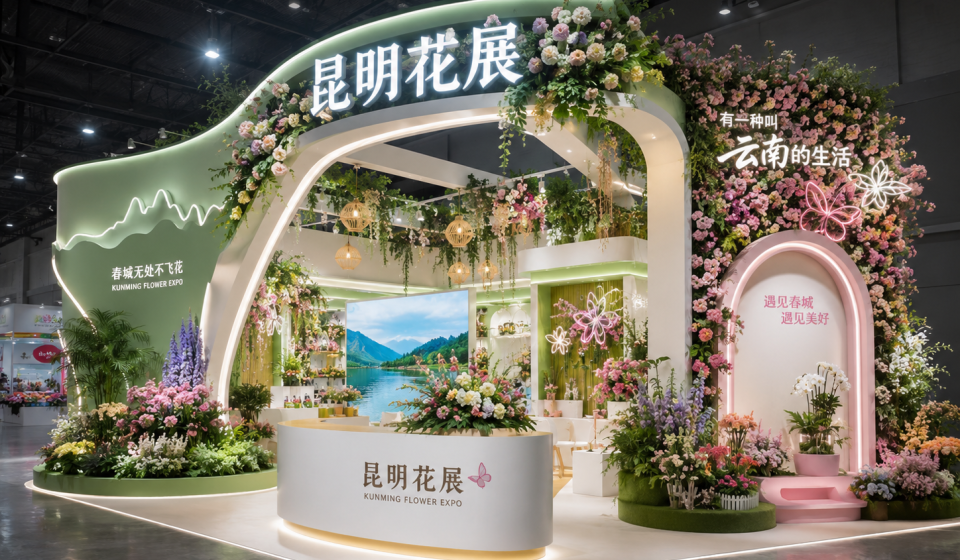
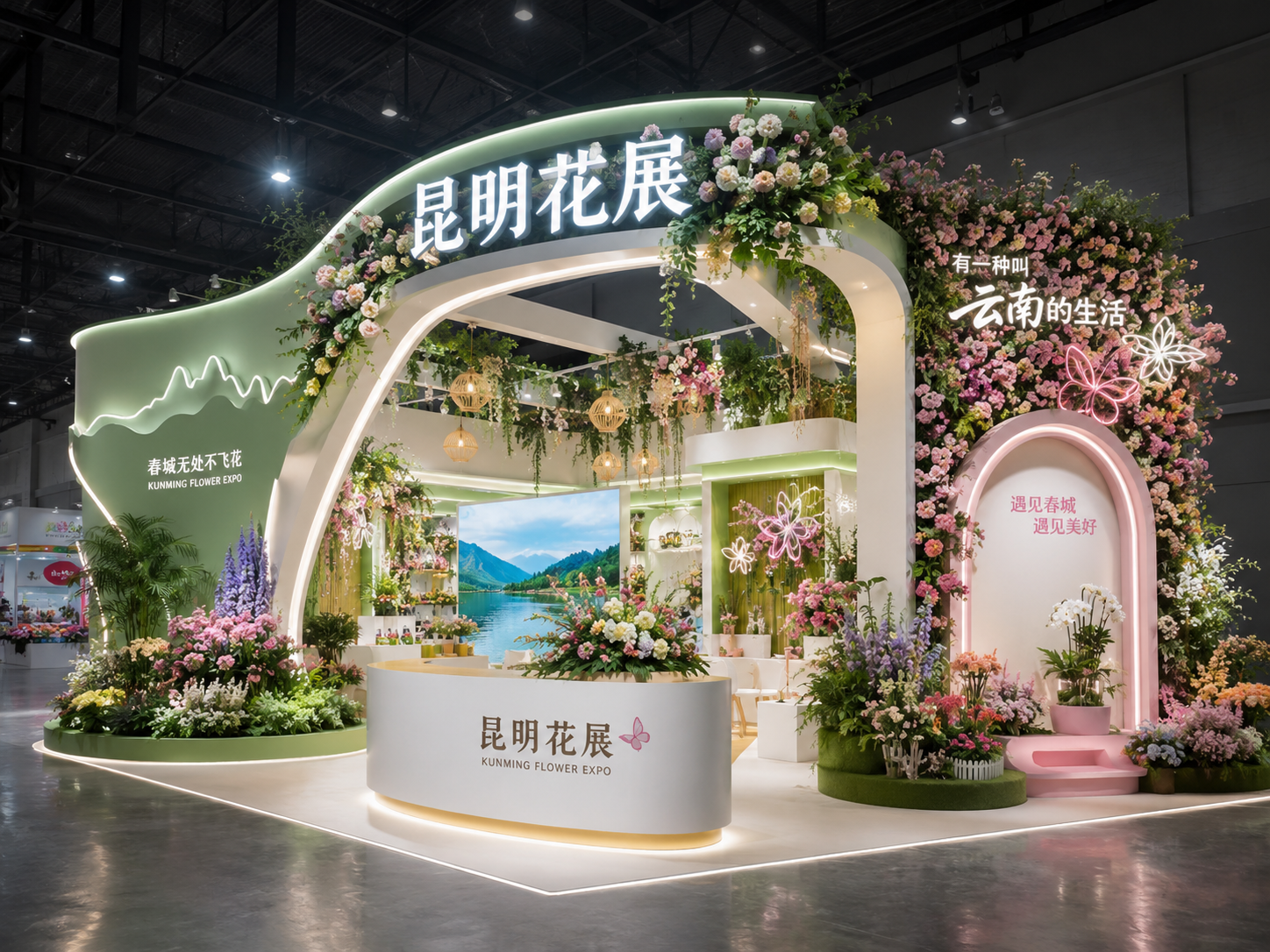
Sourcing flowers from Yunnan is not a one-time transaction. Buyers who treat it as a calendar of supplier meetings, sample reviews, and contract renewals get more stable supply. The Kunming show is where that calendar becomes concrete: 50,000 square meters of growers and exporters, over 30,000 distributors, wholesalers, traders, and floral retailers, and face to face time with the people who control your cold chain. To plan your next sourcing trip or confirm which Yunnan growers match your Japan-bound specifications, send your flower categories and volume to [email protected] or call +86 10 5933 9349.
What Do Japanese Buyers Ask About Yunnan Flower Sourcing?
How long does a first order usually take from Kunming to Japan?
A first order typically takes four to six weeks from confirmation to arrival. That includes harvest, grading, phytosanitary inspection, and air freight. If the exporter already has Japan-bound logistics in place, the timeline can compress to three weeks. New buyers should add buffer for document corrections and Japanese import inspection. This is why we ask chains to confirm the exporter’s last three Japan shipment dates before placing a trial order.
Can a small florist chain order directly from Yunnan growers?
Many small chains assume direct grower orders are impossible, but that is not accurate. The real constraint is language and export paperwork, not order size. A small chain can work directly with a Yunnan exporter that handles Japan documentation, or it can buy through a consolidated program at IFEX Kunming that groups several stores into one shipment. Either path works if the chain defines its grade spec in writing first.
What minimum order quantity do Yunnan exporters expect from Japanese buyers?
It depends on the flower category and whether the exporter already runs Japan-specific packing. For roses, a mixed container may start at a few thousand stems per variety. For chrysanthemums, exporters often accept smaller trial lots because grading is standardized. Confirm the exact MOQ before you leave the show, and get it written in the quotation.
How do you handle phytosanitary certificates for Japan?
In programs we have supported, the phytosanitary process starts before harvest, not after. The exporter submits the shipment for inspection with a complete field and packing list, then the certificate travels with the air waybill. Missing or late certificates cause more Japan-side rejections than flower quality problems. Share your target varieties and shipment timing, and we can confirm which suppliers at IFEX Kunming meet Japan’s phytosanitary documentation requirements.