
Corn ethanol supply chain planning fails when owners treat the fuel plant as an isolated conversion unit. From farm gate to fuel pump, the chain links corn receiving, storage, milling, fermentation, distillation, dehydration, co-product recovery, and outbound fuel distribution. Our engineering work shows that the most resilient projects are planned as one system, where DDGS, carbon dioxide, and biogas return value instead of becoming waste streams. This article maps the full route and the decisions that determine whether a corn ethanol plant meets fuel specifications, stays within energy budgets, and holds up over time.
How Does the Corn Ethanol Supply Chain Work from Farm Gate to Fuel Pump?
Corn enters the chain at the farm gate. The first control point is receiving, where moisture, test weight, foreign material, and mycotoxin load determine storage strategy and downstream yield. Corn above roughly 15 percent moisture may need drying before long-term storage. Wet corn can ferment prematurely or bridge in silos. Our team treats corn storage as the first quality gate rather than a simple buffer. Aeration, temperature monitoring, and first-in first-out rotation protect starch availability for fermentation.
| Supply chain stage | Primary control point | Common failure mode |
|---|---|---|
| Farm gate receiving | Moisture, test weight, mycotoxin | Out-of-spec grain accepted |
| Grain storage | Aeration, temperature, rotation | Spoilage or bridging |
| Milling | Particle size, grind consistency | Poor starch release |
| Fermentation | Yeast health, pH, temperature | Yield loss or stuck batch |
| Dehydration | Molecular sieve pressure, feed purity | Off-spec water content |
From storage, corn moves into the process block. Truck, rail, or barge decisions follow distance, volume, and port access. AGRIFAM port terminal warehousing systems move grain at up to 2,000 t/h with low breakage and residue-free operation. A fuel ethanol plant near a waterway needs that receiving headroom; an inland plant needs the same peak delivery logic applied to truck and rail flow. When unloading capacity cannot absorb harvest peaks, trucks queue and corn quality drifts while the plant pays for idle time.
What Process Steps Convert Corn into Fuel Ethanol?
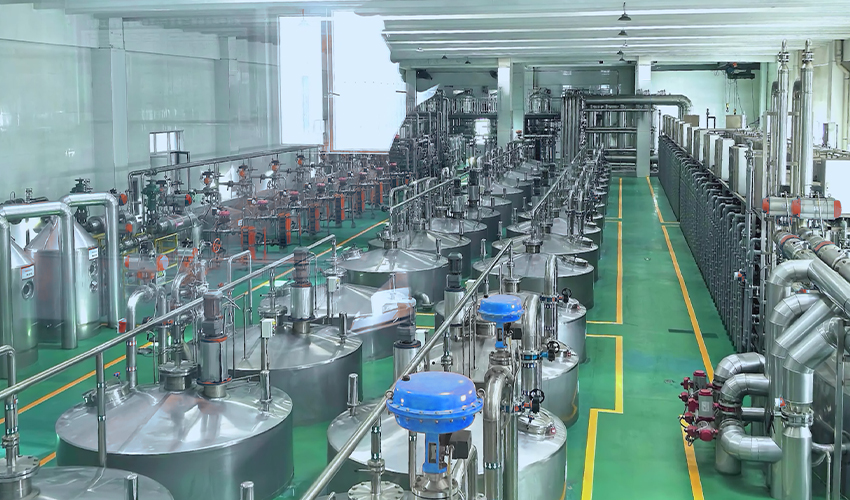
Corn becomes fuel ethanol through a sequence of biological and thermal separations. Milling breaks the kernel to expose starch. Liquefaction uses heat and enzymes to break starch chains, and saccharification converts dextrins to fermentable sugars. Fermentation then uses yeast to produce beer at low ethanol concentration. Distillation concentrates the ethanol, and molecular sieve dehydration removes the remaining water to reach anhydrous fuel grade.
Each stage has a specific failure signature. A grind that is too coarse leaves starch trapped in germ and fiber. A liquefaction temperature drop thickens the mash and slows enzyme activity. In fermentation, pH drift or bacterial contamination can reduce yield before operators see it in daily production logs. That is why our process engineering team specifies continuous monitoring for high-volume fuel ethanol lines rather than end-of-shift sampling.
AGRIFAM’s alcohol EPC scope covers fermentation, distillation, and dehydration with energy cascade utilization, biogas recovery, and wastewater treatment built into the same layout. This keeps co-product and waste heat systems from becoming expensive retrofits after commissioning.
Which Co-Products Strengthen Corn Ethanol Supply Chain Economics?
Ethanol alone rarely makes a corn ethanol plant durable. Three co-product streams usually decide whether a project is marginal or not. DDGS carries protein, fiber, and oil into animal feed markets. Its value depends on drying uniformity, color, moisture, and residual oil. Inconsistent drying creates caramelized particles that feed buyers discount. Carbon dioxide recovery from fermentation can serve food and beverage customers, but only if sulfur compounds and volatile organics are removed to the right purity. Biogas from stillage and wastewater treatment can fire boilers or generate electricity, reducing external energy demand.

| Co-product | Source | Commercial route | Key specification |
|---|---|---|---|
| DDGS | Whole stillage | Livestock feed | Protein and moisture |
| Carbon dioxide | Fermentation gas | Food or industrial | Purity and odor |
| Biogas | Anaerobic digestion | Boiler fuel | Methane and hydrogen sulfide |
| Stillage water | Process return | Recycle or treatment | Solids and pH |
These streams are not add-ons. They share heat, water, and utilities with the ethanol process. A plant that recovers CO2 without waste heat for the reboilers will consume more steam than the CO2 contract justifies. A biogas system without sulfur removal will corrode boiler tubes. Our team evaluates co-product economics together with the ethanol mass balance before fixing capacity.
If your program involves co-product offtake agreements or high-moisture corn, confirm fermentation and dehydration capacity before locking equipment specifications; reach out at [email protected].
How Do Storage and Logistics Decisions Shape Ethanol Supply Reliability?
Fuel ethanol logistics are stricter than corn logistics. Anhydrous ethanol absorbs water, so storage tanks need floating roofs or nitrogen blanketing, and loading systems must exclude moisture. Denaturant blending before outbound shipment changes the product class and tax treatment. Rail and tanker loading require vapor recovery and grounding. In our experience, the biggest reliability risk is not the tank itself but the transfer line. A shared line used for both food-grade and fuel-grade product without proper flushing can contaminate an entire batch.
On the front end, corn receiving is the pinch point. If unloading capacity is smaller than peak harvest deliveries, trucks queue and the plant pays demurrage. If receiving capacity is oversized, capital sits idle for most of the year. We plan receiving at the harvest peak plus a buffer, then use storage to smooth the rest. For coastal or river terminals, AGRIFAM’s port terminal systems carry grain at up to 2,000 t/h with dust-free green storage. Inland plants need the same logic scaled to truck and rail flow.
How Should Buyers Evaluate a Corn Ethanol Supply Chain Partner?
Most ethanol plant failures are process integration failures, not equipment failures. The distillation column, fermenters, and molecular sieve units may each be correctly sized but poorly matched. Buyers should evaluate whether the engineering partner owns the full mass and energy balance across the chain, not just individual equipment packages.
Four signals separate a supply chain integrator from an equipment vendor. The first is a full mass and energy balance across cooking, distillation, dehydration, and stillage. The second is co-product handling specified from the start, including DDGS drying and CO2 or biogas offtake grades. The third is a water balance that accounts for makeup water, recycle, and wastewater treatment. The fourth is a digital control architecture that links corn receiving, fermentation, distillation, and outbound loadout into one operating view.
AGRIFAM’s alcohol EPC scope covers fermentation, distillation, dehydration, energy cascade utilization, biogas recovery, and wastewater treatment within a circular production system. Buyers who need fuel ethanol plus industrial or edible alcohol can avoid duplicated storage and utility systems by planning that flexibility early. Beyond fuel ethanol, the same corn processing platform can extend into starch, modified starch, starch sugar, and other grain products.
Fuel ethanol projects stall when the front-end grain system, process island, and outbound logistics are specified separately. We see this in retrofit projects where a capable fermenter is starved by undersized receiving and a dehydration unit is throttled by a weak steam balance. The solution is a single integrated scope from farm gate to fuel pump. If you are planning or expanding a corn ethanol supply chain, send your target capacity, feedstock moisture range, and co-product requirements to [email protected] or call 010-8591 2286. We will review the mass balance and confirm which process configuration fits the site.
What Do Buyers Ask About Corn Ethanol Supply Chain Projects?
How long does a corn ethanol supply chain project take from design to commissioning?
A single-site corn ethanol project typically takes 18 to 36 months from design to commissioning, depending on permits, site preparation, and equipment lead times. The front-end grain system and utilities often set the critical path because they must be installed before the process island can be tested. Buyers who compress the schedule usually do so by overlapping detailed engineering with long-lead equipment procurement, not by shortening commissioning. Our planning approach aligns receipt of steel silos, fermenters, and molecular sieve units with construction milestones so startup testing begins as soon as mechanical completion closes.
Which part of the chain causes the most project delays?
Many owners assume the distillation or dehydration package causes delays. Grain receiving and utilities actually create more startup risk because they sit upstream of the process island. If the receiving pit cannot handle harvest peak, wet corn backs up and fermentation starts late. If steam and condensate systems are not balanced, the dehydration unit cannot run at design. The delays that matter most are usually the ones that block commissioning of upstream systems before the core process is ready.
Can an ethanol plant start without co-product recovery?
It depends on which co-product. A plant can start selling ethanol without food-grade CO2 or biogas upgrading because those systems can be added later. DDGS handling is difficult to avoid because whole stillage must pass through centrifuges and dryers before the plant reaches steady state. A plant that defers CO2 or biogas should still reserve plot space, piping connections, and steam capacity. Adding them later without that reservation usually costs more than installing the tie-ins during the first build.
What fuel ethanol specification should buyers confirm before shipment?
In projects our team has reviewed, the most common rejection reason is off-spec water content in anhydrous ethanol. Buyers should confirm the applicable standard first, typically ASTM D4806 in the United States or EN 15376 in Europe, then fix the ethanol purity, water, methanol, and denaturant limits with the supplier. The test method matters as much as the number because Karl Fischer titration and gas chromatography do not always read the same sample the same way. Send your target specification and intended blend ratio to [email protected] and we will confirm the dehydration and testing configuration.
If you’re interested, check out these related articles:
Driving Global Food Conservation Through Technological Innovation