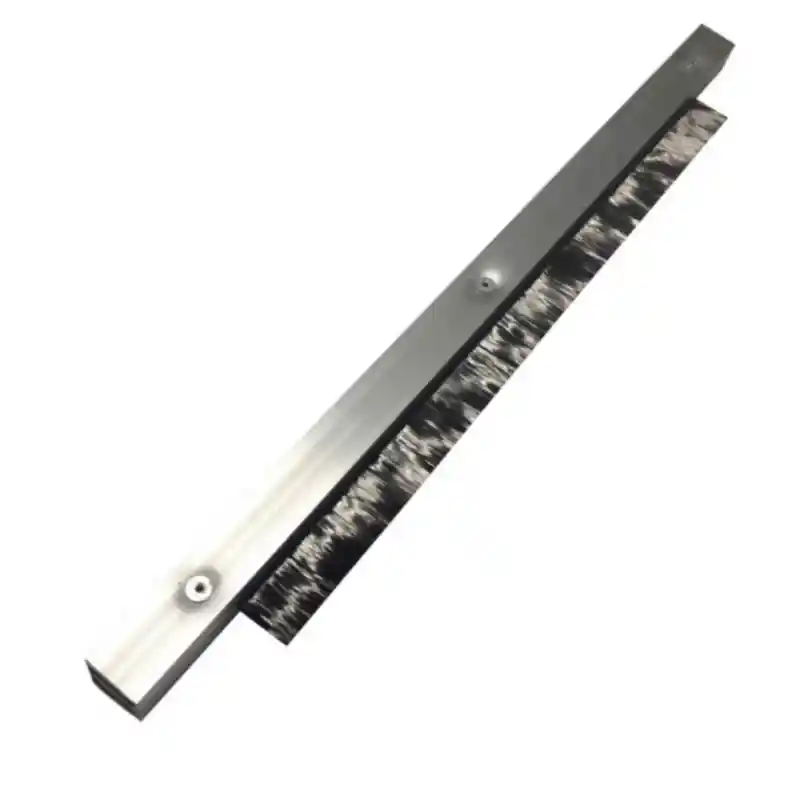

Industrial strip brushes solve three production problems at once: they close irregular gaps, sweep away process debris, and remove light burrs without changing part geometry. In my specification work, most failures come from buyers choosing a standard profile that cannot follow the machine contour or hold the right filament density for the job. This article focuses on the practical selections that separate a strip brush that performs for years from one that creates rework. It covers backing styles, bristle materials, trim length, and the questions to confirm before quoting.
Where Do Industrial Strip Brushes Work in Production Equipment?
Strip brushes become a production tool when a gap must be controlled without building a rigid guard. The backing flexes, the bristles recover after repeated deflection, and the brush can be cut to a specific slot width. In past projects, the same profile family has served as a dust seal on a belt conveyor, a light shield on an inspection station, and a deburring element on a part transfer rail. The common thread is that the brush is doing mechanical work while mounted in a profile channel, so the specification starts with the channel and the working path rather than with the bristle type alone.
The biggest mistake I see is treating a strip brush as a commodity length. A sealing brush has to hold against a moving panel. A cleaning brush has to sweep debris without flipping large particles back into the process. A deburring brush has to remove a raised edge while leaving the machined surface unchanged. Each requirement changes the backing, the filament material, and the exposure length.
Which Strip Brush Profiles Fit Irregular Sealing Gaps?
Profile choice matters more than overall brush length. A rigid straight profile cannot follow a curved door track, and a single-row brush may leave visible gaps when the panel face is uneven. I usually shortlist the backing form first, then adjust bristle density and trim length.
| Profile Form | Best Fit | Mounting Detail |
|---|---|---|
| Single row straight | Flat gaps, wiper strips | Aluminum, steel, or plastic channel |
| Double row | Dust blocking at higher differential | Same channel with two rows |
| Flexible strip | Curved slots, irregular edges | Bendable narrow backing |
| Formed strip | Automation guarding, stable position | Molded or integrated clip |
| Side mount | Low clearance edge sealing | Bracket or clip from side |
| Metal backed | High temperature, abrasive contact | Steel strip carrier |
If low sparking and static dissipation are part of the job, a brass wire strip construction is often the better starting point. <what you know about brass wire brush strip> covers how brass strip brushes hold up in wiping and anti-static service.
The backing profile also sets the bend direction. A formed strip brush often mounts from the top of a guard, while a side mount strip brush works where vertical clearance is tight. When the brush must follow a radius, a flexible strip profile avoids kinking at the outer edge.
What Bristle Materials Handle Cleaning and Deburring?
Bristle material controls what the brush does to the part. For sealing, polypropylene is the default because it recovers well and resists moisture. Nylon offers better wear at higher temperatures and can be crimped or straightened. In cleaning applications where debris is oily and sticky, abrasive nylon can carry fine cutting action without switching to a wire brush.
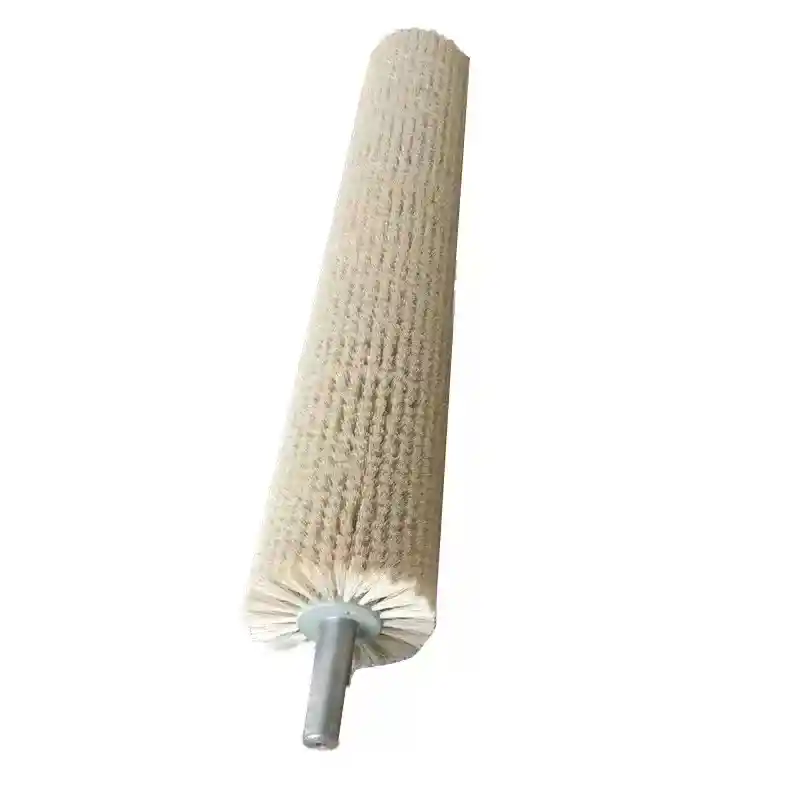
Deburring pushes the material conversation in a different direction. A ductile aluminum burr often responds to crimped brass or steel wire, while a hard steel edge left by milling may need abrasive nylon or a finer steel filament to avoid smearing the workpiece. The filament diameter matters as much as the material. I have changed a deburring result from torn edges to a clean break by moving from 0.2 mm to 0.3 mm wire and reducing trim length.
Temperature and chemical exposure narrow the list quickly. Polypropylene is not the right choice near a heat source. Stainless steel wire handles high temperatures and moisture, but it may mark a soft workpiece. I usually ask whether the brush touches food contact surfaces, solvent, hot air, or cutting fluid before recommending a material.
Deburring with strip brushes depends on wire type, crimp, and trim length rather than on brush length alone. <how do you know about deburring brushes> covers why long trim lowers contact pressure and changes the edge break.
What Should Buyers Specify Before Ordering Industrial Strip Brushes?
Before sending an inquiry, I ask for the following values, because they change price and lead time more than the brush count does.
- Channel width and depth, or a drawing of the holder
- Bristle material and diameter, including whether the process touches food, solvent, or heat
- Trim length measured from the backing face to the bristle tip
- Bristle density, either as rows per unit length or as a target fill
- Mounting style and bend direction if the brush follows a radius
- The edge condition or gap width the brush must maintain or remove
A specification point buyers often miss is the bend radius when the strip brush mounts on a curved track. If your program involves a continuous arc or a moving carriage with repeated flexing, confirm the minimum bend radius and filament recovery before finalizing the Bill of Material. Send your drawing and current strip brush dimensions to [email protected].
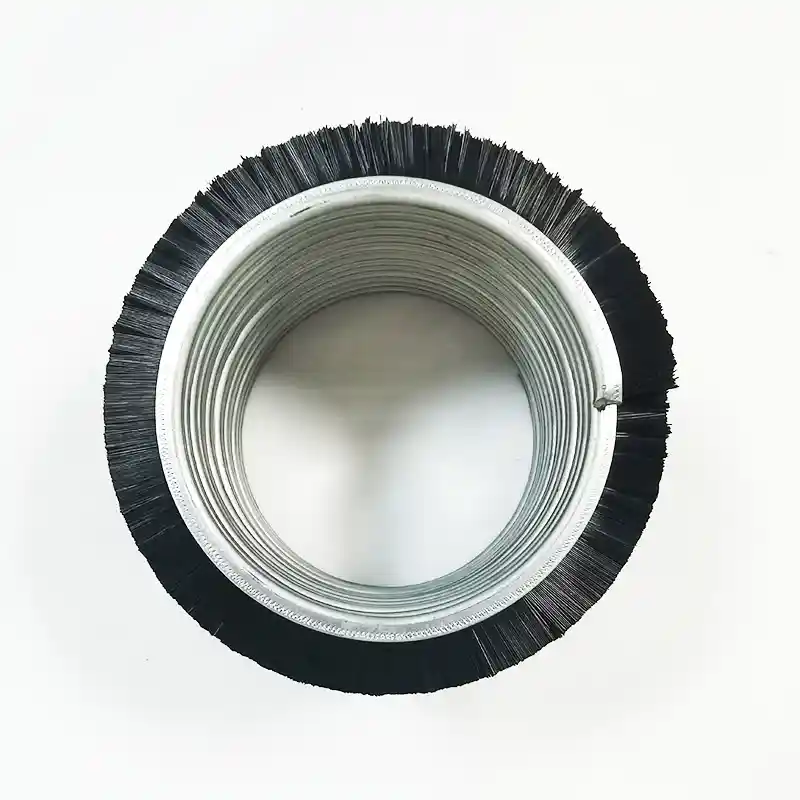
If the application shifts from strip sealing toward wheel cleaning or heavy rust removal, the contact geometry changes. <wire wheel brush the right assistant for industrial cleaning and polishing> covers how wheel brush filament action and surface contact differ from a fixed strip brush.
How Can Custom Strip Brush Sourcing Reduce Rework?
Rework usually starts with a close but not exact profile. The brush is installed, it seals most of the gap, and then the line runs for a week before a complaint comes back from production. At that point, the saving from a standard length disappears. At Huixi Brush, we work from the actual channel and part print, so the backing, bristle pack, and trim length are built around the machine and the working path rather than around the closest stock item. Custom does not always mean higher cost. It means fewer compromises on the line.
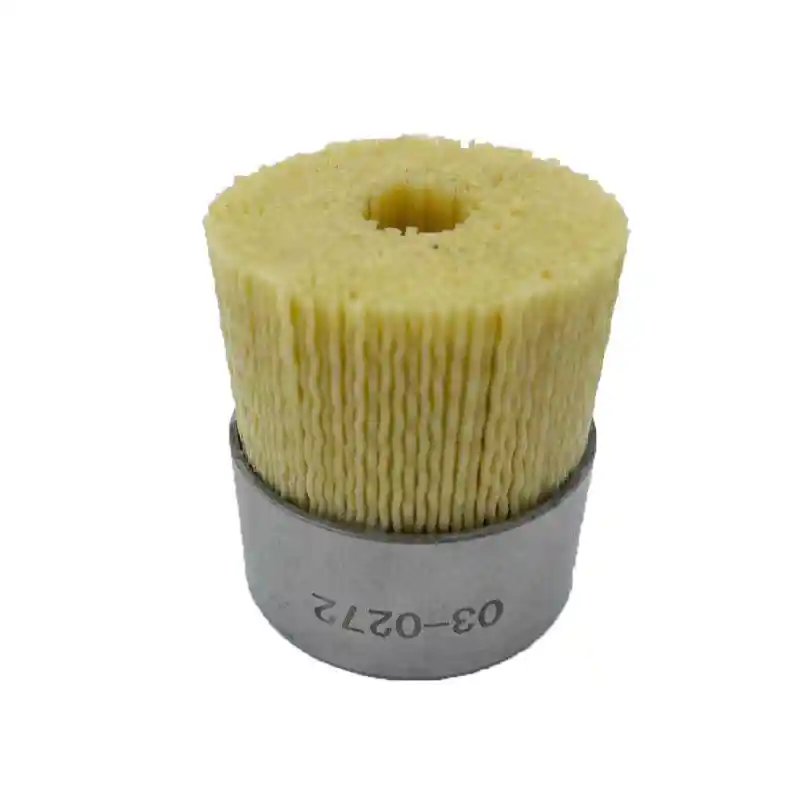
To start, send the part number or drawing, the channel dimensions, the bristle material, and the quantity to [email protected] or call +86 1580 0932 713. We will confirm the profile, trim length, and a suitable sample path before quoting.
What Do Buyers Ask About Industrial Strip Brushes?
Can industrial strip brushes handle hot environments?
Yes, when the backing and bristle material are matched to the temperature. Polypropylene can handle mild heat but softens at elevated temperatures, so high temperature seals usually need nylon, polyester, or a metal-backed brush with steel or abrasive nylon filament. The backing matters as much as the bristle. I have seen standard plastic channel strip brushes distort when placed near oven access gaps. For anything above a warm process, ask for a backing material that holds its shape at the same temperature as the filament.
Is a higher bristle density always better for dust sealing?
Not always. Buyers often assume a denser brush seals better, but fill density mainly changes friction and recovery. A dense single row can fold over and trap debris, while a double row can block particles without being excessively stiff. The best approach is to match density to the gap differential and the speed of the moving surface. A wide, slow-moving gap may seal with a lower density than a narrow, fast-closing one.
What is the difference between crimped and straight wire in a strip brush?
It depends on the edge type and the surface finish requirement. Crimped wire produces a softer, more flexible working face and is better for general cleaning and light oxide removal. Straight wire is stiffer and cuts more directly, which suits heavier deburring but can scratch softer surfaces. When the part must hold a controlled finish, I usually test a short crimped section before moving to straight wire. The wire diameter also changes the result.
How do I know if I should choose nylon or polypropylene bristles?
In sealing work, I usually start with polypropylene for wet zones and nylon when the brush must survive repeated contact or higher heat. Nylon costs more but recovers well after constant deflection and resists many solvents. Polypropylene is the lower cost starting point for dry dust and splash sealing. Share your operating temperature and cleaning agent with [email protected] and we can confirm the right filament before you order.
If you’re interested, check out these related articles:
abrasive disc brush an efficient tool for many applications
wire wheel brush the right assistant for industrial cleaning and polishing
what you know about brass wire brush strip
abrasive wheel brush a magical tool for industrial surface treatment