Most failed scent marketing programs do not fail because the fragrance is wrong. They fail because no one defined what the scent was supposed to do, where air actually moves, and who would own the refill routine. A scent marketing program becomes predictable when it is planned like a facility system first and a fragrance choice second. I have spent more than ten years designing scent solutions for hotels, retail stores, and commercial spaces across 68 countries. The sequence below is the one I use when a client wants a program that holds up after the initial excitement fades.
What Does a Scent Marketing Program Actually Need to Include?
A scent marketing program is not just a diffuser and a bottle of oil. It is a repeatable system with a business objective, a zone map, equipment matched to air volume, a fragrance formula, a maintenance schedule, and a review cadence. When one piece is missing, the program usually gets abandoned within three to six months. Buyers often ask me which diffuser is best. The more useful first question is which part of your space should carry scent and what that scent needs to do.
Start With the Business Outcome, Not the Fragrance
Fragrance preference is subjective. Business outcomes are not. A hotel lobby may need to make arriving guests feel the space is clean and calm. A fitness center needs odor control before it needs a brand statement. A car showroom may need a leather and amber note to make materials feel premium. I have spent years in fragrance R&D, and the pattern is consistent. When a client picks a scent because the owner likes it, the staff often overrides it within weeks. When the client picks a scent because it solves a measurable problem, the program stays.
Define Zones Before You Compare Products
Most physical scenting failures come from treating a building as one box. A retail floor with ceilings twice the normal height, an open stairwell, and an entrance that opens onto a hot street will not scent evenly if you place one unit in a corner. Map the zones first. Note ceiling height, return air grilles, open windows, and busy thresholds. This zone map is the document a supplier should ask for before recommending equipment. Without it, you are comparing hardware without knowing how hard the air will work against you.
How Do You Match a Commercial Scent to Your Brand?
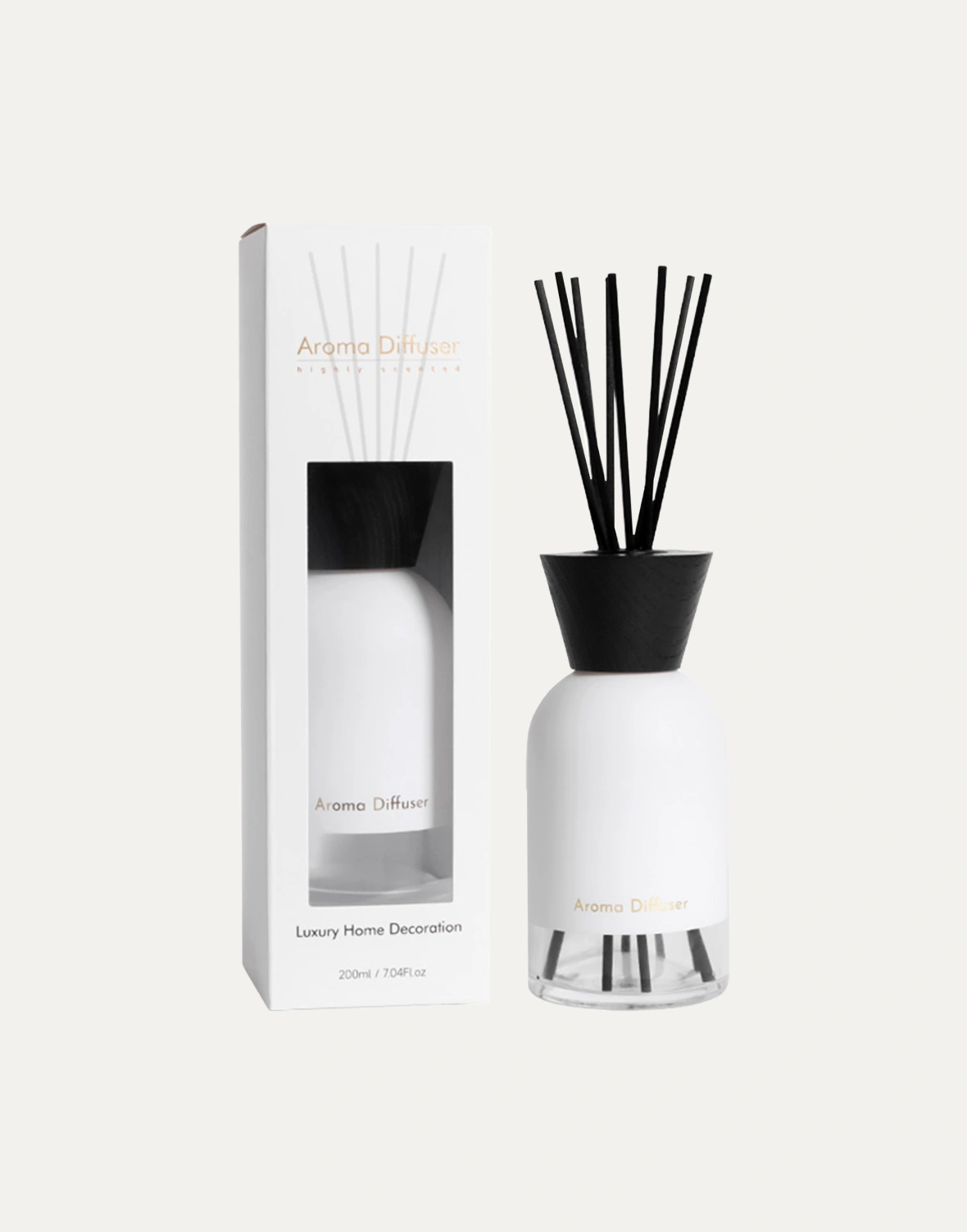
Fragrance should carry the same tone as the rest of the brand. A luxury boutique and a fast casual cafe need different structures. That difference is not only about the note; it is about tenacity, diffusion speed, and how the scent behaves after a few hours.
| Space | Scent Direction | Primary Role |
| Hotel lobby | White tea, cedar, soft floral | Arrival comfort and recall |
| Fashion retail | Citrus, clean musk, light amber | Freshness and premium perception |
| Office | Green tea, marine, light citrus | Concentration without distraction |
| Gym | Mint, eucalyptus, ozonic | Odor control and freshness |
| Spa | Lavender, sandalwood, soft musk | Calm and perceived care |
Scents also behave differently across cultures and climates. Warm, heavy orientals can feel opulent in a cool northern hotel and suffocating in a humid southern lobby. I always ask where the space is, what season the launch happens in, and who the customer is before I recommend a formulation. Scent-Share keeps more than 300 fragrance types for that reason, but the goal is not to show range. The goal is to narrow the choice to two or three candidates that can be tested in the real space.
Which Diffuser Technology Suits Your Space?
Commercial scent machines fall into three broad groups: standalone cold air or waterless diffusers, wall mounted or ceiling mounted units, and HVAC integrated systems. The right choice depends on how much air you need to treat and how much control you want over schedule and intensity. A unit that covers 300 m³ is enough for a boutique or meeting room. A hotel atrium or open retail floor usually requires a tower or HVAC unit that can move scent through thousands of cubic meters.
| Equipment Type | Coverage | Typical Use |
| Commercial scent oil diffuser | 300 m³ (1,000 sq ft) | Boutique, office, meeting room |
| Hotel scent oil diffuser tower | 3,000 m³ (11,000 sq ft) | Lobby, open retail floor, atrium |
| Wall mount HVAC scent system | 3,000 m³ (10,000 sq ft) | Corridors, clubs, showrooms |
| HVAC scent diffuser system | 8,000 m³ (30,000 sq ft) | Large venues, multi zone buildings |
| Dual system HVAC diffuser | 5,000 to 15,000 m³ | Two scent zones in one site |
Coverage area is not the same as perceived scent strength. A 300 m³ unit in a 300 m³ room with a high ceiling and strong HVAC return may still leave the far side weak. Air movement, diffuser placement, and oil viscosity all affect how evenly the fragrance settles. I have seen equipment sized by square footage alone fail because the return air pulled scent into an exhaust path before it reached the seating area. Before you buy, measure the real air volume and walk the space during operating hours, not after closing.
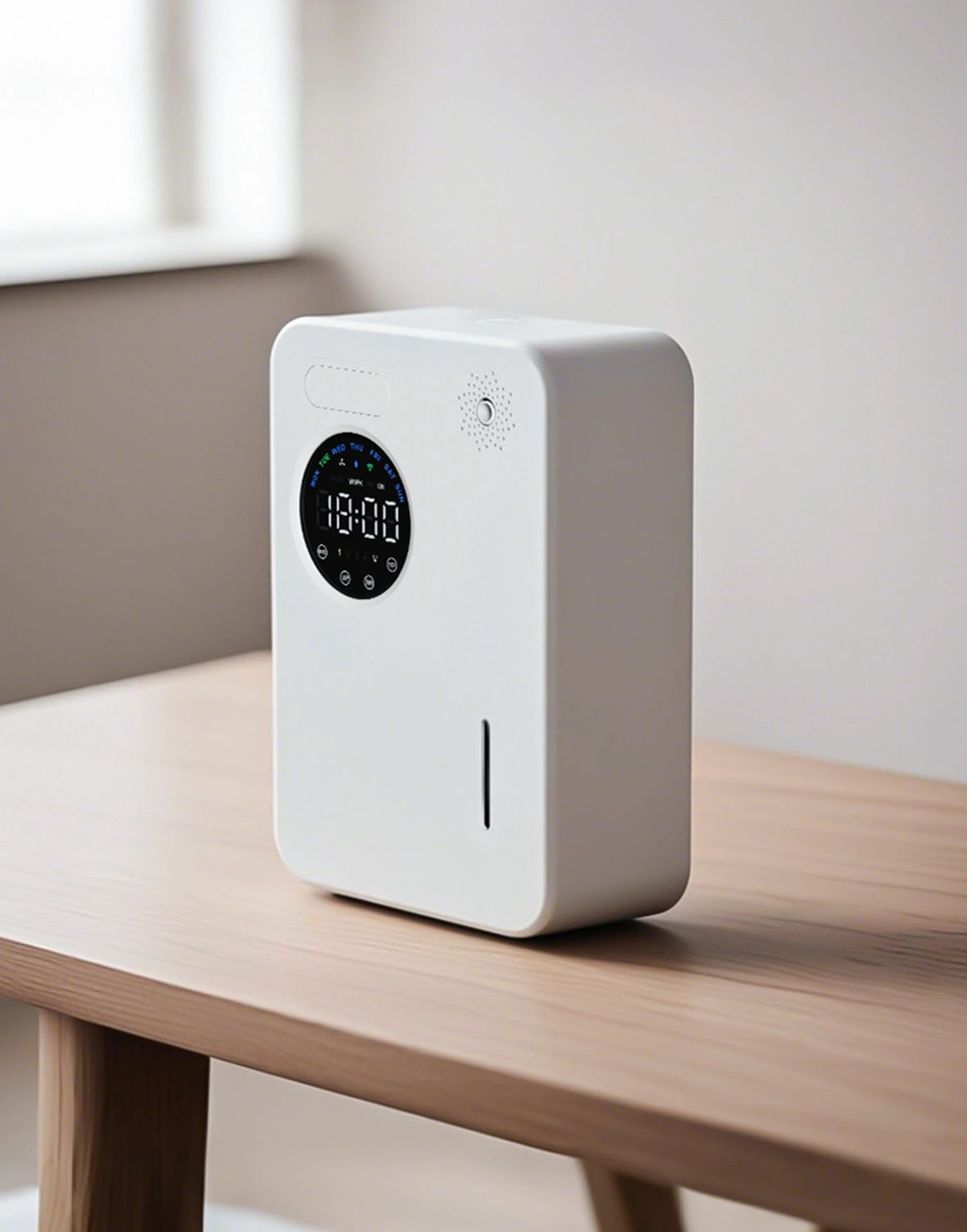 If your program involves multiple zones or a lobby paired with back-of-house spaces, confirm the atomizer output and bottle capacity against your floor plan before finalizing equipment. Send your ceiling height, square footage, and occupancy pattern to [email protected] and we can match the diffuser to the actual air volume.
How Do You Avoid a Scent That Fades by Midday?
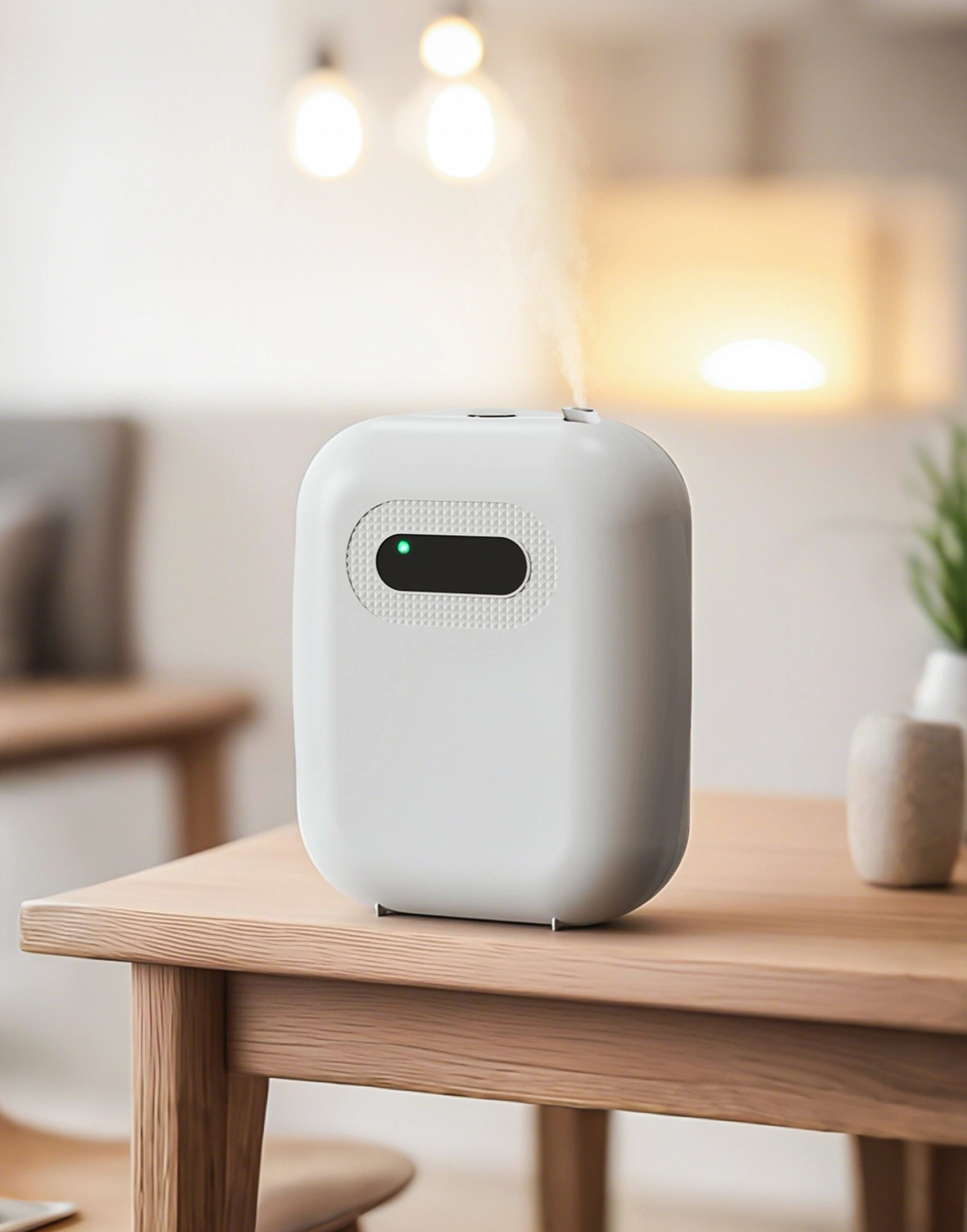
Fading is rarely a problem with the oil. It is a problem with duty cycle, placement, or maintenance. A diffuser set to a fixed low output from 9 a.m. to 9 p.m. will smell different when the room is empty at 10 a.m. and crowded at 6 p.m. Smart commercial diffusers with Bluetooth or app control let you schedule output around occupancy and adjust intensity remotely. That is not a convenience. It is how you keep the scent consistent without overspending on oil.
Schedule Around Occupancy, Not the Default Timer
For a retail store, I usually set higher output during opening, lunch, and after work peaks, then drop to a maintenance level mid-afternoon. For a hotel lobby, the scent should be strongest at check-in and quiet overnight. Bluetooth app control makes this practical across multiple locations. A property manager can adjust a lobby unit in one city from a phone. Without scheduling, the team either turns the machine too low and loses the scent, or turns it too high and creates fragrance fatigue.
Assign a Refill Owner Before Installation
Refills are the point where most programs die. If no one is assigned to check bottle levels and clean the atomizer, the unit becomes furniture. I always ask who will own the schedule before I ship equipment. Bottle size matters here. A 150 ml bottle in a busy lobby needs more frequent replacement than a 1 L bottle in a smaller office. Program the reminder into the maintenance calendar and keep the trigger practical. Some spaces suit a battery powered wall mount diffuser, especially where power outlets are limited or the unit must sit inside a display shelf.
What Should You Ask Before Choosing a Scent Marketing Partner?
Selecting a scent marketing partner goes beyond comparing one fragrance price against another. The expensive mistake is choosing a supplier that sells you a diffuser and then disappears when the scent fades, the oil runs out, or the app stops connecting. A workable program needs a partner who can handle fragrance development, equipment commissioning, and ongoing refill supply in one chain. Scent-Share has delivered scent experiences in 68 countries for ten years, and our team carries the same question through every project: what should this space make the customer feel? If your pilot is ready to move into a full scent marketing program, send your floor plan and launch date to [email protected] or call +86 185 6557 5758. We will confirm the diffuser coverage, scent direction, and refill schedule before you commit.
What Questions Do First Time Scent Marketing Buyers Ask?
How much does a scent marketing program cost?
It depends on square footage, ceiling height, and how much control you need. A small office using a single desktop diffuser costs far less than a hotel lobby that needs an HVAC unit, custom fragrance formulation, and a multi location refill schedule. Request a quote with your floor plan and occupancy hours so the supplier can price the hardware, oil consumption, and service together. Without those details, any number you receive is a guess. Share your floor plan and we will confirm a realistic range for your space.
Can scent marketing work for a B2B business?
Yes, but B2B scent marketing works best when it targets atmosphere rather than impulse purchase. A showroom, law firm reception, or corporate lounge can use scent to make waiting feel shorter and the space feel managed. The scent should stay in the background of the conversation rather than compete with it. Light citrus, green tea, or soft cedar are safer starting points than heavy sweet fragrances. The metric that matters is usually perceived professionalism and client comfort, which shows up in repeat visits and longer meetings rather than a direct sales spike.
How long before customers notice the scent?
Customers notice the scent sooner than operational teams do, but the two do not move together. Guests often register a pleasant atmosphere on the first visit without naming the fragrance. Measurable changes in dwell time or repeat visits take longer and require a consistent schedule. If you change the scent every two weeks, you reset that familiarity. I suggest running the same scent at a steady intensity for at least 60 to 90 days before judging results. That window gives staff and customers time to stop noticing the equipment and start feeling the space.
What is the biggest mistake first time buyers make?
In programs I have reviewed, the biggest mistake is installing equipment before mapping airflow and assigning a refill owner. The diffuser becomes a one month experiment because nobody checks the bottle, the scent fades, and the team assumes the concept failed. A smaller but common error is choosing a fragrance by personal preference instead of by the space’s job. Before you order anything, walk the floor plan, note ceiling heights and returns, and pick one person who owns refills. Share those details with us and we will confirm which diffuser type fits the actual air volume before you commit.
If you’re interested, check out these related articles: